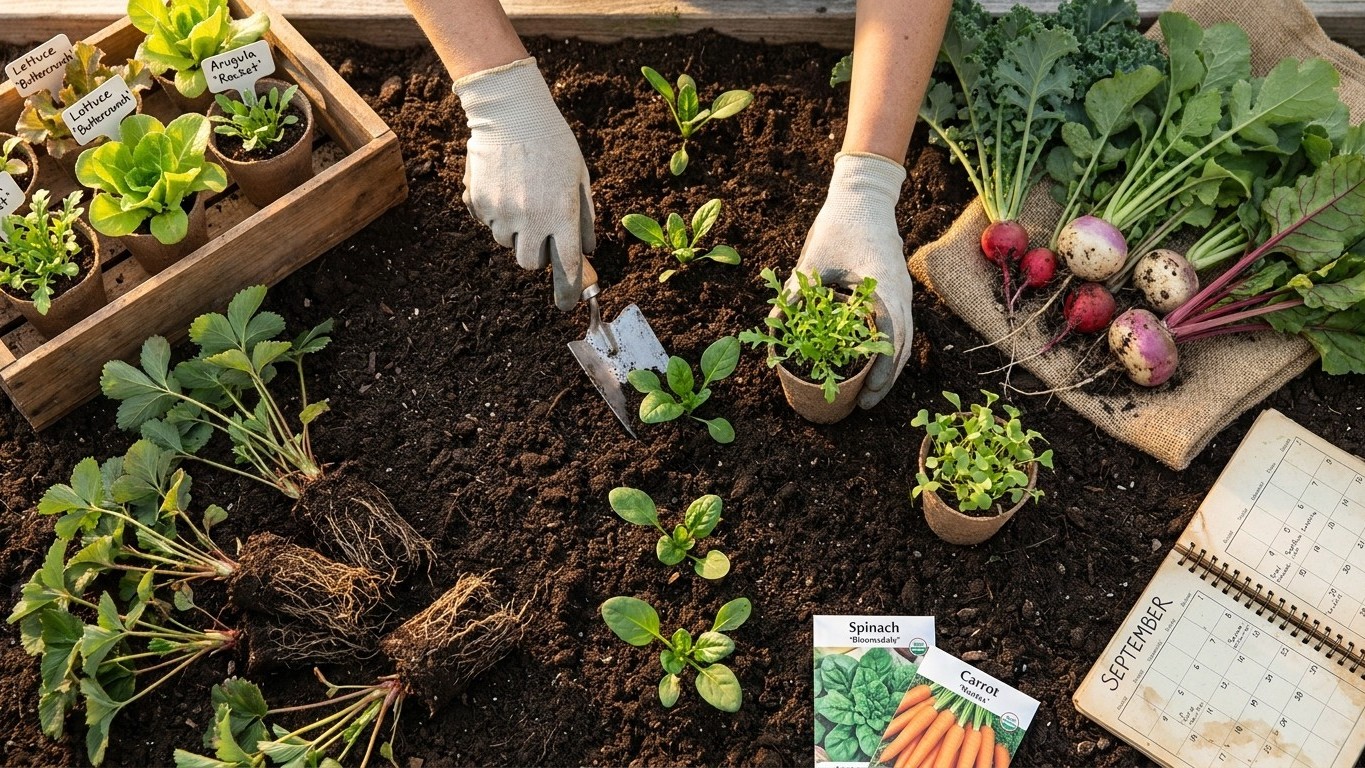

September in Delaware still gives you a real planting window. The first fall frost at the Wilmington reference station lands between October 26 and November 7, so a home garden here typically has six to nine weeks of frost-free time left this month. That’s enough for a full round of cool-season vegetables sown directly outdoors, plus a last push on transplants for anything that needs a head start.
What goes in the ground in September

The decision this month isn’t the calendar, it’s the math: count backward from that October 26 to November 7 frost window and match it against how many days a crop needs to mature. A radish at 25 days is a safe bet sown any week in September. A full-size cabbage at 70 days is only safe if it goes in as a transplant, not a seed, by the first week or two of the month.
Direct-sown into open ground, Delaware gardeners can still get away with a wide range of quick, cold-tolerant crops. Spinach, arugula, mustard greens, radishes, turnips, and loose-leaf lettuce all germinate fine in warm early-September soil and mature well before the frost window closes. Beets and carrots sown in the first half of the month usually finish, though a late sowing pushes the harvest right up against the frost line. Peas for a fall crop can still go in early in the month, since they tolerate a light frost once mature.
| Crop | Days to maturity | September sowing window |
|---|---|---|
| Radish | 25-30 | All month |
| Spinach | 40-45 | All month |
| Turnip | 45-55 | Early to mid-month |
| Beets | 55-60 | Early month |
| Fall peas | 60-70 | First two weeks |
Garlic and shallots are the one classic fall-planted crop that doesn’t belong in September ground here. Delaware’s soil is still too warm for them to root well without pushing premature top growth; that planting waits for the cooler soil of October and November. If you’ve got seed garlic sitting around, hold it. Bare-root strawberries and perennial divisions, on the other hand, transplant well once nighttime temperatures start dropping toward the end of the month.
What to start under cover
Counting backward from the frost window matters even more for anything started under a cold frame, cloche, or low tunnel, because cover only buys you a few extra weeks, not a few extra months. If you want lettuce or spinach to keep producing into November and beyond, sow it under cover by mid-September so it reaches a harvestable size before light and heat drop off sharply.
The safest approach: pick the frost date range you’re planning around, subtract the crop’s days-to-maturity, then subtract another 7 to 10 days as a buffer for slower fall growth rates, since cooler soil and shorter days slow everything down compared to a spring sowing of the same crop. A 45-day spinach sown for a late-October harvest under a cold frame should go in by the first week of September, not the last.
Two mistakes show up every fall. The first is starting too early under cover and ending up with leggy, rootbound seedlings baking in a frame that’s still too warm in early September heat, since cold frames need ventilation until nights cool down. The second is waiting too long, sowing in late September and running out of daylight before the crop can size up. Kale, collards, and Swiss chard are more forgiving on timing than lettuce or spinach, since they hold in place and keep producing leaves even as growth slows, rather than bolting or stalling out entirely.
What is ready to pick
September is one of the fullest harvest months in a Delaware garden, because the summer crops that were still ripening in August keep coming while the first fall crops from late-summer sowings start to mature alongside them. Tomatoes, peppers, and eggplant continue producing until a real frost knocks them back, so pick ripe fruit regularly to keep plants setting new ones rather than letting overripe fruit sit and invite rot.
Summer squash and cucumbers are usually winding down but still worth checking every couple of days, since a missed zucchini can turn into a baseball bat overnight. Sweet corn planted for a late crop finishes up this month; check for plump, milky kernels by pulling back the husk slightly rather than guessing from the outside. Melons are ready when the stem slips easily from the fruit with light pressure.
Sweet potatoes started curing in late summer are often dug in September, ideally before soil temperatures drop too far and before the first frost damages the foliage and vines. Basil and other tender herbs should be harvested heavily now, since a single cold night can blacken a basil plant that survived all summer. Anything left in storage from earlier in the season, like onions or garlic cured in midsummer, is worth a quick check for soft spots before they go into long-term storage.
The jobs that matter this month
September is the single best month in Delaware to overseed or establish a cool-season lawn, and it’s easy to let this slide because it doesn’t feel urgent. Grass seeded now has warm soil for fast germination and enough weeks of mild weather before frost to develop real roots, something a spring seeding in the same zone rarely manages before summer heat stresses it out.
Succession sowing still pays off through the first half of the month. A second round of radishes, lettuce, or spinach sown two to three weeks after the first stretches the harvest instead of dumping it all at once. Mulching beds as summer crops finish helps hold soil moisture and temperature steady while nights start cooling, and it suppresses the weeds that take advantage of any bare, still-warm soil.
Pest scouting matters more in September than gardeners expect, since fall armyworm and cabbage worm populations often peak on brassicas and turf as the weather cools. Check the undersides of kale and cabbage leaves for eggs and small green caterpillars, and look at lawn edges for the ragged, brown patches that signal armyworm damage. Staking and caging should be finished by now for anything still fruiting, since a late-season storm can flatten a heavily loaded tomato plant that’s gone unsupported all summer.
Behind the scenes, this is also the month to pull and compost spent bean and squash vines, test soil pH before amending for a fall cover crop, and start a rotation plan for next spring while this season’s results are still fresh. Cleaning and oiling tools before they sit unused through fall prevents rust from setting in over the coming months.
What not to do in September
The classic mistake is planting warm-season crops, like a second round of tomatoes or peppers, because a stretch of hot September days feels like summer isn’t over. Soil and air temperature both matter, and a warm week in September doesn’t change the calendar math: those crops won’t mature before the October frost window, and the seedlings will just get caught by cold before they produce anything.
Feeding nitrogen to trees, shrubs, or the lawn at the wrong point in September is another common error. A high-nitrogen fertilizer applied too early in the month can push soft new growth on woody plants right before frost, and that new growth is the first thing damaged when temperatures drop. Lawn feeding is different and generally fine this month, since cool-season turf uses nitrogen well as it builds roots ahead of winter, but tree and shrub fertilizing should generally wait until after leaf drop.
Pulling row covers or cold frame lids off too early after a mild stretch is a habit left over from spring thinking, when gardeners uncover tender seedlings the moment a warm spell hits. In fall, the risk runs the other way: temperatures can swing back down fast, and a cold frame left open overnight after a warm afternoon can lose a whole planting of fall greens to a surprise cold night.
Checking this against your own county
Everything above is built around the Wilmington-area reference station, and Delaware’s own frost dates shift with distance from the Delaware Bay, elevation inland, and how sheltered a particular yard is. A garden in southern Kent or Sussex County often sees a later first frost than one further north and inland, sometimes by a week or two, while low-lying or exposed spots can frost earlier than the airport data suggests.
Treat every date in this article as a starting point, not a guarantee. For county-specific guidance, the University of Delaware Cooperative Extension tracks local conditions and planting recommendations that reflect the state’s actual range of microclimates far better than any single station can.
Common questions
Is it too late to start a vegetable garden in Delaware in September?
No. Quick crops like radishes, spinach, arugula, and loose-leaf lettuce all have enough time to mature before the first fall frost, which typically falls between October 26 and November 7 at the Wilmington reference station.
Can I still plant grass seed in September in Delaware?
Yes, and September is generally considered the strongest month for it in this zone. Warm soil speeds germination, and there are usually enough mild weeks left before frost for young turf to root in before winter.
Should I plant garlic in September in Delaware?
Hold off. Garlic and shallots do better planted in October or November here, once soil temperatures cool further; planting in September risks premature top growth before the cold sets in.
What’s the biggest risk to fall crops planted in September?
Running out of time against the frost window, especially for anything with a long days-to-maturity count. Sowing too late in the month, or choosing a slow-maturing crop without cold-frame protection, is the most common way a September planting fails to produce before frost.
Gardeners who plant by the Moon can check the September 2027 moon planting calendar, a tradition rather than a proven method.