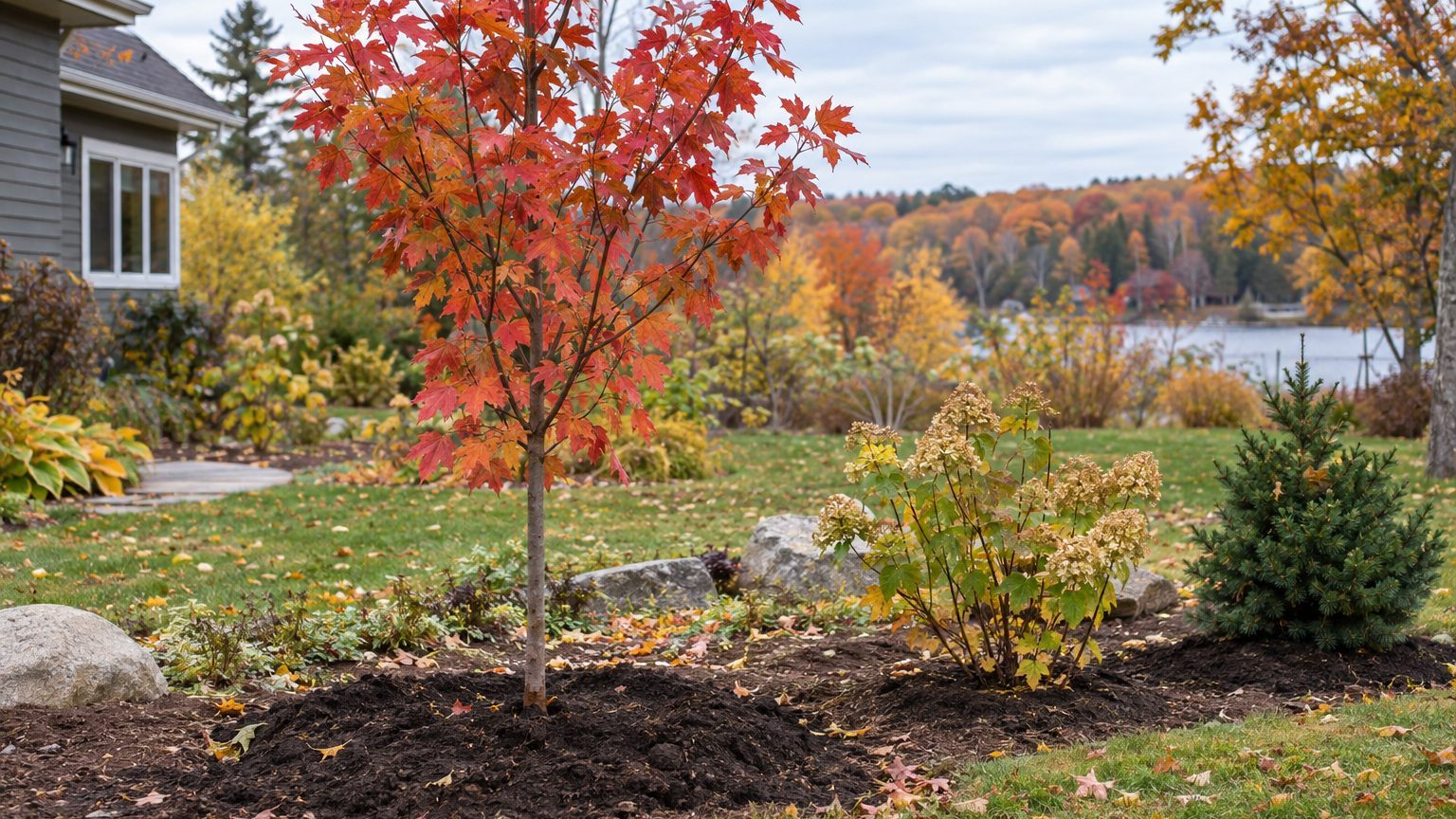

Jacksonville’s coldest month keeps its average low above 42.9°F, and that single fact means the ground under most of Florida never truly freezes. Because of that, the fall planting deadline that shapes gardening in colder states barely applies here. Plant a containerized or balled-and-burlapped tree while the soil stays workable, and in central and south Florida keep going straight through winter. In north Florida, try to have new plantings in the ground before the season’s first hard frost narrows your window.
The deadline in Florida
Roots don’t stop working just because the air turns cold. They keep growing as long as the soil itself stays workable and above freezing, which is why the real fall planting deadline anywhere is tied to the ground, not the calendar on the wall. Cornell Cooperative Extension in Orleans County, New York, states the rule cold-climate gardeners live by: “Fall is an excellent time for transplanting, provided you get them to their new home at least 6 weeks before the ground freezes, allowing them time to establish roots before winter dormancy.” That rule assumes the ground eventually locks up solid. In most of Florida, it doesn’t.
At the Jacksonville reference station, NOAA’s 1991-2020 climate normals put the mean daily minimum of the coldest month at 42.9°F. That’s a monthly average, not a record low, but it tells you the ground rarely sees a hard freeze even in the coldest stretch of the year. Where that holds, Cornell’s six-week countdown has nothing to count down to, and there is effectively no fall planting deadline across most of Florida.
That doesn’t mean frost never happens. NOAA’s 1991-2020 normals put Jacksonville’s first fall frost between November 26 and December 13, a window with a 30 to 70 percent chance of a freeze in a given year at that inland airport station. Three of the last thirty falls saw no freeze at all there, which is worth knowing before you assume a hard cutoff. Check Florida’s frost dates for your area, since a coastal yard or a spot tucked against a south-facing wall near Jacksonville often runs several degrees warmer than the airport reading.
Farther south, the calendar flips entirely. Central and south Florida run effectively frost-free, and fall through winter is the best stretch of the whole year to plant, not a deadline to beat before winter closes in. Summer, with its heat and heavy rain, is the season that stresses new roots there instead. For a broader look at timing across the state, see Florida guides.
| Region | Fall frost pattern | Ground freezes? | Best planting approach |
|---|---|---|---|
| North Florida (Jacksonville) | First frost November 26 to December 13, NOAA 1991-2020 normals | No, coldest month minimum 42.9°F | Get borderline plants in before the frost window; hardy stock can go in through winter |
| Central Florida | Frost rare, many years none | No | Fall through winter is the main planting season |
| South Florida | Effectively frost-free | No | Plant fall through winter; avoid the peak of summer heat |
What to plant late, and what to wait on
Plants rated hardy for the zone go in fine, late
The USDA Plant Hardiness Zone Map, built on 1991-2020 normals, puts Florida across zones 8b to 11b, one of the broadest spans of any state on the map. Jacksonville sits toward the cooler end of that range, and a plant rated hardy there survives winter in the rest of the state without trouble. A live oak, a crape myrtle, a hardy hydrangea, most anything a nursery labels as hardy for north Florida’s zone establishes just fine from a fall planting, because its root system tolerates whatever cold actually shows up that winter.
Container-grown stock has an edge over balled-and-burlapped for a late planting. A containerized root system has already filled its pot and moves with minimal disturbance, so it settles in fast even when the calendar is running late. A balled-and-burlapped tree loses a larger share of its roots at digging time, so it benefits from extra weeks to recover before any stress arrives. If you’re choosing between the two late in the season, the container plant is the safer bet.
Borderline evergreens are the ones to watch
The plants worth being careful with are the borderline ones, tender broadleaf evergreens and subtropical shrubs rated only for the warmer end of the state’s range, planted in north Florida with no time to root in before cold arrives. Get borderline evergreens and subtropicals into the ground well ahead of that frost window, not right before it, so roots have a head start before any cold shows up. An evergreen keeps losing water through its leaves all winter even while dormant, and a root system that hasn’t anchored yet can’t keep up with that demand during a cold, dry snap.
In central and south Florida, that concern mostly disappears. Plant those same tender specimens anytime except deep summer, when heat and storm rain are the bigger threat to a young planting rather than cold. For the general technique of settling a tree or shrub into its hole correctly, see Planting and Caring for Trees, Shrubs and Perennials.
Watering and mulch until the ground freezes
Water deeply at planting and keep watering through the fall, because a new tree’s whole job that first season is growing roots, not top growth. Top growth can wait. A compromised root system can’t recover the same way. In north Florida, keep the watering schedule going until the soil cools and the Nov 26 to Dec 13 frost window has passed. In central and south Florida, where the ground never approaches freezing, keep watering right through the mild season instead of tapering off as you might farther north.
Get the mulch depth right, not deeper
NC State Extension’s Gardener Handbook gives the numbers plainly: “A 2-inch to 3-inch layer of mulch suppresses most annual weed seeds and makes it easy to hand-pull any that do germinate,” and for trees specifically, “Provide a 3-inch layer of mulch to reduce water loss and maintain uniform soil moisture and temperature around roots.” Keep the mulch at that 2- to 3-inch depth, spread in a flat ring out to roughly the drip line. Pull it back a few inches from the trunk rather than piling it against the bark. Piling mulch into a cone against the trunk doesn’t add protection. It just holds moisture against the bark and invites rot.
Florida’s sandy soils drain fast, so a deep, less frequent watering routine trains roots to grow downward instead of staying shallow near the surface. Before watering again, push a finger a couple of inches into the soil near the root ball. If it’s still damp, wait. Since the ground here stays well above freezing all winter, mulch’s job is mostly about holding that soil moisture steady and evening out soil temperature swings, not insulating against a hard freeze the way it does farther north. For a closer look at getting the ring shape right, see Mulching Without Killing the Plant.
What goes wrong
Most fall planting problems in Florida trace back to a handful of habits.
- Choosing a plant rated hardy only for the state’s warmest zones and setting it out in north Florida right before the frost window, with no time to root in before the cold arrives.
- Piling mulch into a volcano against the trunk instead of a flat ring, which traps moisture and invites trunk rot.
- Skipping deep watering after planting and letting the root ball dry out during a dry fall stretch, since a young root system has no reserve to draw on yet.
- Burying the root flare too deep in the planting hole, which slowly suffocates the roots even when everything else about the timing was right.
- Treating spring as the safer choice everywhere in the state, when in central and south Florida the return of summer heat is the harder season to establish roots against, not winter cold.
The single biggest mistake is confusing Florida’s mild winter with a green light to plant anything, anytime. A subtropical shrub that thrives through a Miami winter can brown back to the ground in a Jacksonville cold snap if it went into the ground without enough time to establish first. Match the plant’s cold tolerance to the part of the state it’s actually going into, not to the state as a whole.
Common questions
Can I still plant a tree in Florida in December?
In most of the state, yes. Central and south Florida run close to frost-free, and December sits well within the main planting season there. In north Florida, a December planting still works for anything rated hardy to the region’s zone. Just get borderline evergreens in well clear of the frost window rather than right up against it.
Does the ground actually freeze anywhere in Florida?
Not by the numbers. NOAA’s 1991-2020 climate normals put the coldest month’s average daily minimum at the Jacksonville reference station at 42.9°F, well above freezing even in the depth of winter. That’s why the standard fall planting deadline built around a frozen ground doesn’t really apply here, though a hard air frost can still occur on individual nights.
Is it better to plant citrus or palms in fall or spring?
Fall and winter, in most of the state. Citrus and palms vary in cold tolerance by type, but in central and south Florida the bigger threat to a young planting is the return of summer heat and heavy rain, so getting roots established during the cooler months gives them a head start. In north Florida, hold off on the most cold-sensitive selections until you’re past the coldest stretch of the frost window, or plan to protect them through it.
What about planting trees where the ground does freeze, like up north?
That’s a different calculation entirely. In a state like Minnesota, the fall deadline is a hard stop tied to when the ground actually locks up, and missing it means a root ball that never anchors before winter sets in. See How Late Can You Plant Trees and Shrubs in Fall in Minnesota? for how that timeline works when the ground freeze is a real constraint instead of a rare event.