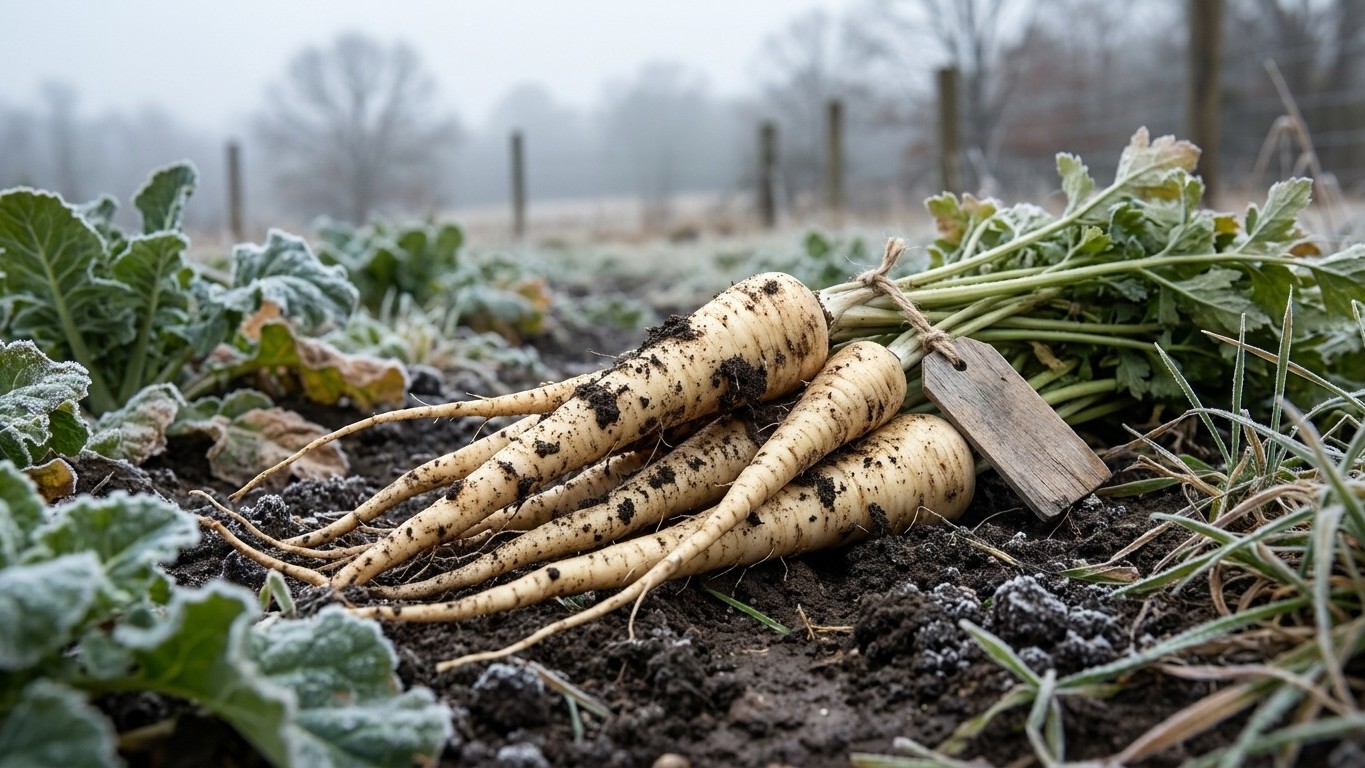

Parsnips will grow just fine around Jacksonville and much of north Florida, but sweetening is a separate matter entirely. This crop needs a real stretch of frosty weather to turn its stored starch into sugar, and Florida’s winters are too short and too mild to deliver that consistently. Expect a solid, edible root grown in good sandy soil, not the candy-sweet parsnip gardeners pull from the ground farther north. Central and south Florida change the picture completely, since frost barely reaches those regions at all.
The short answer
Everything about whether a parsnip sweetens comes down to one question: does this ground see several straight weeks of frosty weather before harvest? Around Jacksonville, the honest answer leans no. NOAA’s 1991-2020 Climate Normals put the mean daily minimum for the coldest month at 42.9°F. That’s not a record low or a single cold snap; it’s the average of every nightly low across the whole month, which means plenty of nights sit well above freezing even in the depths of winter.
That average also hides how uneven the freezes actually are. Three of the last thirty years at the reference station recorded no freeze at all. When a frost does arrive, it tends to be brief, a single cold night rather than the sustained cold stretch that slowly converts a parsnip’s starch reserves into sugar. One hard night doesn’t do the job the way weeks of consistently cold soil temperatures do.
It’s tempting to check Florida’s hardiness zone rating and assume that settles it, but zone numbers measure how much cold a plant can survive, not how much frost exposure sweetens a root sitting underground. Those are two different measurements answering two different questions. A zone rating can look perfectly mild and comfortable for parsnip foliage while the ground still never gets the sustained near-freezing stretch that flips starch into sugar. Comfortable is not the same thing as several frosty weeks, and confusing the two is the single easiest mistake a gardener can make with this crop.
Put plainly: a parsnip grown around Jacksonville will most likely grow into a full, usable root, since deep sandy soil in much of the region actually suits the crop well. It just won’t reliably develop the sweetness that defines a well-frosted parsnip grown somewhere with a real winter. Treat it as a solid cooking root with an earthy, slightly starchy bite, not a sweet treat pulled straight from frozen ground.
Does the season fit?
Lay out the actual arithmetic and the mismatch shows up fast.
- Last spring frost around Jacksonville falls somewhere between February 16 and March 7, based on NOAA’s 30-70% freeze-probability window for that station.
- Parsnip seed goes into the ground 2 to 3 weeks before that date, which puts sowing somewhere from late January into mid-February.
- Germination alone takes 14 to 21 days, so no green shoots the week after sowing. The bed needs to stay undisturbed and evenly moist through most of a month before anything visible happens.
- From the day of seeding, parsnips need 100 to 120 days to reach full size. Counting forward from a late-January to mid-February sowing lands full maturity somewhere in May, running into June.
- The first fall frost doesn’t show up until November 26 to December 13. That’s four to six months after the roots are already mature and sitting in the ground.
- To pick up any sweetness at all, those mature roots would need to survive the entire Florida summer underground, then wait for a frost that only shows up in this area about seven years out of ten.
The days-to-maturity number itself isn’t the obstacle. Florida’s mild winters never cut a growing season short the way a hard freeze farther north would. The mismatch is timing: a spring-sown parsnip on this schedule finishes growing months before the frost that’s supposed to sweeten it ever arrives. That’s not a comfortable fit. It’s a long, hot wait for a payoff that may not show up at all.
What goes wrong here
- Forked roots in heavy or stony ground. Parsnip taproots split into forks the moment they hit compacted clay, buried rock, or leftover construction debris. Double dig the bed to loosen soil at least a foot down, or choose a spot with the deep sandy soil common across much of Florida, which this crop is naturally suited to.
- Forked roots from overwatering. This is a separate cause from soil texture. Roots kept too wet branch out searching for oxygen even in loose, sandy ground. Water deeply, then let the top inch or two dry out before watering again rather than keeping the bed constantly soaked.
- A season that runs into summer heat before the roots finish. Sown to match the spring frost window, parsnips hit their 100-to-120-day maturity right as Florida’s summer heat is setting in, which stresses the plant and toughens the root. Get seed in the ground as early in that sowing window as the last-frost date allows, and mulch heavily to keep soil temperatures down through the finish line.
- Winters too mild to ever sweeten the crop. With the coldest month averaging a 42.9°F daily minimum, and some years passing with no freeze at all, the sustained frost that converts starch to sugar simply doesn’t show up on a reliable schedule. Harvest for flavor and texture rather than banking on sweetness, and treat any real frosty stretch as a bonus, not a guarantee.
Common questions
Does Florida’s hardiness zone tell me whether parsnips will sweeten?
No. Hardiness zone measures how much cold a plant can survive, not how many weeks of frost exposure a root gets. A mild zone rating can coexist with a coldest-month minimum of just 42.9°F, which is nowhere near the sustained frost that sweetens a parsnip.
Are Florida-grown parsnips still worth eating if they don’t sweeten?
Yes. A parsnip that never gets its full frost treatment is still a fully usable root with an earthy, slightly starchy flavor, good for roasting, mashing, or adding to soups. It just won’t have the pronounced sweetness that a well-frosted parsnip develops.
What soil gives parsnips the best shape in Florida?
Deep, sandy soil is what the crop is naturally suited to, according to Utah State University Extension. Where the ground is heavier, double digging the bed before sowing is necessary to prevent the forked roots that compacted soil causes.
Should I try sowing in fall instead of spring to catch the frost better?
The season math laid out here follows the standard approach of sowing 2 to 3 weeks before the last spring frost, which is the timing tied to the sourced frost dates for this area. A different sowing schedule isn’t covered by the figures available for this location, so any change in timing should be weighed carefully against the actual frost window rather than assumed.