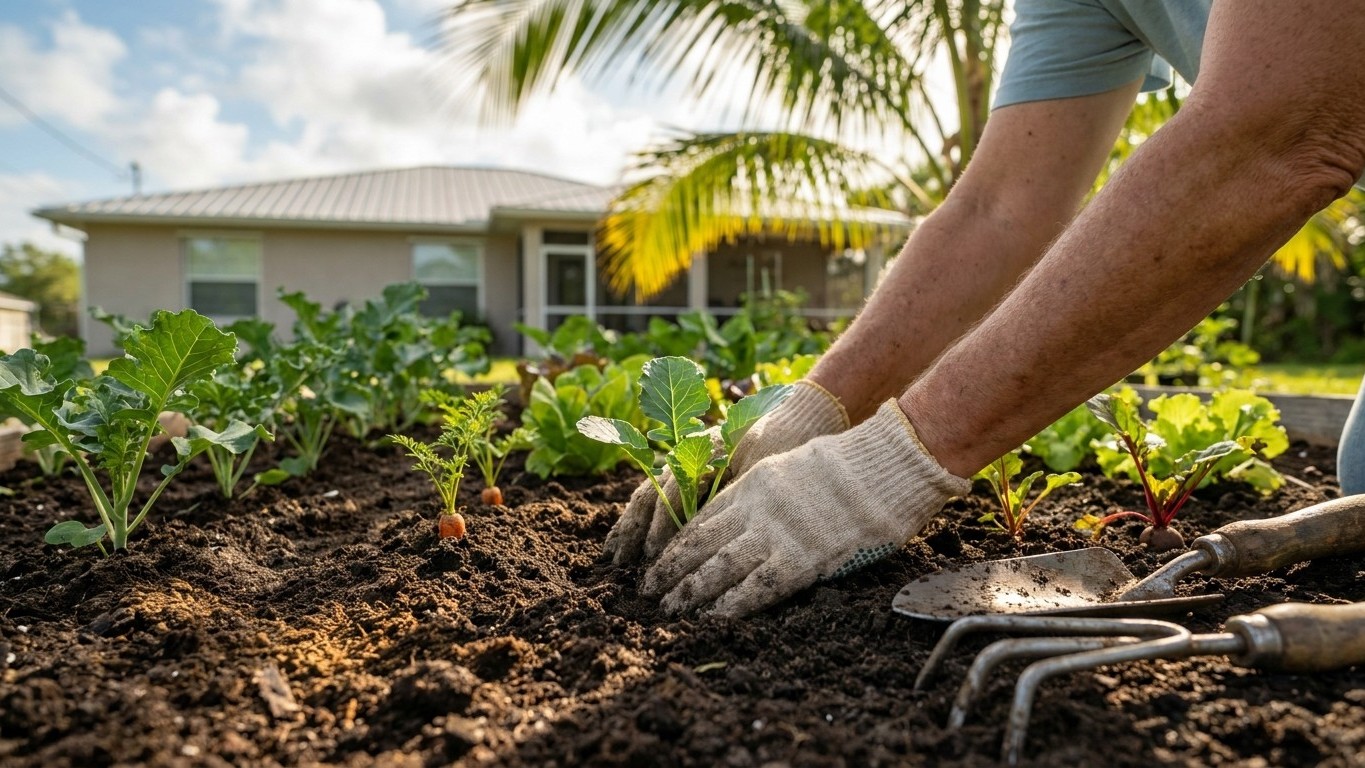

October marks the start of Florida’s main growing season, not the end of one. North Florida still has roughly two months of frost-free weather before the first freeze risk shows up, and central and south Florida see no frost at all in any average year. That flip is what separates this state from the rest of the country: while northern gardens wind down for winter, Florida beds fill up with cool-season vegetables, second-round tomatoes, and the root crops that carry a household through the cooler months.
What goes in the ground in October

The deciding factor here isn’t the calendar square, it’s the gap between now and the first freeze, and in Florida that gap is unusually generous. Near Jacksonville, NOAA’s 1991-2020 climate normals put the first fall freeze between November 26 and December 13, which leaves eight to eleven weeks of open growing time once October starts. That’s enough to bring a full round of cool-season vegetables to harvest before any frost risk enters the picture.
North Florida gardeners can direct-sow broccoli, cabbage, collards, kale, mustard greens, lettuce, carrots, beets, radishes, turnips, and spinach through the month, along with English peas and onion or garlic sets. These are the crops built for the cool, drier weather that settles in as the summer humidity finally breaks.
Central and south Florida run a different clock entirely. There’s no freeze to plan around at all, so the “growing season” for most vegetables isn’t spring and summer, it’s fall and winter, exactly the opposite of how the calendar works north of the state line. October is when tomatoes, peppers, beans, squash, cucumbers, and sweet corn go back into beds that spent summer either fallow or fighting rot and pest pressure in the heat and rain.
| Region | Frost situation in October | What goes in now |
|---|---|---|
| North Florida (Jacksonville area) | 8-11 weeks before first freeze | Cole crops, greens, root vegetables, peas, onion and garlic sets |
| Central Florida | Effectively frost-free | Tomatoes, peppers, beans, squash, plus the same cool-season greens |
| South Florida | Frost-free year-round | Warm-season vegetables and tropical crops through the cooler, drier months |
The USDA Plant Hardiness Zone Map puts the state anywhere from zone 8b to 11b, which is a nine-band spread across one state line. That range means a planting date that works in Jacksonville can be weeks off for Orlando or Miami, so treat the frost figures above as a north Florida reference point, not a statewide rule.
What to start under cover
Seed trays still earn their space in October, even with weeks of open growing time ahead. In north Florida, broccoli and cabbage transplants generally need six to eight weeks under cover before they’re sturdy enough to set into the garden. Counting backward from the November 26 to December 13 freeze window, seed started early in October still leaves room to plant out and let the crop mature before any cold risk, as long as it doesn’t sit in trays too long first.
That timing cuts both ways. Start too early and the seedlings outgrow their trays, get rootbound, and stall out the moment they’re transplanted, a setback that costs more time than it saves. Start too late and there isn’t enough runway left to bring cole crops to size before growth slows in the shorter days of late fall.
Central and south Florida gardeners use the same backward count for a different reason. There’s no frost to race against, but starting tomato and pepper seed under cover in early October, rather than direct-sowing, avoids the last of the rainy season’s damping-off risk while the seedlings are most vulnerable. Six to eight weeks under cover gets a stocky, disease-free transplant ready right as the outdoor soil finishes drying out from summer storms.
Either way, the arithmetic is the same: count the weeks a transplant needs to size up, then work backward from whichever deadline matters in that part of the state, a freeze date up north or the tail end of the wet season further south.
What is ready to pick
October straddles two harvests. Summer holdovers like okra, southern peas, sweet potatoes, and peppers are often still producing in the warmer parts of the state, especially where summer planting ran late. Sweet potatoes planted in spring are commonly dug in fall once the vines start to yellow, a visual cue that the tubers below have finished sizing up.
In north Florida, early citrus varieties start to color on the tree, though most won’t be ready to pick until later in the season. Persimmons, where they’re grown, are one of the few tree fruits actually finishing up this month.
The cool-season vegetables going in now, the lettuce, radishes, and greens, won’t be ready for several more weeks, so October is more of a planting and transition month than a harvest month for most home gardens. That’s worth knowing going in: the payoff for October’s work shows up in November and December, not immediately.
Anyone still holding onions, winter squash, or potatoes from earlier in the year should check the stash now. Florida’s humidity accelerates rot in storage faster than drier climates, so any squash with a soft spot or onion that’s started to sprout needs to be pulled and used before it takes the rest of the bin with it.
The jobs that matter this month
Beds that hosted tomatoes, peppers, or squash through summer need clearing before the fall planting push. Pulling spent plants and their disease-prone debris now, rather than leaving them to break down in place, cuts down on the pests and fungal spores that would otherwise overwinter right where next crop is going in.
Working compost into that same soil while beds are empty is one of the highest-payoff jobs on the list. Cool-season crops are heavier feeders than most people expect, and amending now gives the organic matter time to integrate before roots need it.
Anything going in as a transplant, tomatoes and peppers especially in central and south Florida, needs stakes or cages set at planting time, not after the plant has already sprawled. Retrofitting support around a established plant tears roots and stems in a way that costs weeks of growth.
Watering rhythm shifts this month as Florida’s dry season starts to take hold. New transplants and direct-sown seed need consistent moisture to germinate and establish, even as overall rainfall drops off from summer’s storm pattern, so a hose or drip line often has to pick up where the rain leaves off.
Pest pressure hasn’t cleared out yet either. Fall armyworms and whiteflies are still active on new transplants, and aphids find young cole crop seedlings especially easy targets. Scouting the underside of leaves weekly, before a problem gets visible from a few feet away, catches an infestation while a hand-picking or a targeted treatment can still handle it.
Succession sowing lettuce, radish, and other quick greens every two to three weeks stretches the harvest window instead of dumping an entire crop’s worth of produce at once.
What not to do in October
The most common misstep is treating October’s warm afternoons as a green light for heat-loving crops before the soil has actually cooled. Air temperature and soil temperature don’t move together, and cool-season transplants set into ground still holding summer’s heat often bolt or stall instead of settling in.
In north Florida, the opposite mistake shows up closer to the freeze window: waiting too long to get frost-sensitive crops in the ground, then scrambling when the first cold front of the season arrives sooner than expected. The November 26 to December 13 range is an average, not a guarantee, and pushing planting to the very edge of it leaves no margin.
Citrus growers sometimes apply a late nitrogen feeding this time of year to push a flush of green growth. That tender new growth is exactly what’s most vulnerable if a cold front does move through north Florida, so nitrogen applications are better timed earlier in the year, not as fall sets in.
Leftover humidity from hurricane season also tempts gardeners into overwatering newly planted beds out of habit. Combined with cooling soil, that excess moisture is a setup for damping-off and root rot in young seedlings. Watering to the plant’s actual need, not the calendar’s, matters more this month than most.
Checking this against your own county
A statewide October guide is a starting point, not an instruction sheet. Florida’s frost data here comes from a single north Florida station, and central and south Florida run frost-free entirely, which shifts the whole planting logic rather than just the dates. Latitude moves these windows by weeks from the panhandle to the Keys, more than elevation or lake effect do in most other states.
The University of Florida IFAS Extension publishes county-level guidance that accounts for exactly this kind of regional split, and it’s the more reliable check before committing a bed to any of the crops named here.
Common questions
Is October too late to plant tomatoes in Florida?
Not in central and south Florida, where there’s no frost to race against and October is close to the start of the main tomato season. In north Florida, tomatoes are riskier this month since they’re frost-sensitive and the freeze window arrives in late November.
Can you grow vegetables in Florida in October without irrigation?
Rainfall drops off as the dry season begins, so newly planted seed and transplants generally need supplemental watering even though October feels less demanding than summer.
What USDA hardiness zone is Florida in?
The USDA Plant Hardiness Zone Map places Florida across zones 8b to 11b, a wide range that means planting advice calibrated for one part of the state, like the Jacksonville area, won’t hold for Orlando or Miami.
When does the first frost typically hit north Florida?
Around the Jacksonville area, NOAA’s 1991-2020 climate normals show the first fall freeze falling between November 26 and December 13 in an average year, though three out of thirty years in that record saw no freeze at all.