
In north Florida, sowing pumpkins comes down to one narrow window: the first fall frost lands somewhere between November 26 and December 13, and a pumpkin needs 45 to 55 days after its flowers open to ripen fully. Push a flower past the third week of October and the vine is racing a freeze it probably won’t beat. In central and south Florida, that whole calculation flips: frost is rare enough to ignore, and the growing season runs through the cooler months instead of summer.
The short answer
Start from the frost, not the seed packet. North Florida’s first fall frost, measured at a Jacksonville-area station, falls anywhere from November 26 to December 13. That’s not a single date to circle on a calendar. It’s a three-week band, and in three of the past thirty years the station recorded no freeze at all in that stretch. Still, treat the early end of that window, late November, as the practical deadline for anything still on the vine.
Work backward 45 to 55 days from that deadline, and the number that matters comes into focus: the last flower with any real shot at becoming a ripe, storable pumpkin needs to open somewhere in the first three to four weeks of October. That’s a flowering date, not a sowing date, and mixing the two up is the single most common way this math falls apart. A pumpkin sown in October has done nothing yet. A pumpkin flowering in October, on a vine that was sown weeks earlier, still has time to finish.
This window belongs to north Florida specifically, the inland station data behind it doesn’t represent the whole state. Central Florida and south Florida run close to frost-free most years, and where that’s true, the entire seasonal logic reverses. Instead of racing a fall freeze, gardeners there plant through the fall and winter months, when temperatures sit in a range pumpkins tolerate, and treat summer as the season to avoid. If that’s the climate a reader is actually gardening in, this frost-based countdown simply doesn’t apply, and a different calendar (built around heat and rain rather than frost) governs the sowing date instead.
For the north Florida grower working against that November-to-December frost band, the takeaway is straightforward even if the arithmetic feels tight: sowing has to happen early enough in the growing season that flowering lands in early-to-mid October, leaving the full 45-to-55-day clock room to run before the first hard cold arrives.
| Region | Frost pattern | Growing calendar |
|---|---|---|
| North Florida (inland station) | First fall frost November 26 to December 13; last spring frost February 16 to March 7 | Standard frost-based calendar: sow after soil warms, harvest before the fall freeze window opens |
| Central Florida | Effectively frost-free most years | Calendar inverts: main growing season runs through the cooler months |
| South Florida | Effectively frost-free most years | Calendar inverts: summer heat, not frost, is the limiting season |
When to sow here
- Note the last spring frost window for north Florida, February 16 to March 7, as the earliest point the ground can be considered safe from freezing air. This date marks the end of frost risk, not the start of pumpkin sowing.
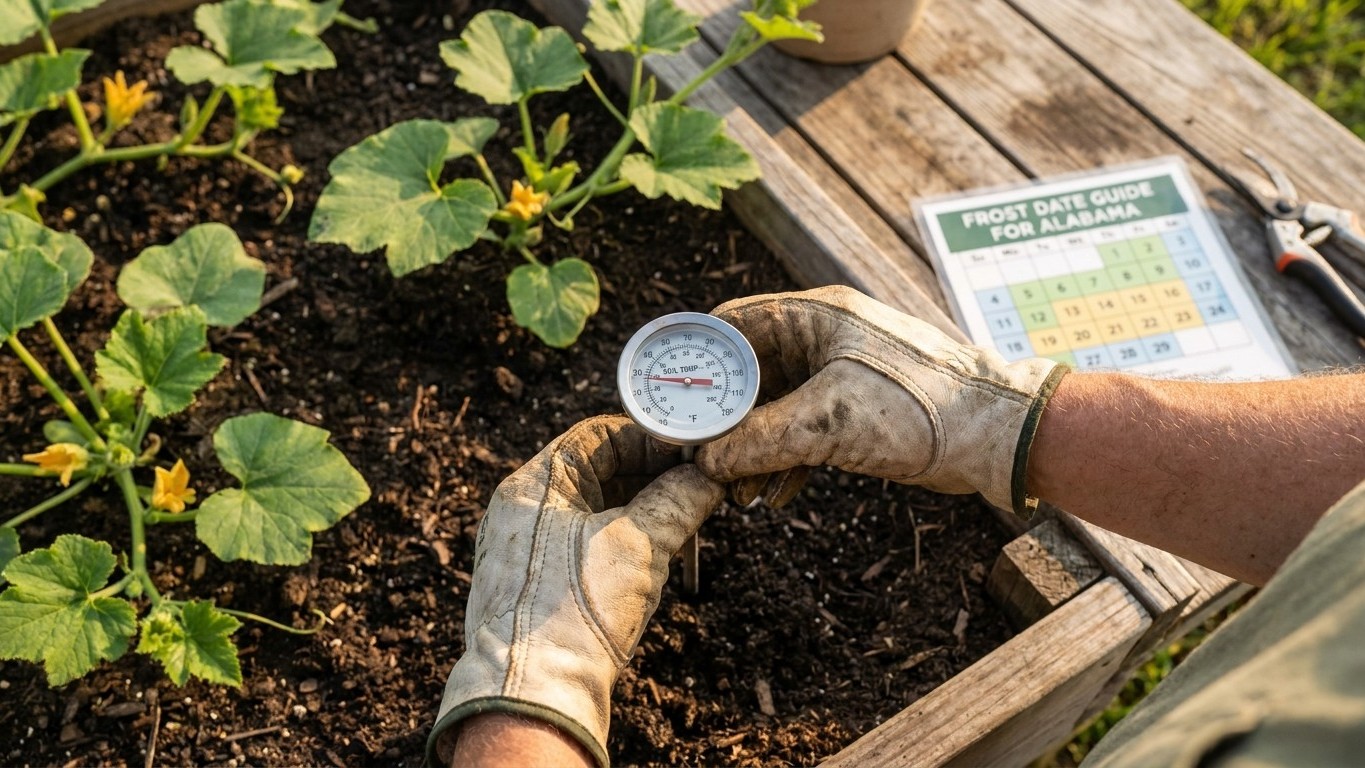
- Check soil temperature directly with a thermometer rather than guessing from the calendar. Pumpkins need a steady 65°F soil reading before seed goes in the ground, and soil warms measurably slower than the air above it, so that 65°F mark arrives well after the last frost date, not on the same week.
- Lay row covers over the prepped bed ahead of an early sowing if an earlier start is worth the effort. Covers can buy roughly two weeks against the calendar, warming the soil faster and shielding tender seedlings from a late cold snap.
- Count backward from the fall frost window, November 26 to December 13, using the 45-to-55-day flower-to-harvest clock. That math sets the outer limit: flowers opening any later than the first few weeks of October are gambling against the freeze.
- Time sowing so the plant has reached flowering well ahead of that October limit, leaving the full 45 to 55 days of fruit development undisturbed by an early frost.
- Set this entire frost-based schedule aside if gardening in central or south Florida. There, the growing calendar inverts, and the sowing guidance built for those effectively frost-free regions applies instead of this one.
What goes wrong here
- A late flower that never colors. When flowering slips past the safe October window, the fruit is still green and hard when the first frost arrives in the November 26 to December 13 band. The remedy is tracking flowering dates on the vine directly, not the sowing date, and pulling the whole schedule earlier the following season if flowers are consistently opening too late.
- A fruit caught by frost. Even a fruit that colored up can suffer skin damage or rot if it sits on the vine once a freeze hits. The fix is harvesting with the stem attached as soon as the fruit is fully colored and the rind resists a fingernail, then moving it somewhere it won’t freeze, since no specific storage temperature is published for pumpkins beyond keeping them out of freezing conditions.
- A vine that dies back before the skin hardens. Shortening fall days and an early cold snap can knock the vine down before the rind has fully cured, leaving a pumpkin that looks ripe but won’t store. Row covers over the vine during a cold snap can buy extra days, and if the vine collapses anyway, harvesting immediately and curing the fruit indoors is better than leaving it exposed.
- Pest pressure on a stressed vine. A vine already racing the calendar has less resilience against squash bugs or cucumber beetles, and either can finish off a plant that was already behind schedule. Readers dealing with either pest should check the dedicated squash bugs in Florida and cucumber beetles in Florida pages rather than treating the vine’s slow decline as frost damage alone.
Common questions
Can pumpkins be sown in Florida in summer?
In north Florida, summer sowing is generally too late to hit the October flowering deadline needed ahead of the November 26 to December 13 frost window. In central and south Florida, summer heat itself is the obstacle, since the growing calendar there runs through the cooler months instead.
Does 65°F soil mean the last frost has passed?
No. The last spring frost window for north Florida runs February 16 to March 7, but soil takes weeks longer to climb to a steady 65°F than the air does to clear frost risk. Testing soil directly with a thermometer is the only reliable way to know it’s ready.
What happens if a pumpkin is still green when frost hits?
A pumpkin that hasn’t finished its 45-to-55-day post-flowering development by the time frost arrives generally won’t ripen further off the vine in any meaningful way. The safest move is watching the forecast closely as the frost window opens and harvesting anything close to mature before a hard freeze rather than after.
Is the frost window the same across all of Florida?
No, and this is the biggest source of confusion. The November 26 to December 13 window comes from an inland north Florida station. Central and south Florida run close to frost-free most years, which inverts the entire sowing calendar rather than just shifting the dates.