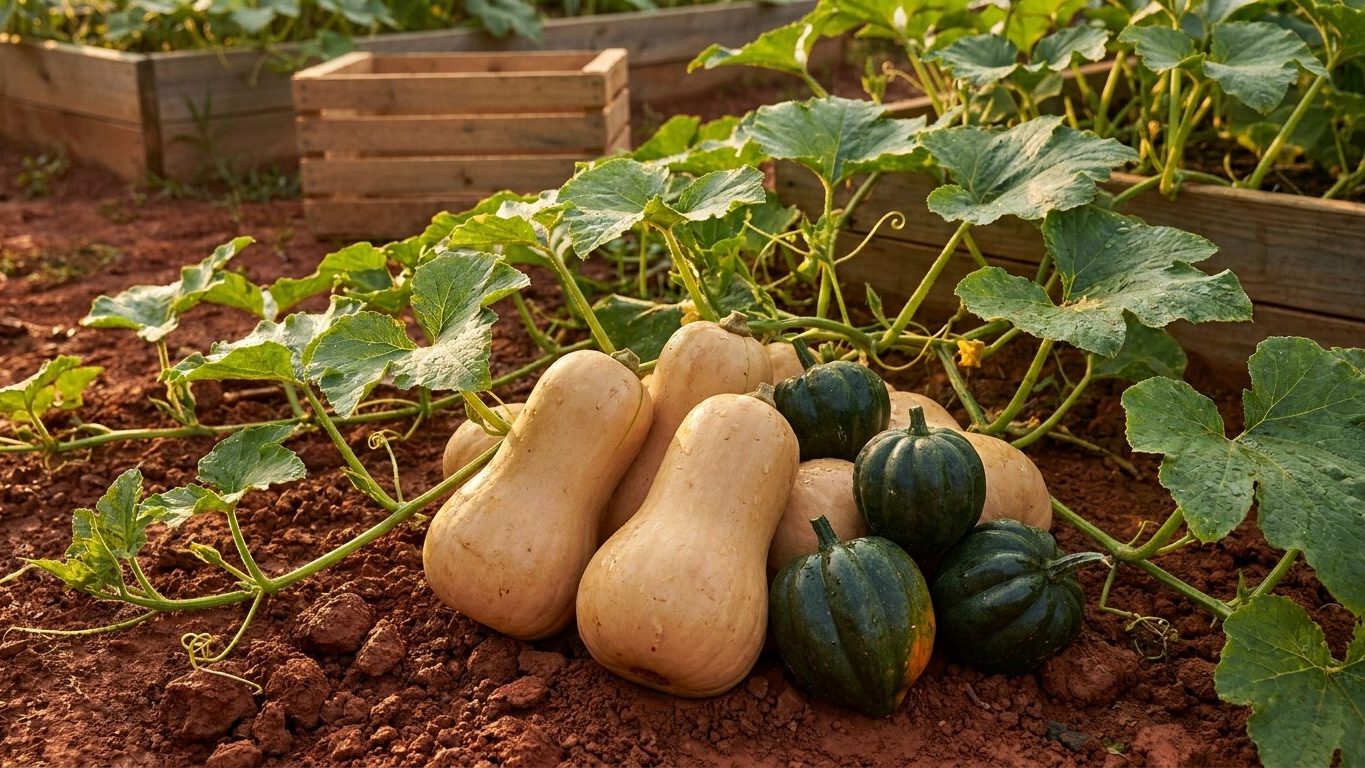

North Florida’s frost dates leave a wide but heat-hammered window, so the fastest-maturing, most heat-tolerant vining types win there. Central and south Florida never freeze, which flips the whole calendar: winter becomes the growing season and summer becomes the enemy. The right variety depends entirely on which Florida a reader is gardening in.
The short answer for Florida
Start with the numbers that actually shape this state’s growing season. At the reference station near Jacksonville, the last spring frost falls between February 16 and March 7, and the first fall frost doesn’t arrive until November 26 to December 13. That’s a frost-free stretch of roughly eight and a half months, which sounds generous. But layered on top of that window is a punishing 73.2 days a year at or above 90F, a heat load that lands squarely in the middle of that long season. So in north Florida, the limiting factor isn’t frost at all. It’s the block of summer heat and humidity sitting in the middle of an otherwise open calendar.
That changes which type of winter squash makes sense. Compact, quicker-maturing types like acorn and delicata do best planted early enough to set fruit before the heat block settles in, or held back for a second run once temperatures ease in fall. Longer-vining, longer-maturing types like butternut and kabocha carry more risk in north Florida, because they need more weeks of mild weather than the shoulder seasons reliably offer before or after that 73-day heat stretch.
In central and south Florida, none of this applies the same way, because those regions are effectively frost-free. The growing calendar inverts entirely: winter, not summer, becomes the main season for vining crops, and the long hot months become the period to avoid rather than the period to work around. A gardener there planting on a north Florida timetable will be fighting the wrong season.
One type deserves a direct mention here: the Seminole pumpkin, a long-vining winter squash naturalized in Florida for generations specifically because it tolerates the state’s combination of heat, humidity, and heavy summer rain better than most winter squash types bred for cooler, drier climates. It’s the closest thing to a statewide answer, though it isn’t a fit for every garden layout given how aggressively it vines.
| Type | Best fit in north Florida | Best fit in central/south Florida | Main risk |
|---|---|---|---|
| Acorn / delicata (compact, quicker-maturing) | Early spring or fall shoulder windows, before or after the heat block | Cool-season winter planting | Running into the 73.2-day heat stretch mid-cycle |
| Butternut / kabocha (longer vine, longer season) | Riskier; needs a longer mild stretch than shoulder seasons reliably give | Winter main season, well ahead of summer heat | Not maturing before heat or frost closes the window |
| Seminole pumpkin (long-vining, heat-adapted) | Tolerates the summer heat block better than most | Can be grown across a longer stretch of the year | Needs room to vine; not suited to small beds |
What will not work here
Planting a long-season butternut in north Florida on a schedule borrowed from a cooler state is the most common failure. Squeeze one of those longer-maturing vines into the shoulder season before the heat block hits and it either runs out of mild weather and stalls in the humidity, or it ripens right into the June-through-August stretch where 73.2 days a year sit at 90F or higher. Heat that intense disrupts pollination and stresses fruit set on a plant that hasn’t finished sizing its squash yet.
The rainfall numbers set up a second, less obvious failure. Summer brings about 21.2 inches of rain across June, July, and August, with July alone averaging 6.77 inches. That sounds like a season with no watering to worry about. But that rain mostly arrives as short, heavy thunderstorms rather than steady soaking rain, and on Florida’s characteristically sandy soils, a heavy rain event can drain through within a day rather than sitting in the root zone. A gardener who assumes the summer total means the plants are covered can watch squash wilt within days of a downpour, simply because the water didn’t stay where the roots could use it.
Humidity compounds that same rainfall pattern in a different way. Frequent thunderstorms mean foliage stays wet longer than in a drier climate, and winter squash vines packed too closely together in a small Florida bed hold that moisture against the leaves even longer. That’s a setup for the fungal and mildew problems that hit winter squash hardest in humid climates, regardless of how much total water the plant received that month.
Finally, gardeners in central and south Florida who Plant Winter Squash in summer, following the calendar habits of most of the country, are working against the region’s inverted season. That stretch is the region’s hardest, hottest, and often wettest period, not its growing window, and a crop started then is starting in the worst month rather than the best one.
What changes across Florida
Florida spans USDA hardiness zones 8b through 11b, under the USDA Plant Hardiness Zone Map, and that’s a spread wide enough that no single planting answer covers the whole state. Zone 8b sits toward the north, where real winter frost shapes a defined start and end to the growing season. Zone 11b sits toward the southern end, where frost essentially never occurs and the growing calendar runs on heat and rainfall patterns instead of freeze dates.
That difference is not cosmetic. In the northern part of the state, a gardener plans around the frost dates already discussed: a spring window opening in mid-February to early March, and a fall window closing in late November to mid-December. Everything in between is workable, minus the heat block sitting in the middle. Toward the southern part of the state, that frost framework doesn’t exist at all, and the entire logic flips: the cool dry season becomes the main window for vining winter squash, and the hot wet season becomes the period to work around or skip entirely.
A gardener in the middle of the state sits somewhere between those two patterns, with a shorter, milder version of north Florida’s heat block and a much smaller risk of frost than the panhandle sees. That middle ground doesn’t get its own clean set of dates here, because it depends on exactly where along that zone gradient a given garden falls.
The USDA Plant Hardiness Zone Map is built for that exact purpose, using average annual extreme minimum temperature as its one variable, and checking a specific address against it takes less time than reading this paragraph. The spread across Florida runs the full range from 8b to 11b, and that spread alone is reason enough to treat a statewide recommendation as a starting point, not a final answer.
Where to check this for your own county
The University of Florida’s IFAS Extension runs the state’s official Extension network, and its public portal, Solutions for Your Life, is where a county-specific answer to this question actually lives. Statewide climate normals include freeze probabilities, heat-day counts, and rainfall averages drawn from a single reference station. That’s useful for understanding the pattern across Florida, but it is not a substitute for what a county Extension office has already worked out for its own soil, microclimate, and local pest pressure.
Once on that site, look for two things specifically. First, the local vegetable planting calendar for the county in question, which will translate the general spring and fall windows described above into dates adjusted for that county’s own frost history and heat pattern. Second, look for any variety trial results or recommended-variety lists tied to that county’s demonstration gardens or master gardener program. Extension offices frequently track which winter squash types have actually performed well in local trial plots, including how they’ve handled the region’s specific disease and pest pressure, information no statewide climate page can offer.
A county recommendation will always beat a state one, because it accounts for details that get averaged away at the state level: a coastal county’s salt air, an inland county’s slightly different frost pattern, a sandy-ridge county’s faster-draining soil. The state-level part of that work draws directly from the reference station’s climate normals. Confirming it against a county Extension office is the natural next step, not a duplicate of what’s already been covered here.
Checking this against your own garden
Every date and average in this piece describes what a typical year at one reference station looks like. A specific yard rarely tracks that average exactly, and three simple observations will tell a gardener more about their own plot than any regional figure can.
Soil warmth by feel is the first. Winter squash seed germinates poorly in cold, wet soil regardless of what the calendar says, so pressing a hand into the planting bed a few inches down and feeling for genuine warmth, not just air temperature, gives a more honest read on whether the soil is actually ready than the frost dates alone.
The first flush of male flowers is the second signal worth watching. Squash plants typically produce male flowers before female ones, and a strong early flush usually means the plant has settled into its site and is building toward fruit set. A long delay, or male flowers with no females following, often points to heat or moisture stress specific to that spot, even when regional conditions look fine on paper.
The appearance and vigor of the first true leaves is the third. Fast, sturdy true leaves following the seedling stage suggest the microclimate is running warmer and more favorable than the regional average; slow, pale, or stunted true leaves suggest the opposite, whether from a shadier spot, heavier soil, or a cooler pocket in the yard. None of these require any equipment beyond a gardener’s own attention, and together they outrank any single date.