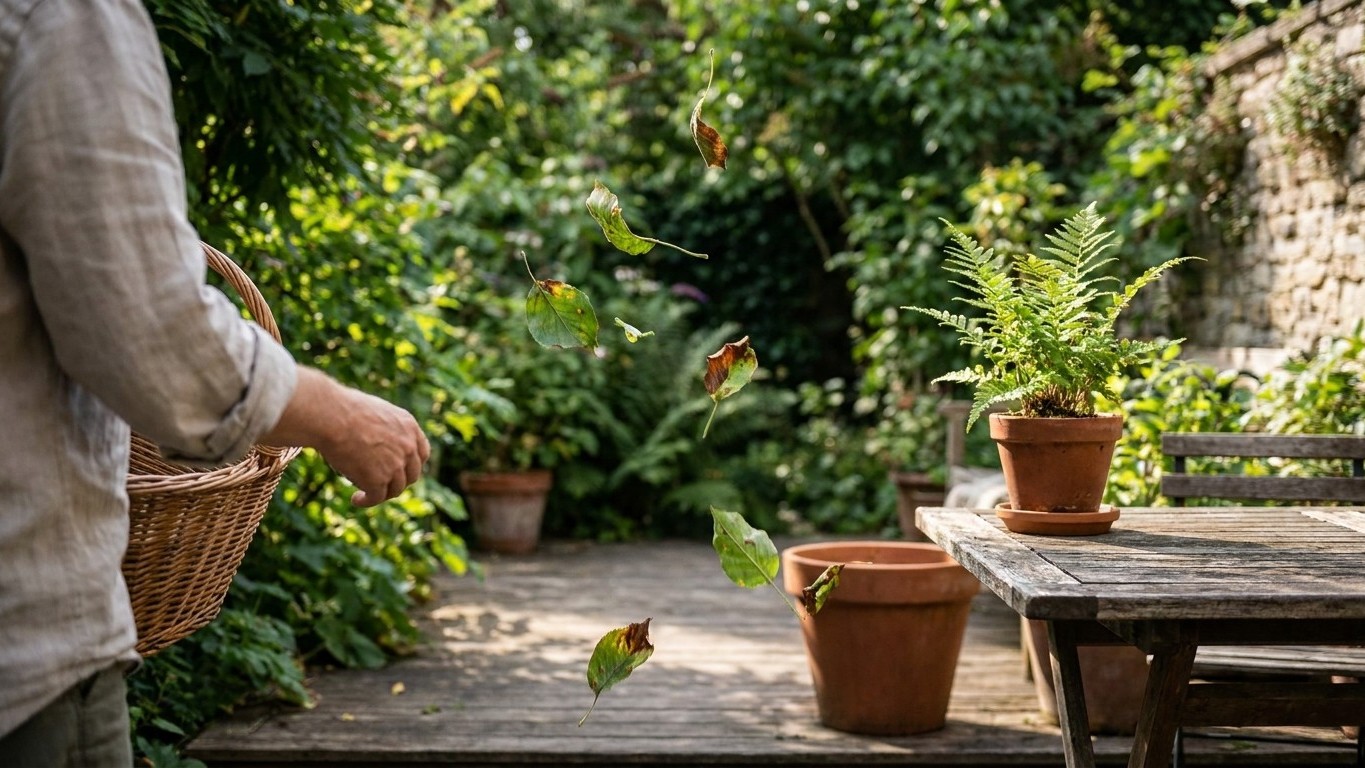

Leaves dropping from an apple tree in July or August is not the same thing as fall color, and it usually means something is stressing the tree rather than the season changing. Most cases trace back to a handful of causes: drought stress, a fungal leaf disease such as apple scab, or a heavy crop pulling resources away from the canopy. The single thing to check first is the pattern: are the oldest, lowest leaves going first, or is the whole tree turning at once? That distinction points you toward the real cause faster than anything else.
What you are seeing

Early leaf drop shows up as leaves that turn yellow, brown, or blotchy while the tree is still actively growing, then let go weeks or months before you’d expect a leaf to fall. Sometimes it’s a scattering at the base of the canopy. Sometimes whole branches strip bare while the top of the tree stays green. The bark underneath is usually fine, the buds for next year are still forming, and the tree is not dying. That’s the part worth holding onto: a moderate amount of early leaf loss is a stress response, not a death sentence, and most apple trees recover the following spring once the underlying cause is dealt with.
Look closely at where the drop starts. Leaves shed from the lower interior of the canopy first, often with yellow color and no spotting, tend to point toward a resource problem: the tree is triaging, sending less water and sugar to the leaves that do the least photosynthesis. Leaves that fall with dark spots, blotches, or a papery gray texture on the surface first usually mean a fungal disease has already done its damage weeks earlier and the leaf is just now giving up.
Also note the timing relative to fruit. If the drop follows a spring with an unusually heavy bloom and a bigger-than-normal fruit set, that’s a strong clue the tree is shedding leaves to support the crop it’s carrying, not fighting off disease or drought. This is common enough on young trees carrying their first big harvest that it deserves treating as normal rather than alarming.
What this is not is the tree preparing for winter early. Genuine fall senescence is a whole-canopy, whole-orchard event tied to shortening daylight, and it comes with an even, uniform color change across every tree of a given variety at once. If your neighbor’s apple tree three houses down still looks green and yours is half bare, you are looking at a localized problem on your tree, not the calendar.
What it is not
Before chasing a cause, rule out the things that only look like early leaf drop. A tree planted within the past year or two that loses leaves in a hot stretch is often showing simple transplant stress: the root system hasn’t caught up to the top growth yet, and it sheds leaves to reduce demand. This resolves on its own as roots establish and generally does not repeat once the tree is past its second full season.
Insect feeding can mimic disease at a glance. Leafminers, aphids, and Japanese beetles all leave leaves looking chewed, curled, or skeletonized, and a heavily fed-on leaf will drop early just like a diseased one. The giveaway is physical damage you can see and touch: holes, tunnels, sticky residue, or rolled edges, rather than the flat discoloration or spotting typical of a fungal leaf disease.
Sunscald and mechanical damage look like localized dieback rather than a general thinning. A branch that got nicked by a mower, rubbed by a stake, or scorched on the side facing full afternoon sun will drop leaves only on that section, while the rest of the tree carries on unaffected. That’s a wound to treat, not a whole-tree condition.
It also isn’t necessarily a sign the tree needs fertilizer. A hungry-looking tree with pale, small leaves across the whole canopy points to a nutrient problem worth testing for, but scattered early drop with otherwise normal leaf size and color is much more often about water or disease than about feeding. Fertilizing a stressed tree in mid-summer, when growth is already slowing down for the year, tends to do more harm than good regardless of the actual cause.
What actually causes it
Several distinct problems produce the same visible result, so the fastest way to sort them is to compare what else is going on besides the falling leaves.
| Cause | What you’ll see | What to check |
|---|---|---|
| Drought stress | Lower, older leaves yellow and drop first; leaf edges may curl | Soil moisture 6-8 inches down; recent rainfall |
| Apple scab | Olive-brown velvety spots on leaves before they yellow and fall | Undersides of leaves in wet, humid spells |
| Marssonina leaf blotch | Dark green to black blotches, often on older leaves late in the season | Pattern moving from lower canopy upward over weeks |
| Cedar-apple rust | Bright orange-yellow spots on the upper leaf surface | Nearby juniper or cedar trees hosting the other stage of the fungus |
| Heavy crop load | Whole-tree thinning after an unusually large fruit set | Fruit count versus a typical year for that tree’s age |
| Herbicide drift | Cupped, twisted, or strap-shaped new leaves before drop | Recent spraying nearby, even several yards away |
Drought stress is the most common cause by far, especially on dwarfing rootstocks. A tree on M.9 (8-12 feet at maturity) or M.26 (12-15 feet) carries a shallow, compact root system that dries out faster than a tree on MM.111 (30-35 feet) or seedling rootstock (35-40 feet), the mature sizes given by USU Extension’s guide to apple rootstocks for the home garden. The dwarfing stocks are excellent for a small yard but they need more consistent watering to avoid exactly this symptom.
Fungal leaf diseases including apple scab, Marssonina leaf blotch, and cedar-apple rust cause premature drop as a secondary effect: the fungus damages leaf tissue over weeks, and the leaf finally lets go once it can no longer photosynthesize enough to justify staying attached. These diseases run their course over the growing season, so by the time you see the drop, the infection happened well before, often during a wet spring. If your trees have gone a full season without setting fruit at all, that’s a separate thread worth pulling on its own, covered in Blossom But No Apples: Working Through the Causes.
Heavy crop load deserves a specific mention because it’s easy to miss. A tree that sets an unusually large crop, often the result of strong cross-pollination between two varieties blooming at the same time, can shed leaves in late summer simply because it doesn’t have the resources to support both a full canopy and a full crop. Varieties with sterile pollen, such as Jonagold, Mutsu, Stayman, and Winesap (per Clemson HGIC 1350, UGA Circular 740, and USU Extension), still bear a heavy crop themselves once paired with a compatible pollinator, and the first big harvest after pollination finally clicks into place can trigger this kind of stress-driven drop on an otherwise healthy tree. If the fruit on that tree is also showing sunken brown patches under the skin, that’s a related, distinct problem worth reading up on separately: see Bitter Pit: Sunken Brown Specks Under the Skin.
What to do this season
What you can still fix now
If soil moisture is the culprit, water deeply and infrequently rather than a light daily sprinkle, aiming to soak the root zone rather than just the surface. A layer of mulch pulled a few inches back from the trunk holds that moisture longer through a dry stretch. This is the one cause on this list you can meaningfully reverse within the same season, and trees often push out a second flush of healthier leaves within a few weeks of consistent watering.
If the drop is from disease, rake up and remove fallen leaves rather than leaving them to compost under the tree. Apple scab and Marssonina blotch both overwinter in leaf litter and reinfect the tree from the ground up next spring, so getting the debris out now cuts down next year’s infection pressure even though it does nothing for the leaves already lost this year.
If a heavy crop is the cause, thinning some of the fruit now, while there’s still time before harvest, reduces the load on the tree and can slow further leaf loss. It won’t bring back leaves already dropped, but it protects the ones still hanging on.
What you generally cannot fix this season is anything tied to the plant’s overall growing environment, whether that’s a root system compromised by an incompatible rootstock, a chronic nutrient deficiency, or damage from a graft union planted too deep. Those call for changes made at dormancy or at planting time, not mid-summer intervention, and pushing fertilizer or heavy pruning on a stressed tree right now usually adds stress rather than relieving it.
Stopping it happening again
Set up a watering routine before the tree needs it, not after leaves start dropping. Trees on dwarfing rootstocks like M.9 or M.26 benefit from a mulch ring and a regular deep soak through the growing season precisely because their root systems, per USU Extension’s size figures for those stocks, are smaller and shallower than a standard tree’s. Building that into a spring routine, rather than reacting to wilting leaves in mid-summer, is the single biggest change most home orchards can make.
For disease, timing matters more than the product. Fungicide programs for apple scab and rust work at specific bud stages, from green tip through petal fall, when new tissue is most vulnerable and before symptoms are visible. Waiting until leaves are already spotted and dropping is too late for that season’s spray program to help. Your state extension service can tell you which materials are labeled for home orchard use where you live and the exact stage to apply them, since registration and rates differ by state.
If overcropping is a repeat issue, thin fruit early the next spring, right after petal fall, rather than letting the tree carry every apple it sets. This is especially worth watching in the first two or three years after a tree starts bearing, and on any tree where two varieties from the same bloom group, such as the group B varieties Fuji, Gala, and Red Delicious listed by Clemson HGIC, are planted close enough to cross-pollinate heavily. A young orchard that hasn’t dealt with any of this yet is worth reading up on from the start at Growing Apples, since rootstock choice and spacing decided at planting shape how much stress the tree can absorb later.
Common questions
Will the tree grow the leaves back this year?
Usually not until next spring. Apple trees don’t push a full second flush of foliage once the growing season is winding down, so leaves lost in late summer typically stay gone until new growth resumes at the next bud break.
Should I fertilize a tree that’s dropping leaves?
Not in mid-summer. Feeding a stressed tree late in the season can push soft new growth right before the tree needs to be hardening off, and it does nothing to address drought, disease, or crop load, which are the more likely causes.
Is it normal for just one branch to lose leaves while the rest of the tree stays green?
That pattern usually points to something local to that branch: a wound, a borer, a graft that failed, or shading that dried it out faster than the rest of the canopy. Whole-tree causes like drought or disease almost always show up across the canopy, not on a single limb.
Could this be from a spray I used elsewhere in the yard?
Yes, herbicide drift can travel further than expected, especially on a windy day, and it often shows up as cupped or twisted new leaves before they yellow and drop. If you sprayed anything nearby in the weeks before the drop started, that timing is worth checking against when the symptoms appeared.