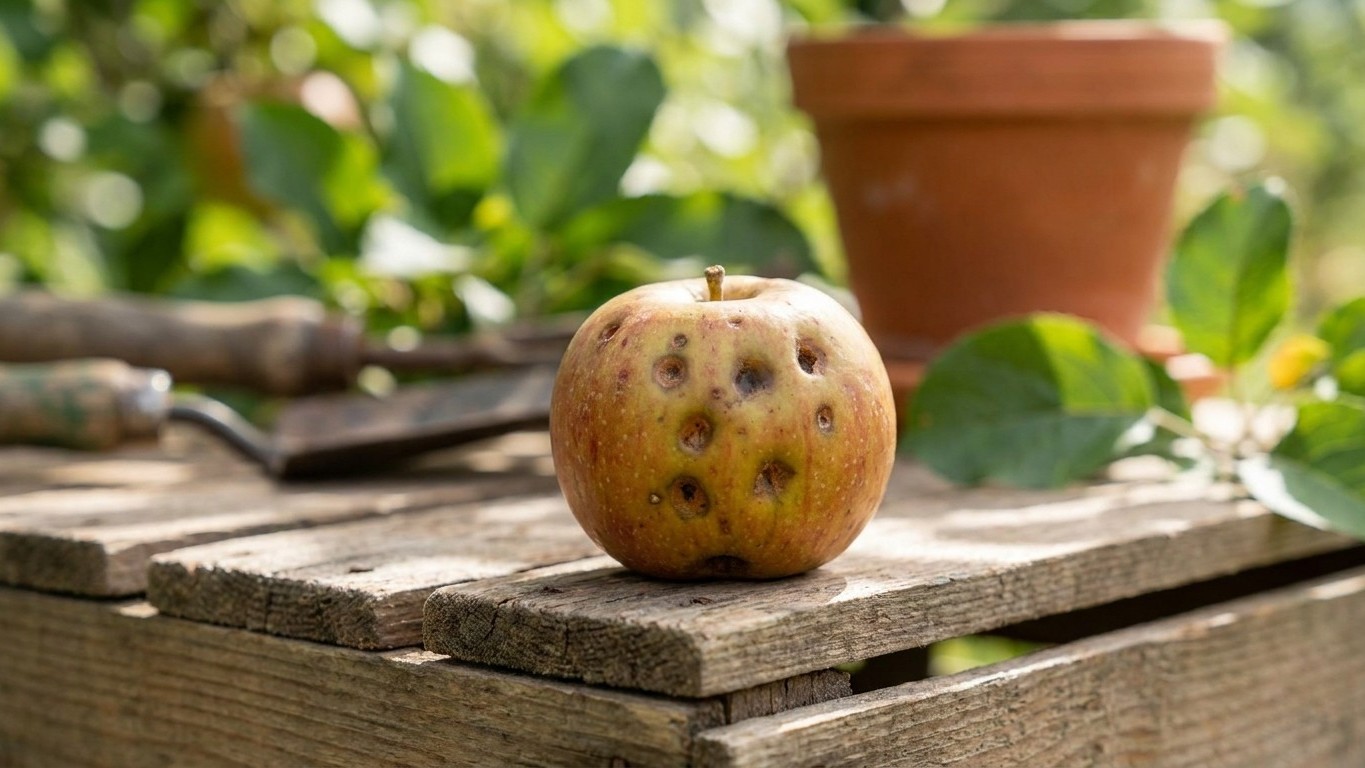

Bitter pit shows up as small, sunken brown to purple-brown dimples in the skin of a mature apple, with corresponding dry, spongy brown patches in the flesh just beneath them. It is caused by a shortage of calcium reaching the fruit itself, not necessarily a shortage of calcium in the soil. Cut a few affected apples in half before you do anything else: if the flesh below each dimple is dry and brown rather than wet or rotten, you are looking at bitter pit and not a disease.
What you are seeing

Bitter pit shows up as small sunken dimples in the skin, usually dime sized or smaller, running from tan to dark brown or purple-brown. They cluster more heavily around the calyx end, the end opposite the stem, though scattered spots can appear anywhere on the fruit. Cut one open and you will find a matching patch of dry, spongy, brown tissue just under the skin, sometimes reaching a quarter to half an inch into the flesh. That tissue stays dry and corky. It has no smell, and it does not turn wet or slimy the way a rot does.
Press gently on a spot before you cut into it. It should feel firm and slightly sunken, not soft or mushy, and that firmness is one of the fastest ways to separate bitter pit from an early rot without cutting every apple in the bin.
The spots can show up before harvest, but more often they appear two to eight weeks into storage, after the fruit looked perfectly sound going into the bin. This is normal for the disorder. It does not mean the fruit is rotting from the inside out, and it does not spread from an affected apple to a sound one sitting next to it in storage. Bitter pit is not contagious.
It tends to hit the biggest fruit on the tree hardest, and young, vigorously growing trees produce more of it than older, settled ones. A tree that has never shown bitter pit before can start showing it the year it happens to carry an unusually light crop of oversized apples, which is worth remembering before you assume something has gone wrong with the tree itself.
What it is not
Bitter pit is easy to confuse with a handful of other apple problems that also leave marks on the skin or flesh, and telling them apart before you act matters because the fixes are different.
Cork spot looks almost identical under the skin, the same dry, corky brown flesh, but it tends to show up as a trait of particular rootstock and variety combinations rather than a seasonal calcium swing, and it is far less common in home plantings than true bitter pit.
Stink bug or tarnished plant bug feeding leaves a similar-looking dimple, but cut into it and you generally find a narrow discolored channel running from a tiny puncture mark on the skin, not the broad, shallow patch bitter pit leaves. Find a pinprick entry point and you are looking at insect feeding, not calcium.
Bitter rot and black rot spread. Their lesions start small but expand week over week, soften, and eventually show spore masses or a moldy surface, none of which bitter pit does. Sooty blotch and flyspeck sit entirely on the surface as a smudgy or speckled film and wipe or scrub off, while bitter pit sits under the skin and stays put.
Fruit that splits open after a heavy rain following a dry spell is a different disorder again, driven by a sudden surge of water into the fruit rather than a calcium shortage. That pattern is covered in Apples That Split After Rain. Hail and frost injury cause corking too, but they leave a scar or russet ring tied to one specific storm or cold night, not spots scattered evenly across otherwise smooth skin.
What actually causes it
The root cause is a shortage of calcium reaching the fruit itself, not a shortage of calcium in the soil. Soil calcium is almost always adequate. The problem is that a growing apple is a weak sink for calcium compared with leaves and new shoots, which transpire hard all season and pull the tree’s calcium supply toward themselves first. Fruit gets whatever is left over, and that share shrinks further in the final weeks before harvest, exactly when the apple is sizing fastest and its own calcium demand peaks.
The usual triggers
Several things push that shortfall over the edge into visible pitting, and it helps to work out which one applies to your tree before changing anything:
- Excess nitrogen: heavy fertilizing produces a flush of leafy shoot growth that out-competes fruit for the season’s calcium.
- Irregular watering: a dry stretch followed by heavy irrigation or rain triggers a growth spurt at the wrong moment. The same swing is often behind a tree dropping leaves early in the season.
- Oversized fruit from a light crop: the same calcium pool covers fewer, bigger apples, so each one gets a thinner share.
- Heavy pruning: hard dormant cuts stimulate vigorous regrowth the following spring that competes with fruit the same way excess nitrogen does.
- Rootstock vigor: a tree still busy building wood puts less of its calcium and carbohydrate budget toward fruit.
That last point is worth naming directly. A tree on MM.111 (30 to 35 feet at mature height, per USU Extension) or seedling rootstock (35 to 40 feet, also USU) spends several years building wood before settling into steady cropping, and that vegetative pull competes with fruit for calcium. A tree on a dwarfing rootstock such as M.9 (8 to 12 feet at maturity, USU) or M.26 (12 to 15 feet, USU) generally settles into fruiting sooner and shows less bitter pit once established, simply because less of its energy goes into new wood each summer.
What to do this season
There is no fix for calcium that is already missing from apples already hanging on the tree. Once pitting has started, a foliar calcium spray or a soil amendment will not reverse it, because the fruit’s calcium allotment for the season was set weeks earlier. What you can do now is manage the fruit you have and set up next year’s tree better.
Sort and use affected fruit first
Bitter pit apples are still fine to eat. Cut around the pitted flesh and use or process them soon rather than saving them for later. Pitted fruit does not store well: the damaged tissue can turn into an entry point for storage rots over the following weeks, so keep it separate from clean fruit going into long storage and work through it first.
Skip nitrogen fertilizer for the rest of the season, even if the tree looks like it could use a boost. A late application pushes leafy growth right when the tree should be slowing down, pulling calcium away from fruit still hanging.
Keep watering on a steady schedule rather than letting the tree swing between dry and soaked. That will not undo the pitting already present, but it limits how much worse the remaining fruit gets before harvest.
What has to wait
A thinning plan, a pruning plan, and any calcium spray program all need to start next spring, not now. This year’s crop cannot be fixed retroactively, so the useful work now is record keeping: note how heavy the crop was, how the watering went, and whether you fertilized late, so next year’s decisions have something to go on.
Stopping it happening again
The single most useful change is thinning at the right stage and to the right degree. Thin fruit while it is still small, in the weeks just after bloom, down to one apple per cluster by hand. Thinning too hard produces the opposite of what you want: fewer, oversized apples concentrate the season’s calcium supply over less total flesh, and those are the apples most likely to pit. Moderate, early thinning spreads that same calcium supply across more fruit instead.
Hold nitrogen back. Apply it, if at all, in early spring around green tip rather than through summer, and keep the amount modest. A tree pushing new leafy growth all summer long is a tree pulling calcium away from its fruit all summer long.
Water evenly from bloom through harvest. Deep, regular watering that avoids long dry spells followed by a heavy soaking keeps calcium moving into fruit at a steady rate instead of in swings tied to shoot growth, the same discipline that also helps prevent fruit from splitting after a heavy summer rain.
If you are planting a new tree, rootstock choice sets the stage for years. A dwarfing rootstock such as M.9, 8 to 12 feet at mature height per USU Extension, or M.26, 12 to 15 feet per USU, settles into fruiting sooner than a vigorous rootstock like M.7 (18 to 20 feet, USU) or M.106 (25 to 30 feet, USU), and puts less energy into new wood each season once established. That is one more thing to weigh, alongside the general spacing and staking guidance in Growing Apples, before you order a tree rather than after.
Common questions
Can I still eat apples with bitter pit?
Yes. Cut away the dry, corky patches and the rest of the apple is fine to eat or cook with. Check first that no secondary rot has moved into the cut, since pitted tissue is more prone to picking up storage rot than sound flesh.
Will a calcium spray fix apples that already have bitter pit?
No. Once the spots have formed, the fruit’s calcium shortfall for the season has already played out and cannot be reversed by spraying. Foliar calcium applied through the following growing season can reduce next year’s incidence, but ask your local extension service for the product and timing recommended in your state before spraying anything.
Do I need to add lime or calcium to my soil?
Usually not. Soil calcium is almost always sufficient even in orchards with heavy bitter pit, because the disorder is about calcium transport into the fruit, not calcium availability in the ground. A soil test through your local extension office will tell you whether your soil is actually short, but that is rarely the driver here.
Why does only one variety on my tree show it while the others look fine?
Because bitter pit tracks fruit size, crop load and vigor on a given limb or variety rather than the whole tree at once. A variety that naturally sets bigger fruit, or one that got thinned less heavily that year, will show more pitting than its neighbor on the same tree even though both drew from the same soil and the same watering.