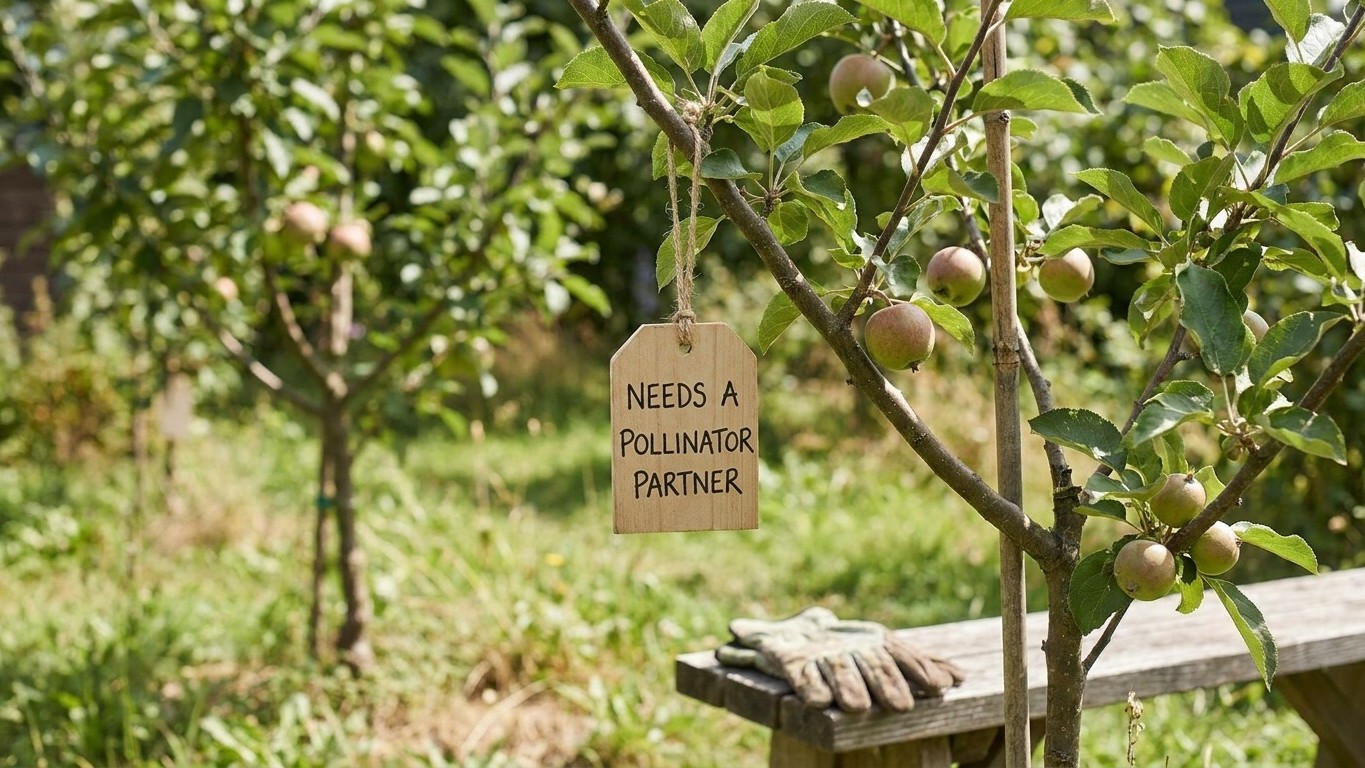

Plant one apple tree by itself and you’ll likely get plenty of blossom and a disappointing basket of fruit. Nearly all apple varieties set a much heavier crop when a second, compatible variety blooms nearby at the same time, according to Clemson Cooperative Extension’s HGIC 1350 fact sheet on apples. Before you plant anything, check that the variety you want can actually pollinate, or be pollinated by, whatever else is going in the ground nearby, because a few familiar names cannot do their half of the job.
Why one tree is rarely enough

One tree, standing alone in the yard, will bloom beautifully and hand you almost nothing come fall — that’s how apples work, most varieties need a second, different tree flowering at the same time to set real fruit. So before you dig a hole, figure out what’s already blooming nearby, in your yard or the neighbor’s, and pick a variety that overlaps with it and can actually trade pollen with it, since successful apple Planting depends on getting this pairing right from the start. This is why apple Buying decisions should always start with pollination compatibility in mind — and for gardeners short on space, fitting a second compatible variety in doesn’t always mean a full-size tree, since Espalier: Growing an Apple Tree Flat Against a Wall lets you tuck a pollinator right along a fence or wall. Once both trees are in the ground, keeping their bloom timing aligned year after year often comes down to apple Winter pruning, since how you cut back each tree can shift when it flowers, while Summer Pruning can help fine-tune growth and fruiting the rest of the year, and Feeding an Apple Tree properly gives both trees the resources they need to flower reliably each season. All that careful timing can still be undone in a single cold night, though, so Protecting Apple Blossom From a Late Frost matters just as much as getting the pairing right in the first place, and staying alert to Apple Diseases is just as important, since a sick tree won’t flower or set fruit reliably even with perfect pollination timing. Get that pairing right, and the difference isn’t a few more apples; it’s the difference between a basket and a bare tree — though once that fruit finally sets, Keeping Birds and Deer Off an Apple Tree becomes the next concern, right up until it’s time to focus on Knowing When an Apple Is Ready, Without a Calendar, so all that careful pollination work actually pays off at the challenge, followed soon after by Storing Apples properly so all that harvest doesn’t go to wasteurdle, and knowing Apple Pests: The Mark Each One Leaves can help you catch trouble before it costs you the hurdle standing between you and that harvest.
What compatible actually means
First, the bloom windows have to overlap, and the tree’s Apple Rootstocks can influence how quickly it comes into bearing and when it flowers each year. Clemson’s HGIC 1350 groups common varieties into three bloom groups based on the relative order in which they flower: group A (Anna, Dorsett Golden), group B (Fuji, Gala, Ginger Gold, Granny Smith, Jerseymac, Mollie’s Delicious, Mutsu, Red Delicious, Yates), and group C (Arkansas Black, Golden Delicious, Jonagold, Ozark Gold, Priscilla, Rome Beauty, Stayman). Two varieties from the same group, or from adjacent groups, generally overlap enough to cross-pollinate, which is the whole basis of successful apple Pollination. When space is tight or a compatible apple variety just isn’t available nearby, Using a Crabapple as a Pollinator is another reliable option to bridge the gap. The actual calendar dates shift with the climate and the year, but the order between groups holds — and getting good apple Soil conditions in place beforehand helps whichever pairing you choose actually thrive, though even a well-matched pair still needs consistent apple Watering and a sound apple Spraying routine to protect the blossoms and developing fruit along the way.
- Group A: Anna, Dorsett Golden
- Group B: Fuji, Gala, Ginger Gold, Granny Smith, Jerseymac, Mollie’s Delicious, Mutsu, Red Delicious, Yates
- Group C: Arkansas Black, Golden Delicious, Jonagold, Ozark Gold, Priscilla, Rome Beauty, Stayman
Second, the pollen itself has to be fertile, and a variety can’t pollinate its own parent or its own seedling offspring even when the two bloom together. If your yard doesn’t have room for a second full-sized tree, growing a compatible pollinator in apple Containers is a practical workaround that still lets the two varieties bloom close enough together to cross-pollinate. Getting the pairing right also means keeping both trees healthy while they establish, and consistent apple Mulching goes a long way toward retaining the moisture and steady soil temperature young trees need to bloom reliably. Matters later on, since apple Thinning is easier and more effective when the tree has actually set a healthy crop to begin with. Overlap without fertile pollen sets nothing.
The sterile-pollen trap
Jonagold, Mutsu, Stayman, and Winesap all produce sterile pollen, according to Clemson HGIC 1350, the University of Georgia’s Circular 740, and USU Extension. Each of these varieties can be pollinated by another tree and will set a full crop, but none of them can pollinate anything, which is also worth keeping in mind if you’re considering apple Grafting onto an existing tree for cross-pollination purposes else. Plant a Jonagold and a Stayman side by side, expecting them to service each other, and you’ll get plenty of blossom and no apples on either tree. If you want one of these four varieties, you need a third variety in the yard, one with fertile pollen and an overlapping bloom, to pollinate all of them.
The rootstock decides the size, not the variety

A Gala grafted onto M.9 rootstock and a Gala grafted onto seedling rootstock are the same apple, but they are not the same tree. According to Utah State University Extension’s guide to apple production and variety recommendations for the home garden, the rootstock underneath the graft, not the variety on top, is what fixes how tall and wide the mature tree ends up.
Mature height by rootstock
| Rootstock | Mature height |
|---|---|
| M.9 | 8 to 12 feet |
| M.26 | 12 to 15 feet |
| G.11 | 12 to 15 feet |
| G.30 | 18 to 20 feet |
| M.7 | 18 to 20 feet |
| M.106 | 25 to 30 feet |
| MM.111 | 30 to 35 feet |
| Seedling | 35 to 40 feet |
All of these figures come from USU Extension. The same Honeycrisp scion can end up an 8-to-12-foot dwarf on M.9 or a 35-to-40-foot giant on seedling rootstock, with every size in between available depending on which rootstock the nursery grafted onto.
What the smaller sizes cost you
The dwarfing rootstocks (M.9, M.26, G.11) bring the fruit into reach and bring the tree into bearing sooner, but they trade away some durability for it. A tree on M.9 has a shallow, brittle root system and needs a permanent stake or trellis for the life of the tree, not just while it’s young. Dwarf rootstocks also tolerate drought and a missed watering worse than the larger ones, and their productive lifespan tends to run shorter than a tree on MM.111 or seedling roots. A full-size tree on seedling rootstock needs no staking once established, shrugs off neglect better, and can keep bearing for decades, but it takes a ladder to prune and pick, and it takes longer to bear its first crop.
Choosing a variety that suits your winter

A variety has to clear two separate hurdles before it crops reliably, and they are not the same hurdle. One is about surviving winter. The other is about getting enough winter to wake up evenly in spring. A variety can pass one of these and still fail the other.
Hardiness zones: will it survive
The USDA Plant Hardiness Zone Map sorts the country by average minimum winter temperature, and nursery catalogs list a hardiness range for each variety and rootstock combination. A tree planted outside its hardiness range risks real winter damage to the wood itself, from split bark to dead branches to a tree that dies outright in a hard year. Check your own zone against the range printed on the variety and rootstock before you order anything.
Chill hours: will it flower evenly
Even a tree that survives winter fine can flower poorly if it never gets enough cold. Apples need a certain number of hours of winter chill to break dormancy evenly come spring, a requirement nurseries publish for each variety as its chill-hour figure. Low-chill varieties such as Anna and Dorsett Golden need only around 250 to 300 hours, which is why those two are the varieties suited to the Deep South and similar mild-winter climates. Plant a variety bred for a hard northern winter where that much cold never arrives, and it breaks dormancy unevenly, with buds opening weeks apart from each other, which drags out bloom and weakens the crop.
Match both filters before committing to a variety, and check the individual variety’s own page for its specific chill-hour figure and disease-resistance rating rather than relying on a general rule of thumb.
The year on an apple tree
An apple tree moves through the same sequence of stages every year, in the same order, no matter where it’s planted. The calendar date each stage lands on depends on the local climate, but the stage itself, and what it calls for, does not change. Read spray timings and frost risk off the stage the tree is in, not off the date on the calendar. Check your own territory page for the local dates that correspond to each stage below.
Dormancy

The tree is bare and the buds are tight and small. This is the window for structural pruning and for dormant oil, applied before any green tissue is exposed and at risk of burning.
Green tip

A sliver of green leaf tissue pushes out through the bud scales. Growth is starting again, and this stage is often the first spray timing on a disease-prevention schedule, while blossoms aren’t yet present to put pollinators at risk.
Pink bud

The flower buds swell and show color before they open. This is the last easy window to thin overcrowded fruit spurs or finish a pre-bloom spray, since once the blossoms open, spraying becomes riskier for pollinators.
Bloom

The flowers open fully. This is the stage that matters most for pollination, and it’s also the most frost-sensitive point in the whole year, since an open blossom is killed by a much lighter frost than a dormant bud shrugs off. No insecticide should go on the tree while it’s in bloom.
Petal fall

Spent petals drop and small fruitlets begin to swell at the base of each flower. Disease sprays often resume here, since the newly forming fruit and fresh leaves are now vulnerable to the season’s first fungal infections.
Fruit set

The tree is carrying far more small fruitlets than it will actually keep. A natural thinning drop follows within a few weeks, and many growers thin by hand as well, down to one apple per cluster, to size up whatever fruit remains.
Harvest
The fruit reaches full size and the mature color and firmness expected of the variety. The exact harvest window and its length vary by variety and by year, which is one more reason to track the stage rather than a fixed date on paper.
When there is no fruit

Three different problems can all show up as “the tree didn’t fruit,” and each calls for a different fix. Look at what actually happened before assuming the worst.
Match the symptom to the cause
| What you see | What it usually means |
|---|---|
| Heavy bloom, almost no apples | No compatible pollinator bloomed nearby, or the variety has sterile pollen |
| Small fruit drops heavily in June | Natural thinning drop, or frost damage during bloom |
| A big crop one year, almost nothing the next | Biennial bearing, a pattern some varieties fall into on their own |
A tree loaded with blossom that sets almost no fruit points back to pollination. Either no compatible variety was blooming close enough at the same time, or the variety planted happens to be one of the sterile-pollen varieties paired with another tree that can’t service it either. Work back through the bloom groups and the sterile-pollen list above before assuming the tree itself is unhealthy.
Fruit that sizes up to marble-size and then drops heavily in early summer is usually the tree’s own natural thinning at work, shedding fruit it can’t support to full size. A cold snap during the bloom stage can cause a heavier drop than usual by damaging flowers that still opened and looked fine at the time, so a late frost during bloom is worth ruling out too.
A tree that bears heavily one year and then barely at all the next has settled into biennial bearing, a pattern where a huge crop uses up the fruit buds that would otherwise have flowered the following spring. It isn’t a sign of disease or a pollination failure, and it usually smooths out over a few seasons with deliberate thinning in the heavy year.
Common questions
Can I grow just one apple tree if I don’t have room for two?
You can, and you’ll get some fruit, but expect a lighter crop than a paired planting would give. Check whether a neighbor within pollinating distance already has a compatible, overlapping-bloom variety before you write off a second tree entirely.
Do crabapples count as pollinators for apple trees?
Yes, as long as the crabapple blooms at the same time as the apple tree and its pollen is fertile. Many ornamental crabapples bloom early and heavily, which makes them a useful pollen source for orchard rows that are short on space.
How far apart do two apple trees need to be for pollination?
Close enough that pollinating insects travel between them regularly, which in practice usually means the same yard or an adjoining one. Beyond that, distance matters less than whether their bloom windows actually overlap.
Will a wild or seedling apple tree pollinate my grafted tree?
It can, provided it blooms at the same time and isn’t the direct parent or seedling offspring of your grafted variety. Wild seedling trees are usually seedling rootstock as well, so expect it to grow considerably larger than a dwarf tree nearby.
What if I don’t know what rootstock my tree is on?
Check the original nursery tag or receipt first, since reputable nurseries label the rootstock along with the variety. If that’s gone, watch how the tree grows over its first several years. A tree that reaches full size well past 20 feet is on something closer to MM.111 or seedling, while one that stays under 15 feet and needs staking is on a dwarfing rootstock like M.9 or M.26.
Can two sterile-pollen varieties ever pollinate each other?
No. Sterility runs one way, so a sterile-pollen variety can receive pollen and set fruit, but it can’t donate pollen to anything, including another sterile-pollen variety. A yard holding only two of Jonagold, Mutsu, Stayman, or Winesap will bloom heavily and set no fruit on either tree without a third, fertile variety added to pollinate both.