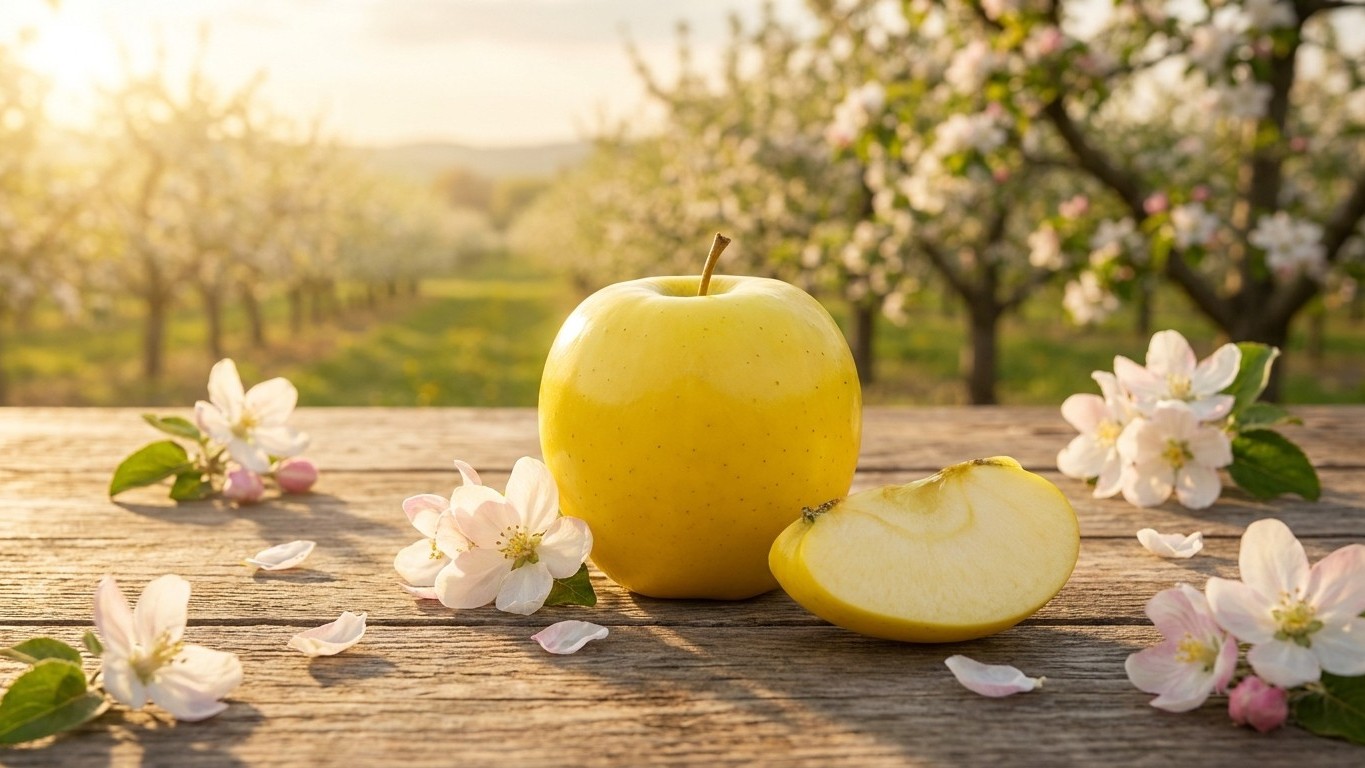

Ozark Gold is a yellow-skinned apple bred for sweet, lightly tart eating and general kitchen use, with firm yellow flesh that holds up under heat. It flowers in bloom group C, a midseason slot that matters more than the calendar date when you’re picking a partner tree. The short answer on pollination: plant Arkansas Black, Golden Delicious, Priscilla, or Rome Beauty nearby, and skip Jonagold or Stayman as sole partners even though they bloom at the same time.
What Ozark Gold actually is

- Ripens: Its bloom-group placement puts flowering in the midseason window.
- Tastes like: Sweet with a light tartness, and firm yellow flesh.
- Good for: General purpose, eating out of hand and cooking.
- Keeps: Storage length isn’t published in the data set behind this profile.
Start with the flavor, because that’s what actually shows up on a plate. The combination of sweetness and light acidity, paired with flesh that stays firm rather than turning to mush, is what earns Ozark Gold its “general purpose” label. That label isn’t a shrug. A dessert apple that goes soft in the oven ruins a pie; a baking apple with no sugar makes bland eating out of hand. Ozark Gold’s firm yellow flesh keeps its shape when heated, and the acidity doesn’t disappear the way it does in some sweeter varieties, so the same fruit that’s good sliced into a lunchbox also holds together in a baked dish. That’s a rarer trait than most shoppers realize.
Unlike some well-known apples that circulate under two names, such as Mutsu sold as Crispin, or Pink Lady marketed as Cripps Pink, Ozark Gold doesn’t appear to carry a second commercial identity in the record. If you’ve bought it, you bought it as Ozark Gold. The bloom group designation, C, comes from horticultural extension references (Clemson HGIC 1350, cross-checked against UGA Circular 740) and reflects a relative flowering order rather than a fixed date. That order holds from one region to the next even when the actual bloom dates shift by weeks depending on local spring weather.
Will it grow where you are
Hardiness zone
A published hardiness zone range for Ozark Gold isn’t part of the verified facts behind this profile, so no specific zone number is given here rather than guessed at. If you’re weighing this variety for a specific yard, the safest move is checking with a regional cooperative extension office, since they track which apple varieties actually perform in local winters, not just which ones survive on paper.
Winter chill
Winter chill, the number of cold hours a tree needs each dormant season before it will break bud and flower properly, isn’t a published figure for this variety in the data used here either. What can be said with more confidence is the origin story: Ozark Gold traces its development to Missouri, a region with cold winters and hot, humid summers, which generally points toward a variety bred to handle a real chill season rather than the mild winters of the Deep South or coastal California. Growers in regions with very light winter chill, southern Florida or low-desert Arizona, for example, are the ones who should ask a local extension agent directly before planting, since insufficient chill shows up as patchy bloom and poor fruit set regardless of what the pollination chart says.
What to plant beside it
Nearly all apple varieties crop better with a compatible partner nearby, and Ozark Gold is no exception. Its bloom group is C, which means the varieties below aren’t just genetically compatible, they also tend to have their flowers open at overlapping times, which is the part that actually gets pollen moved between trees by bees.
- Arkansas Black
- Golden Delicious
- Priscilla
- Rome Beauty
Any one of those four planted within bee range, generally within about 50 feet, though closer is always better, should supply enough compatible pollen to set a reliable crop on Ozark Gold.
Here’s the trap worth naming directly: Jonagold and Stayman both flower at the same time as Ozark Gold, so on paper they look like fine neighbors. They aren’t. Ozark Gold has sterile pollen, which means it can accept pollen from a compatible partner and set fruit, but it cannot supply usable pollen back. Plant only Jonagold and Stayman next to it and you’ll get flowers on all three trees and fruit on none, because none of the three can pollinate the others in that particular combination. A third, unrelated variety, one of the four listed above, has to be in the mix. For a broader look at how bloom timing, pollen fertility, and orchard layout interact across apple varieties, see our full guide to apple pollination.
Growing it well
Disease pressure
A specific fire blight rating for Ozark Gold isn’t included in the verified facts used for this page, so none is stated here. In general terms, fire blight shows up as blackened, wilted shoot tips that look scorched, spreading fast in warm, wet spring weather right around bloom time, and it’s worth scouting for regardless of a given variety’s reputation, since local strains of the bacteria vary in aggressiveness from one region to the next.
Growth habit and thinning
Specific data on Ozark Gold’s canopy habit, spreading versus upright, isn’t part of the sourced facts either. What is worth remembering across most apple varieties, this one included until variety-specific data says otherwise, is that fruit set often needs manual thinning to reduce disease pressure and improve fruit size, since crowded clusters trap moisture and slow airflow around developing apples.
Biennial bearing
Many apple varieties swing between a heavy crop one year and a light one the next if left unthinned, so removing some young fruit early in the season, generally down to one apple per cluster, is a reasonable general practice while waiting to see how a given tree actually behaves over a few seasons.
Picking it and keeping it
Exact harvest-window dates for Ozark Gold aren’t part of the published facts here, so instead of guessing at a calendar date, rely on the physical signs that tell you an apple is actually ready, regardless of variety:
- Lift and twist a fruit gently in your palm. If it separates from the spur with little resistance, it’s likely ripe; if it clings and has to be pulled, give it more time.
- Cut one open and check the seeds. Ripe apples generally show brown or dark seeds; pale or greenish seeds mean the fruit needs more days on the tree.
- Check the ground color, the background skin tone beneath any red or blush coloring. A shift from green toward yellow usually signals the fruit is close to or at ripeness.
Storage
Specific cold-storage duration for Ozark Gold isn’t part of the sourced facts behind this profile. General apple storage practice still applies while variety-specific numbers aren’t available: cold, humid conditions, close to refrigerator temperature with some added humidity, slow ripening far more than room-temperature storage, and checking stored fruit periodically for soft spots keeps one bad apple from spoiling the batch, quite literally.
Common questions
Can Ozark Gold pollinate other apple trees?
No. Ozark Gold has sterile pollen, so it can be pollinated by a compatible partner but can’t supply usable pollen to any other tree in return.
Will one Ozark Gold tree produce apples on its own?
Not reliably. Nearly all apple varieties crop better with a compatible partner nearby, and Ozark Gold’s sterile pollen means a second, fertile variety is required for a full crop.
Is Ozark Gold a good baking apple?
Yes, it’s classified general purpose, which means the firm yellow flesh holds its shape when cooked and the light tartness balances the sugar in a pie or crisp, the same qualities that make it good for fresh eating too.
Do Jonagold and Stayman work as pollinators for Ozark Gold?
They flower at the same time, but neither can pollinate Ozark Gold, and Ozark Gold can’t pollinate them either. A third variety like Golden Delicious or Rome Beauty is needed for fruit to set.
What does bloom group C actually tell a grower?
It places Ozark Gold’s flowering in a midseason slot relative to other apple varieties, not on a fixed calendar date. The actual bloom date shifts with local spring weather, but the relative order compared to other varieties stays consistent from region to region.