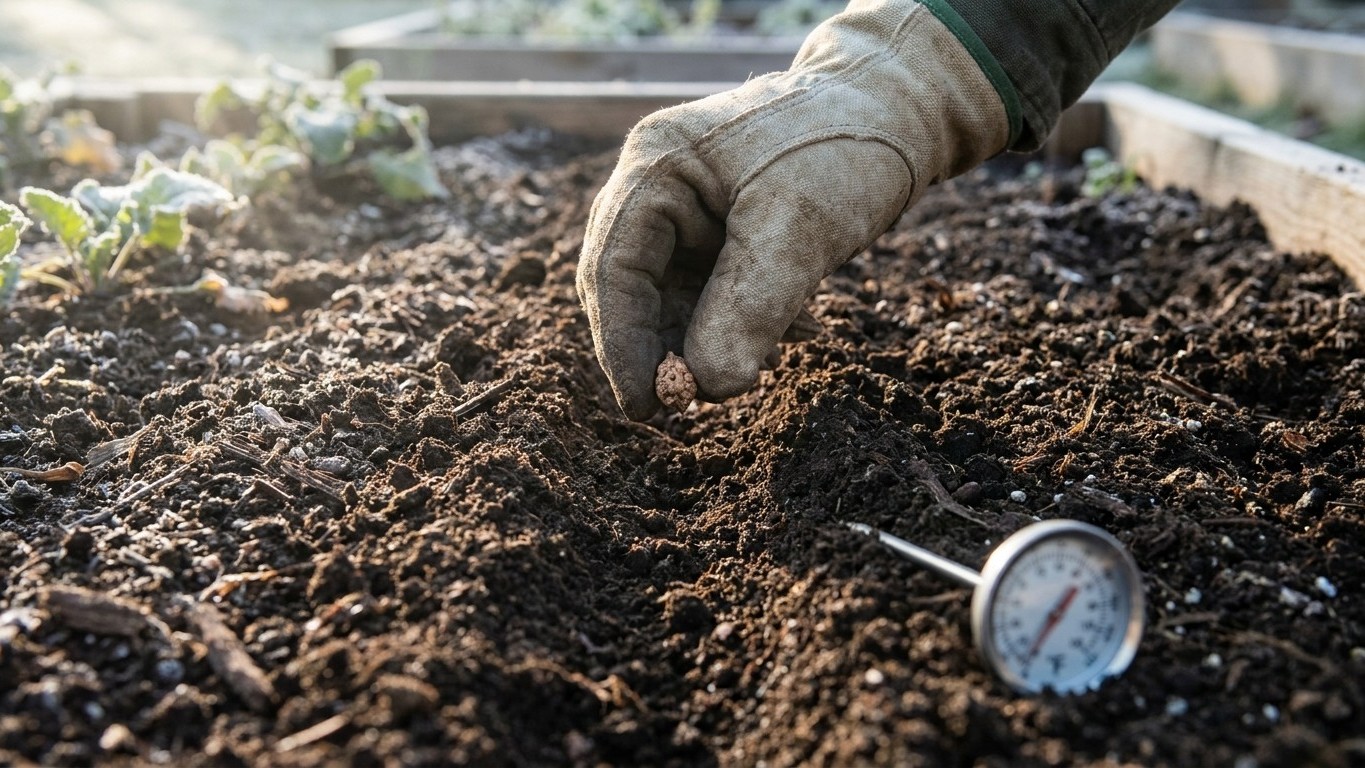

Sow beet seeds once the soil warms to 40 F, two to three weeks before your last frost date, a quarter to half an inch deep. That’s the window Utah State University Extension backs with its own trial data, and it’s tighter than most seed packets suggest. Miss it in either direction and the crop pays for it later, not right away.
The short answer
Utah State University Extension’s guide on Beets in the Garden sets the planting rule plainly: get seed into the ground when soil temperature hits 40 F, timed two to three weeks ahead of the last frost, at a depth of a quarter to half an inch. That’s shallower than a lot of gardeners assume for a root crop, and the timing runs ahead of frost risk rather than after it. Beets tolerate cold soil far better than they tolerate a late start.
Once seed is in, germination becomes a temperature story. The Extension guide states that “seeds germinate best at 55-75 F” and take 7 to 14 days to emerge. That’s a full two-week spread, and soil that sits at the cool end of that range will stretch toward the 14-day mark. Gardeners who plant into soil barely at 40 F should expect emergence closer to the slow end, not the fast one, because the seed isn’t waiting on the calendar. It’s waiting on warmth.
Soil texture matters just as much as temperature. The guide describes what beets actually want: “fertile, well-drained, deep, sandy soils rich in organic matter.” That’s a specific combination, not a vague preference. Heavy clay, the kind that holds water and compacts under a boot, works against every part of that list. Extension addresses this directly, noting that heavy soils need amending with compost before beets go in, so the root has room to push down instead of fighting resistance.
But there’s a limit on that fix, and it’s the number most gardeners blow past. The same guide caps the amendment at “no more than 1 inch of composted organic matter per 100 sq ft.” More is not better here. Overloading a bed with compost past that ceiling doesn’t speed up drainage or add fertility in a useful way, it just changes the soil chemistry and structure in ways the Extension guide doesn’t credit with any benefit. One inch, spread over 100 square feet, is the stated limit, full stop.
The last piece of the short answer is temperature on the other end of the season. Beets grow best, according to the same source, when temperatures do not exceed 85 F. That number sets a rough outer boundary for the growing window in warmer regions, and it explains why timing the sowing date correctly at the front end matters so much. A slow start pushes harvest into hotter weather, and hotter weather works against the crop in a way water alone can’t fix.
What actually decides it
Three separate mechanisms shape whether a beet crop succeeds, and they operate at different points in the season. Conflating them is where most gardening advice goes soft, treating “keep it watered” as a catch-all fix. It isn’t.
Soil temperature and depth control emergence
Germination is a chemical process before it’s a visible one. Seed tissue needs enough soil warmth to activate the internal processes that break dormancy and push a root down, a shoot up. Below the 40 F threshold, that activation doesn’t happen reliably, which is why Extension sets that number as the floor for sowing rather than a suggestion. Depth compounds this: a quarter to half an inch keeps the seed close enough to the surface to catch the fastest-warming soil layer, while still deep enough to hold moisture around the seed coat. Plant deeper and the seed sits in cooler, often wetter soil, stretching germination toward or past the 14-day mark.
Early water stress triggers bolting
Once a seedling is up, its next vulnerability is drought stress in the first weeks of growth. A beet plant that dries out early reads that stress as a signal to skip straight to reproduction, sending up a flower stalk instead of building a root. This is bolting, and it’s a distinct failure from anything heat-related later in the season. It happens early, it happens fast, and once a plant has bolted there’s no reversing it. The root that was supposed to bulk up gets abandoned in favor of seed production. Consistent soil moisture in those first weeks after emergence is what prevents this, not moisture in general at some point during the season.
Late-season heat turns roots woody
The second failure shows up much later and has nothing to do with water stress. It’s temperature. Beets grow best under 85 F, and once the crop sits in hotter conditions for an extended stretch, root texture changes. The tissue toughens, turning stringy and woody instead of tender. This isn’t a watering problem, and dumping extra irrigation on a beet bed baking at 90-plus degrees doesn’t reverse the texture change already underway. It’s a timing problem traced back to when the seed went in the ground. A crop sown on schedule, two to three weeks before last frost, gets far enough along before the hot stretch of summer arrives to avoid this outcome. A crop sown late runs straight into it.
How to do it
- Check soil temperature before anything else. Use a soil thermometer at planting depth and wait until it reads 40 F. Air temperature and calendar guesses aren’t reliable substitutes.
- Amend heavy soil ahead of planting, not on planting day. If the bed is clay-heavy, work in compost, staying at or under the 1-inch-per-100-square-foot limit Extension sets. Do this early enough for the compost to integrate before seed goes in.
- Time the sowing date against your last frost. Count back two to three weeks from your expected last frost date and target that window for putting seed in the ground.
- Sow at the correct depth. Place seed a quarter to half an inch deep, no deeper, in rows spaced to allow thinning later.
- Keep the seedbed consistently moist through germination. Expect emergence somewhere in the 7-to-14-day window, longer if soil sits near the cool end of the 55-75 F germination range.
- Maintain steady soil moisture through early seedling growth. This is the window where drought stress triggers bolting, so gaps in watering matter more here than at almost any other stage.
- Thin seedlings once they’re established. Crowded beets compete for the same root space and moisture, working against the deep, well-drained conditions the crop needs.
- Watch the temperature forecast as harvest approaches. Since beets grow best under 85 F, pulling the crop before an extended hot stretch helps avoid the root turning woody in the ground.
What goes wrong
- Seed sown into cold soil never comes up, or comes up unevenly. Below 40 F, germination stalls. Test soil temperature directly rather than guessing from air temperature, and hold off sowing until the reading is consistent, not just a one-day spike.
- Seed planted too deep takes far longer to emerge, if it emerges at all. Beet seed wants a quarter to half an inch, not the inch-plus depth common for larger seeds. Check depth with a ruler on the first few passes until it becomes second nature.
- Seedlings bolt in the first month. This traces back to drought stress right after emergence, not anything that happens later. Keep the bed evenly moist through those early weeks, and don’t let the soil surface fully dry between waterings during that stretch.
- Roots come out stunted, forked, or misshapen from heavy clay soil. Beets want fertile, well-drained, deep, sandy soil rich in organic matter, and clay works against every part of that. Amend ahead of planting with compost, staying within the 1-inch-per-100-square-foot ceiling rather than assuming more compost fixes the problem faster.
- Overloading the bed with compost past the stated limit. Extension’s cap exists for a reason, and piling on extra organic matter beyond it doesn’t improve drainage or fertility in any documented way. Measure the area and stick to the 1-inch limit per 100 square feet rather than eyeballing it.
- Roots turn woody and stringy at harvest. This comes from extended exposure to temperatures above 85 F, not from anything watering can undo at that point. The fix happens earlier in the season, by sowing on schedule so the crop matures before the hottest stretch arrives.
Common questions
Can beet seed be started indoors and transplanted?
The Extension guidance addresses beets as a direct-sown crop, sown in place in the garden rather than started as transplants. Any timeline for the crop’s development runs from the seeding date in the ground, not from a transplant date.
What happens if beets are sown before the soil reaches 40 F?
Germination becomes unreliable. Beet seed needs that soil warmth to activate, and sowing earlier just means the seed sits in the ground waiting, exposed to rot and pests, rather than germinating any faster.
Does the germination window change with soil temperature?
Yes. Utah State University Extension lists 55-75 F as the best germination range, with emergence in 7 to 14 days within that band. Soil sitting near 40 F, the minimum sowing threshold, will emerge more slowly than soil already warmed into the 55-75 F range.
How many beet varieties does Utah State University Extension mention?
The guide lists five garden beet varieties by name, though it does not attach a specific season, color, or use to any single one of them in that listing.
Some gardeners also time this by the Moon: when to plant beets by the moon, as almanac tradition rather than fact.