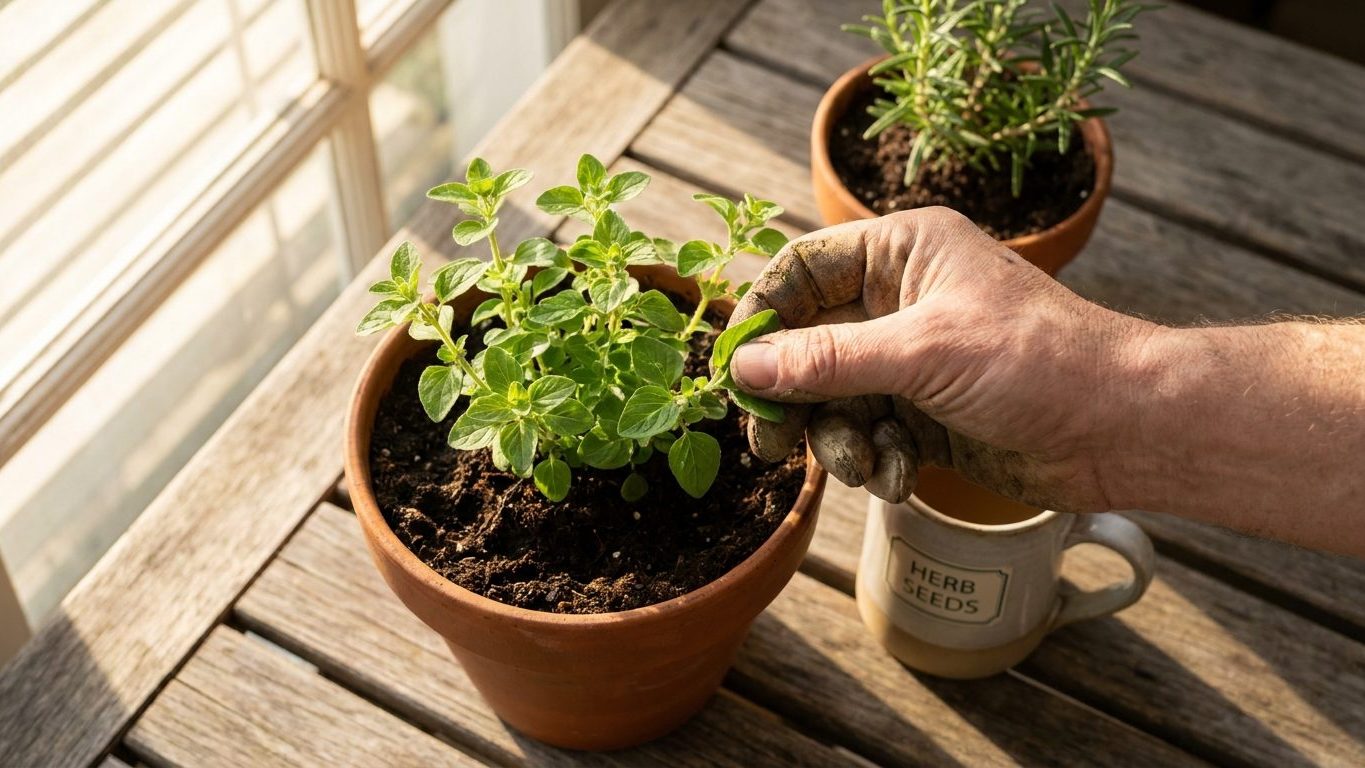

A pot of oregano can look perfect, thick leaves, healthy color, and still taste like nothing when you rub a leaf between your fingers. That’s not bad luck. It usually means the plant is putting its energy into leaf growth instead of the oils that give oregano its punch, or it’s not quite the oregano you thought you bought.
What is actually going on

Flavor in oregano comes from aromatic oils stored in tiny glands on the leaf surface, and the plant only makes those oils in any quantity when it’s mildly stressed. Lots of sun, lean soil, and infrequent water push the plant to concentrate its resources into those oil glands. Give the same plant rich soil, regular fertilizer, and generous water, and it grows fast and lush, but the oil production drops off because the plant doesn’t need to defend itself or conserve anything. You end up with more leaf and less taste.
There’s a second layer to this, and it trips up more gardeners than the growing conditions do. What’s sold as “oregano” at nurseries and in seed racks isn’t always the same plant. True oregano is Origanum vulgare, but the type most prized in Mediterranean cooking is often a specific subspecies within that group, sometimes labeled Greek oregano, sometimes just oregano with no further detail. Meanwhile, marjoram (Origanum majorana) is a close cousin that gets sold, mislabeled, or substituted often enough that plenty of home gardeners are growing marjoram and calling it oregano. Marjoram is milder, sweeter, and simply doesn’t have the same bite no matter how you stress the plant.
Then there’s Mexican oregano, which isn’t in the same genus at all. It comes from a different plant family entirely (most commonly Lippia graveolens), grown and used in Mexican and Southwestern cooking for a similar peppery, earthy flavor role, but it’s botanically unrelated to European oregano. If a tag just says “oregano” without a species name, there’s a real chance you’ve got something that was never going to taste like the dried oregano in your spice jar, regardless of how you grow it.
Age matters too. Oregano’s oil concentration peaks right before the plant flowers, then declines once it puts energy into blooms and seed. A plant that’s already flowering, or one that’s past its first year and getting woody, will taste weaker even under otherwise ideal conditions.
In the garden
Getting flavor out of oregano is less about feeding it and more about controlling what you don’t give it. The plant wants sun, drainage, and a bit of neglect. Here’s what tends to go wrong, and what to do instead.
| What you do | What happens if it’s wrong | What to do instead |
|---|---|---|
| Soil richness | Compost-heavy or fertilized soil produces fast, pale, weak-tasting growth | Plant in average to poor, well-drained soil; skip the fertilizer entirely once established |
| Watering | Frequent watering keeps the plant lush but dilutes oil concentration in the leaves | Water deeply but infrequently, letting the soil dry out between waterings |
| Sun exposure | Partial shade gives you leggy stems and thin flavor | Give it as much direct sun as your spot allows, six hours minimum |
| Harvest timing | Picking a young plant heavily, or harvesting after it flowers, both give weaker flavor | Let the plant establish for a season, then harvest just before flower buds open |
| Plant identity | An unlabeled or vaguely labeled plant may be marjoram or another Origanum relative, never delivering the flavor you expected | Buy from a source that names the species, or grow from seed packets that specify the type |
The oregano versus marjoram confusion deserves its own note because it’s so common. Both are in the same genus, both have similar rounded leaves, and both get labeled loosely at big box garden centers. The clearest difference in the garden is vigor and hardiness: oregano tends to be the tougher, more sprawling, more pungent of the two, while marjoram is more tender, more compact, and noticeably milder even when grown under identical stress conditions. If you’ve followed every rule above (full sun, poor soil, minimal water) and the plant still tastes mild and sweet rather than sharp and peppery, you’re probably growing marjoram, not a poorly performing oregano.
Oregano also spreads readily once established, sending out low runners that root as they go. That habit is useful information for planning where to put it, since a plant that outgrows its bed will crowd neighbors, but it isn’t something that changes flavor one way or the other.
What it depends on where you are
How intensely oregano develops flavor has as much to do with your climate as with how you treat the plant, and that part of the answer is genuinely local. Oregano is a Mediterranean native, and it produces its strongest oils in regions with long, hot, dry summers, the kind of conditions that mimic its native range. Gardeners in the Southwest and parts of the interior West often get noticeably more pungent oregano than gardeners in humid, cloudier regions of the country, simply because the plant is under the kind of heat and drought stress it evolved for.
Humidity works against oregano in two ways. It keeps the soil and air moist enough that the plant doesn’t need to concentrate its oils for stress response, and in wetter climates it also raises the risk of root rot and fungal issues at the base of the plant, since oregano’s Mediterranean roots don’t tolerate consistently soggy soil. Gardeners in the Southeast or the Pacific Northwest may need raised beds, extra grit worked into the soil, or containers specifically to keep roots dry enough, regardless of how careful they are with watering.
Season length changes a different part of the picture: how much of the year the plant spends in that ideal “about to flower” flavor window, and whether it survives winter outdoors at all or needs treating as an annual or brought indoors. In colder regions with short growing seasons, oregano may barely get established before frost cuts the season short, while in milder climates a single plant can be productive for years.
If you’re growing oregano in a state with hot, dry summers, check the state-level guide on this site for that region for planting windows and specifics. If nothing here matches your conditions, your local cooperative extension service is the most reliable free resource for questions tied to your exact climate and soil.
The mistake that costs the most
The single most expensive mistake, in terms of flavor lost, is treating oregano like a vegetable that rewards good care. Gardeners who are used to feeding tomatoes or leafy greens instinctively give oregano the same treatment: rich soil, regular water, occasional fertilizer. Every one of those inputs works against the plant’s flavor. The instinct to nurture is exactly backward here.
What to do instead is simple, but it goes against most gardening habits: plant oregano in the worst soil in your yard, the poorest, driest, sunniest corner you have, and then largely leave it alone. Water only when the soil is dry a couple of inches down, skip fertilizer after the first few weeks of establishment, and resist the urge to baby a plant that looks like it’s struggling a little. A slightly stressed, slightly stunted oregano plant in full sun will out-flavor a lush, fast-growing one every time.
If you’ve done all of that and the flavor is still flat, the second most common cause is plant identity, not care. Before assuming you’ve failed as a gardener, consider that the plant itself might be marjoram or an unnamed Origanum hybrid sold under a generic oregano label. Checking the species name on the original tag, or comparing the plant’s vigor and pungency against a known oregano at a garden center, is a faster fix than another season of adjusting water and sun.