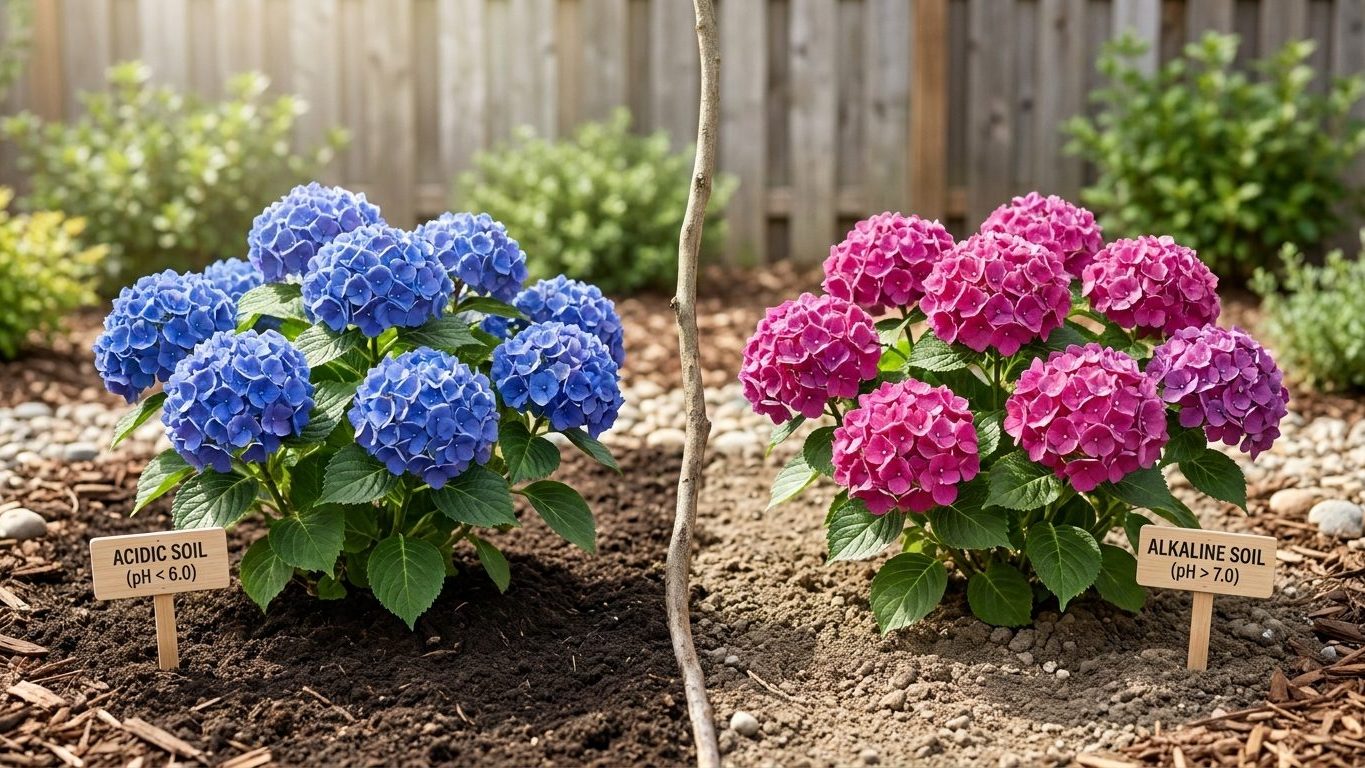

Flower color in Hydrangeas comes down to one thing: how much aluminum the roots can actually absorb. Soil pH controls that availability, not the other way around. Below roughly pH 5.5, aluminum becomes soluble and the flowers turn blue; above pH 6.5, aluminum locks up and flowers turn pink. But this entire mechanism only applies to bigleaf and mountain hydrangeas.
Why this matters
Aluminum is already present in most garden soils, usually in more than enough quantity to color a hydrangea blue. The plant just can’t reach it unless the soil is acidic enough to dissolve it into a form the roots can take up. That’s why two gardeners with the same aluminum-rich soil can get opposite results: one has a pH of 5.2 and blue blooms, the other has a pH of 6.8 and pink ones, with identical aluminum sitting in the ground the whole time.
Skip this step, or misjudge it, and the plant doesn’t suffer, but the color does. A gardener who wants blue and does nothing will likely get purple or pink if the native soil runs neutral to alkaline, which describes a lot of yards. Overcorrect with too much aluminum sulfate at once, and the shallow root system of a bigleaf hydrangea can scorch, since these plants dislike concentrated fertilizer salts near the crown. The plant itself stays healthy either way. Only the color is at stake, which is exactly why so many people chase this without ever checking whether their hydrangea is even the type that responds to it.
When to do it
There’s no calendar date for this, because soil pH shifts don’t happen overnight and the plant tells you when it’s ready far better than a date on a bag of aluminum sulfate. Watch the foliage flush out fully in spring, once the plant has leafed out and settled into active growth. That’s the window to test soil pH and start any adjustment, well before flower buds are visible.
The reason timing matters so much is that bigleaf hydrangeas set next year’s flower buds on the current season’s wood by late summer. Any pH correction made this year shapes color for blooms that open next year, not this year’s flowers, which were already determined by conditions during the previous growing season. Mountain hydrangea works the same way, on old wood, though its buds tolerate a late frost better than bigleaf’s do.
Don’t expect a quick flip in color mid-season. Soil chemistry changes gradually, especially with materials like aluminum sulfate or lime that need to dissolve and migrate through the root zone. A hydrangea that blooms pink in June won’t turn blue by August no matter what gets added in July. Test in spring, apply gradually, and judge results the following bloom cycle. If you’re working with a plant you just moved or one that’s still small and establishing roots, hold off on aggressive pH correction until it’s had a full season to settle in undisturbed.
How to do it
Start by confirming the type. If it isn’t a bigleaf or mountain hydrangea, stop here, because nothing below will change the flower color of a panicle, smooth, oakleaf, or climbing hydrangea. Those bloom whatever shade they’re bred for and shift only with the natural aging of the flower cluster over the season, from white or green toward pink or tan, regardless of soil chemistry.
For bigleaf or mountain types, the next step is a soil test, either a home pH kit from a garden center or a lab test through a local extension office. Don’t guess. A lot of gardeners assume their soil is neutral when it’s actually running alkaline from years of concrete foundation runoff or well water, which is a common reason blue hydrangeas planted near a house slowly drift pink over a few seasons.
Pushing toward blue
To acidify soil and make aluminum available, work aluminum sulfate into the soil around the drip line, not piled against the stems. Follow the product’s rate for the container size and plant age rather than guessing at a scoop count, since concentration varies by brand and over-application burns roots. Water it in thoroughly right after application so it moves into the root zone instead of sitting on the surface. This isn’t a one-time fix. Expect to repeat the application in smaller doses over a full growing season, retesting pH every few weeks rather than assuming a single treatment holds.
Pushing toward pink
To make soil more alkaline, work garden lime into the soil the same way, spread evenly around the root zone and watered in. Lime works more slowly than aluminum sulfate, so patience matters here even more. Retest before adding a second application; lime that hasn’t finished reacting with the soil can push pH higher than intended if you keep adding on schedule instead of by test result.
What it should look like when it’s working
A properly acidified soil for blue flowers typically tests below pH 5.5 at root depth, not just at the surface. New growth flushes should look normal, no yellowing or leaf burn at the margins, which would signal too much aluminum too fast. For pink, soil testing above pH 6.5 with healthy, deep-green foliage means the treatment is working as intended. In both cases, judge the outcome by the next flush of blooms, not the current one, since existing flowers were already set by last year’s chemistry.
What goes wrong
The most common failure is applying aluminum sulfate or lime without testing pH first, then reapplying more of the same product when color doesn’t shift fast enough. That usually pushes pH too far in one direction, and the flowers end up an odd muddy purple instead of a clean blue or pink, because the plant is caught between the two thresholds.
A subtler mistake, one that looks like diligence but isn’t, is heavy feeding with a high-phosphorus fertilizer aimed at boosting bloom count. Phosphorus binds aluminum in the soil, making it unavailable to the plant even if the pH itself is acidic enough for blue. A gardener can maintain a textbook-acidic soil test and still watch blue flowers drift toward pink, simply because the fertilizer routine is working against the pH correction.
Kitchen remedies deserve a plain word here. Coffee grounds and citrus peel are widely believed to acidify soil enough to turn flowers blue. In practice, the pH shift from either is small and inconsistent, nowhere near what’s needed to make aluminum reliably available at the root zone. What actually moves color is aluminum availability, driven by real soil acidification, not a sprinkle of grounds on the surface. Anyone relying on this method alone is usually disappointed by the following season, mistaking a stagnant pH for a failed plant when the real problem was the method.
Also worth recognizing after the fact: a hydrangea planted near a concrete walkway, foundation, or driveway often trends pink over time no matter what’s applied, since lime leaching from the concrete steadily raises soil pH nearby.
Doing it differently
Container-grown bigleaf and mountain hydrangeas are actually easier to color-correct than in-ground plants, since the growing medium is smaller in volume and responds faster to aluminum sulfate or lime. Anyone testing a color strategy for the first time might get more predictable, faster results in a large pot before committing to an in-ground bed.
Raised beds behave more like containers than open ground, especially if the bed was filled with a purchased soil mix rather than native soil. That mix’s starting pH matters more than the surrounding yard, and testing the bed specifically, rather than the general garden soil, gives a truer picture.
In-ground plantings, especially older, established shrubs with an extensive root spread, take the longest to shift and need repeated seasonal treatment rather than a single application. This is where patience genuinely pays off over aggressive dosing.
None of these variations apply to panicle, smooth, oakleaf, or climbing hydrangeas, in a container or otherwise. Growing method changes how fast pH correction works, not whether a given species responds to it at all. Confirm the type before choosing a growing strategy aimed at color.
Common questions
Can I turn a panicle or oakleaf hydrangea blue with aluminum sulfate?
No. Color response to soil pH is limited to bigleaf and mountain hydrangeas. Panicle, smooth, oakleaf, and climbing types keep their bred color and simply age through natural shade changes over the season, regardless of how acidic or alkaline the soil is.
Why did my blue hydrangea turn pink even though the soil tests acidic?
A high-phosphorus fertilizer is a likely cause. Phosphorus binds aluminum in the soil so the plant can’t take it up, even when the pH itself sits below the 5.5 threshold that should support blue flowers. Check the fertilizer routine before adding more aluminum sulfate.
Are coffee grounds a reliable way to turn hydrangeas blue?
Not really. The pH shift from coffee grounds or citrus peel is minor and inconsistent, far short of what’s needed to make soil aluminum reliably available to the roots. Aluminum sulfate, applied at label rates and confirmed with a soil test, is the method that actually moves color.
Is it safe to have hydrangeas around pets, given the toxicity concern?
Only bigleaf hydrangea is documented as toxic, and only if eaten in large quantities, causing nausea, stomach pain, vomiting, and sweating in people, as well as in cats, dogs, and horses. It’s not a reason to avoid the plant, but it’s worth knowing if pets or curious kids are around the yard.