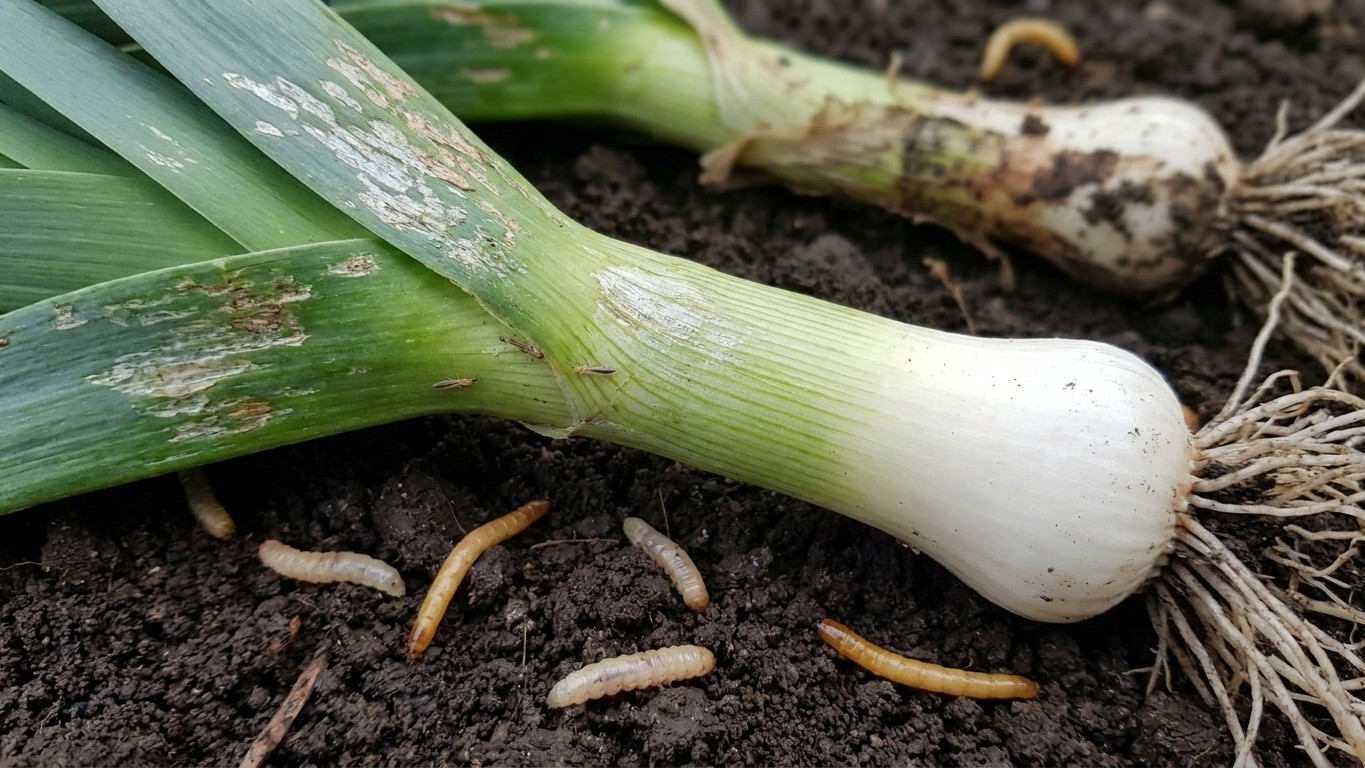

Three insects trouble leeks, but the fix isn’t three separate plans. Thrips leave leaves silvered and twisted near the base. Onion maggot larvae chew through seedlings, roots and bulbs. Wireworms, the underground larvae of click beetles, gnaw roots, seeds and stems from below the soil line. Two of these three, onion maggot and wireworm, answer to the exact same remedy: crop rotation paired with restraint on organic matter. Thrips call for a different kind of attention altogether.
The short answer
Utah State University Extension’s guide, Leeks in the Garden, lays out three insect problems for home leek growers, and the fix for two of them is identical. Onion maggot is described as a white worm that feeds on seedlings, roots or bulbs, and the Extension’s stated remedy is crop rotation combined with avoiding excessive amounts of organic matter. Wireworm, the larvae of the click beetle, feeds on roots, seeds and underground stems, and the guide gives it the same rotation advice. Same soil-dwelling habit, same countermeasure.
Thrips work differently. The Extension describes the damage plainly: leaves turn silver or gray, may twist and die, and the insects themselves hide near where the leaf and bulb meet. That last detail matters more than it sounds. A grower scanning a leek row from a few feet away will see discoloration and assume drought, nutrient trouble, or general stress. The insects causing it are tucked down at the base of the plant, right where leaf tissue folds into the bulb, out of casual view.
The Extension guide also names three leek varieties commonly grown in home gardens, Large American Flag, Comanche and King Richard, without attaching days-to-maturity, size, or hardiness figures to any of them. That’s worth flagging because seed catalogs and other sources sometimes fill in numbers the university guide simply doesn’t provide. If a figure for one of these varieties shows up somewhere else, it isn’t coming from this source.
So the short answer holds up under scrutiny: two of the three leek pests, onion maggot and wireworm, share one management approach centered on where and how often leeks are planted and how much organic matter goes into that bed. Thrips require a closer look at the plant itself rather than a change in field practice. Treating all three as one problem with one fix would miss what the source actually says.
What actually decides it

The split between these three pests isn’t arbitrary. It comes down to where each insect actually lives and feeds during the part of its life cycle that damages leeks.
Soil residency drives the shared remedy
Onion maggot and wireworm both spend the damaging stage of their life underground, feeding on roots, seedling tissue, bulbs, or underground stems. A pest that lives in soil is a pest that benefits from soil that hasn’t changed. Planting alliums in the same bed season after season lets a population already established in that soil simply carry over onto the next crop instead of having to relocate. Moving leeks to different ground breaks that continuity, which is the entire logic behind the Extension’s rotation advice for both insects.
Organic matter changes the soil these pests prefer
The Extension pairs rotation with a second, related instruction: avoid excessive amounts of organic matter. Heavy compost or manure application changes soil texture and moisture in ways that favor the conditions these soil-dwelling larvae need. It isn’t that organic matter is bad for leeks generally, it’s that piling it on right before planting can work against the rotation strategy by making the new bed just as hospitable as the old one. The two practices, rotating location and moderating organic matter, function as a single combined remedy rather than two separate tips.
Thrips live above ground, at one specific junction
Thrips don’t follow the same pattern because they aren’t soil residents. The Extension guide places them specifically near where the leaf and bulb meet, tucked into that fold of tissue rather than distributed across the root zone. That above-ground location is why a soil-based remedy like rotation doesn’t appear in the guide’s description of thrips management. The mechanism that matters for thrips is visibility and inspection habit, not what happened in that bed the previous year.
How to do it
- Before planting, map out where onions, garlic and leeks have grown in your garden over the past few seasons, and pick this year’s leek bed in a spot that hasn’t held any of those crops recently. This is the rotation step the Extension guide points to for both onion maggot and wireworm.
- Hold off on heavy compost or manure applications to that bed right before planting. The guide names avoiding excessive organic matter as part of the same combined remedy, so treat it as a companion step to rotation rather than an optional extra.
- At transplanting time, put plants into the rotated location rather than defaulting back to last year’s row, even if that means reworking the layout of a small garden.
- Once leeks are established, walk the row regularly and gently part the leaves down at the base of each plant, checking the point where leaf tissue meets the bulb. That’s the specific spot the Extension guide identifies for thrips.
- If leaves show silver or gray discoloration or a twisted shape, confirm thrips are present at that leaf-bulb junction before assuming the cause is something else, since the same symptoms can resemble drought or nutrient stress from a distance.
- Keep a simple written note of which bed held leeks and other alliums this season, so next year’s rotation decision is based on a record rather than memory.
What goes wrong

- Planting leeks or other alliums in the same bed year after year, and loading that bed with compost or manure right before planting. Both habits work in favor of onion maggot and wireworm, since these insects live in the soil and both benefit from unchanged ground and organic-rich conditions. Utah State University Extension gives one combined remedy for both mistakes: rotate leeks away from recent allium ground, and go easy on fresh organic matter in that bed.
- Mistaking thrips damage for drought stress or a nutrient problem. Silvered, twisted leaves can look like several other issues from a distance, and growers sometimes reach for water or fertilizer instead of checking the plant itself. The remedy is checking the leaf-bulb junction directly, since that’s where the Extension guide says thrips actually hide.
- Waiting to inspect leeks until leaves have already died back. By the time damage is obvious across the whole plant, the early silver-gray stage the guide describes has already passed. Regular, earlier inspection at the base of the leaves catches the problem while it’s still identifiable rather than after the fact.
Common questions
Do onion maggot and wireworm actually need separate treatments?
No. Utah State University Extension gives them the same management approach: crop rotation and avoiding excessive organic matter. There’s no separate product or practice listed for one versus the other in the guide.
Where exactly should I look for thrips on a leek plant?
Right where the leaf meets the bulb. The Extension guide specifies this junction as where thrips hide, rather than scattered across the leaf surface or in the soil.
Does rotating leeks mean avoiding the exact same bed, or the whole area?
The guide’s advice is crop rotation generally, moving leeks away from ground that recently held alliums, without specifying an exact distance or number of seasons to wait.
Are Large American Flag, Comanche or King Richard more resistant to these pests?
The Extension guide names these three as leek varieties without giving any pest-resistance, size, or maturity figures for them, so no variety-specific claim about resistance can be attributed to this source.