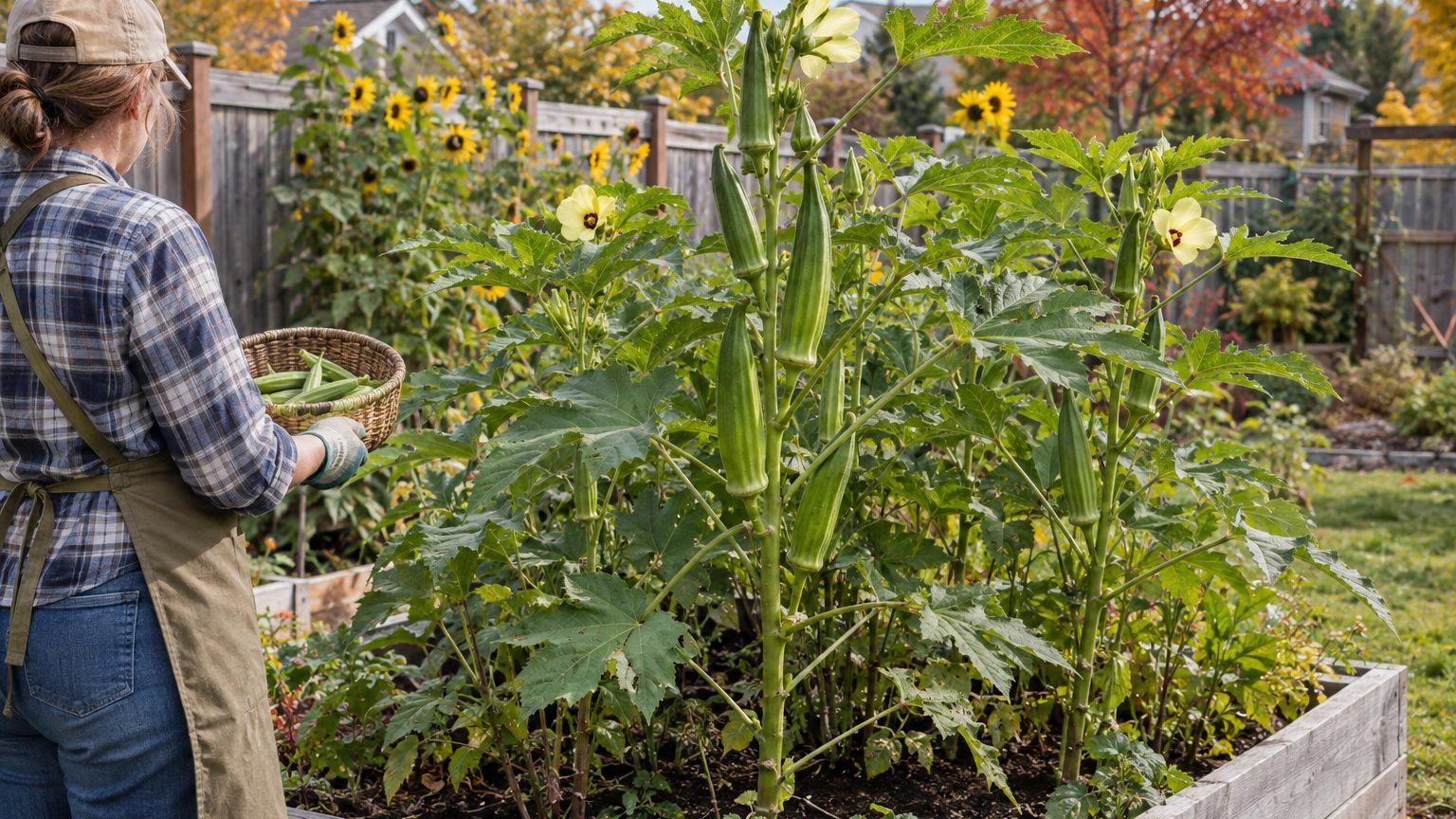

Okra can work in a short summer, but only if you stop treating it like a tomato. It needs warm soil (at least 65°F) before it sprouts, nights above roughly 55°F before it grows, and about 50 to 60 days of real heat before the first pod. Gardeners in the northern tier of states, the Pacific coast, and high elevations get there by starting seeds indoors, warming the ground ahead of planting, and choosing fast varieties. They also stop expecting a southern-sized harvest.
That last part matters. A plant that yields for four months in Georgia might give you six good weeks in Minnesota or coastal Oregon. Six weeks of fresh okra is still plenty for gumbo, roasting, and a few jars of pickles.
Do the calendar math before you buy seed
Start with two dates: your average last spring frost and your average first fall frost. Your county extension office publishes both, and a typical northern garden might see about 120 frost-free days between them. Okra will not use all of those. The first 2 to 3 weeks after the last frost are usually too cold for it, and the final stretch before the first frost is when growth slows to a crawl.
Here is a worked example. Say the last frost is May 20 and nights reliably stay above 55°F by about June 5. You transplant on June 5. A fast variety needs around 50 to 60 days to reach harvest, so pods start in late July or early August. The first frost arrives around September 25. That leaves seven or eight weeks of picking, which is a workable window. Plant two weeks late, though, and you lose a quarter of it.
Seed packets complicate this. “Days to maturity” for okra generally counts from direct sowing in warm soil, but some companies count from transplanting, and they rarely say which. If a packet is vague, assume the longer interpretation and plan around it.
Soil temperature is a better trigger than the calendar. A cheap soil thermometer pushed 2 inches deep, checked in the morning when the ground is coolest, takes the guesswork out. Okra seed sown into 55°F soil mostly rots. At 65°F it germinates unevenly. At 75°F to 85°F it comes up in a week or less.
Give okra a head start without shocking it
Start indoors, but gently
Sow seed indoors about 3 to 4 weeks before your planned transplant date, no earlier. Okra seedlings that sit in small pots for six weeks get root-bound and sulk after planting. Soaking the seed in room-temperature water overnight softens the hard coat and speeds germination. Nicking the coat lightly with a file does the same job.
Okra has a taproot that resents disturbance, so sow into individual pots rather than a shared flat. Peat pots, paper pots, or any container you can slide off without tearing the root ball all work. Keep the trays at 75°F to 85°F until sprouting, using a heat mat if the room runs cool, then give the seedlings the brightest light you have. Leggy okra seedlings are weak okra seedlings.
Harden them off over about a week, but don’t rush this step with okra. One cold night in the low 40s can stunt a seedling for weeks even if no frost shows up. Cold damage often looks like nothing at first (leaves yellow a bit, growth simply stops), which is why many people blame the variety when the real culprit was a cool May.
Warm the ground before the plants go in
Two weeks before transplanting, cover the planting bed with black plastic mulch. It typically raises soil temperature by a few degrees compared with bare ground, and it keeps weeds down. Clear plastic warms soil even more but lets weeds thrive underneath, so it works best as a short pre-warming tool that you replace or remove before planting.
Raised beds heat faster in spring than ground-level beds because they drain well and have more surface exposed to sun and air. A south-facing spot next to a wall, fence, or foundation adds a little more reflected heat. Just make sure it doesn’t also add afternoon shade.
Once the plants are in, floating row cover or a low tunnel traps warmth on cool nights and blocks wind. Water-filled cloches, the kind that wrap around each plant, hold heat well enough to protect against nights in the high 30s. Remove any cover on hot days, because okra is a heat lover but a tunnel in full sun can climb past 100°F fast.
Space plants 12 to 18 inches apart in full sun, at least 8 hours daily. In short seasons, a slightly tighter spacing gets you more pods from the same bed, since each plant won’t reach its full southern size anyway. Go easy on nitrogen. Heavy feeding grows tall, leafy plants that spend the brief summer on foliage instead of flowers.
Choose varieties that hurry
Variety choice carries more weight in a short season than almost any other decision. Many okra varieties sold nationally were bred for the South, where a plant can take 70 days or more and still have months left. Look instead for early types, which seed catalogs usually describe as maturing in about 50 to 55 days.
Compact varieties are often a good match. Annie Oakley II, Cajun Delight, and Baby Bubba are commonly recommended for cooler or shorter-season gardens, and Clemson Spineless remains the standard everyone compares against, though it typically runs a bit longer and grows tall. Ratings change from year to year and catalogs differ, so check the days-to-maturity figure on the specific seed source you buy from instead of trusting any list, including this one.
If your summers are short and cool but not unreliable, trying two varieties side by side in the same bed costs almost nothing. One fast, one standard. After a single season you will know which suits your microclimate better than any forum thread can tell you.
Gardeners with limited space or very cold ground can also grow okra in pots, where the soil warms quickly and the whole plant can be moved to shelter on a cold night. Dark containers absorb heat, which helps early and can hurt in July, so it pays to know which types handle it. The page on okra in a container covers which types work and how big the pot needs to be.
Keep it going through cool nights and into fall
Even in a good year, northern summers throw cold snaps. When forecast lows dip toward the mid-40s, cover plants at dusk with frost cloth or an old bedsheet, held off the foliage with stakes, and take it off in the morning. Okra that gets chilled below about 50°F for several nights in a row drops flowers and slows pod set, sometimes for weeks.
Once plants flower, pods arrive fast. In warm weather an okra pod is usually ready 4 to 6 days after the flower opens, and in cooler spells it takes longer. Harvest when pods are about 2 to 4 inches long, and check every day or two. A pod that gets away from you toughens quickly, and short-season plants cannot afford the setback because a big, fibrous pod left on the stalk tells the plant to stop making new ones. If you’ve already let some go, the guide to okra pods that are woody and inedible explains why it happens and what to do with them.
As the season closes, the plants slow on their own. About three to four weeks before your first expected frost, you can pinch off the growing tip of each main stem. This stops upward growth and nudges the plant toward finishing the pods already set. Remove any tiny flowers that open in the last two weeks, since a pod started that late has almost no chance of reaching a usable size before frost.
Frost kills okra outright. A light frost blackens the leaves, and the pods stop developing within a day or two. If a frost is forecast for one night but warm days follow, covering the plants can buy you another week or two of picking. Repeated cold, though, is the end. Pull the plants, chop them up for the compost pile, and don’t let the stalks sit; they get tough and woody and are hard to cut later.
For the full picture of how okra behaves once it’s established, including daily picking habits and why cut pods turn slimy in the pan, see the main guide to growing okra, heat, daily picking, and the slime question.
What a short-season harvest actually looks like
Expect less than the seed packet implies. A healthy okra plant in a long southern season can produce pods for months, and gardeners there often count on a steady supply into October or later. In a short season, a more realistic goal is a handful of pods per plant, every day or two, for 4 to 8 weeks. Planting 6 to 10 plants instead of 2 or 3 makes the difference between a few snack-sized batches and enough for a real meal.
Pods freeze well, so a surplus from a good stretch is easy to store. Wash, trim the stem caps without cutting into the pod, blanch for a few minutes, cool in ice water, dry, and freeze flat on a tray before bagging them. That way a short summer can still supply gumbo in January.
One more nuance worth knowing: okra flowers are self-fertile, and each opens for only about a day. Cool, wet weather can reduce pollination and flower drop, which is why a cold spell in mid-July shows up as a gap in pods a week later. The gap closes on its own once the warmth returns, provided the plants weren’t chilled hard enough to stall completely.