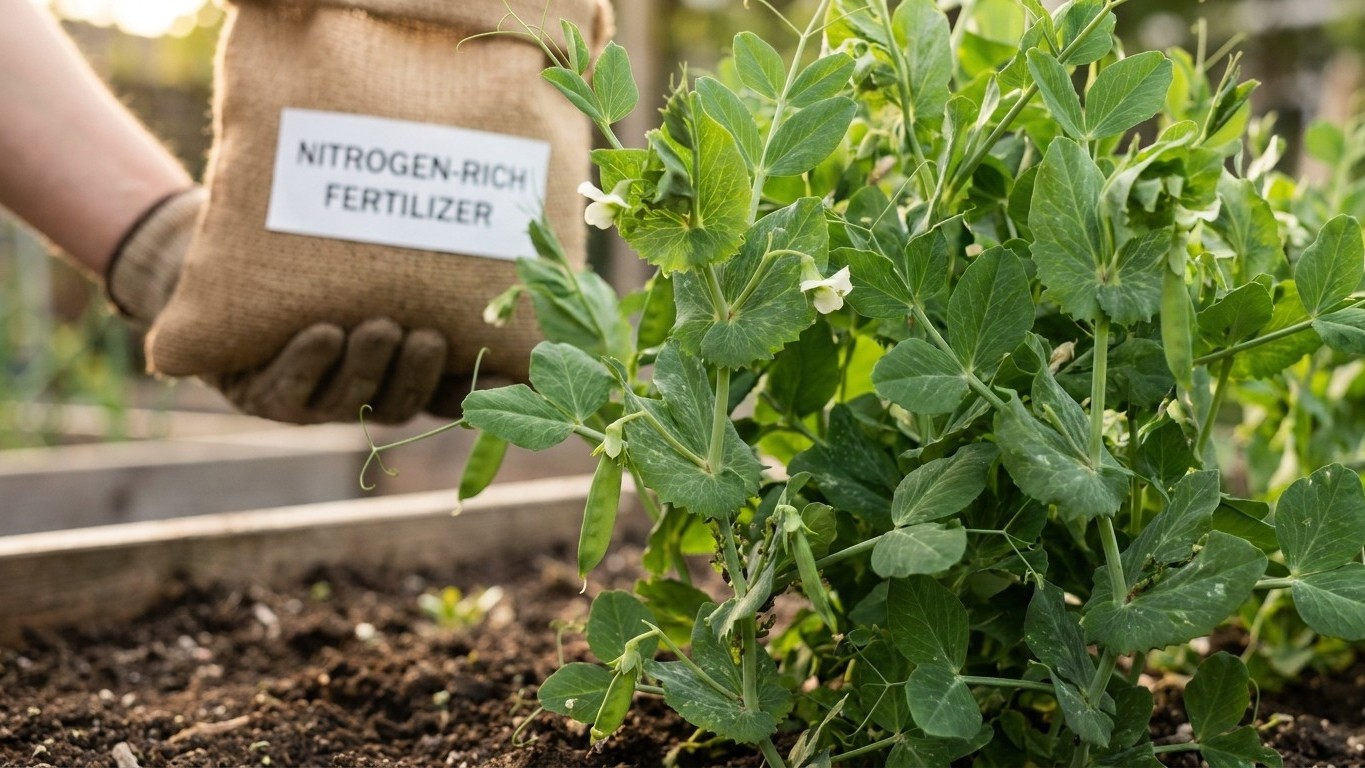

Feeding peas fertilizer doesn’t buy more pods, it costs you pods. Utah State University Extension warns that peas fix their own nitrogen through bacteria living on their roots, so extra fertilizer only pushes leaf growth, delays flowering, and shrinks the harvest. Worse, that same excess nitrogen swells pea aphid populations, the insect that carries Pea Enation Mosaic virus into the planting. One bag of fertilizer, two separate ways to lose the crop.
The short answer
Peas are one of the few garden vegetables that make their own nitrogen supply. Soil bacteria attach to the roots and pull nitrogen straight from the air, converting it into a form the plant can use. That’s why Utah State University Extension states plainly that peas do not require additional fertilizer if compost or fertilizer was already worked into the bed at planting time. The plant is, in effect, running its own feeding program underground.
Adding more nitrogen on top of that self-sufficiency doesn’t help. It overstimulates leaf growth, delays flowering, and reduces pod set. The plant puts its energy into vines and foliage instead of blossoms, and blossoms are the only thing that turns into a pod. So the person who side-dresses their pea row with a nitrogen-rich fertilizer, thinking they’re helping, is actually trading pods for green growth nobody eats.
Timing matters here too, though not in the way most gardeners assume. Peas are direct-sown and frost tolerant, which means the planting signal isn’t a countdown of weeks Before the Last Frost. It’s the soil itself: as soon as it can be worked, whether that’s turned with a hand trowel without clumping into mud, peas can go in the ground. They germinate in cool soil and tolerate a light frost on emerging seedlings. The clock that matters more is the one running forward, not backward, because peas need roughly two months of cool weather to mature and their flowers abort once temperatures climb past 80°F. So the real planning question isn’t “how many weeks until frost” but “is there enough cool weather left before the heat arrives.”
Put those two pieces together and the short answer holds: skip the fertilizer once the bed is prepped, plant as Soon as the Soil allows, and let the pea’s own root bacteria do the feeding. Utah State University Extension’s guidance treats this as a single rule with several payoffs, not a set of separate tips.
What actually decides it

One decision, skipping supplemental nitrogen, settles three different problems that look unrelated on the surface. Here’s how each one connects back to the same root cause.
Pod set and flowering
Nitrogen tells a plant to keep growing leaves and stems. That’s useful for lettuce or spinach, where the leaf is the harvest. For peas, the harvest is the pod, and pods only form after flowering. Extra nitrogen keeps the plant in vegetative mode longer, pushing flowering back and reducing how many blossoms ever form. Fewer blossoms means fewer pods, no matter how lush the vines look.
Pea aphids and Pea Enation Mosaic
Utah State University Extension notes that over-fertilizing increases populations of pea aphid, the insect responsible for spreading Pea Enation Mosaic. Aphids are drawn to the soft, nitrogen-fed new growth that overfeeding produces. More tender leaf tissue means more aphids feeding on it, and more aphids means a higher chance the virus they carry moves from plant to plant. The fertilizer habit that costs pods directly is also the habit that invites the pest carrying a virus. It isn’t a coincidence, it’s the same excess nitrogen doing both jobs.
Root rot
The same caution against too much nitrogen shows up again under root rot in Utah State University Extension’s guidance. Overfed, overly lush plants growing in wet or poorly drained soil are more susceptible to rot organisms attacking the root system. Avoiding excess nitrogen isn’t just about pods and aphids, it’s also part of keeping the root zone healthier overall.
How to do it
- Prepare the bed before sowing. If a fertilizer or compost application is needed, work it into the soil at this stage only, before seeds go in the ground.
- Sow seed directly outdoors once the soil is workable, meaning it can be turned or raked without clumping into wet mud. Peas don’t need transplanting; direct sowing is standard practice.
- For very early sowings when soil is still cold, pre-germinating seed indoors is a trick some gardeners use to get a jump start, then moving the sprouted seed into the ground once conditions allow. This is not a transplant routine; it’s simply a way to get ahead of cold, wet soil.
- Skip any nitrogen side-dressing once seedlings emerge. Let the root bacteria handle nitrogen needs through the growing season.
- Begin shallow cultivation to control weeds as soon as seedlings are small, keeping cultivation shallow to avoid damaging the pea’s root system. Keep weed control active during the first six weeks of growth, since that’s the window when peas are most vulnerable to weed competition.
- Watch the crop through flowering and pod set rather than reaching for fertilizer if growth looks slow. Slow growth in peas is often a temperature or moisture issue, not a nitrogen shortage.
What goes wrong

- Side-dressing peas with nitrogen fertilizer mid-season, a habit carried over from feeding corn or tomatoes, delays flowering, reduces pod set, and increases pea aphid numbers that carry Pea Enation Mosaic. The fix is the same for both problems: stop feeding after planting. If compost or fertilizer went into the bed before sowing, that’s enough for the whole season.
- Rich, over-fertilized soil combined with wet conditions sets up root rot, since Utah State University Extension repeats the same caution against too much nitrogen under root rot guidance. The remedy is avoiding excess nitrogen at planting and making sure the bed drains well rather than staying soggy.
- Deep cultivation or tilling around young seedlings to fight weeds ends up damaging the pea’s shallow root system, which weakens the plant and lets weeds regain ground. Shallow cultivation only, concentrated in the first six weeks of growth, controls weeds without hurting the roots that are doing the plant’s nitrogen work.
- Ignoring the plant after fertilizing lets an aphid population build unnoticed on nitrogen-fed new growth, giving Pea Enation Mosaic a path to spread before anyone spots the problem. Checking new growth regularly, especially on any bed that got extra nitrogen, catches the aphid buildup before it becomes a virus problem.
Common questions
Do peas need any fertilizer at all? Only at planting, and only if the soil hasn’t already been amended with compost or fertilizer. Once the crop is growing, the root bacteria supply nitrogen on their own.
Can I use nitrogen fertilizer if my soil is poor? A single application worked in before sowing is the described practice. Adding more once plants are growing overstimulates leaves at the expense of pods, according to Utah State University Extension.
How do I know if I’m overfeeding my peas? Lush, dark green vines with few flowers is the classic sign. If the plant looks vigorous but isn’t setting pods, excess nitrogen is a likely cause.
What should I do if aphids appear on my pea plants? Check new growth regularly, since aphids cluster on tender nitrogen-fed tissue first. Their presence raises the risk of Pea Enation Mosaic spreading through the row, so catching a buildup early matters more than treating it late.