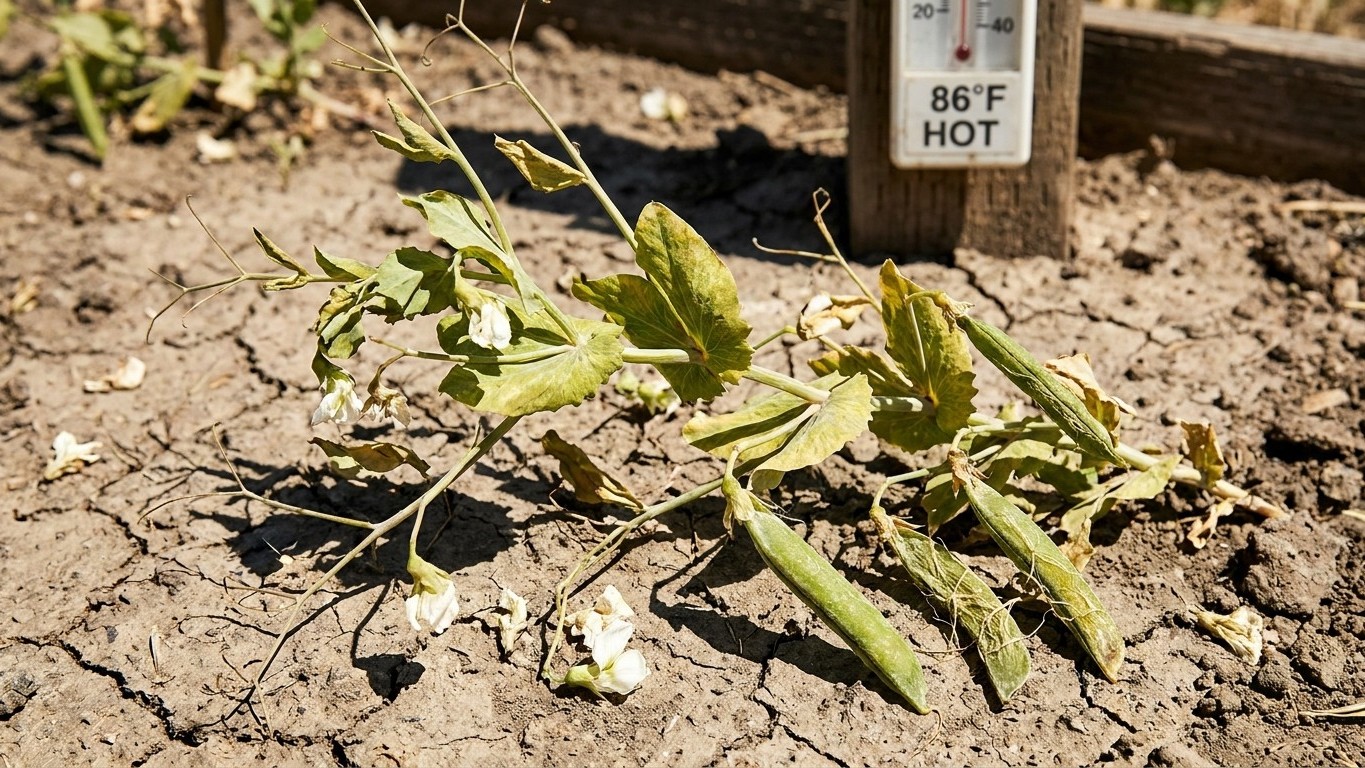

Peas start dropping their flowers once temperatures push past 80 F, according to Utah State University Extension. Add dry soil to that heat and the flower loss accelerates. The pods that do form under that same stress turn tough and stringy, because the fiber inside them hardens when the plant is short on water. Both symptoms trace back to one root cause: heat paired with drought, not two separate garden mysteries.
The short answer
Utah State University Extension is blunt about the threshold: pea flowers are “very sensitive to temperatures above 80 F,” and if dry conditions show up at the same time, the plant sheds its blossoms rather than push them into pods. That’s the flower-drop half of the problem. The pod-texture half comes later, once whatever flowers survived have set fruit. The Extension calls stringy peas “further evidence of heat or water stress,” explaining that the fibers inside the pod wall get tougher and the pods less palatable when the plant is under strain.
Read together, those two lines describe a single sequence rather than two unrelated complaints. A hot, dry stretch during bloom knocks flowers off the vine before they ever become pods. If some flowers hang on anyway, a hot, dry stretch afterward toughens the pods that those flowers produce. Same stress, two different growth stages, two different symptoms.
Because peas are direct-sown into the garden and tolerate frost well, the planting cue isn’t a date on a calendar. It’s whether the soil can be worked. Peas need somewhere in the range of 60 to 70 days from sowing to harvest, and they suffer once the weather turns hot. That means the practical goal is getting seed into the ground as early as the soil allows, so the plant can flower and fill pods while the weather still sits comfortably below that 80 F ceiling, then wrapping up harvest before the hottest stretch of the season settles in for good.
None of this is about counting weeks before or after frost, the way it might be for a tender, Warm-Season crop. It’s about matching the plant’s 60-to-70-day cycle to a window of cool weather, wherever the garden happens to sit on the map. A gardener in a mild coastal climate and one in a high-desert valley are chasing the same 80 F ceiling, just on different calendars.
What actually decides it

The 80 F threshold hits the flowers first
Flowering is the vulnerable moment. Utah State University Extension’s language is specific: pea flowers are sensitive to heat above 80 F, and dry soil at that same moment pushes the plant to drop them outright rather than let them develop. A single hot, dry afternoon during peak bloom can cost a gardener a meaningful share of the eventual harvest, simply because the flowers that fall never get the chance to become pods.
Water status after flowering decides pod texture
Once flowering is behind the plant, the stakes shift but don’t disappear. The Extension notes that water needs are “most critical after flowering,” and that drought stress at this stage does several things at once: it lowers yield through pod abortion, shrinks seed size, and increases pod stringiness while altering seed quality overall. the plant doesn’t need less careful watering once the flowers appear; it needs more consistent watering, because this is exactly when a lapse shows up as tough, stringy pods on the vine.
One watering habit covers both stages
Here’s where a single decision does double duty. A gardener who keeps soil consistently moist through both flowering and pod-fill isn’t solving two separate problems; they’re addressing one continuous stress window with one continuous habit. Skip the watering during bloom and flowers drop. Skip it during pod-fill and the surviving pods turn stringy. The fix in both cases is the same: don’t let the soil dry out during the plant’s most heat-sensitive stretch, and lean on mulch for later plantings that are more likely to hit hot weather before they finish.
How to do it
- Sow as Soon as the Soil Can Be Worked. Peas tolerate frost and are direct-sown, so the planting cue is workable soil, not a date. For an especially early start, seed can be germinated indoors and then moved out, a trick reserved for the earliest sowings rather than a standard transplant routine.
- Skip the fertilizer at planting. Peas fix Their Own Nitrogen. Extra nitrogen in the soil delays flowering and tends to attract more aphids, so there’s no upside to feeding the row before or during bloom.
- Keep the soil moist through flowering. This is the stage where temperatures above 80 F combined with dry soil cause the plant to drop its flowers, so consistent moisture matters more here than at almost any other point in the crop’s life.
- Watch the water supply closely once flowering ends. Utah State University Extension identifies this as the most critical period for water; letting the soil dry out now is what produces pod abortion, smaller seeds, and stringy texture.
- Let soil dry partway before rewatering. The Extension’s rule is to allow the soil to use up about half its available water before bringing it back to field capacity. Overwatering isn’t a safe substitute for consistency; wet soil invites root rot.
- Mulch later plantings. A crop sown later in the season is more likely to run into a hot spell before it finishes, so mulch becomes a practical tool for holding soil moisture and buffering the plant against that heat.
- Consider a fall crop with realistic expectations. Utah State University Extension confirms a second planting later in the season is possible, but notes plainly that fall-grown pea yields run much lower than spring sowings, so it’s worth planting fall peas as a bonus crop rather than counting on a full harvest.
What Goes Wrong
- Flowers drop during a hot spell. This is the 80 F threshold at work, made worse by dry soil. The remedy is consistent moisture through bloom rather than any change to the seed or variety; once the heat passes and soil stays damp, remaining flowers can still set pods normally.
- Pods turn stringy and tough near harvest. Utah State University Extension ties this directly to heat or water stress after flowering, the stage it calls most critical for water. The remedy is the same moisture discipline that prevents flower drop, just extended through pod-fill instead of stopping at bloom.
- Yield drops and pods abort even though the plant looks healthy. This is drought stress after flowering again, this time showing up as fewer filled pods rather than texture problems. Watching soil moisture closely during pod-fill, and not letting it dry out completely, addresses this and the stringiness problem with the same watering routine.
- Roots rot despite regular watering. This usually means the soil never gets the chance to dry out between waterings. The Extension’s guidance is to let the soil use up roughly half its available water before bringing it back to field capacity, and to avoid overwatering outright, since wet soil is what invites root disease in the first place.
- Plants stay leafy but flower late, with more aphids around. This points to excess nitrogen in the soil, often from fertilizer applied out of habit. Since peas fix their own nitrogen, the fix is simply skipping fertilizer at planting rather than adjusting the watering schedule.
- A fall-sown crop comes up thin. Utah State University Extension is upfront that fall plantings yield much lower than spring ones. There’s no separate fix here beyond adjusting expectations; it’s a known trade-off of pushing a second crop into the season rather than a sign anything went wrong.
Common questions
Does one hot day above 80 F ruin the whole crop?
Not necessarily. Utah State University Extension frames the risk as heat combined with dry soil during flowering. A single warm afternoon with moist soil is a smaller threat than a stretch of hot, dry weather during peak bloom, which is when flower loss becomes noticeable.
Can stringy pods be reversed once they’ve formed?
No. Stringiness reflects fiber that has already toughened in response to heat or water stress after flowering, per the Extension. The practical response is to catch the moisture problem for pods still developing and harvest existing stringy pods promptly rather than expect them to soften.
Is it worth fertilizing peas to boost flowering?
No. Peas fix their own nitrogen, and added nitrogen delays flowering while increasing aphid numbers. Skipping fertilizer at planting protects the timing of bloom rather than accelerating it.
Should a second, later planting be expected to match the spring harvest?
No. Utah State University Extension states plainly that fall-grown peas yield much lower than spring sowings. A fall crop is worth planting as a supplement, but the spring sowing remains the main harvest.