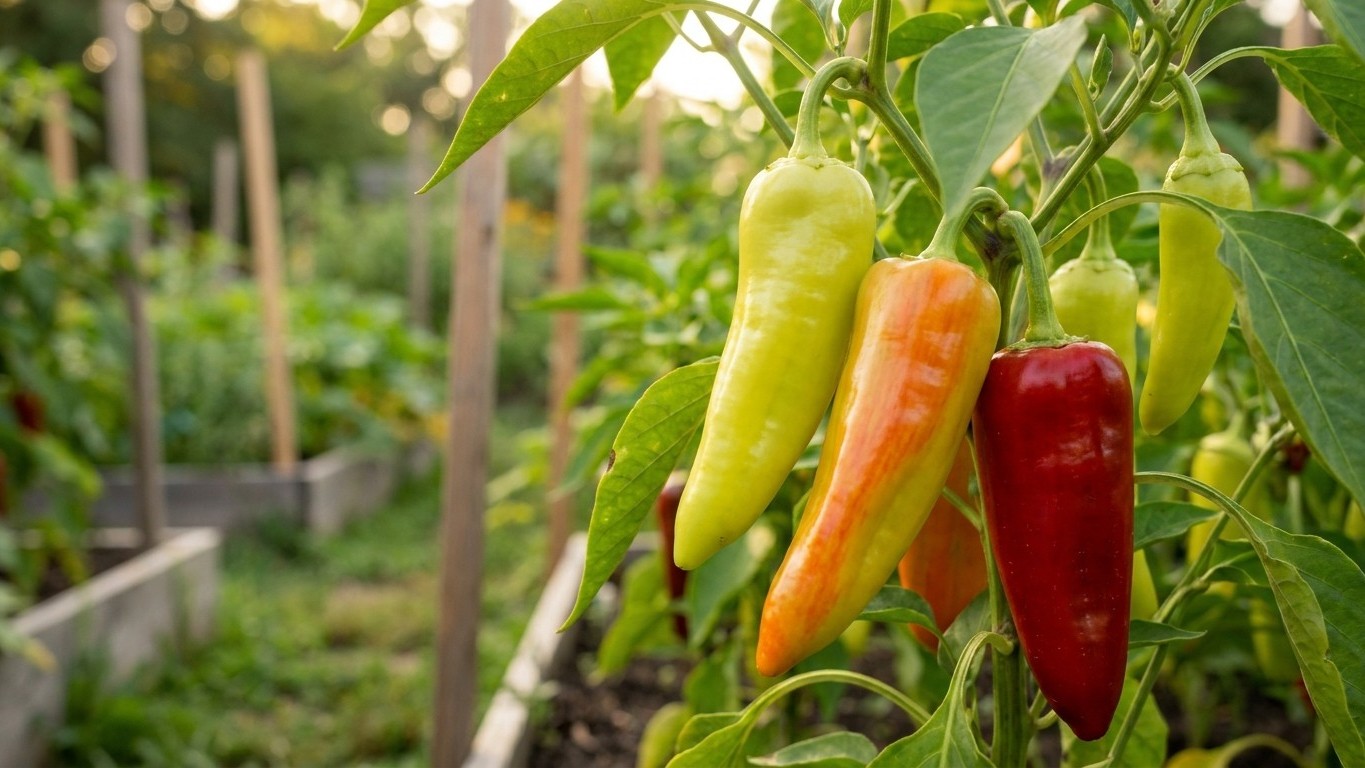

The Sweet Banana pepper is a banana pepper cultivar, which puts it in the mild, thin-walled category grown mostly for pickling and fresh slicing rather than heat. Clemson Cooperative Extension lists it among recommended garden varieties for home growers, and NC State Extension describes its general type. No published days-to-maturity, fruit size, or yield figure exists for it in either source, so the seed packet in your hand is the more reliable guide.
What growers get with this cultivar
Start with the type, because it tells you more than the name does. A banana pepper is long, tapered, and pale yellow to light green when young, ripening toward orange or red. It’s bred for a mild, tangy flavor rather than heat, which puts it in a different category from a jalapeno or a habanero before you even get to the specific variety.
Clemson Cooperative Extension includes Sweet Banana on its list of recommended pepper cultivars for South Carolina home gardens, identifying it plainly as a banana pepper type suited to the region. That’s the extent of the university’s specific claim for this cultivar. NC State Extension, which maintains a broader description of pepper types across the region, treats banana peppers as a category rather than singling out extensive cultivar-level detail for Sweet Banana specifically.
What’s missing matters as much as what’s there. Neither source publishes a days-to-maturity count, a fruit-length measurement, or a per-plant yield estimate for this cultivar. A gardener who knows that gap exists can plan around it, checking the count printed on their own seed packet instead of assuming a number that was never measured.
One distinction worth making plainly: some pepper plants sold at garden centers are ornamental only, bred for colorful, upright fruit display rather than eating. Sweet Banana, as an edible garden cultivar recommended by extension services, is not in that category, but the two get mixed up often enough at the nursery that it deserves a direct mention.
How hot is it, really
Heat comes down to type, and a banana pepper sits at the mild end of the pepper world, well below a jalapeno and nowhere near a habanero or a Carolina Reaper. Two cultivars in the wider pepper record actually have published Scoville numbers: the Carolina Reaper averages 1.64 million Scoville heat units, and jalapenos measure between 2,500 and 8,000. Those figures don’t apply to Sweet Banana, and no comparable number exists for it in Clemson or NC State’s published material.
That absence isn’t a data gap so much as a fact about how peppers work. NC State Extension’s general caution about pepper fruit applies here just as it does across many mild cultivars: fruits are edible “but spiciness is unpredictable in intensity.” That phrase points to the real mechanism behind pepper heat rather than pretending it’s fixed.
Capsaicin, the compound responsible for a pepper’s bite, concentrates under stress. A plant pushed through drought, heat spikes, or uneven watering tends to produce hotter fruit than the same cultivar grown in a mild, well-irrigated season. That’s true even for mild types like banana peppers, which explains why a homegrown Sweet Banana pepper can taste noticeably sharper in a rough August than it did the year before, even though nothing about the seed changed.
Practically, a bite test on one fruit from a stressed plant tells you little about the next fruit from the same plant, let alone the next season. If a recipe depends on a specific heat level, mild banana peppers are a safer bet than hot types precisely because their baseline is low enough that normal seasonal variation rarely pushes them into genuinely spicy territory. But “rarely” isn’t “never,” and unpredictable is the word the extension source actually uses.
Growing habits and season timing
Beyond the type designation, neither Clemson Cooperative Extension nor NC State Extension publishes cultivar-specific detail on Sweet Banana’s growth habit, disease resistance, or heat tolerance. That’s a narrower record than exists for some cultivars in this same pepper family, and it’s worth saying so rather than filling the space with a guess about compactness or container suitability that isn’t backed by either source.
Days to maturity: check your packet, not a general estimate
Days to maturity is one of the few pepper facts genuinely tied to individual cultivars, and it’s published for only a small number of them in this record. Sweet Banana isn’t one of them. Rather than estimate a count from its type, the more useful step is reading the number printed on your own seed packet, since packet counts reflect the specific seed lot and breeding line you’re actually growing, which varies more than a single “banana pepper” figure could capture.
What does hold true across essentially every pepper, regardless of cultivar, is that peppers are a warm-soil crop. Transplanting into ground that hasn’t warmed sufficiently doesn’t just slow growth modestly, it can stall a young pepper plant for weeks while it waits out cold soil, even if air temperatures feel warm enough to a person standing in the garden. That stall shows up later as a shortened, compressed harvest window rather than a steady one.
Getting the timing right starts well before transplant day. If you’re starting from seed, our guide on starting pepper seeds indoors covers the germination and hardening steps that set up a strong plant. And for the move outdoors itself, the soil-temperature thresholds and hardening-off schedule are covered in our transplanting peppers guide, which applies to Sweet Banana the same way it applies to any pepper cultivar without a separately published timeline.
Taste and how to use it in the kitchen
Flavor, like heat, tracks closely with type here. A banana pepper is mild and slightly tangy, with a thinner wall than a bell pepper and a shape built for slicing into rings rather than stuffing whole. That profile is what makes banana peppers a pantry staple for pickling, whether that means a quick refrigerator pickle or a shelf-stable jar processed for longer storage.
Fresh, banana peppers work well sliced into sandwiches and salads, where their mild bite adds interest without overwhelming other ingredients the way a jalapeno or serrano would. Because neither Clemson Cooperative Extension nor NC State Extension publishes a cultivar-specific tasting note for Sweet Banana beyond its type classification, the honest description here is the type description itself, mild, tangy, suited to pickling and fresh use, rather than an invented flavor note that would sound more specific than the record actually supports.
That’s a meaningful contrast with other cultivars in this same family, where NC State does publish distinctive language. Certain ornamental-leaning cultivars, for instance, get described as having “no heat but the prolific production of a habanero pepper,” while some sweet cultivars are noted for a “sugary sweet flavor.” Sweet Banana doesn’t carry either of those specific phrases in the source material, so stretching its description to match would misrepresent what’s documented. What can be said with confidence is that it fits squarely into the mild, pickling-friendly banana pepper category that home cooks already know how to use.
Common questions
Is Sweet Banana pepper hot?
No. As a banana pepper type, it sits at the mild end of the pepper spectrum, well below jalapenos. No Scoville figure is published for this specific cultivar, but its type places it far from anything considered spicy under normal growing conditions.
How many days until Sweet Banana peppers are ready to pick?
Neither Clemson Cooperative Extension nor NC State Extension publishes a days-to-maturity figure for this cultivar. The count on your own seed packet reflects the specific seed lot you’re growing and is the more reliable reference.
Can Sweet Banana peppers turn spicy?
Heat can shift with growing conditions. NC State Extension notes that pepper spiciness is “unpredictable in intensity,” and drought or heat stress tends to concentrate capsaicin, potentially making fruit taste sharper in a hard season than in a mild one, even for naturally mild types.
Are all banana pepper plants sold at nurseries edible?
Not necessarily. Some pepper plants marketed for their colorful foliage or fruit display are ornamental cultivars, not intended for eating. Sweet Banana, as a Clemson-recommended garden cultivar, is grown for food, but it’s worth checking a plant tag before assuming any pepper plant is edible.
Related guides
- Cubanelle Pepper: When to Plant the Tomatoes That Ripen All at Once
- Banana Supreme Pepper: When to Plant the Tomatoes That Ripen All at Once
- Biscayne Pepper: When to Plant the Tomatoes That Ripen All at Once
- Plato Pepper
- Serrano Pepper
- Jalapeno M Pepper
- Poblano Pepper: When to Plant the Tomatoes That Ripen All at Once