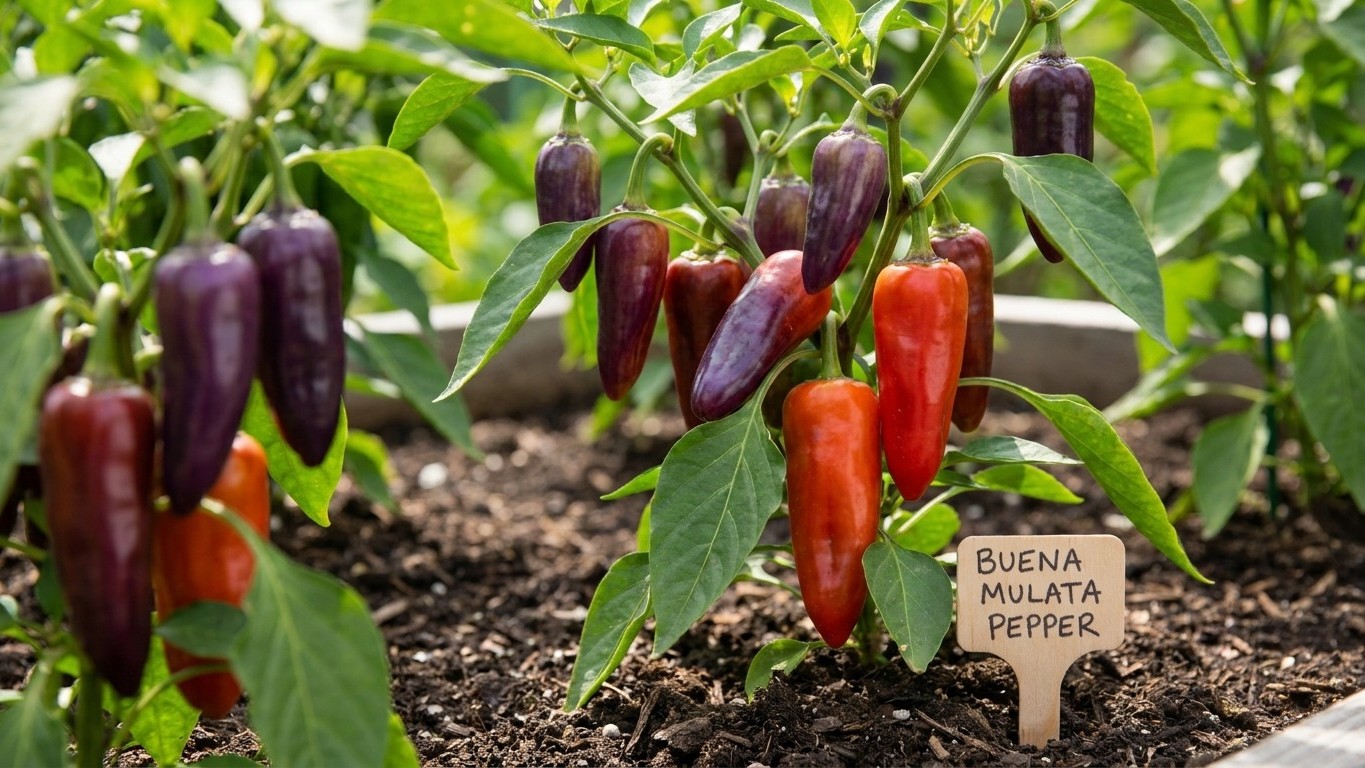

The Buena Mulata pepper is an edible cultivar noted by NC State Extension mainly for its color-shifting fruit, not for a known heat level or maturity date. Sources don’t sort it into a standard pepper type, so what you plant is closer to a novelty grower’s pick than a predictable garden staple. Timing follows the same warm-soil rule as every other pepper.
What the Buena Mulata Pepper Actually Is
Most pepper cultivars get filed neatly into a type: bell, banana, jalapeno, habanero, cayenne, or a general “hot pepper” bucket. Clemson Cooperative Extension‘s recommended list uses exactly those categories. The Buena Mulata doesn’t appear on that list, and NC State Extension, which does describe it, never assigns it a type either. That’s worth saying plainly rather than guessing where it fits based on its name or its color.
What NC State Extension does say is short and specific: “Chameleon-like color changes as it ripens.” That’s the entire cultivar-specific description available from the source. No days to maturity. No fruit length or width. No yield estimate per plant. A lot of pepper listings skip these details, and rather than fill the gap with a plausible-sounding number, it’s more honest to tell you the number simply isn’t published for this one.
One distinction matters here: this is a fruit-bearing, edible pepper. It is not the same category as the decorative pepper plants sold in garden centers purely for their colorful foliage and clustered ornamental fruit, several of which are not meant to be eaten at all. If you bought Buena Mulata seed or starts labeled for the vegetable garden, you’re dealing with a food crop, not a houseplant accent.
How Hot Is the Buena Mulata Pepper?
Pepper heat scales with type more reliably than with name. A bell pepper carries essentially none. A jalapeno sits in moderate territory, generally cited at 2,500 to 8,000 Scoville heat units. A habanero or a Carolina Reaper runs extreme, with the Reaper averaging 1.64 million Scoville units. Those two figures are the only Scoville numbers backed by the sources behind this page, and neither one applies to the Buena Mulata.
Because this cultivar isn’t sorted into any of those categories by Clemson’s list or by NC State’s description, there’s no type-based shortcut to lean on either. What NC State does offer is a caution that turns out to be the most useful piece of information available: the fruits are edible, “but spiciness is unpredictable in intensity.” That sentence is doing real work. It means the plant itself doesn’t guarantee a fixed bite.
The mechanism behind that unpredictability is worth understanding rather than glossing over. Capsaicin, the compound responsible for heat, tends to concentrate under plant stress, drought, heat waves, uneven watering. A pepper grown in a mild, well-watered season can taste noticeably tamer than the same variety grown through a hot, dry stretch. So two harvests off the same plant, in two different summers, can land in different places on the heat scale. Nobody can hand you a fixed Scoville number for this cultivar, because the plant itself doesn’t produce one.
And again, worth repeating in this context specifically: some ornamental pepper varieties sold for looks rather than eating are not food-safe. That’s a separate category from what’s discussed here, but it’s an easy mix-up at a garden center display.
Growing Requirements: Soil, Timing, and What’s Not on the Label
Beyond the color-change trait, the sources don’t describe whether this cultivar is compact, container-friendly, disease-resistant, or bred for heat tolerance. Some pepper listings include those growth-habit details; this one, as documented by NC State Extension, doesn’t go beyond the ripening color note. So rather than assume it behaves like a typical hot pepper or a typical bell, treat those traits as unknown until you’ve grown it yourself.
Days to Maturity: Check Your Seed Packet
Only one pepper cultivar in this reference set has a published days-to-maturity figure, and the Buena Mulata isn’t it. That’s not an oversight worth working around with an estimate based on its presumed type, since the type itself isn’t confirmed. The number that actually matters for your garden is the one printed on your own seed packet, since seed suppliers test and report maturity windows specific to their stock and growing conditions. That figure, not a generic estimate, is what will apply to your planting.
The One Rule That Applies to Every Pepper
Whatever the maturity window turns out to be, the clock doesn’t start until the soil is warm. Peppers are a warm-soil crop across the board, and setting transplants into cold ground doesn’t just slow growth, it can stall the plant for weeks while it waits out temperatures it can’t tolerate. If you’re planning your planting date, that soil-temperature threshold matters more than the calendar. For the specifics on when soil counts as warm enough and how to harden off transplants, see our guides on starting pepper seeds indoors and transplanting peppers outdoors.
Taste and Kitchen Uses
Pepper flavor generally tracks type the same way heat does. A bell pepper is sweet and firm enough to hold its shape stuffed or roasted. A banana pepper is mild and tangy, well suited to pickling. A jalapeno brings fresh, grassy heat to salsa, poppers, and quick pickles. A cayenne is typically dried and ground into powder. A habanero is fruity underneath its heat and used in small amounts precisely because a little carries the whole dish.
The Buena Mulata doesn’t fit cleanly into that list, and the sources don’t hand us a flavor note to lean on. NC State Extension’s description stops at the color-changing trait; it doesn’t characterize the fruit’s sweetness, its thickness of flesh, or its best kitchen use. Inventing a tasting note for a specific named cultivar is exactly the kind of detail a reader can catch as unearned, so it’s better stated directly: beyond noting that this is an edible pepper with unpredictable heat, the published sources don’t describe how it tastes or how it’s best used in the kitchen. That’s information you’ll gather firsthand once you’ve grown and harvested it, likely across a couple of its color stages, since a chameleon-like ripening pattern often means the fruit changes not just in appearance but in sweetness and heat as it matures.
Common questions
Is the Buena Mulata pepper edible or ornamental?
It’s an edible cultivar. That said, some decorative pepper plants sold for colorful foliage are grown strictly for looks and aren’t intended for eating, so always confirm what you’re buying is labeled as a food crop.
When should I plant Buena Mulata peppers?
No cultivar-specific days-to-maturity figure is published for this pepper, so timing follows the general rule for all peppers: wait until soil has warmed, since cold ground stalls transplants for weeks. Check your seed packet for the maturity window specific to your seed source.
How hot is Buena Mulata pepper compared to a jalapeno?
There’s no direct comparison available. Jalapenos run 2,500 to 8,000 Scoville units, but no Scoville figure exists for Buena Mulata. NC State Extension notes only that its heat is edible but unpredictable in intensity, meaning it can vary from one harvest or season to the next.
Why does my Buena Mulata pepper change color?
That shifting color is the cultivar’s defining trait, described by NC State Extension as “chameleon-like.” Peppers commonly move through multiple colors as they ripen, and this variety is specifically noted for how pronounced that progression is.
Related guides
- Calico Pepper: When to Plant the Tomatoes That Ripen All at Once
- California Wonder Pepper: When to Plant the Tomatoes That Ripen All at Once
- Early Jalapeno Pepper: When to Plant the Tomatoes That Ripen All at Once
- Sweet Sunset Pepper
- Mitla Pepper
- Cubanelle Pepper
- Biscayne Pepper: When to Plant the Tomatoes That Ripen All at Once