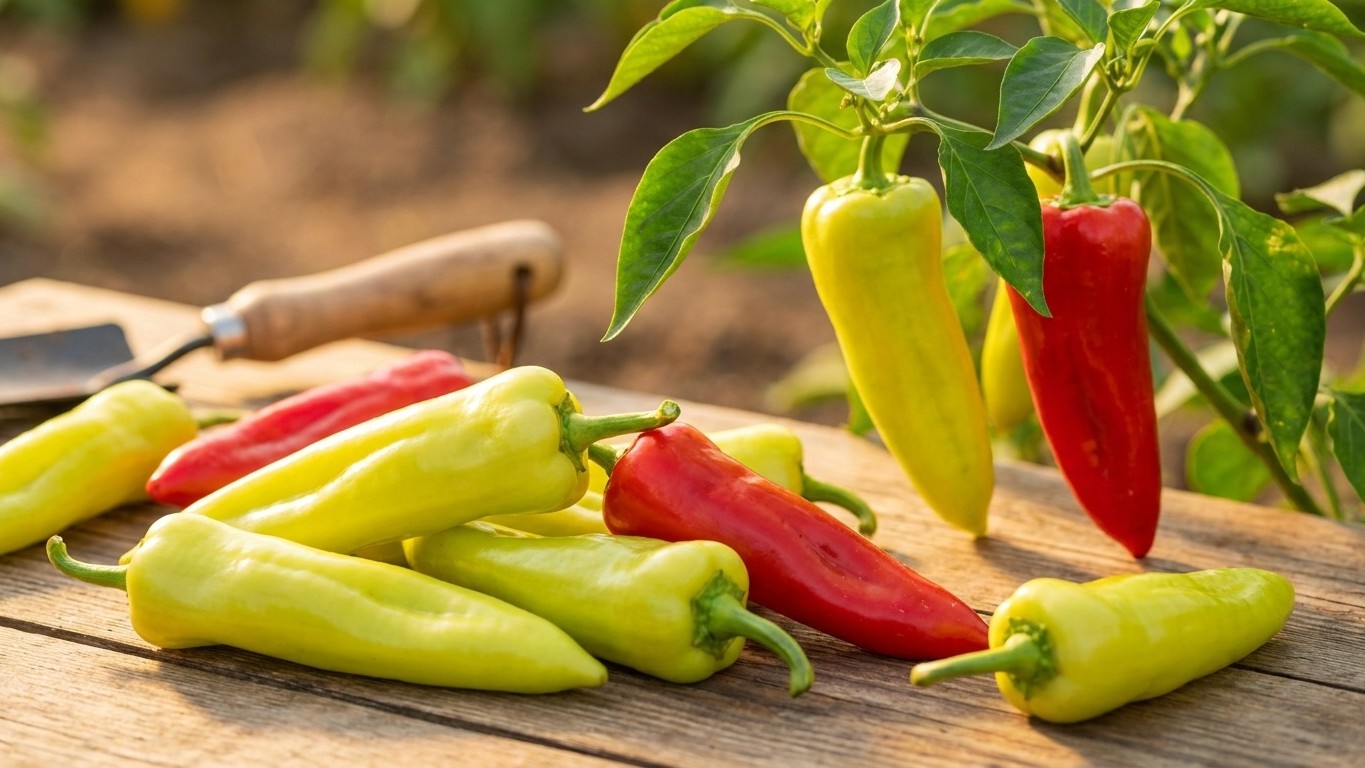

The Cubanelle pepper is a sweet, thin-walled frying pepper that Clemson Cooperative Extension lists among its recommended banana pepper types for home gardens. It carries little to no heat, grows best once soil has warmed past 65°F, and is picked young for frying, stuffing, or sautéing rather than left to fully ripen and turn red.
What Kind of Pepper Is the Cubanelle
Before anything else, know the category: Cubanelle belongs to the banana pepper group, a family of long, tapered, thin-walled sweet peppers grown for frying and general kitchen use rather than for stuffing whole like a bell or for heat like a jalapeño. Clemson Cooperative Extension includes Cubanelle on its list of recommended pepper cultivars for South Carolina gardens, filed under the banana pepper type. That listing tells a gardener the plant has been vetted for regional performance, but it stops short of specifics.
NC State Extension, the other authority behind most pepper cultivar descriptions used in home garden references, does not carry a detailed cultivar entry for Cubanelle the way it does for some ornamental and novelty types. That gap matters more than it might seem. No published days-to-maturity figure exists for this cultivar in these extension sources. No standardized fruit length or width is listed. No yield-per-plant number is available. Rather than estimate those figures from the banana pepper type in general, it is more honest to say plainly: they are not published for Cubanelle specifically, and a gardener should not treat a general banana-pepper number as a guarantee for this named cultivar.
One distinction worth making once, clearly: some peppers sold in nurseries are ornamental, bred and marketed for colorful foliage or fruit display rather than for eating. Cubanelle is not one of those. It is an edible cultivar grown for the kitchen, listed as such in cooperative extension recommendations. But the two categories get mixed up often enough at garden centers that it is worth checking a plant tag before assuming every pepper in the ornamental section is dinner.
How Spicy Is the Cubanelle Pepper, Really
The honest answer starts with the type, not the cultivar. A bell pepper carries essentially no heat. A jalapeño sits in moderate territory. A habanero and something like the Carolina Reaper occupy the extreme end of the scale. Cubanelle, as a banana pepper type, falls at the mild end alongside its relatives, closer to a bell than to a jalapeño in the sensation it delivers.
What this page will not do is assign the Cubanelle a Scoville number, because no such figure has been published for it in the sources behind this page. Only two Scoville figures actually exist in the research used here: the Carolina Reaper averages 1.64 million Scoville units, and jalapeños run between 2,500 and 8,000. Every other cultivar mentioned across this pepper series, Cubanelle included, has no measured number attached to it. Printing one anyway would make it look tested when it is not.
What NC State Extension does say, describing edible pepper cultivars more broadly, is that fruits are edible “but spiciness is unpredictable in intensity.” That single sentence does more useful work than a fake number ever could. Pepper plants concentrate capsaicin, the compound responsible for heat, in response to stress: drought, high heat, poor watering consistency. A banana-type pepper grown in a hot, dry summer with irregular watering can bite noticeably sharper than the same plant grown in a mild, evenly irrigated season. So a Cubanelle harvested during a heat wave in July might carry more bite than one picked after a wet, cool June. Same seed packet, same cultivar name, different plant behavior depending on what kind of season it lived through.
Growing Conditions and Timing for Cubanelle
Cubanelle’s listing among Clemson’s recommended cultivars signals decent regional adaptability, but the extension sources behind this page don’t specify whether it’s bred for containers, unusually compact, especially disease-resistant, or grown as much for its foliage as its fruit. Those traits get called out explicitly for some cultivars and simply aren’t mentioned for this one, which likely means Cubanelle performs as a standard garden pepper plant rather than a specialty type bred for a narrow use case.
Days to maturity is where a gardener most wants a firm number, and here again, this cultivar doesn’t have one published in the sources behind this page. Only one pepper cultivar in this reference series carries a stated maturity count; Cubanelle isn’t it. Rather than guess based on the banana pepper type generally, the better move is to read the number printed directly on your own seed packet. Seed lots vary by grower and by year, and the packet in your hand reflects the specific stock you’re planting, which is a more reliable figure than any general estimate.
The One Rule That Doesn’t Change
Regardless of maturity timing, one constant applies to Cubanelle the same way it applies to every pepper cultivar: this is a warm-soil crop. Peppers stall, sometimes for weeks, when transplanted into ground that hasn’t warmed sufficiently. A transplant that sits in cold soil doesn’t just grow slowly, it can lose the growing season’s early momentum entirely and never fully catch up. For soil temperature thresholds and hardening-off timing, see our guide to transplanting pepper seedlings. For gardeners starting from seed indoors rather than buying transplants, our starting pepper seeds guide covers the earlier stage of that same warm-conditions requirement.
What Cubanelle Tastes Like and How It’s Used
Taste, again, is best explained by type rather than by invented specifics for this one cultivar. Banana peppers, the category Cubanelle belongs to, are mild and thin-fleshed, which is exactly why they show up so often in frying pans, on sandwiches, and in vinegar brines rather than roasted whole or stuffed the way a thicker-walled bell pepper gets used. Cubanelle specifically is a workhorse of Italian-American frying pepper dishes, sautéed with onions, sliced into sandwiches, or pickled whole.
Neither Clemson Cooperative Extension nor NC State Extension publishes a cultivar-specific tasting note for Cubanelle the way they do for some other peppers in this reference series, where quotes like “sugary sweet flavor” or “no heat but the prolific production of a habanero pepper” appear for named cultivars. Rather than manufacture a similar line for Cubanelle that no source actually states, the fair description is the one grounded in its type: mild, thin-walled, suited to frying and pickling, without the sweetness intensity of a true bell or the acidic punch of a hot pepper. That’s a real answer, just not a manufactured quote dressed up as one.
Common questions
Is a Cubanelle pepper the same as a banana pepper?
They belong to the same broad category of mild, thin-walled frying peppers, and Clemson Cooperative Extension lists Cubanelle under its banana pepper type recommendations. They aren’t identical cultivars, but they share the same general growing habits and mild flavor profile.
How hot is a Cubanelle pepper on the Scoville scale?
No Scoville figure has been published for Cubanelle specifically. As a banana pepper type, it falls at the mild end of the scale, well below a jalapeño, but the exact number isn’t measured or listed by the extension sources behind pepper cultivar guides.
When should I transplant Cubanelle pepper seedlings outdoors?
Wait until soil has warmed sufficiently rather than following the calendar alone. Peppers transplanted into cold ground stall for weeks regardless of cultivar, so soil temperature matters more than a fixed date.
Can I eat an ornamental pepper plant that looks like Cubanelle?
No. Ornamental peppers are bred and sold for colorful foliage or fruit display, not for eating, and they are a different product entirely from edible cultivars like Cubanelle. Always check the plant tag before assuming a pepper for sale is meant for the kitchen.