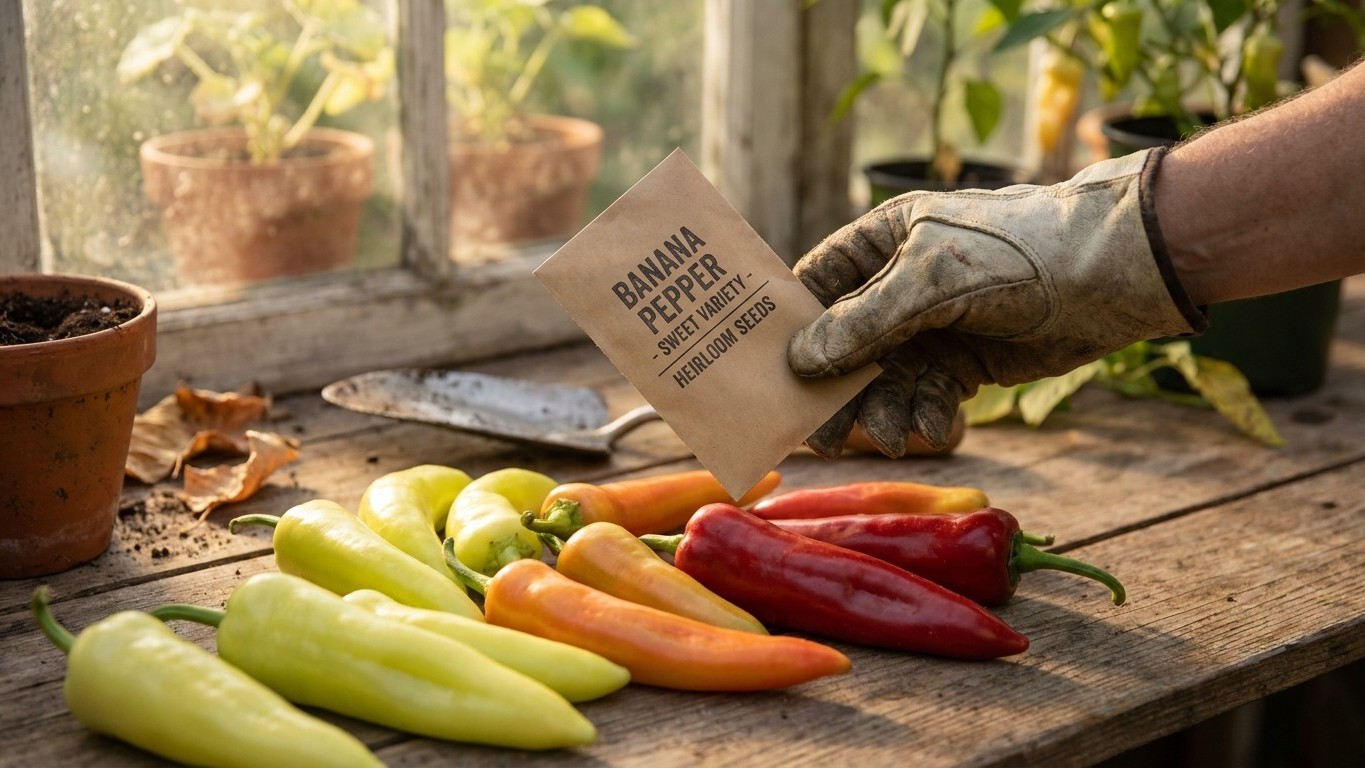

Banana Supreme is a banana pepper, the mild, elongated, yellow-to-orange type sold for pickling and fresh slicing, not a hot pepper. It appears on Clemson Cooperative Extension’s list of recommended pepper cultivars for home gardens. No published days-to-maturity, fruit size or yield figure exists for this specific cultivar, so the seed packet you’re holding is the best guide to timing, and heat level follows the banana-pepper type rather than any measured number.
What Kind of Pepper Is Banana Supreme?
The cultivar name tells you almost nothing on its own. What matters is the category behind it, and Banana Supreme falls squarely into the banana pepper group: long, tapered fruits that start pale yellow-green and ripen toward orange or red, grown mostly for pickling and fresh use rather than drying or powder-making.
Clemson Cooperative Extension lists Banana Supreme among its recommended cultivars for South Carolina home gardens, identifying it by type as a banana pepper. That’s the extent of what the source states plainly. It does not publish a days-to-maturity count, a fruit length, or a yield estimate for this particular cultivar, and no other university extension source fills that gap either.
Rather than guess at those numbers from the type alone, it’s worth saying so directly: for Banana Supreme, the maturity window, fruit size and expected yield simply aren’t documented in the extension literature this page draws from. A gardener who knows that gap exists can plan around it, checking the seed packet or nursery tag for the specifics the extension list doesn’t provide, instead of working from an invented figure that sounds authoritative but isn’t.
One distinction matters here before going further. Some pepper plants sold at garden centers, often labeled ornamental or decorative, are grown purely for colorful foliage and fruit display. Those are not food crops, and eating their fruit isn’t recommended. Banana Supreme is not one of them, it’s an edible cultivar bred for the kitchen, but the two categories get mixed up often enough at retail that the distinction is worth stating once, clearly.
How Hot Is a Banana Supreme Pepper?
Banana peppers as a type carry mild heat, well below jalapenos and nowhere near the extreme end of the pepper world. That places Banana Supreme in the tangy-not-fiery category most cooks reach for when a recipe calls for a pop of flavor without a burn.
No Scoville figure exists for Banana Supreme specifically, and none should be invented. Only two cultivars in university extension literature carry published Scoville numbers: the Carolina Reaper, which averages 1.64 million Scoville units, and the jalapeno, which runs 2,500 to 8,000. Every other cultivar, Banana Supreme included, falls outside that measured range in the available sourcing, so any number attached to it here would read as precise when it simply isn’t.
What extension sources do say applies broadly to pepper cultivars without individual Scoville data: NC State Extension notes that fruits are edible « but spiciness is unpredictable in intensity ». That single sentence carries more practical weight than a made-up number would. The mechanism behind it is straightforward: capsaicin, the compound responsible for pepper heat, concentrates under plant stress. A hot, dry stretch late in the season, or a plant pushed to the edge of its water tolerance, tends to produce sharper-tasting fruit than the same cultivar grown in a mild, evenly watered summer.
That means two gardeners growing Banana Supreme from the same seed packet, one in a humid coastal yard and another in a drought-prone inland plot, can end up with noticeably different results at harvest. Tasting a small piece before committing a whole batch to a recipe remains the only reliable check, since no lab number is going to tell you what your particular growing season did to that particular plant.
Growing Conditions and Days to Maturity
Clemson’s recommendation places Banana Supreme in home garden lineups without flagging it as a specialty or difficult cultivar, which suggests it performs like a standard banana pepper: productive, tolerant of average garden conditions, and suited to both in-ground beds and containers, the way most banana pepper types are grown.
Days to maturity is not published for Banana Supreme in the extension sourcing behind this page. Only one pepper cultivar in this broader reference set carries a documented maturity count, and Banana Supreme isn’t it. Rather than borrow a number from a different cultivar or estimate one from the banana pepper type in general, the honest answer is that the figure isn’t available here, and the seed packet in your hand is going to be more accurate for your specific seed lot and growing zone than anything this page could offer.
What Does Apply, Regardless of Cultivar
One constant holds across every pepper cultivar, Banana Supreme included: peppers are a warm-soil crop. Soil temperature, not just air temperature, determines how fast roots establish, and cold ground stalls growth for weeks even after a transplant looks fine above the soil line. Pepper roots essentially sit dormant until the soil around them warms enough to support active growth, which is why an early, optimistic transplant into cool spring soil often ends up outperformed by a later one set into properly warmed ground.
For the specifics on timing that transplant and starting seed indoors ahead of it, the practical steps are covered on this site’s pages on transplanting pepper seedlings and starting pepper seeds indoors, rather than repeated here.
Taste, Texture, and Best Kitchen Uses
Flavor and use both follow from the banana pepper type, since no cultivar-specific tasting note for Banana Supreme appears in the extension sourcing this page relies on. Rather than invent one, the honest approach is to describe what banana peppers as a category deliver, and say plainly that Banana Supreme hasn’t been singled out with its own flavor description by either Clemson Cooperative Extension or NC State Extension.
Banana peppers as a type are known for a mild, tangy-sweet flavor with a slight vinegar-like edge even before pickling, which is exactly why they’re the standard choice for jar pickling, sandwich toppings, and pizza garnish. The thin walls and elongated shape make them quick to slice into rings, and their mild heat means they can be used generously without overwhelming a dish, unlike a jalapeno or habanero used in the same volume.
Fresh, banana peppers work well sliced raw into salads or alongside cheese and crackers. Cooked, they soften quickly in sautes and hold their shape reasonably well when stuffed, though not as sturdily as a bell pepper. Where a cultivar-specific quote does exist for a different pepper in this same reference set, such as a note about « sugary sweet flavor » or one describing no heat but prolific production, that language belongs to that cultivar specifically and shouldn’t be borrowed here. For Banana Supreme, type-level description is what the sourcing supports, and that’s what this page reports.
Common questions
Is Banana Supreme pepper hot?
No, it’s a banana pepper type, which carries mild heat rather than the sharp burn of a jalapeno or the extreme heat of a habanero or Carolina Reaper. No Scoville number is published for this cultivar specifically, and heat can vary with growing conditions.
How many days to maturity does Banana Supreme pepper need?
That figure isn’t published for this cultivar in the university extension sourcing behind this page. Checking the days-to-maturity count printed on your specific seed packet will give a more accurate estimate than any general figure.
Is Banana Supreme pepper the same as an ornamental pepper?
No. Banana Supreme is an edible cultivar recommended by Clemson Cooperative Extension for home gardens. Ornamental peppers sold for colorful foliage are a separate category, grown for display rather than eating, and shouldn’t be treated as food.
What’s the best use for Banana Supreme peppers in the kitchen?
As a banana pepper type, it suits pickling, fresh slicing for sandwiches and salads, and pizza toppings, thanks to its mild, tangy flavor and thin walls that slice easily into rings.
Related guides
- Biscayne Pepper: When to Plant the Tomatoes That Ripen All at Once
- Key Largo Pepper: When to Plant the Tomatoes That Ripen All at Once
- Jalapeno M Pepper: When to Plant the Tomatoes That Ripen All at Once
- Mitla Pepper
- Cubanelle Pepper
- California Wonder Pepper
- Basket of Fire Pepper: When to Plant the Tomatoes That Ripen All at Once