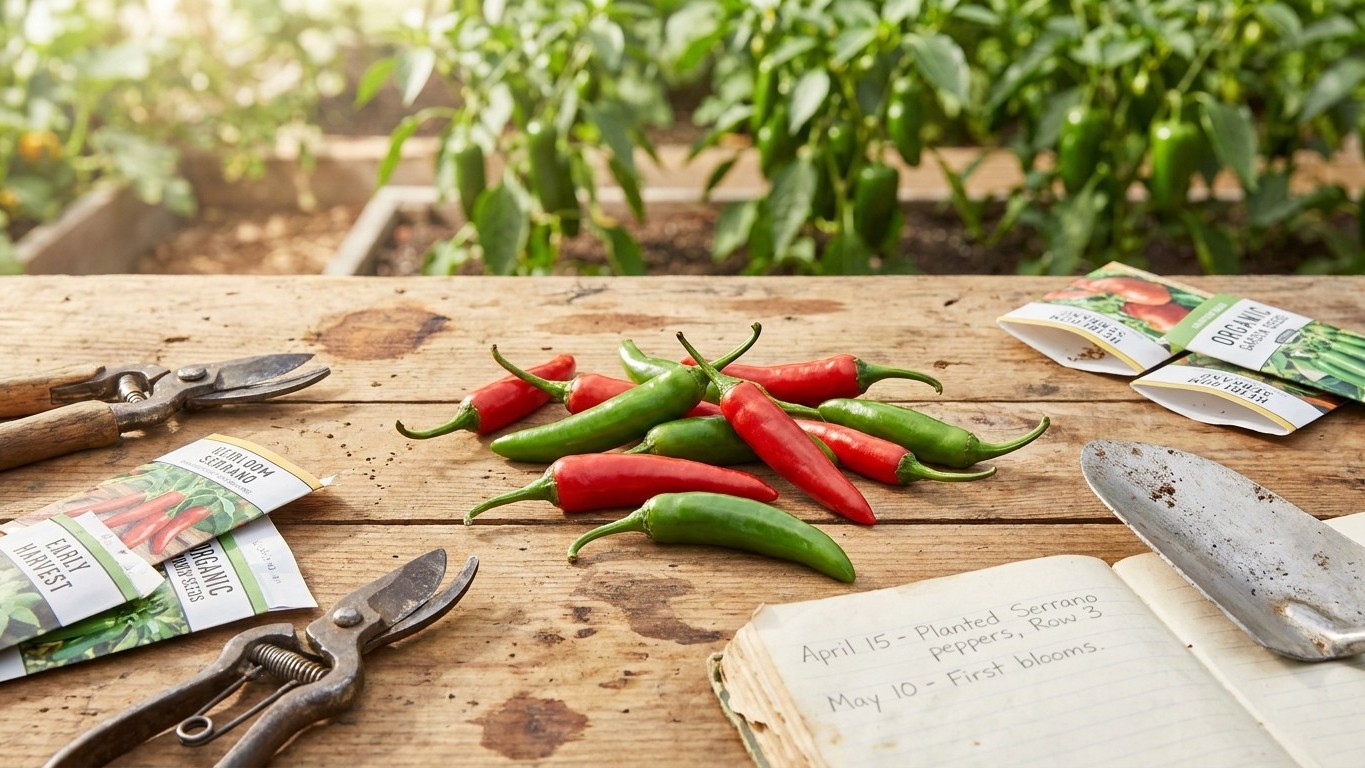

The Serrano pepper is a hot pepper type, one of the cultivars recommended by Clemson Cooperative Extension for home gardens. Its heat runs unpredictable from season to season, and no fixed maturity date is published for it, so the count on your own seed packet is what actually governs your planting calendar.
What the grower actually gets
Before anything else, know what shelf this pepper sits on. Clemson Cooperative Extension lists the Serrano among its recommended home-garden cultivars, filed under the type “hot pepper.” That single word tells you more than the name itself does. A hot pepper behaves differently in the garden and on the plate than a bell, a banana, or a habanero, and the type is the first thing worth confirming when you buy a seed packet or a nursery start.
NC State Extension, the second source behind this page, describes the fruit in plain terms: edible, with heat that varies. Neither university publishes a days-to-maturity figure for the Serrano specifically, nor a fruit size, nor a yield estimate. That gap is worth stating outright rather than papering over with a guessed number. A reader who knows a figure simply isn’t published is better served than one handed a confident-sounding estimate that nobody actually measured.
One distinction matters enough to repeat here, once, clearly: some pepper plants sold at garden centers are ornamental, bred for colorful foliage and berry-like fruit display rather than for eating. Those decorative plants are not food, and they are a different product entirely from the edible Serrano cultivar this page covers. If a tag or label doesn’t say “edible” or list it among culinary peppers, treat it as a houseplant, not a harvest.
How hot is it, really?
Heat in peppers tracks the type long before it tracks the cultivar name. A bell pepper carries essentially no capsaicin. A jalapeno runs moderate, in the 2,500 to 8,000 Scoville range. A habanero or a Carolina Reaper sits at the extreme end, the Reaper averaging 1.64 million Scoville units. The Serrano falls into the hot pepper category, above a jalapeno’s typical bite in most gardeners’ experience, but no Scoville figure for the Serrano itself appears in either university source used for this page, and inventing one here would read as measured data when it isn’t.
What NC State Extension does say is worth quoting directly, because it’s the actually useful part: fruits are edible “but spiciness is unpredictable in intensity.” That single line explains more than a number would. Capsaicin production isn’t fixed by genetics alone; it responds to stress. A plant that goes through a stretch of drought, or that sits in a heat wave with irregular watering, tends to concentrate more capsaicin in its fruit than the same plant grown in a mild, evenly watered season. Two Serrano plants from the same seed packet, grown on opposite sides of a yard with different sun exposure, can genuinely taste different.
That unpredictability is the honest answer to “how hot will mine be.” Consistent moisture and moderate conditions tend to produce a milder fruit; a stressed, dry summer tends to push the heat up. There’s no way to promise a number in advance, and any grower who tells you otherwise is guessing just like the rest of us.
What this cultivar needs to grow
Neither Clemson Cooperative Extension nor NC State Extension publishes a days-to-maturity count specific to the Serrano. Only one cultivar in this broader pepper lineup has a published figure, and the Serrano isn’t it. Rather than borrow a number from a different cultivar or estimate one from its type, the honest move is to check the seed packet in hand. Seed producers test their own stock for germination and maturity timing under standard conditions, and that printed number is the one that will actually apply to the plants growing in your yard.
One constant does apply across nearly every pepper cultivar, Serrano included: this is a warm-soil crop from the moment seed hits soil. Peppers germinate slowly and unevenly in cool ground, and transplants set out before soil has warmed stall for weeks rather than taking off. That stall isn’t cosmetic. A plant that sits stunted through a cold snap in its first weeks often produces less through the whole season, even after the weather turns warm.
Beyond soil temperature, the source material available for this cultivar doesn’t establish anything unusual about disease resistance, container suitability, or compact growth habit specific to the Serrano. Absent that detail, the safest approach is standard pepper practice: start seed indoors under consistent warmth, harden off transplants gradually, and hold off moving plants outside until nighttime lows are reliably mild. For the specific steps and timing, a dedicated guide to starting pepper seeds indoors and a companion piece on transplanting peppers into the garden cover the mechanics in more depth than belongs here.
The taste and how it’s used
Flavor, like heat, tracks type more reliably than cultivar name for peppers where the source material stays quiet on specifics. A bell pepper reads sweet and holds its shape well enough to stuff or roast whole. A banana pepper stays mild and pickles cleanly. A jalapeno works fresh in salsa, stuffed and baked as poppers, or sliced and pickled for sandwiches. A cayenne gets dried and ground into powder rather than eaten fresh. A habanero brings a fruity note and gets used in small quantities precisely because a little goes a long way.
The Serrano sits in the hot pepper category, and in that category the fruit is generally used fresh, chopped into salsas, sauces, and dishes where a clean, direct heat is wanted without the smoky or dried character of a cayenne. Neither Clemson Cooperative Extension nor NC State Extension publishes a tasting note specific to the Serrano cultivar itself, though, and it would be a mistake to invent one here. Where these sources do offer cultivar-specific flavor language for other peppers, quoting it directly and crediting NC State is the right move; for the Serrano, the honest description stops at what the type establishes, and no further.
If you’re deciding whether the Serrano fits your kitchen, think about how you use hot peppers generally rather than looking for a unique flavor claim that doesn’t exist in the published record.
Common questions
Is Serrano the same thing as jalapeno?
No. Both fall under the broader hot pepper category, and jalapeno has a published Scoville range of 2,500 to 8,000 units, but they’re distinct cultivars with their own growth habits and uses. Don’t substitute one for the other in a recipe expecting identical heat.
Why does my Serrano taste different from one I grew last year?
Capsaicin concentration responds to growing conditions. A season with more drought stress or heat tends to push heat intensity up; a mild, evenly watered season tends to produce a gentler fruit. NC State Extension describes this variability directly, noting spiciness is unpredictable in intensity even within the same cultivar.
Can I eat an ornamental pepper plant labeled Serrano-like?
Only if it’s specifically sold and labeled as an edible culinary cultivar. Ornamental peppers are bred and marketed for foliage and fruit display, not for eating, and the two categories should never be treated as interchangeable at the dinner table.
When should I move Serrano transplants outside?
Wait until soil has warmed and nighttime lows are reliably mild, since cold ground stalls pepper growth for weeks regardless of cultivar. No specific maturity count is published for the Serrano, so lean on the days-to-maturity figure printed on your own seed packet to plan your harvest window.