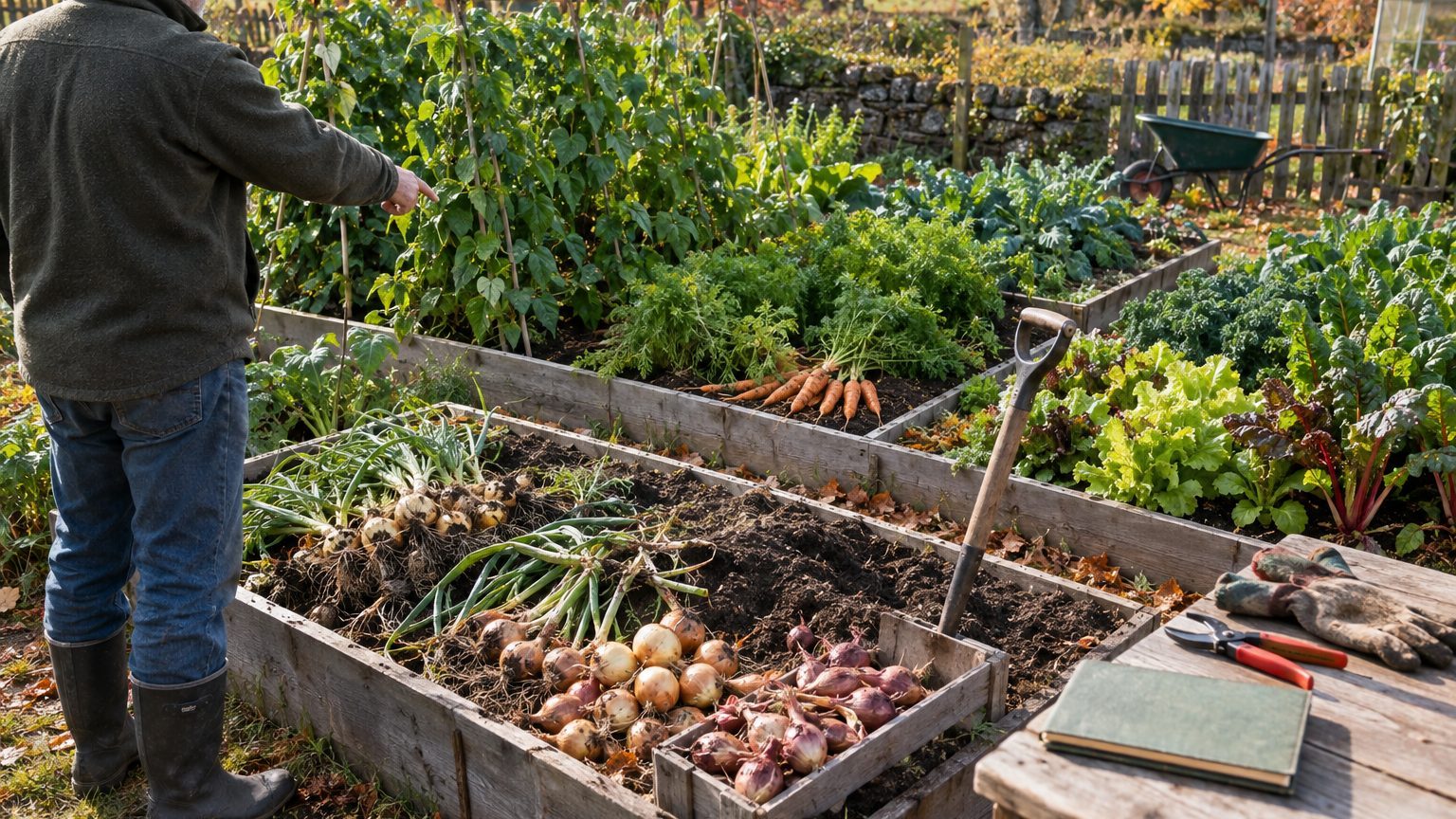

Plan on a three-year gap, four if you have ever had disease in the bed, before shallots go back into soil that grew any allium. That means onions, garlic, leeks, scallions, chives, and other shallots. Everything in that family shares the same pests and soil diseases, so a bed of onions followed by a bed of shallots is not a rotation at all. It is a second serving for the same pathogens.
Shallots are a form of the common onion species, so what hurts onions generally hurts them. If you are still weighing the two crops, How a Shallot Differs From an Onion covers flavor, storage, and growth habit. For rotation, though, treat them as one crop.
Why the allium family has to move as a group
Rotation works because most garden pests and diseases are picky. A cabbage worm ignores a bed of beans, and a bean beetle has no interest in garlic. Alliums have their own short list of troublemakers, and each one can build up in soil or debris after a crop leaves.
The usual suspects include:
- Onion maggots, whose larvae feed on bulbs and seedlings and overwinter in the soil as pupae
- White rot, a fungal disease that attacks only alliums
- Stem and bulb nematodes, microscopic worms that distort and soften plants
- Fusarium basal rot, which rots the base plate from the bottom up
- Leek moth and allium leaf miner, two newer pests that have spread through parts of the Northeast and Mid-Atlantic
Move a different crop family into the bed and the spring population of maggots emerging from the soil has nothing to lay eggs near. Fungal spores and nematodes decline without a host. The gap does not erase them overnight, but it lowers the pressure enough that a healthy planting can outgrow what remains.
Shallots feel this harder than you might expect, because their growth habit gives pests more to work with. One planted bulb divides into a cluster of bulbs sitting shallow in the soil, and each one is a target. (If you want a refresher on how that multiplication works, Growing Shallots: One Bulb In, a Handful Out walks through it.) A bed with a history of problems can lose a large share of the clump before harvest.
How long to wait, and when waiting is not enough
Extension services across the country mostly land on the same range: three to four years between allium crops in the same spot. A four-year cycle is easier to organize in a garden with four beds, and it gives a larger margin against nematodes and fusarium. Three years is workable if your garden has been clean and your yields have been good.
White rot breaks the rule. The fungus forms tiny black survival structures called sclerotia, and these can sit in soil for twenty years or more, waiting for the root exudates of an allium to wake them up. Once a bed has white rot, a standard rotation will not clear it. The warning signs are yellowing, dying-back foliage while the weather is cool and moist, plus a white, fluffy fungal mat at the base of the bulb with small black dots in it. If you see that, pull the plants carefully, bag them, and send them to the trash. Do not compost them.
After a white rot diagnosis, the practical choices are limited. You can grow alliums in containers filled with fresh potting mix, or you can set up a new bed in a different part of the yard, as far from the affected area as you can manage. Soil moves on boots, tools, wheelbarrows, and the roots of transplants, so scrub equipment before it goes from the infected bed to a clean one. Some gardeners test soil-applied products or cover crop strategies, but results vary, and for a home garden the safest assumption is that infected ground is off the allium list for a very long time. Your state extension office can confirm a diagnosis if you are not sure what you are looking at, and most will take a sample for little or nothing.
Distance matters for the flying pests too, but in a different way. Onion maggot flies and leek moths move between gardens, so shifting your shallots 20 feet will not shake them. What a rotation does is break the local cycle, so the pupae that overwintered in last year’s bed hatch into empty ground rather than a fresh crop.
What goes before and after shallots
Timing makes shallots easier to rotate than long-season onions. Fall-planted shallots, common in milder regions from roughly USDA zone 7 southward, usually come out in late spring or early summer. Spring-planted shallots in colder states typically size up and cure by mid-to-late summer. Either way, the bed is free by July or August, which leaves room for a second crop or a cover crop in the same season.
A simple four-bed plan
A common rotation uses four plant groups so that no family follows itself:
- Year one: shallots and other alliums
- Year two: peas, beans, or other legumes
- Year three: brassicas such as kale, broccoli, or cabbage
- Year four: squash, tomatoes, peppers, or cucumbers
Then the cycle starts over. The order has some logic behind it. Legumes put nitrogen back into the soil, which suits the leafy brassicas that follow, and brassicas are heavy feeders that benefit from that boost. After a year of fruiting crops, the soil has had a long stretch with no allium hosts, and the bed is ready for shallots again. Shallots themselves are moderate feeders with shallow roots, so a bed amended the year before with compost does well, and one that was loaded with fresh manure in spring does not. Fresh manure close to planting invites rot and soft, poorly storing bulbs.
Old garden advice says to keep alliums away from peas and beans because they stunt each other. The evidence behind that is thin, and many rotation plans put legumes right before or after alliums without trouble. If you want to be cautious, just keep the two in different beds in the same season and rotate them as above.
Small gardens and rented yards
Four beds is a luxury. In a single 4 by 8 raised bed, you can still rotate by splitting it into halves or quarters and moving each crop one section over every year. The gap shrinks, and the pests do not have far to go, so lean toward the longer end of the timeline and use physical protection (more on that below). Another option is a container rotation, with shallots in large pots of fresh potting mix each year and the mix refreshed or replaced between crops. Containers are especially useful for renters, since you can sidestep a bed with unknown history entirely. If you move into a place where the previous tenant grew onions and garlic, assume the bed is mid-rotation and treat it as year one of your own count.
After the shallots come out, a quick cover crop such as buckwheat, which grows in about a month in warm weather, keeps weeds down in the bare ground. In the fall, oats winterkill in colder states and leave a mulch behind. Shallots are poor at competing with weeds, so a bed that went into the summer clean and stayed that way helps whatever comes next.
Habits that keep the rotation honest
A rotation only works if you remember what grew where. Sketch the beds on paper or snap a photo of the garden each spring, and write the year beside each crop. Memory fails fast, especially when garlic goes in during October and shallots in March and both blur together.
Volunteers deserve attention too. A single missed shallot bulb left in the ground after harvest will sprout the following year, and that one plant can restart the allium cycle in a bed you thought was resting. Dig a little deeper at harvest than you think you need to, and pull any green shoots that appear in a non-allium year. The same goes for culls: bulbs that show rot, soft spots, or fuzzy growth should be thrown out, not tossed in the compost pile where the spores may survive and come back with the finished compost.
Physical barriers do a lot of work that rotation alone cannot. Floating row cover laid over the bed right after planting keeps onion maggot flies, leek moths, and leaf miners from reaching the plants, provided the edges are buried or pinned tight. In regions where allium leaf miner has taken hold, adults fly in spring and again in fall, so the cover needs to be on during those windows. Because the cover also blocks pollinators, that is a non-issue for shallots grown for bulbs, which do not need pollination.
Water management matters as well. Constantly damp soil encourages fungal problems like basal rot and neck rot, especially as bulbs near maturity. The article on Watering Shallots, and When to Stop explains how to cut back as the tops begin to fall over, which pairs well with a clean rotation.
One more detail worth knowing: chives and perennial onions such as Egyptian walking onions sit in the same beds year after year, which makes them easy to overlook. They are alliums too, and they can carry pests and disease from season to season. If you grow them, keep them in a spot well away from your annual rotation, and count their ground as allium ground for as long as they are in it.