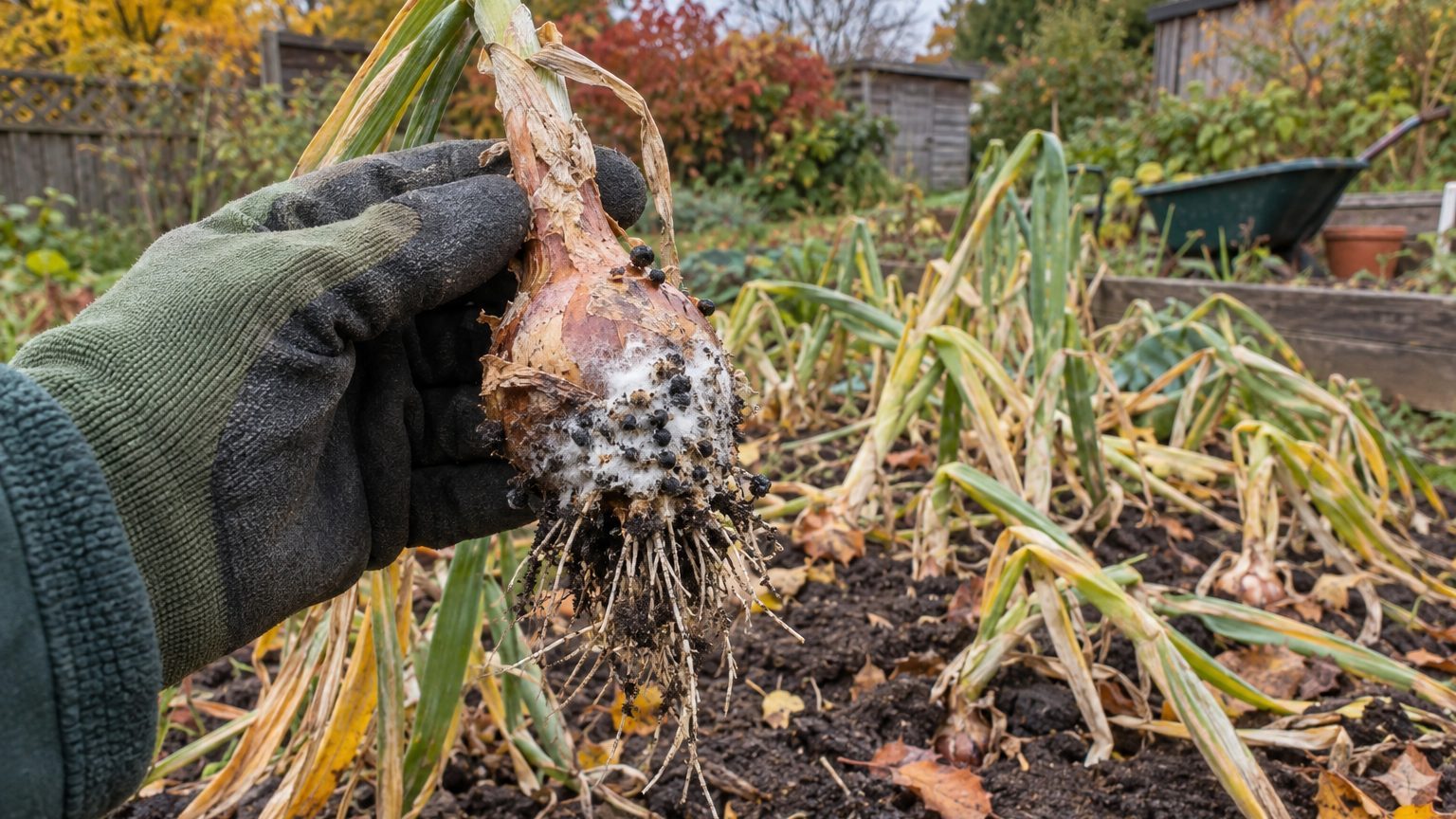

White rot is a soil-borne fungus (Stromatinia cepivora, older texts call it Sclerotium cepivorum) that rots the roots and basal plate of shallots, onions, garlic, leeks, and chives. If your plants are yellowing and toppling in cool weather, and the base of a pulled bulb is wrapped in fluffy white mold dotted with black specks, that is almost certainly it. There is no cure, and the fungus can wait in the soil for years, often decades, for the next allium to come along. That’s why it ends allium beds rather than just damaging a crop.
The good news is that early recognition, strict cleanup, and a change of planting location can keep one bad bed from becoming a whole-property problem. This page covers how to identify the disease, why it lasts so long, what to do after a confirmed case, and how to keep it out of a clean garden. For the broader picture of growing the crop, start with Growing Shallots: One Bulb In, a Handful Out.
How to Recognize White Rot in Shallots
The first sign above ground is easy to dismiss. Older outer leaves yellow from the tips, then flop over, and the plant looks thirsty even when the soil is damp. Within a week or two, whole clumps can collapse. Because shallots grow as multiplying clusters, one infected bulb can take down the neighboring bulbs in the same clump, so the damage often looks like a patch rather than a single dead plant.
Pull one up. Healthy shallots resist a gentle tug because their roots grip the soil. Infected plants slide out with almost no effort, since the roots have rotted away. Look at the basal plate, the flat disc where the roots attach. A white, cottony growth covers it and often creeps up between the bulb scales. Within the mold, you will find the diagnostic detail: tiny black, round bodies about the size of poppy seeds or smaller. These are sclerotia, the fungus’s survival structures. They are the reason the problem outlives your garden plans.
Timing is a useful clue. White rot is a cool-weather disease, most active when soil temperatures sit roughly between 50°F and 75°F, and it slows or stalls once soil climbs into the 80s. In the cooler parts of the country, that means trouble in spring and early summer. In mild-winter areas where shallots go in during fall, it can show up over winter and into spring. A shallot bed that fails in the heat of midsummer is more likely suffering from something else.
Several other problems look similar, and the differences matter because the response differs:
- Onion maggots tunnel into the bulb and leave soft, hollowed tissue with actual larvae inside. See Maggots in Shallot Bulbs for that diagnosis.
- Fusarium basal rot causes a brownish-pink decay at the base and prefers warmer soil. It lacks the fluffy white growth and the black sclerotia.
- Pink root turns roots a translucent pink and mostly stunts growth rather than killing plants outright.
- Neck rot and storage rots show up after harvest, usually from the top of the bulb downward, not from the roots up.
If the diagnosis is uncertain, send a sample. Your county Cooperative Extension office can usually point you to a state plant diagnostic lab, and many handle home-garden samples for little or no charge. Bag a whole affected plant with some surrounding soil, keep it from drying out, and ship it or drop it off promptly. A confirmed answer is worth having before you decide to abandon a bed.
Why the Fungus Outlasts Almost Everything
The black sclerotia are the whole story. Each one is a hardened ball of fungal tissue that can sit dormant in soil for twenty years or more. Reports vary on the upper limit, and some researchers cite even longer, but the practical message holds: you cannot starve it out by skipping alliums for a few seasons. Standard crop rotation, which works against many garden diseases, does very little here.
What wakes the sclerotia is the plant itself. Allium roots release sulfur-containing compounds into the soil, the same family of chemicals that gives onions their smell. Sclerotia sense those compounds, germinate, and send out threads that attack roots close by. Without an allium nearby, they stay asleep. This is also why the fungus is so specific: carrots, lettuce, tomatoes, beans, and brassicas do not trigger it and are not hosts.
Numbers matter here, too. Even a small population of sclerotia in a given volume of soil can cause real losses in a susceptible crop, which is why commercial growers in garlic and onion regions treat a single infested field with serious concern. White rot has been a long-running problem in some of the major US allium-producing areas, including parts of California and the Pacific Northwest, and it turns up in home gardens from the Northeast to the Midwest as well.
How it moves from place to place
Sclerotia are tiny, so they hitch rides on almost anything. Infected sets, bulbs, and transplants are the biggest route into a clean garden. Soil stuck to tools, tiller tines, wheelbarrows, boots, and tires is next. Runoff water carries them downhill, and a tiller dragged through an infected bed and then through a clean one can seed the second bed in a single pass. Compost made from infected plants does not reliably kill them, either.
Shallots add a wrinkle that onions grown from seed don’t have. Gardeners typically replant their own saved bulbs year after year, which is half the appeal of the crop. If the mother bulbs carry sclerotia or fungus on the basal plate, saving them quietly moves the problem into every new planting. The same goes for sharing bulbs with friends. A neighbor’s heirloom shallot that “always does fine” is a risk if their bed has ever had white rot, whether or not they knew what they were looking at.
Dense planting is another factor. The fungus can spread root to root between neighboring plants, and tightly packed clusters give it an easy path. Wide spacing will not save a plant in infected soil, but it can limit how fast a small outbreak spreads. For the growth habit behind that, see Spacing Shallots for the Cluster to Come.
What to Do After a Confirmed Case
Act quickly, because every infected plant left in the ground releases more sclerotia. Dig up the sick plants along with a few inches of soil around the roots, and do it when the soil is dry if you can, so less of it clings and scatters. Seal everything in a plastic bag and put it in the household trash. Do not compost it, do not toss it in a brush pile, and do not feed it to the chickens.
Then clean up everything that touched the bed. Scrape soil off tools and boots first, since disinfectant works poorly on caked dirt. Then scrub with a solution of one part household bleach to nine parts water, or wipe metal tools with rubbing alcohol, and rinse bleach off metal afterward to limit rust. Wash the wheelbarrow wheel and the soles of your boots. Do this before walking into any other bed.
After that, the honest answer is to stop growing alliums in that spot. Options are limited:
- Move the allium crop to a different part of the yard, ideally uphill from the infected bed so water does not carry sclerotia toward it, and plant only clean stock.
- Use containers or new raised beds filled with purchased potting mix or fresh soil that has never grown alliums. Keep them physically separate from the infected area and do not top them up with garden soil.
- Grow non-host crops in the infected bed. Tomatoes, peppers, carrots, lettuce, beans, and brassicas will not activate the fungus, so the bed is not wasted.
- Try soil solarization in hot-summer regions: clear plastic over moist, tilled-free soil during the hottest weeks of the year can cut sclerotia in the upper soil layer. Results are inconsistent, and heat rarely penetrates deep enough to reach every sclerotium, so treat it as a reduction, not a guarantee.
Fungicides deserve a plain mention because gardeners always ask. Commercial growers have some registered products and management programs, and research has explored using synthetic onion-like compounds to trick sclerotia into germinating with no crop present, so they starve. Those approaches are aimed at farms, depend on product labels that vary by state, and aren’t a practical rescue for a backyard bed. If you are considering any product, check the label for home-garden use and call your extension office first.
Avoid tilling the affected area more than necessary, and think carefully before moving soil out of it for use elsewhere. Mark the bed, whether with a stake, a note in your garden map, or a border, so that a future owner, a helper, or a forgetful you does not plant garlic there in three years. Sclerotia do not expire on a convenient schedule.
Keeping It Out of a Clean Garden
Prevention is the only reliable strategy, and it starts with where the planting stock comes from. Buy bulbs and sets from suppliers that sell certified or tested disease-free stock, and avoid planting grocery-store shallots, which are not grown or screened for garden use and may come from anywhere. True seed is considered a lower-risk starting point for varieties that are offered that way, since the fungus does not travel in seed as reliably as it does on bulbs and cloves.
Be strict about what you accept from other gardeners. Swapping bulbs is part of garden culture, and plenty of swaps are harmless, but with white rot the downside is a bed you cannot use for a generation. Ask whether the source bed has ever had yellowing, collapsing plants with white mold at the base. If the answer is vague, pass.
Inspect at planting and again through the cool season. Check each bulb’s basal plate before it goes in the ground, and discard any with fuzz, discoloration, or soft spots. During spring, walk the bed weekly and pull any plant that yellows early or wobbles in the soil. Catching a single clump while it has only a few sclerotia is far better than catching a bed’s worth later.
Tool and soil habits matter more than most gardeners expect. Clean tools between beds. Avoid borrowing a tiller or buying bulk soil and compost of unknown origin for allium beds. If you share equipment with a neighbor who grows onions or garlic, ask where they have been used. Wash soil off before moving gear between properties.
Finally, the host list is wider than the vegetable garden. Chives, ornamental alliums, wild onion, and volunteer onions or garlic left from last year can all carry the fungus and keep it active. Clear them out of any area you want to keep clean, and keep an eye on them near an infected bed: a patch of chives next to it can quietly feed the sclerotia a reason to stay awake.