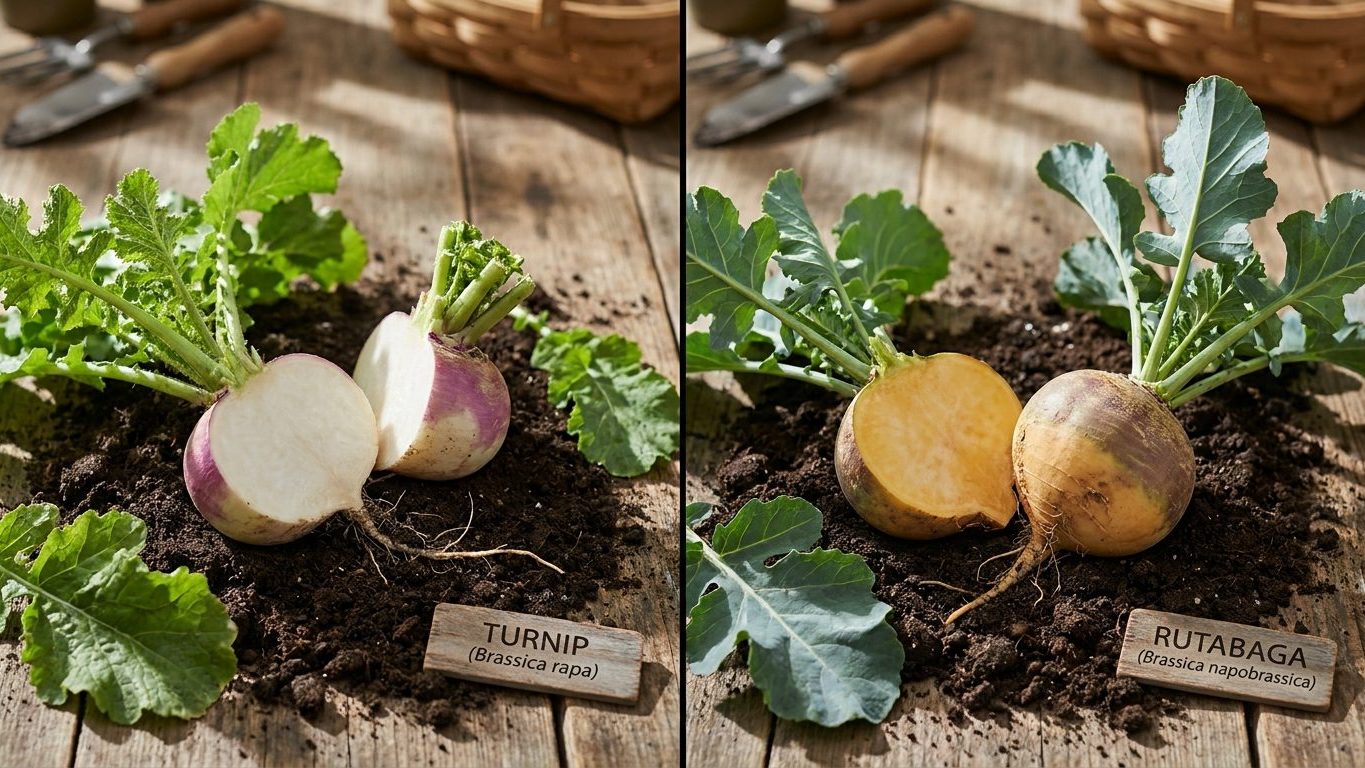

Turnip and rutabaga are not two names for the same root. A turnip is its own species, quick to grow and mild when small. A rutabaga is a cross between turnip and cabbage, denser, sweeter after cold, and built for a much longer season in the ground. Mixing them up in the garden costs more than a wrong label at the market.
What is actually going on

The thing to understand here is growth rate. A turnip is Brassica rapa, the same species behind some Asian greens, and it was bred for speed: sow it, and in a matter of weeks you have a root worth pulling. A rutabaga is Brassica napus, a natural cross between turnip and cabbage that happened long enough ago to become its own crop, and it behaves like it inherited the cabbage side’s patience. It sits in the ground far longer, building a denser, starchier root that only gets sweeter once cold weather sets in.
That single fact, one root sprints and the other marathons, is what drives almost every practical difference between them. A gardener who sows both on the same day in spring will be pulling turnips before the rutabagas have even filled out their shoulders. Treat them as interchangeable and one of two things happens: the turnips overgrow and turn woody while you wait on the rutabagas, or the rutabagas get pulled too early and taste like nothing at all.
The two also part ways in the kitchen for the same reason. A young turnip has a peppery bite and a soft bite, closer to a radish than to a potato. A rutabaga, having had months to concentrate sugars, roasts and mashes with a richness that a turnip of any age can’t match. Size confuses people too, since a small rutabaga and a mature turnip can look similar at a glance, but the flesh inside tells the real story: turnip flesh is white and fine, rutabaga flesh runs pale yellow to orange and noticeably firmer.
Both are brassicas, and that matters more than the flavor difference ever will for a working garden. Turnip and rutabaga share their pests and diseases with cabbage, kale, broccoli, and mustard, which means clubroot, cabbage maggot, and flea beetle don’t care which of the two you planted. A rotation plan that moves turnips into last year’s cabbage bed, or rutabagas into a spot that grew kale, hasn’t rotated anything at all. If you’re building a rotation schedule for the whole garden, that’s worth working out on the crop rotation guide for brassicas rather than guessing bed by bed.
In the garden
The calendar difference between the two roots shows up in almost every decision you make, from when you sow to how you store the harvest. The table below lays out where they diverge and, just as important, what tends to go wrong when the difference gets ignored.
| Factor | Turnip | Rutabaga | What goes wrong if mishandled |
|---|---|---|---|
| Sowing window | Can go in for a quick spring crop and again for fall, since it moves fast | Generally wants an earlier-summer sowing to have enough season before it matures | Sow a rutabaga on a turnip’s late-summer schedule and it never bulks up before cold weather stops growth |
| Spacing | Tighter spacing works since roots stay smaller | Needs more room per plant to reach its larger, denser size | Crowd rutabagas like turnips and they compete for space, staying small and fibrous |
| Thinning | Thin early, the seedlings come up thick | Same principle, but skipping it costs more given the longer investment of time | Skip thinning on either and you get a bed of small, crowded roots instead of a smaller number of good ones |
| Response to frost | Tolerates light frost, quality drops if left too long after | Actually improves with a touch of cold, converting starch to sugar | Pull a rutabaga before any frost and it can taste flat compared to one left through a cold snap |
| Keeping after harvest | Best used within a shorter window, doesn’t hold as long in storage | Built for longer keeping in the right conditions | Store either one assuming it behaves like the other and you either waste a rutabaga’s keeping potential or lose turnips to softness before you expect it |
The frost line deserves its own note. Pulling a rutabaga at the first hint of cool weather is one of the more common near-misses gardeners make, because the instinct is to rush the harvest in before frost damages the crop. With rutabaga, a light frost is doing useful work, not causing harm. Turnips are less forgiving of being left too long regardless of temperature; the roots that sit in warm soil past their moment tend to turn woody and sharp rather than sweet.
Storage is where the two crops ask for the most attention, and neither should be judged safe just because it looks fine on the outside. Before storing either root, or before using one that’s been sitting a while, check the crown for any soft give, look for a weeping or wet patch on the skin, and smell for anything musty. A soft patch, a weeping spot, or a moldy crown ends the question regardless of how solid the rest of the root feels. For the specifics on curing and keeping conditions for each, the storage guide on this site covers what to look for over time.
What it depends on where you are
How well either root performs, and how much of that season-length gap actually matters, comes down to things this page can’t know about your yard: how long your growing season runs, how hot your summers get, and how much rain falls while the roots are sizing up. A gardener with a long, cool growing season can sow a rutabaga with room to spare and still get a fall harvest worth the wait. A gardener working with a short window between spring and summer heat may find rutabaga’s slower pace a genuine obstacle, one that pushes the harvest into weather that isn’t reliable where they live.
Summer heat affects turnip just as much, though differently. Turnip roots that mature during a hot stretch tend to turn woody and bitter faster than those that finish in cooler weather, which is part of why many gardeners treat turnip as a spring-and-fall crop rather than a summer one. Whether your local summer allows for a spring crop before the heat arrives, or whether fall planting is the safer bet, depends on a growing season this page has no way to measure for you.
Rainfall patterns matter too, particularly for rutabaga given how long it sits in the ground. A root that spends months in the soil is exposed to more of whatever your rain pattern does over that stretch, whether that means a dry spell that stunts growth or a wet patch that invites rot. None of that is something a general guide can predict state by state, let alone yard by yard.
This is exactly the kind of question your state’s cooperative extension service is built to answer, since their trial data reflects actual local seasons rather than a national average. If this site has a growing guide for your state, that’s the place to check for the sowing windows and expected timing that apply to your climate specifically; the extension office fills in anything more detailed, including which types have performed well in local trials.
The mistake that costs the most
The single costliest mistake is treating the two roots as one crop with two names and sowing them on the same schedule. It seems harmless, since they look alike as seedlings and share a planting method, but the gap between a fast crop and a slow one doesn’t forgive being ignored. Sow rutabaga on a turnip’s timeline and you either run out of season before it matures, or you push the harvest into weather your garden wasn’t built to handle. Sow turnip on a rutabaga’s timeline and you’ll be checking a bed for weeks longer than needed, waiting on roots that were ready long before you thought to look.
The fix isn’t complicated: pick your type before you buy seed, not after, and let that choice set the calendar rather than the other way around. If you want a quick, forgiving crop for a shoulder season or a gap in the garden, turnip is built for that. If you’re planning around a longer season and want a root that improves with the season’s first cold snap, rutabaga is the better fit, provided your local season length actually supports it. Check with your extension office or a state-specific planting guide before committing seed to soil, since the difference in maturity time is exactly the kind of detail that varies by variety and by climate, not something a general page can pin down for every garden.
And because both crops are brassicas, that same planning moment is the right time to check where cabbage, kale, or mustard have grown recently in your rotation. A turnip or rutabaga following any of those crops too soon isn’t starting fresh, it’s stepping into the same pest and disease pressure left behind. Working that into the plan before seed goes down costs a few minutes; sorting it out after a clubroot problem shows up costs a season, sometimes more.