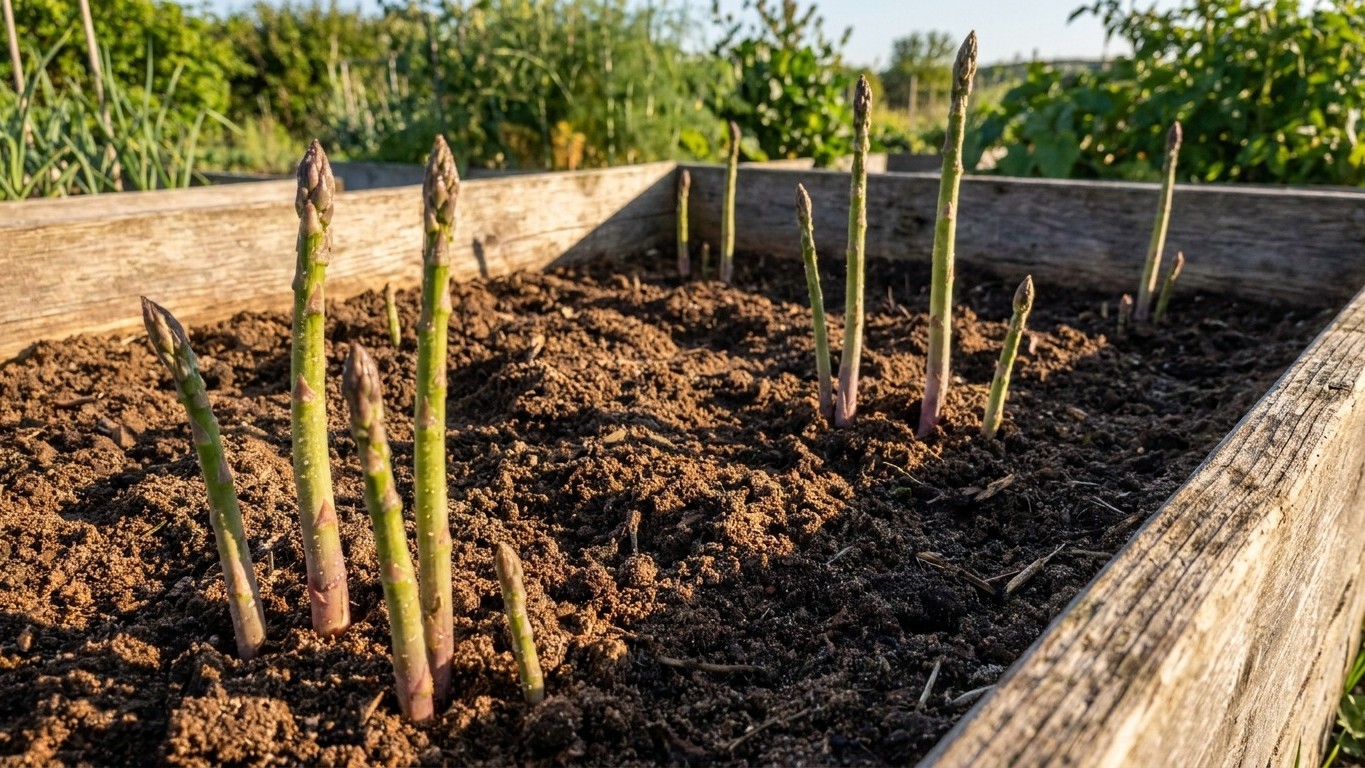

Georgia’s Cooperative Extension doesn’t publish a pest list specific to asparagus. The insects most likely to show up on a Georgia asparagus bed are generalist feeders that hit dozens of other crops too: aphids, spider mites, and cutworms. The other seven pests the state documents are tied to corn, beans, cucurbits, or potatoes, none of which share a garden row with a fern that never grows fruit or pods.
Which pests attack asparagus in Georgia
UGA Cooperative Extension documents ten pests for home vegetable gardens across the state: Aphids, Colorado potato beetle, Corn earworm, Cowpea curculio, Cutworms, Melonworm, Mexican bean beetle, Pickleworm, Spider mites, and Squash vine borer. That’s the full list, and it’s short for a reason. Most of these ten insects are specialists, wired to a single plant family, and asparagus doesn’t belong to any of them.
Colorado potato beetle needs Solanaceae foliage, potato, tomato, eggplant, to lay eggs and feed its larvae. An asparagus fern gives it nothing to chew. Corn earworm tracks corn silk and ripening tomato fruit; asparagus never produces an ear or a fruit for the larvae to bore into, so the pest has no reason to stop there. Cowpea curculio and Mexican bean beetle are legume feeders built around cowpea and bean pods and leaves, and asparagus makes neither. Melonworm, pickleworm, and squash vine borer are cucurbit pests through and through, tied to squash, melon, and cucumber vines, and a wiry asparagus stalk offers the borer nothing to tunnel into.
That leaves three insects on the list with no host-family loyalty: aphids, spider mites, and cutworms. All three are generalists that feed on whatever soft, green tissue is available, and an asparagus fern qualifies just as well as a tomato leaf or a bean plant does. Since an asparagus planting isn’t harvested until year three and then keeps producing for 10 to 15 years, a fern that gets stripped or weakened by any of these three during its first two seasons costs the gardener years of production, not just one crop.
Nothing here says these three insects are common on asparagus specifically. UGA Cooperative Extension documents them broadly for Georgia vegetable gardens, not as asparagus specialists, and a gardener growing asparagus alongside beans, squash, or corn is far more likely to see them concentrated on those crops first.
When each one shows up, and what it does first
Crowns go into 8-inch furrows in early spring, and in Georgia that generally falls within the state’s average last-frost window, March 11 to March 29, though the source is clear that this window shifts by region, running earlier in the mountains and later on the coastal plain. Cutworms are the first threat, and they show up close to that planting date. The first sign isn’t a chewed leaf; it’s a spear that’s toppled or simply missing at the soil line, often with no debris left behind to explain it. The larvae work at night, cutting stems near the surface, then curl up in the soil nearby during the day.
Once the fern leafs out later in the season, the risk shifts to aphids and spider mites, and both track the weather more than the calendar. Spider mites favor dry, dusty conditions, and Georgia’s driest summer stretch runs through August, averaging 4.3 inches of rain, the lowest of the three summer months. The first sign of mites is a fine stippling or bronzing on the fern’s needle-like foliage, and a close look often turns up faint webbing tucked against the stems. Aphids don’t wait for dry weather; the first sign is a cluster of small, soft-bodied insects gathered on new fern growth, followed by a sticky residue on the foliage below as the colony feeds and excretes honeydew.
Because harvest doesn’t start until the planting’s third year, none of this activity threatens spears a gardener is actually cutting for the table in years one and two. It threatens the fern itself, the part of the plant building the root reserves that make harvest possible later. A fern damaged early in the life of the bed is a problem that doesn’t show up as a missed harvest until a season or two down the road.
Telling the damage apart from everything else
Asparagus damage gets misread often, mostly because a stressed fern and an infested one can look similar from a few feet away. Checking soil moisture at root depth before assuming a pest is responsible settles more disputes than any spray ever will.
| Symptom | Possible cause | What distinguishes it |
|---|---|---|
| Spear toppled or missing at soil line, soon after planting | Cutworms vs. mechanical damage (tool, animal, foot traffic) | Cutworm cuts are clean and near the surface, with a curled larva often findable in the soil right next to the stub |
| Yellow stippling with fine webbing on fern foliage | Spider mites vs. nutrient deficiency | Webbing under the fronds points to mites; a deficiency produces even yellowing with no webbing at all |
| Sticky residue, curled new growth, sooty black film | Aphids vs. drought stress | Aphid colonies are visible in clusters; drought stress wilts and dries foliage without any sticky coating or insect cluster |
| Wilting fern despite regular watering | Fast-draining sandy soil vs. crown or root rot | Sandy soil dries quickly near the surface but the root zone still holds moisture; rot shows soft, discolored crown tissue when dug up |
That last row matters more in Georgia than in a lot of places. The soil the USDA lists as representative for the state, the Tifton series, runs about 84 percent sand at the surface and drains well, which means a fern can look thirsty on a hot afternoon even when the root zone underneath is fine. A gardener’s own bed may be nothing like that representative soil, though, so this is a pattern to watch for, not a diagnosis to apply on sight. When the cause isn’t obvious from the table above, that’s the point to stop guessing and bring a sample to the county extension office rather than treat for the wrong problem.
What actually works here, and what is a waste of time
Timing beats product choice on a planting this new. Because asparagus isn’t harvested at all in its first two years, a physical barrier like row cover laid over the bed right after crowns go into the furrow costs nothing in lost harvest and blocks cutworms from reaching young spears before they’ve had a chance to toughen up. That window, the two full seasons before the first cutting, is the cheapest time to protect the planting because there’s no crop being covered up, just a fern building strength underground.
Keeping the bed weed-free through the driest summer stretch helps against spider mites more than most gardeners expect. Mites build up fastest on dusty, stressed foliage, and a fern kept watered through August’s low rainfall, or through any stretch that runs dry, stays less attractive to them than one left to fend for itself. Checking the underside of fronds every week or two during hot weather catches an aphid or mite buildup early, while the colony is still small enough that removing affected growth by hand makes a real difference.
What wastes time is spraying on a calendar for pests that aren’t documented on this crop in the first place. Corn earworm, squash vine borer, and the other cucurbit and legume specialists on Georgia’s list have no reason to settle on an asparagus fern, and treating for them here is effort spent on a threat that doesn’t exist for this plant. Any treatment beyond a physical barrier and routine monitoring is a decision for the county extension office, since they’re the ones who know what’s labeled for use on asparagus in Georgia and what isn’t.
Where to check this for your own county
Everything above comes from state-wide records kept by UGA Cooperative Extension, and state-wide is not the same as a single backyard. Pest pressure shifts within Georgia the same way the frost date does, running earlier in the mountains and later on the coastal plain, and a county’s soil, drainage, and local pest history can all push its actual risk away from the statewide picture.
The most useful next step is a call or visit to the local county extension office. County agents can confirm whether a specific insect found on a fern is one of the three generalists discussed here, flag anything unusual for that part of the state, and pull soil test results that show what a particular bed is actually working with, rather than the Tifton series values that represent the state as a whole. That’s also the office to ask about what’s currently labeled for use on asparagus, since pesticide labels and approvals change and this site doesn’t prescribe them.
Before planting crowns this spring, or before deciding whether a chewed spear is worth treating, that phone call is worth more than another search. A fifteen-year planting is a long commitment to get wrong from the start.
Common questions
Does Georgia have a documented asparagus beetle problem?
UGA Cooperative Extension’s list for home gardens doesn’t include asparagus beetle among its documented pests. A gardener seeing chewed fern foliage that doesn’t match aphids, spider mites, or cutworm damage should bring a sample to the county extension office rather than assume which insect is responsible.
When is a Georgia asparagus bed most vulnerable to pests?
The first two seasons, before any harvest begins, carry the most risk. Cutworms threaten spears right at planting, within the state’s last-frost window of March 11 to March 29, and aphids or spider mites can build up on the fern through the growing season that follows.
Can I harvest asparagus while dealing with a pest problem?
Not in the first two years regardless, since harvest doesn’t start until the planting’s third year. After that, harvest generally runs for a set number of weeks each season and stops once most spears come up thinner than a pencil, a signal that applies whether or not pests have been an issue that year.
Does Georgia’s soil affect pest pressure in an asparagus bed?
The Tifton series, the soil USDA lists as representative for the state, is sandy and drains well, which can make a fern look drought-stressed rather than pest-damaged during dry spells. That’s a statewide reference point, not a reading of any one garden, so a local soil test remains the only way to know what a specific bed is dealing with.