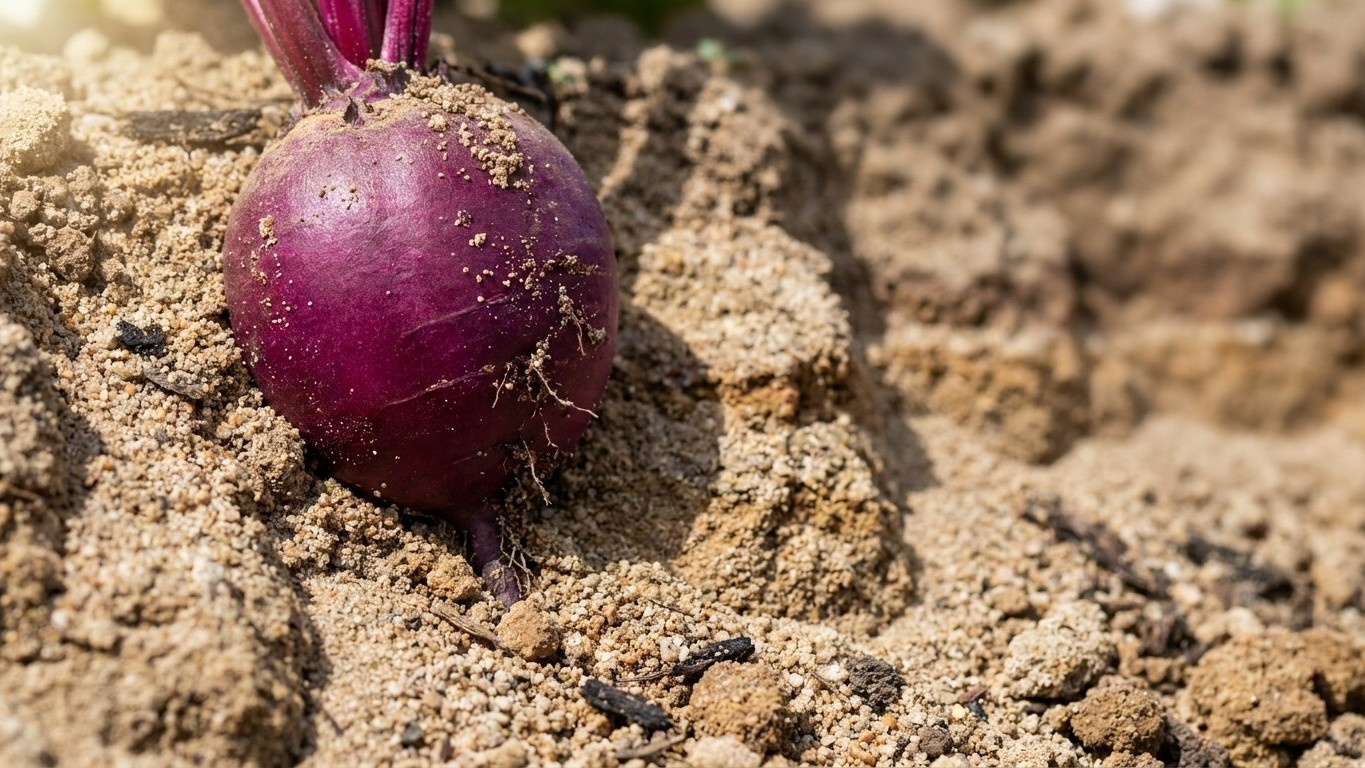

Beet in Georgia faces a short list of real threats: aphids, cutworms, and spider mites, the only three insects out of ten that UGA Cooperative Extension documents for the state’s vegetable gardens with any actual reason to feed on this crop. Cutworms strike right after seedlings emerge, aphids move in once true leaves form, and spider mites build up during the season’s hottest, driest stretch. The rest of the state’s documented pest list belongs to beans, squash, corn, and tomatoes growing nearby, not to beet.
Which pests attack beet in Georgia
The full list UGA Cooperative Extension documents
UGA Cooperative Extension documents ten insects for vegetable gardens across the state: Aphids, Colorado potato beetle, Corn earworm, Cowpea curculio, Cutworms, Melonworm, Mexican bean beetle, Pickleworm, Spider mites, and Squash vine borer. That’s the complete list for this territory, and it isn’t beet-specific at all; most of these species made it in because they build up in whatever other backyard crops share the same garden rows.
Which of those actually feed on beet
Sort through it and the beet-relevant names shrink fast. Colorado potato beetle needs nightshade foliage, potato, eggplant, tomato, and has no reason to touch a beet leaf. Corn earworm goes after corn ears and, secondarily, tomato and pepper fruit. Cowpea curculio is a legume specialist. Melonworm and pickleworm are cucurbit feeders targeting squash, melon, and cucumber. Mexican bean beetle needs bean foliage, and squash vine borer tunnels into squash and pumpkin stems, nothing a beet plant offers.
That leaves three species from the UGA list with any real business in a beet row: aphids, cutworms, and spider mites. All three are general feeders that don’t specialize on one crop family and will settle on beet foliage or stems if the plant is nearby and conditions suit them. Aphids cluster on the undersides of young beet leaves and along leaf stalks. Cutworms are soil-dwelling caterpillars that cut seedling stems at ground level, no different to them than a tomato or pepper seedling’s stem. Spider mites are arachnids, not true insects, and turn up on beet foliage during hot, dry stretches the same way they turn up on nearly everything else in the garden.
UGA Cooperative Extension’s list for this territory is short on beet-specific threats. No borer, root maggot, or leaf miner unique to beet appears in the state’s documented pest set. The three general feeders above are what a Georgia gardener growing beet needs to watch for.
When each one shows up, and what it does first
Beets in Georgia go into the ground as seed, not transplants, and the calendar for these three pests runs off that seeding date rather than off a month name. Because the state’s last spring frost falls anywhere from March 11 to March 29 depending on the station, sow after that window closes and count forward from there instead of from a fixed date on the calendar.
Cutworms arrive first
Cutworms are the earliest threat, hitting before a gardener has even seen true leaves. The first sign is a seedling snapped or chewed clean through at the soil line, usually within the first couple of weeks after emergence, sometimes with the wilted top lying right next to the stub. Cutworms feed at night and hide curled in the soil during the day, so the damage is often found before the caterpillar is.
Aphids follow as leaves develop
Aphids move in once the beet has a real set of leaves to work on. The first sign isn’t a hole or a cut, it’s a change in the leaf itself: curling, a slight paleness, or a sticky film on the underside of leaves and along the leaf stalks. Turn a leaf over and small soft-bodied insects clustered in a colony confirm it.
Spider mites are a heat-driven latecomer
Spider mites are tied to heat rather than to plant age. Georgia’s beet crop runs into trouble once temperatures climb past 85°F, and that same stretch of hot, dry weather is what lets spider mite populations explode. The first sign is a fine stippling or bronzing across the upper leaf surface, tiny pale dots that can look like dust until a hand lens or a sheet of white paper held under the leaf turns up moving specks and fine webbing.
None of the three follow one single window from start to finish. Cutworms are a seedling-stage risk that fades once stems toughen. Aphids can persist across most of the season whenever new leaf growth is available. Spider mites are a hot-weather event, concentrated in whatever stretch of the season runs driest and warmest.
Telling the damage apart from everything else
Georgia’s representative soil, the Tifton series, runs 84 percent sand and drains well, holding little water in reserve. That matters because water stress in the first six weeks after seeding triggers premature flowering, or bolting, and heat above 85°F combined with water stress later on makes the root turn woody. Neither of those two failures is caused by an insect at all, and they shouldn’t get lumped together, since bolting is an early-season failure and woodiness is a later, heat-driven one.
Symptom-by-symptom checks
| Symptom | Likely cause | What tells them apart |
|---|---|---|
| Seedling stem cut through at soil line | Cutworm feeding | Chewed, ragged stem end with a curled caterpillar in the soil nearby; damping-off disease leaves a soft, water-soaked stem with no larva present |
| Curled, sticky, or pale leaves | Aphid colony | Small soft-bodied insects visible on the leaf underside; a nutrient shortage produces even yellowing across the whole leaf with no insects present |
| Fine stippling or bronze speckling on leaves | Spider mites | Fine webbing and tiny moving specks under a hand lens; heat or drought scorch browns from the leaf edge inward with no webbing |
| Tough, woody, fibrous root | Heat above 85°F combined with water stress | No tunneling or entry wound in the root itself; none of the pests documented for this territory bore into a beet root |
Whenever a symptom doesn’t match anything on that table clearly, that’s the point to stop guessing rather than treat for a pest that might not be there at all.
What actually works here, and what is a waste of time
What works
Physical barriers timed right beat any treatment applied after damage appears, especially on a short root crop. A floating row cover set over the bed at seeding, and left on until the beet has several true leaves, keeps aphids and the moths that lay cutworm eggs off the crop during the exact weeks those two pests do their worst work. Since beet doesn’t need pollinators to produce a root, the cover can stay on longer than it could over a squash or melon bed.
Cutworm collars, a simple paper or cardboard sleeve pushed an inch into the soil around each seedling, block the one feeding behavior that matters, a caterpillar chewing through the stem at ground level. They cost almost nothing and take longer to describe than to install.
Timing the sowing date against the region’s last spring frost window matters more than any spray for preventing bolting and woodiness, since both trace back to water stress rather than to any of the three pests above. Keeping the bed evenly watered through the first six weeks after seeding, and again through any stretch above 85°F, does more for the crop than an insecticide would.
What doesn’t
Spraying for a pest that isn’t documented here in the first place wastes time; treating Colorado potato beetle or squash vine borer on a beet bed is chasing an insect with no reason to be there. It’s also a mistake to treat woodiness or bolting as a pest problem, since the actual fix is a watering schedule and sowing date, not a pesticide application. For anything beyond a row cover or a soil-line collar, the choice of an actual product, and whether it’s labeled for beet in Georgia, is a question for the local extension office.
Where to check this for your own county
UGA Cooperative Extension’s list of ten pests is a statewide record, not a guarantee of what’s living in one particular garden. A call to the local Extension office is the fastest way to find out whether aphids, cutworms, or spider mites are actually active nearby this season, since populations build up unevenly across a state that runs from mountains to coastal plain.
Start with a sample, not a guess
The county Extension office can offer more than a website page ever will: staff track what’s showing up in traps and in samples submitted from gardens near yours, and they know the local microclimate rather than a statewide average. Georgia’s last spring frost date alone ranges from March 11 to March 29 depending on the weather station used, a reminder that even a single climate figure shifts across the state, let alone something as locally patchy as an insect population.
Bring a leaf, a clear photo, or a soil sample rather than a guess. UGA Cooperative Extension offices in most counties can look at plant material directly and either confirm a pest ID or rule one out, which beats treating a bed for the wrong problem. If woodiness or bolting is the actual issue rather than chewed leaves, the office can also help work back from a soil test to whether the bed’s water-holding capacity, not a pest, is the real driver. The next step for anyone dealing with beet damage in Georgia this season is a call or a sample drop-off to that county office, before anything gets pulled off a shelf.
Common questions
Do beets in Georgia usually get eaten by insects at all?
Not heavily. Of the ten pests UGA Cooperative Extension documents for Georgia vegetable gardens, only aphids, cutworms, and spider mites have any real reason to feed on beet; the rest target other crops such as beans, squash, corn, and tomatoes.
How long does beet take to reach harvest size after seeding in Georgia?
Beet is sown directly in the garden rather than transplanted, so the maturity count starts at seeding, and most gardeners plan around roughly 60 to 80 days from that seeding date to harvest.
Does the state’s soil type make beet more likely to suffer pest damage?
Not directly. The Tifton series soil that represents Georgia is sandy and well drained, about 84 percent sand, which sheds water fast rather than causing insect problems. It raises the risk of water stress, and that stress drives bolting and woodiness, not insect activity.
When is the safest window to sow beet to avoid both frost and the worst pest pressure?
Since the state’s last spring frost date falls between March 11 and March 29 depending on the station, sow after that window closes. Cutworm risk peaks in the first couple of weeks after emergence, so a cutworm collar set at seeding covers that gap regardless of the exact date chosen locally.