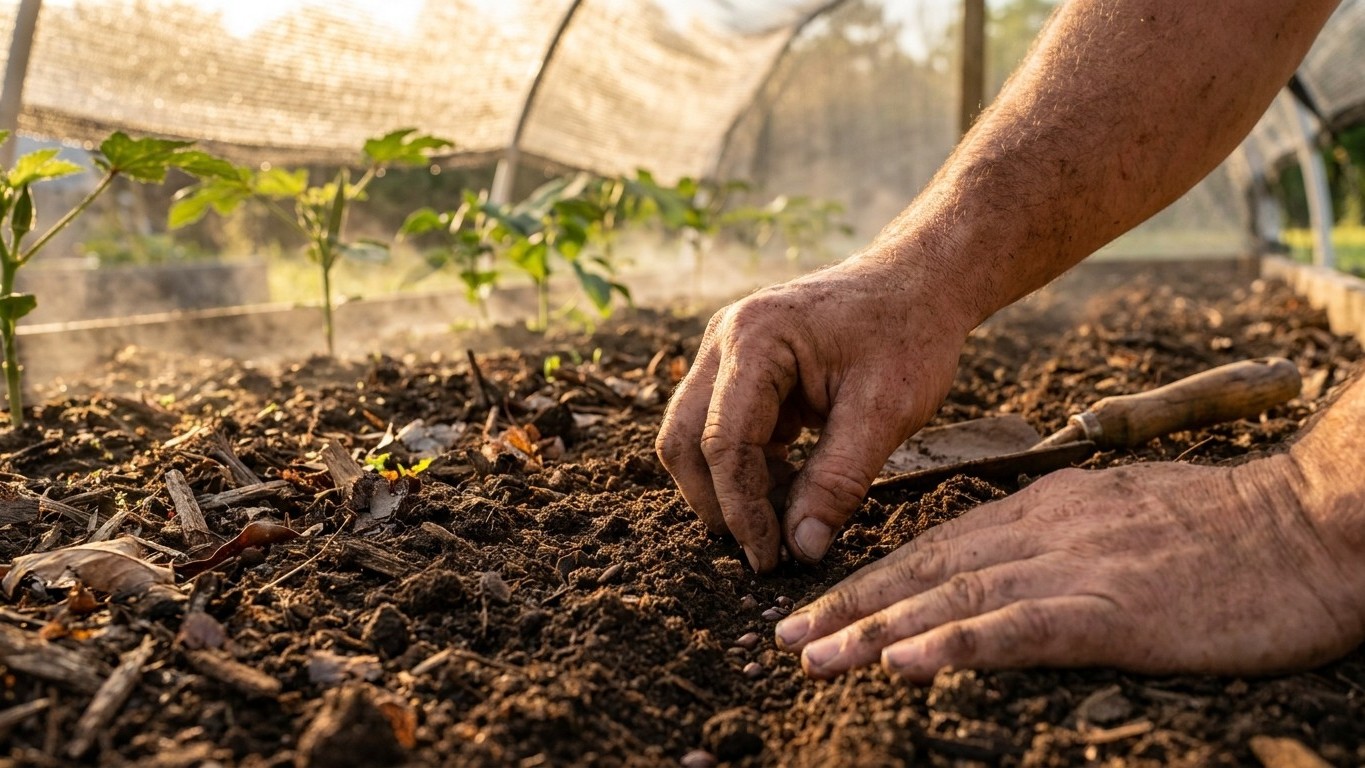

August in Georgia sits right in the gap between summer’s last stretch and the fall garden’s start. The ground is too hot for most cool-season seed to germinate reliably, but there’s still a real window to direct-sow a few heat-tolerant crops, and it’s the month to start fall brassicas and greens under cover so they’re ready to transplant once the worst heat breaks.
What goes in the ground in August

Soil temperature, not the calendar, decides what survives an August planting in Georgia. Bare soil in full sun can run well above 90°F at seed depth through most of the month, and that heat is what kills germination for lettuce, spinach, and most brassica seed sown directly outdoors. The fix isn’t waiting for a date. It’s waiting for the soil to cool, which usually starts happening in earnest toward the back half of the month, especially with mulch or shade cloth helping the process along.
What actually tolerates direct sowing now is a short list, and it’s worth sticking to it rather than gambling on anything else. Southern peas (cowpeas) handle the heat without complaint and can still be sown in early August in most of the state. Okra planted in the first half of the month has a real shot at maturing before frost, particularly in the southern half of Georgia. Bush beans work as a fast succession crop if sown by mid-month, since they only need about 55 to 65 days to bear. Late in the month, once soil starts to ease off its peak, root crops like carrots and beets can go in for a fall harvest, and quick-maturing summer squash can still produce a second flush before cooler weather sets in.
Zone and geography matter here
Georgia’s hardiness zones run from 6a in the mountains to 9b along the coast, per the USDA Plant Hardiness Zone Map, and that spread changes the August math. The coastal plain has a longer runway before its first fall frost and can push warm-season direct sowing further into the month. North Georgia’s higher elevations cool off sooner in autumn than the statewide frost data (drawn from the Atlanta station) suggests, so gardeners there should treat late-August plantings of anything slow-maturing as a real gamble, not a safe bet.
Sweet potatoes, sweet corn, and anything else needing a long season are off the table for new plantings in August almost everywhere in the state. They needed to go in months earlier to finish before frost.
What to start under cover
The real work in August is starting fall crops indoors or under shade, and the timing runs backward from the first fall frost rather than forward from today. Georgia’s first fall frost lands between November 13 and December 1, based on NOAA’s 1991-2020 climate normals for the Atlanta station, with the mountains typically seeing frost several weeks earlier and the coast running milder than that window suggests.
Broccoli and cabbage need roughly six to eight weeks as seedlings before they’re sturdy enough to transplant, and then another 60 to 100 days in the ground depending on the variety, before they’re ready to harvest. Counting back from a mid-November frost, that means starting seed indoors or under shade cloth in early to mid-August, transplanting in September, and harvesting through October and into November. Collards and kale run a similar timeline but tolerate a bit more slack since a light frost actually improves their flavor rather than ending their season. Lettuce and other quick greens can be started a little later, since they mature faster and can even be sown directly once the soil cools toward the end of the month.
Two mistakes show up constantly with this timing. Starting seed too early, while August heat is still peak, produces leggy, stressed seedlings that bolt or stall once transplanted into equally hot soil. Starting too late, especially in north Georgia where frost arrives sooner than the statewide window implies, leaves slow crops like cabbage without enough days to mature before the cold shuts them down. Shade cloth over seed trays and consistent bottom watering solve most of the early-heat problem; a firm sense of each variety’s days-to-maturity solves the late-start problem.
What is ready to pick
August is peak harvest for the crops planted back in spring, and the list is long enough to keep a kitchen busy. Tomatoes should be coming off the vine steadily, picked once they’ve colored fully but while still slightly firm to avoid splitting in the heat. Peppers, cucumbers, and summer squash all keep producing if picked often, since letting fruit sit and mature on the plant signals it to slow down. Okra needs daily attention; pods over three or four inches turn woody fast in August’s growth rate. Southern peas and snap beans planted earlier in the season are also coming in now, and melons planted in spring are finishing up, with ripeness usually judged by a dulling of the skin’s sheen and a hollow sound when tapped.
Sweet potato vines are still filling out below ground and won’t be ready until closer to fall, so resist digging early even if the tops look full.
Stored crops need a check-in too. Onions and garlic pulled and cured earlier in the summer are sitting in storage through Georgia’s humid August air, which is exactly the condition that turns a soft spot into rot. Going through the bin now and pulling anything that’s started to soften or sprout keeps one bad bulb from spreading trouble through the rest.
The jobs that matter this month
Watering rhythm is the job that decides whether August’s crops make it to September. Shallow, frequent watering in this heat encourages roots to stay near the surface, where they dry out fastest; a deeper soak two or three times a week does more good than a light sprinkle every day. Mulch backs that up by keeping soil temperatures down several degrees, which matters directly for any fall seed trying to germinate in beds that would otherwise be too hot to sprout anything.
Pest pressure peaks in August too. Squash vine borers, stink bugs, and armyworms are all most active now, and a five-minute scouting pass through the garden every few days catches an infestation while it’s still small enough to hand-pick or treat rather than one that’s already stripped a plant. Tomato and pepper plants still producing need their stakes and ties checked, since a summer’s worth of growth has often outpaced the original support and a storm can snap an overloaded branch overnight.
This is also the moment to clear out anything that’s finished for the season, spent bean vines, bolted lettuce, squash plants that have given up, and get that space amended with compost before the fall transplants go in. Summer crops pull heavily on soil nutrients, and beds that fed tomatoes and squash all summer need that organic matter worked back in before they’re asked to support a fall round of brassicas. Succession sowing of beans or quick greens should be timed against the frost countdown from the section above, not squeezed in without checking whether there’s enough season left.
What not to do in August
The most common mistake is treating hot August air as a green light for direct-sowing fall crops straight into open soil. Lettuce and brassica seed sown into ground running above 85°F often just sits there, or germinates unevenly and bolts the moment it’s transplanted. Starting that seed under cover or shade, and waiting for the soil itself to cool before direct-sowing anything cool-season, avoids the wasted seed and the lost weeks.
Another recurring error is planting a warm-season crop late in the month without actually checking its maturity window against the frost dates. A variety that needs 90 days to bear, planted in the third week of August, is cutting it close even in the milder parts of the state and is a lost cause in the mountains, where frost typically arrives well ahead of the statewide window drawn from the Atlanta station. Check the seed packet’s days-to-maturity number against the local frost date before committing bed space.
Heavy nitrogen feeding is the third trap. Tomatoes and peppers still setting fruit in August don’t need a nitrogen boost, since it pushes leafy growth at the expense of the fruit already on the vine. A balanced feed, or none at all if the soil was well-amended earlier in the season, does more for the harvest than another round of high-nitrogen fertilizer.
Checking this against your own county
Everything above is a statewide starting point, and Georgia is too varied for one set of dates to fit every yard. Elevation in the mountains, distance from the coast, and even how a particular property sits relative to cold air drainage can shift these frost windows by weeks in either direction. A garden in the north Georgia foothills should plan around an earlier fall frost than the statewide window suggests, while a coastal plain garden usually has more slack.
The University of Georgia Cooperative Extension is the best next stop for county-level planting calendars and local frost data, and it’s worth checking before locking in a fall planting date based on a statewide range alone.
Common questions
Is it too late to plant tomatoes in August in Georgia?
For a full-size slicer, yes, in most of the state, since they need 60 to 80 days to bear and the first frost lands between November 13 and December 1 depending on location. A fast-maturing cherry or determinate variety planted in the first days of August has a narrow but real chance in the milder southern half of the state.
Can I still plant okra in August in Georgia?
Yes, if it goes in during the first half of the month. Okra grows fast in summer heat and can still mature before frost in most of Georgia when started early in August, though the window is tighter in the mountains.
Why won’t my lettuce seed germinate in August?
Soil temperature is almost certainly the cause. Lettuce seed struggles to sprout once soil runs much above 80°F, which is common in unshaded August beds. Starting it indoors or under shade cloth, then transplanting once the soil cools, solves the problem.
When should I start my fall broccoli and cabbage seedlings?
Count back from the first fall frost in your area, which falls between November 13 and December 1 statewide. Since broccoli and cabbage need six to eight weeks as seedlings plus 60 to 100 days in the ground, starting seed in early to mid-August keeps the timeline on track for most of Georgia.