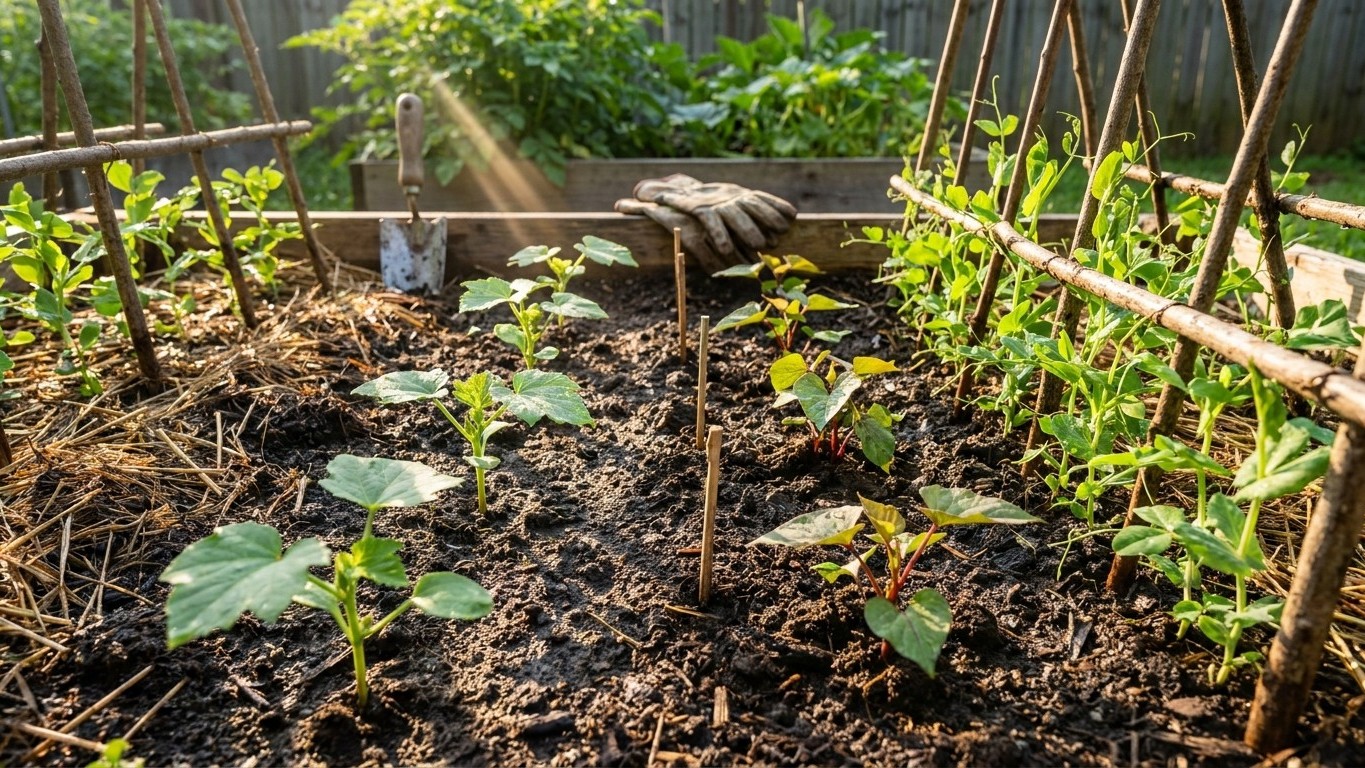

By July, Georgia is squarely between frost dates: the state’s last spring freeze (March 11 to March 29) is long past, and the first fall frost (November 13 to December 1) is still months away. That gap means direct-sown okra, southern peas, and sweet potato slips go in without hesitation, while gardeners also start fall-crop seedlings under cover to be ready for late-summer transplanting.
What goes in the ground in July

Soil temperature, not the calendar, decides what survives this month. Across most of Georgia’s zone 6a-9b range, July soil sits well above 80°F at planting depth, which is exactly what heat-loving southern staples want and exactly what stops cool-season seeds from germinating at all. That single fact reshapes the whole planting list.
Okra is the clearest bet: it germinates fastest in hot soil and keeps producing until frost. Southern peas (cowpeas), including black-eyed and crowder types, go in the same way, tolerating drought stretches that would stunt snap beans. Lima beans and a final succession of bush beans still have time to mature before the November frost window if seeded in the first half of the month. Sweet potato slips can still be set out, though earlier plantings in the season have more time to size up. Pumpkins and winter squash meant for a fall harvest belong in the ground now too, since most varieties need 90 to 120 days and the frost window still leaves room.
What’s a gamble: a fresh planting of summer squash or cucumbers can still fruit, but squash vine borer pressure builds through midsummer, and germination itself gets unreliable once soil crosses into the upper 80s. Sweet corn seeded now is a last-call succession, best done in the first week or two of the month to clear its 60-to-90-day maturity window before frost.
What doesn’t belong outdoors at all right now is anything cool-season: lettuce, spinach, and broccoli seed sown directly into July soil will either fail to germinate or bolt within days of sprouting. Those crops move to the next section, started under cover instead.
North Georgia’s mountain counties run several degrees cooler than the Piedmont, and the coastal plain holds heat later into the evening, so a planting that’s routine in Savannah can stress in Blairsville. Local soil thermometers beat any statewide date.
What to start under cover
Fall transplants get counted backward from the first frost window, not forward from today’s date. Broccoli, cabbage, and collards typically need 70 to 80 days from transplant to harvest. Working back from the earliest edge of the frost window, November 13, that puts the ideal transplant date around the end of August or the first days of September. Seedlings need roughly four to six weeks of growth before they’re ready to go into the garden bed, which is what makes July the month to start the seed, not August.
Fall tomatoes follow the same math with a tighter margin. Short-season varieties running 55 to 65 days to maturity, started from seed in early to mid-July and transplanted by mid-August, still have a reasonable shot at ripening fruit before the frost window closes in.
Starting these seeds outdoors in July’s midday heat rarely works, since germination rates for cool-season brassicas drop sharply above 85°F. Most gardeners start trays indoors, in a shaded porch, or under light shade cloth where soil temperature stays lower, then harden the seedlings off gradually before transplanting.
The two ways this goes wrong are worth naming plainly. Starting too early means seedlings sit in small trays through the worst heat of August, turning rootbound and leggy before there’s anywhere cool enough to plant them. Starting too late means the plants never build enough root mass to establish before shortening fall days slow their growth, leaving an unfinished harvest when frost finally arrives.
What is ready to pick
Midsummer harvest in Georgia runs full and fast, and knowing the ripeness signs matters more than the calendar. Tomatoes are past their spring flush and coming in steadily; color break, that first blush from green to red or yellow, is the cue to pick before cracking or splitting sets in during heavy rain. Peppers can be harvested green or left to color fully, depending on the variety and patience.
Cucumbers and summer squash need daily checking; both go from perfect to oversized and seedy within a day or two in July heat. Snap beans are ready when pods snap cleanly rather than bend. Okra pods should come off at 2 to 4 inches; left longer, they turn fibrous and woody almost overnight.
Watermelon and cantaloupe reward a bit of technique: a watermelon’s underside turning from white to a creamy yellow, paired with a dulling of the skin’s sheen, beats the old thump test for reliability. Cantaloupe tells you itself, slipping easily from the vine at the stem when it’s ready. Peaches across much of the state are finishing their season, and blueberries are winding down as well. Sweet corn planted earlier in the season is coming in, with kernels that run milky when pierced marking peak sweetness.
The jobs that matter this month
Mulching pays back hardest right now. A 2- to 3-inch layer over the root zone keeps soil temperature down and moisture even, which directly reduces blossom end rot in tomatoes and peppers, a problem caused less by lack of calcium than by the inconsistent watering that bare, sun-baked soil produces.
Watering rhythm matters more than volume. One deep soak that reaches 6 to 8 inches down, delivered a couple of times a week, beats a daily light sprinkle that only wets the surface and encourages shallow, drought-prone roots. Morning watering, aimed at the soil rather than the foliage, limits the fungal disease pressure that Georgia’s humidity already sets up.
Succession sowing keeps beans, squash, and cucumbers coming instead of cratering all at once. Reseeding a short row every two to three weeks through the month smooths out the harvest and gives a backup if the first planting gets hit by pests.
Pest scouting can’t wait. Squash vine borer moths lay eggs at the base of squash stems through early-to-mid summer; checking stem bases weekly and slitting out larvae before the vine collapses saves plants that otherwise look fine until they suddenly wilt. Stink bugs and Japanese beetles both peak now, damaging fruit and foliage fast enough that a few days’ delay in noticing costs real yield.
Staking and caging should already be in place for indeterminate tomatoes and pole beans, but any plant that’s sprawled past its support needs tying up now, before fruit sitting on wet soil starts to rot.
What not to do in July
Setting new transplants into the ground at midday is a common misstep. The combination of root disturbance and full afternoon sun stresses seedlings hard enough that many never fully recover; transplanting in the evening, or on an overcast day, gives roots a chance to settle before they face the next day’s heat.
Overhead watering in the middle of the day feels efficient but wastes a large share to evaporation and leaves foliage wet into the evening, exactly the conditions that let fungal diseases like early blight take hold in Georgia’s humidity. Watering at the soil line, in the morning, avoids both problems.
Heavy nitrogen feeding this late in the season is another classic error. Nitrogen pushes leafy growth at the expense of flowering and fruit set, so a tomato or pepper plant that gets a strong nitrogen dose in July often responds with lush foliage and disappointing fruit. A balanced or lower-nitrogen feed suits this stage better.
Ignoring a wilting squash vine because “it rained yesterday, it’ll bounce back” is how squash vine borer damage goes from fixable to fatal. A sudden wilt on an otherwise healthy-looking plant is the signal to check the stem base immediately, not to wait and see.
Letting mulch thin out without topping it up undoes most of its benefit right when soil temperature swings are at their worst, so a midsummer mulch check is worth the ten minutes it takes.
Checking this against your own county
A statewide frost window is a starting point, not a fixed instruction. Georgia’s elevation changes, from the coastal plain to the north Georgia mountains, shift real planting dates by weeks in either direction.
| Region | General pattern |
|---|---|
| North Georgia mountains | Cooler soil, earlier fall frost risk |
| Piedmont / Atlanta area | Reflects the statewide frost window closely |
| Coastal plain / south Georgia | Warmer soil, later fall frost, milder overall |
For a planting date tuned to a specific county, the University of Georgia Cooperative Extension publishes county-level guidance and a state planting calendar that accounts for these regional differences directly.
Common questions
Is it too late to plant tomatoes in Georgia in July?
Full-season tomatoes are risky this late, but short-season varieties running 55 to 65 days, started from seed now and transplanted by mid-August, can still ripen before the first fall frost window opens in mid-November.
Can I still plant sweet corn in July?
Only in the first week or two of the month. Most varieties need 60 to 90 days to mature, and pushing a planting later risks running into the November frost window before the crop finishes.
Why won’t my lettuce seed germinate in July?
Lettuce and other cool-season seeds germinate poorly once soil temperature climbs past the mid-80s, which is typical for Georgia in July. Starting seed indoors or under shade, then transplanting once temperatures ease in late summer, works better than direct sowing now.
What’s the single most important job in the garden this month?
Consistent, deep watering paired with a solid mulch layer. Georgia’s July heat and heavy humidity swing soil moisture fast, and that inconsistency is behind most of the blossom end rot, cracked tomatoes, and stressed transplants gardeners deal with this time of year.