
There’s no frost date to sow around in Hawaii, so the calendar most gardeners use elsewhere simply doesn’t apply here. Instead, timing your pumpkin planting means watching soil temperature, rainfall patterns, and whether you’re gardening on the windward or leeward side of an island. Get those three right, and the 45-to-55-day stretch from flower to harvest takes care of itself.
The short answer
Start with what NOAA’s climate data actually shows for Hawaii: at station USW00022521, the 1991-2020 Climate Normals list every freeze percentile at 32 F and 36 F as not computable. Zero days per year drop to or below 32 F. That’s not a gap in the record. It means freezing weather simply doesn’t happen where people live and garden in this state. Frost is real in Hawaii, but it stays up on Mauna Kea, Mauna Loa, and Haleakala, thousands of feet above any backyard plot or community garden bed.
That changes the whole logic of a sowing calendar. On the mainland, you’d take the first fall frost date and count backward 45 to 55 days, since that’s how long a pumpkin needs to mature after its flower opens, not from the day you drop the seed. Here, there’s no frost line to count back from. So the limiting factor shifts to something else: rainfall.
Hawaii’s growing seasons run on wet and dry patterns rather than warm and cold ones. Leeward areas, the dry sides of the islands, often have a defined drier stretch followed by a return of heavier rain. That return of rain functions the way frost does elsewhere. It’s the point after which a maturing pumpkin runs into trouble, whether that’s fungal pressure on the vine, splitting fruit, or a rind that never finishes hardening in soggy conditions.
The pumpkin clock itself doesn’t change. Utah State University Extension’s guidance on pumpkins still applies: 45 to 55 days from the day a female flower opens to a fruit ready for harvest, with the stem left attached. What changes is what you’re racing against. Instead of watching a frost forecast, Hawaii gardeners need to watch the local rainfall calendar for their specific elevation and exposure, and count forward from planned flowering to make sure that 45-to-55-day window closes before the wet weeks set in. A flower that opens too late for that window gives you a fruit that’s still green, or one that rots before the rind ever colors up.
When to sow here
- Check soil, not the calendar. Since there’s no frost date to wait out, soil temperature isn’t tied to any “weeks after last frost” rule the way it is on the mainland. In most lowland Hawaii gardens, especially on leeward coasts, soil sits well above 65 F for most of the year. That’s the number that matters: Utah State University Extension recommends sowing once soil reaches 65 F, because seeds sown into cooler soil germinate slowly or rot before sprouting.
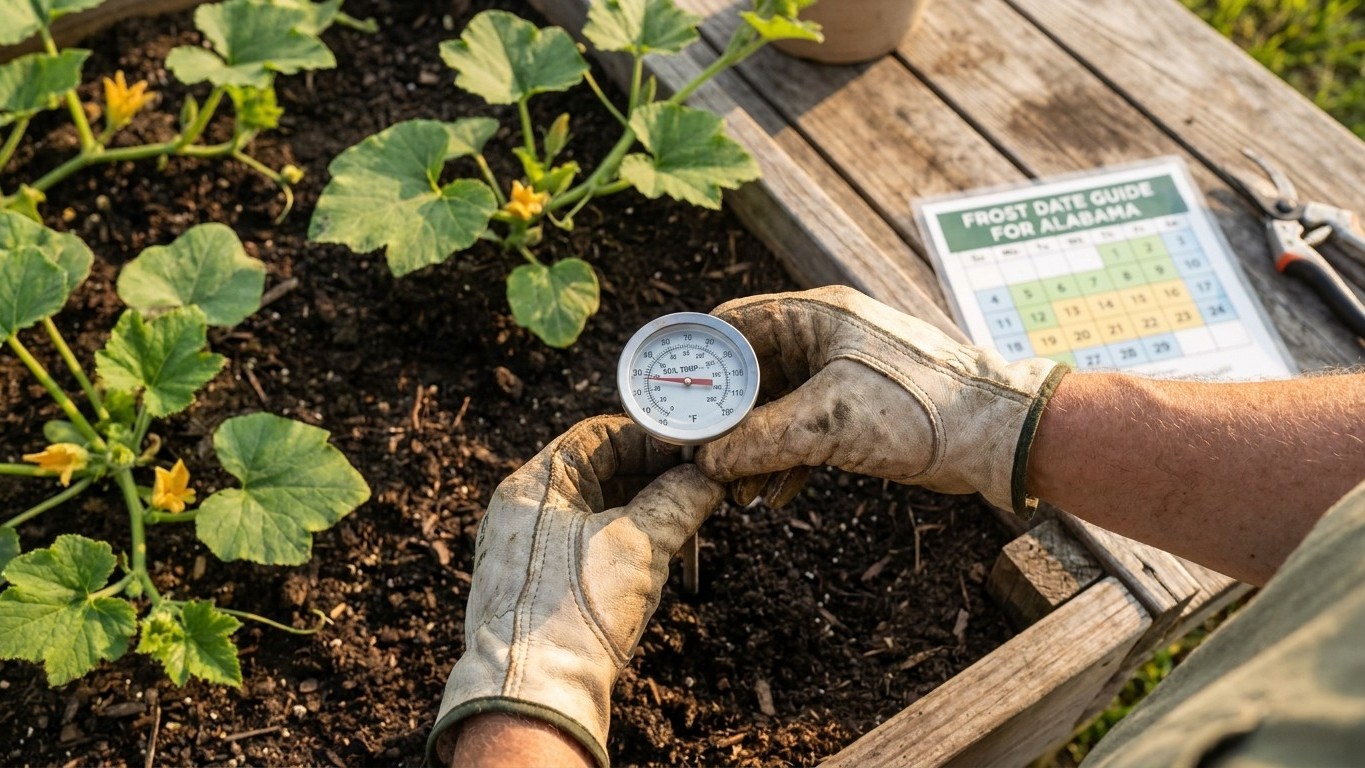
- Confirm with a soil thermometer at elevation. The 65 F threshold isn’t guaranteed everywhere in the state. Upcountry areas above roughly 2,000 feet, places like Kula on Maui or Volcano on Hawaii Island, run cooler and lag behind sea-level gardens by weeks. A thermometer pushed a few inches into the bed tells you more than any regional guess.
- Use row covers to buy time at elevation. In those cooler upcountry pockets, black plastic mulch or row covers can warm soil faster, effectively buying about two weeks on reaching that 65 F mark. That’s useful where the growing window between a workable dry stretch and the return of heavy rain is already tight.
- Work backward from the rains, not a frost. Once soil is warm enough to sow, count forward: germination, several weeks of vine growth, then flowering, then the 45-to-55-day maturity window after that first flower opens. Line up that whole sequence so the harvest lands before your area’s typical return of heavier rain, whether that’s the start of a windward wet season or the seasonal shift on a leeward coast.
What goes wrong here
- A late flower that never colors. If flowering starts too close to when heavier rain typically returns, the fruit spends its entire 45-to-55-day maturing window in wet, low-light conditions instead of finishing under drier skies. The rind stays pale and soft instead of hardening. Sow early enough, based on your local soil-warming date, that flowering wraps up well before the wet stretch begins, not during it.
- A vine that dies back before the skin hardens. Prolonged soggy soil during Hawaii’s wetter months invites root and stem rot that can kill a vine before fruit finishes sizing. Planting on raised beds or well-drained leeward ground, and mulching to manage moisture swings, keeps the vine alive long enough to finish the job.
- Fruit caught by returning rain. Where mainland gardeners lose a pumpkin to an early frost, Hawaii gardeners lose one to a fruit still sizing up when the rains resume. Heavy, sustained moisture at that stage causes splitting and rot rather than a clean finish. Track your area’s typical rain return and count back the 45-to-55-day window from there when deciding your sowing date.
- Pest pressure compounding a tight window. A vine already stressed by wet soil or a rushed timeline has less resilience against squash bugs or cucumber beetles. Both are covered in detail on this site’s dedicated pest pages, worth checking before symptoms appear rather than after.
Common questions
Does Hawaii have a frost date at all?
Not where gardens are. NOAA’s climate normals for the state’s inhabited stations show zero freeze days per year and mark every frost percentile as not computable. Frost exists only on the summits of Mauna Kea, Mauna Loa, and Haleakala, well above any planting area.
If there’s no frost, why do I still need to time my sowing?
Because the pumpkin still needs 45 to 55 days from flowering to reach a hardened, harvestable rind. Without a frost to force an end date, Hawaii’s returning rains take on that same limiting role, and a flower that opens too close to that shift won’t finish properly.
How do I know when my soil hits 65 F?
A simple soil thermometer pushed a few inches into the bed is the most reliable check, since 65 F is reached at very different times depending on elevation and exposure, not on any fixed calendar date.
How long can I store harvested pumpkins?
Utah State University Extension’s guidance doesn’t publish a storage temperature or keeping time, only that harvested pumpkins should be kept where they won’t freeze. That’s not a concern for most Hawaii storage areas, but no specific shelf-life figure is available from that source.