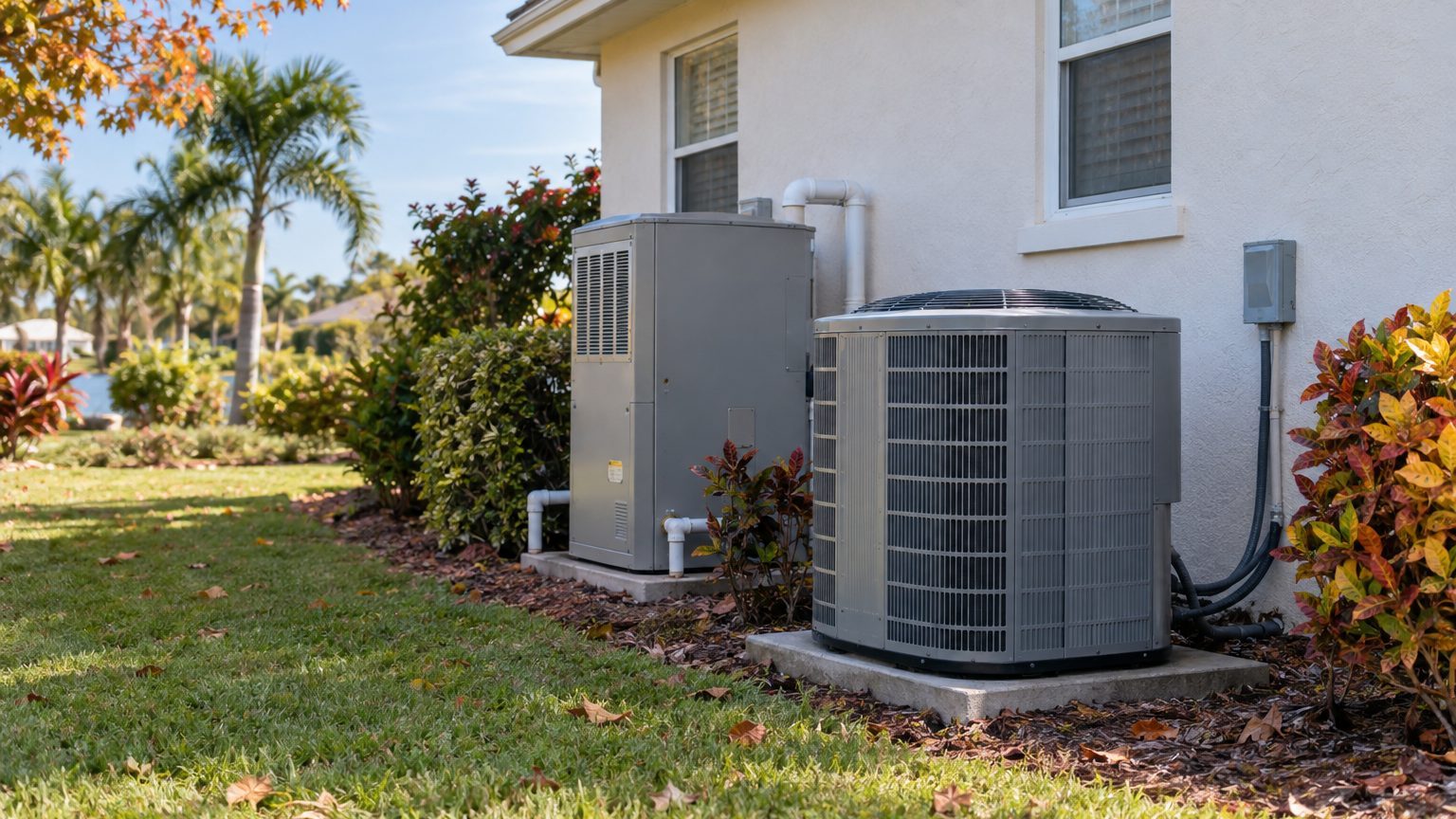

In Illinois, a natural gas furnace costs less to run than a heat pump, and the gap is wide enough to matter. A heat pump still beats electric baseboard by a long way. Which one is the right call for a given house depends on gas service, air conditioning needs, and the equipment already in the basement.
The short answer for Illinois
Start with the cost of delivering one million Btu of heat to the house, using average Illinois residential prices from the U.S. Energy Information Administration (EIA) and ENERGY STAR efficiency levels. A natural gas furnace at 97% AFUE comes in at $11.18. A heat pump at 8.1 HSPF2, a seasonal COP of about 2.4, comes in at $23.73. Electric baseboard, which is 100% efficient but gives back one unit of heat per unit of electricity, lands at $56.33.
That makes the gas furnace $12.55 cheaper per million Btu than the heat pump. Baseboard is the expensive outlier, and a heat pump cuts that cost by more than half.
Be clear about what these numbers are. They are a running-cost comparison on the same unit of heat. They are not a yearly bill, since that depends on square footage, insulation, air leaks and how warm you keep the place. They are not the price of equipment or installation either, which can reverse the long-term math in either direction.
The heat pump figure also uses the ENERGY STAR minimum for a ducted system. A higher-rated unit would run cheaper than $23.73, though that figure isn’t computed here. For households with gas already at the meter, the furnace is the cheaper system to run, and the heat pump is the clear winner over electric resistance. Everything else in this comparison, from the cold to the housing stock, changes how much that gap matters rather than which way it points.
What each option costs to run in Illinois
| System | Efficiency used | Cost per million Btu delivered |
|---|---|---|
| Natural gas furnace | 97% AFUE | $11.18 |
| Heat pump | 8.1 HSPF2 (seasonal COP about 2.4) | $23.73 |
| Electric resistance (baseboard) | 100% | $56.33 |
The electricity side of that table rests on an average residential price of 19.22 cents per kWh, the year-to-date figure through July in the EIA’s Electric Power Monthly, Table 5.6.B. The gas side uses the EIA’s average residential natural gas price for Illinois, converted at about 1,037 Btu per cubic foot, and electricity converts at 3,412 Btu per kWh. Those are statewide averages. Your utility and rate plan will differ, so pull the current gas and electric rates from your own bills before you lean on any of this.
Efficiency matters as much as the fuel price because you are buying heat, not kilowatt-hours or cubic feet. Electricity costs more per unit of energy than gas here, so a heat pump has to multiply that energy to compete. At a seasonal COP of about 2.4, it moves roughly that much heat for each unit of electricity it uses, which is why it lands far below baseboard. A 97% AFUE furnace turns nearly all its fuel into house heat, and the fuel is cheap per Btu. The heat pump closes most of the gap with baseboard but not all of the gap with gas.
One detail is worth knowing when you read spec sheets. ENERGY STAR asks 8.5 HSPF2 of a non-ducted (ductless) split system but only 8.1 of a ducted one for the same label, because ductless equipment avoids duct losses and has to be better to earn the badge. What HSPF2 Measures, and Why Ductless Asks for More goes deeper. For the arithmetic here, compare systems by cost per million Btu delivered, never by price per kWh or per unit of gas alone.
How cold it gets, and what that does to a heat pump
The reference station for Chicago, O’Hare, logs about 5,974 heating degree days a year (base 65°F), according to NOAA’s 1991-2020 Climate Normals. That figure adds up, for every day, how far the mean temperature sat below 65°F. Twice the degree days means roughly twice the fuel for the same house. Cooling adds about 1,003 degree days on the other side of the year, so Illinois asks a lot from a heating system and some from a cooling one.
The coldest month there has a mean daily minimum of 18.8°F. That is an average of the lows, not the record, so individual nights run colder. It describes a long, sustained heating season with real cold, not a mild one where equipment loafs along.
Here is where the $23.73 needs care. That number uses a seasonal efficiency, an average across the whole heating season. In deep cold a heat pump’s efficiency drops, so on the coldest nights it delivers less heat per unit of electricity than the seasonal average suggests. That is why cold-climate installs pair the heat pump with backup, either resistance strips or a furnace, to carry the coldest stretches. The backup is also part of the cost, since resistance strips run at the $56.33 end of the table. How Cold Is Too Cold for a Heat Pump covers how performance changes as temperatures fall.
These figures describe one station in the northern part of the state. Other parts of Illinois will have different degree-day totals, so treat Chicago as the reference city rather than the whole map. Heating a Home in Illinois puts the state’s regions in context. Plan for a backup heat source on the coldest nights, whichever system you choose as the main one.
What homes in Illinois already heat with
The EIA’s 2020 Residential Energy Consumption Survey (RECS) says natural gas is the main heating fuel in 78% of Illinois homes. Electricity serves 17% and propane 4%. For fuel oil or kerosene the survey reports none, which means too few households to publish a figure, not that nobody uses it.
By equipment, furnaces dominate at 76%, steam or hot-water boilers sit at 11%, and central heat pumps are at 2%. These are statewide shares from a national survey, not a count for your county. They also say what was installed, not what is best now. Most Illinois homes were built when gas was the cheap fuel, and the furnace that followed is still doing the job.
That shapes the choice. A house with a gas line and ductwork can compare a new furnace with a ducted heat pump directly, and the table above applies. A house with no gas line changes the comparison completely. The real competitors are the heat pump, electric resistance and propane, and the heat pump’s $23.73 beats the $56.33 of baseboard. Propane has no computed figure here, so get quotes from local suppliers.
The boiler houses, about one in nine, are a different conversion. Radiators and hot-water pipes have no ducts, so a ducted heat pump has nothing to plug into. Ductless units are the usual way in, and Ductless or Central walks through that choice. Before anything else, check whether you have a gas line and whether you have ducts. Those two facts narrow the options faster than any price table.
When the other choice wins
Running cost is one input. The cheapest system to operate is not always the right buy, and Illinois has a few clear cases where the heat pump wins despite the table.
No gas service is the first. If the house has no gas line, extending one is a project of its own, and the heat pump’s cost per million Btu then competes with propane and baseboard, not with the $11.18 furnace. In that situation the heat pump is usually the sensible choice.
Air conditioning is the second. With about 1,003 cooling degree days at the O’Hare reference station, Illinois summers justify cooling, and a heat pump does both jobs. If a central air conditioner is near the end of its life too, one heat pump can replace both machines. When comparing cooling, look at SEER2, since that letter measures cooling and HSPF2 measures heating. ENERGY STAR asks 15.2 SEER2 or better of every type.
A dual-fuel setup is the third: a heat pump for milder weather with a gas furnace carrying the coldest nights. It keeps the furnace as backup, which fits a state with a long heating season, and it adds cooling. Whether it saves money depends on your rates, so ask an installer to run your numbers.
The fourth is an old furnace with years left in it. A running-cost gap on paper doesn’t pay for a replacement that isn’t needed yet. Repairing a Furnace or Replacing It lays out how to judge that. The running-cost gap alone shouldn’t decide a replacement; age, repair history, and whether you need cooling should.
Common questions
Is a heat pump cheaper than electric baseboard in Illinois?
Yes. At average Illinois residential prices, a heat pump at 8.1 HSPF2 delivers a million Btu for $23.73, against $56.33 for baseboard.
Does a gas furnace always cost less to run?
On the statewide averages used here, yes, by $12.55 per million Btu against the heat pump. Your own utility’s rates can shift that, so check your gas and electric bills.
Do these figures tell me my yearly heating bill?
No. They compare fuels on the same unit of heat. Your yearly bill depends on house size, insulation, air leaks and thermostat habits.
Why does ENERGY STAR require 8.5 HSPF2 for ductless and 8.1 for ducted?
Ductless systems have no duct losses, so they start with an advantage. They have to perform better to earn the same label.