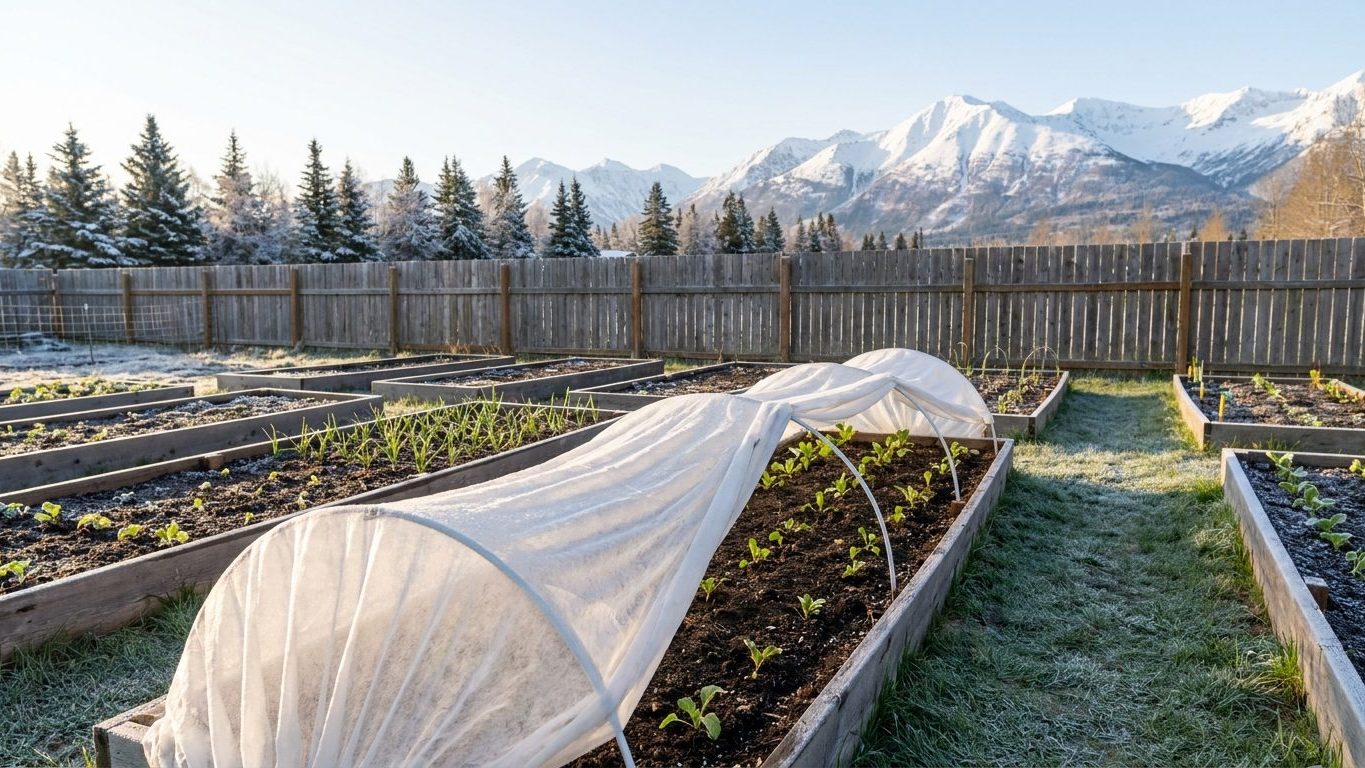

Cover your Illinois garden on any night the forecast low heads toward 32°F, and treat the calendar as a warning rather than a rule. At the Chicago reference station, the last spring freeze lands between April 11 and April 22, and the first fall freeze between October 24 and November 3. Gardens outside the city usually get a wider window on both ends. The sections below explain how to read those dates.
The short answer for Illinois
Those dates are probabilities, not predictions. They come from the NOAA 1991-2020 Climate Normals for the Chicago airport station, and they mark the 30-70% band of the chance of a 32°F freeze. A date in that band means a freeze is still a live possibility on some nights, not that one will certainly arrive. A gardener who plants on April 22 is making a bet. Covers are how you hedge it. (The underlying numbers are in the NOAA station file if you like reading raw data.)
One caution matters more than the dates themselves. They describe an airport weather station, not your yard. Suburban and rural gardens typically see the last spring frost one to two weeks later, and the first fall frost one to two weeks earlier. Elevation stretches that further. Treat the figures as the reference-city version of the question.
In spring
From April 11 onward, keep a sheet or row cover within reach for anything tender: tomato and pepper transplants, squash, basil, beans. The rule is simple. If the forecast low is at or near 32°F, cover that evening. Cool-season crops such as peas, spinach, kale and onion sets take a light frost without help, so save your covers for the hardest nights. Gardens outside Chicago should push the whole routine later, which means keeping covers handy well past the April 22 end of the airport band.
In fall
Today is October 14, 2026, and the reference window opens October 24. In a rural garden, it may already be open. This is when a bedsheet earns its keep, because the first freezes tend to be brief and followed by weeks of mild weather. Covering tomatoes, peppers and late beans through those short cold snaps can add real harvest time. Hardy greens and root crops, on the other hand, can stay uncovered until the cold gets serious. For choosing materials, see Which Season Extenders Work in Illinois, and for the bigger picture, Extending the Growing Season in Illinois.
What will not work here
Planting by the calendar alone fails first. The spring band is eleven days wide, and the fall band is eleven days wide too. A gardener who sets out tomatoes on April 11 because a chart said so is planting at the very start of a stretch where freezes are still common. Illinois also has a notoriously jumpy spring, with warm spells that invite early planting and then cold snaps that punish it. The dates cannot warn you about that. The forecast can.
Winter protection with a thin cover fails too. The mean daily minimum of the coldest month at the Chicago station is 18.8°F. That is an average of the nightly lows, so many nights run colder. A single layer of row cover typically buys a few degrees at most, which is plenty for an October frost and nowhere near enough to carry a tender crop through January. Hardy crops such as garlic, kale or spinach can overwinter with help. Tender ones cannot, whatever you drape over them.
Then there is the mistake of leaving covers on. Illinois summers are humid, and spring and fall days can swing from freezing nights to sunny afternoons. Plastic or glass left sealed on a bright day can cook seedlings, and a cover left on through damp weather traps moisture against the leaves, which invites disease. Take covers off in the morning once temperatures climb, and put them back on before sunset.
Wind is the quiet saboteur, especially on open prairie ground, where a loose cover can end up in the neighbor’s field. Anchor the edges with soil, boards or staples, and do not rely on a few rocks.
One more thing fails: assuming the reference dates work for you. A garden in a low spot where cold air pools may freeze well after the airport numbers say it is safe, even if your zip code sits a few miles from the station.
What changes across Illinois
Illinois is not one garden. USDA lists its hardiness zones as 5a-7b, based on the 2023 map built on 1991-2020 normals. That range spans six half-zone steps, so there is no single answer for the state. Zone is built on one variable, the average annual extreme minimum temperature, so it tells you what survives winter, not when to cover in April.
The frost dates here belong to Chicago, at 41.99 degrees north. A reader in the far north of the state should expect a shorter season than the reference figures, and a reader in the far south can expect a longer one, with frost arriving later in fall and leaving earlier in spring. Because the state spans several degrees of latitude, a rural gardener in the south could be planting while the Chicago band is still weeks away. Latitude also controls day length, which is what tells an onion to quit making leaves and start making a bulb, so it matters for crop choice as well as covering.
I will not tell you which zone you are in, because it can shift within a single county and I cannot see your yard. Find your location on the USDA Plant Hardiness Zone Map and read the zone for your own ZIP code. Then shift the reference dates accordingly: later in spring and earlier in fall if you are north, rural, or on high ground, and the reverse if you are south and sheltered.
Where to check this for your own county
Your state extension service is the next stop. University of Illinois Extension runs the local horticulture programs, and county offices publish guidance tuned to the weather your garden actually sees. This page gives you the state-level view built on one airport station. The extension gives you the county-level one, and a county recommendation beats a state one every time.
When you get there, look for two things. The first is a local planting calendar, the one that names dates for your county rather than for Chicago. The second is the list of varieties trialled near you, because a tomato that ripens well in one part of Illinois can stall in another. Calendars are usually written crop by crop, so find the entry for what you are actually growing. A calendar for one crop will not serve another.
The dates on this page cover Chicago only. The material I had for this page did not include an Illinois county calendar or a trial list, so I am not going to guess at one. If your county office has a master gardener helpline, ask them what the average last freeze looks like near you. Local volunteers often know which neighborhoods run colder.
Checking this against your own garden
Your own observations outrank every date above. Three of them are worth watching, and none need equipment.
- Soil warmth by feel. Dig down a few inches on a spring morning and squeeze a handful. If it feels cold and clammy against your palm, warm-season seedlings will sit and sulk. Sheltered beds near a south-facing wall warm first, so comparing a few spots tells you where your warmest microclimate is.
- The first male flowers on squash. These open a few days before the female flowers and signal that the plants are growing steadily. If yours show up late compared with a neighbor’s, your garden runs cooler than theirs.
- The first true leaves on seedlings. The rounded seed leaves come first, and the true leaves follow. Slow arrival of the true leaves in an outdoor bed means chilly nights or cool soil, so keep covers handy a while longer.
Write down what you see each year, even a line or two in a notebook. After a few seasons you will have a frost calendar for your own plot, and it will outperform any chart.
Common questions
Should I cover plants every night in April?
No. Cover on nights when the forecast low is at or near 32°F, and check the forecast in the evening. Take the cover off the next morning once it warms, so plants do not overheat.
Do I need to cover hardy crops like kale and spinach?
Usually not for a light frost. Save covers for the hardest nights and for tender crops such as tomatoes, peppers, squash and basil.
Are the Chicago frost dates good for my garden downstate or in the country?
Treat them as a starting point. They come from an airport station, and rural and suburban gardens typically see the last spring frost one to two weeks later and the first fall frost one to two weeks earlier. Check with your county extension office for local dates.
Can a bedsheet really protect plants?
For a short, light freeze, yes. Drape it over stakes so it does not press on the leaves, anchor the edges, and remove it in the morning. It will not carry tender plants through a long, deep cold spell, since the coldest month at the Chicago station averages a nightly low of 18.8°F.