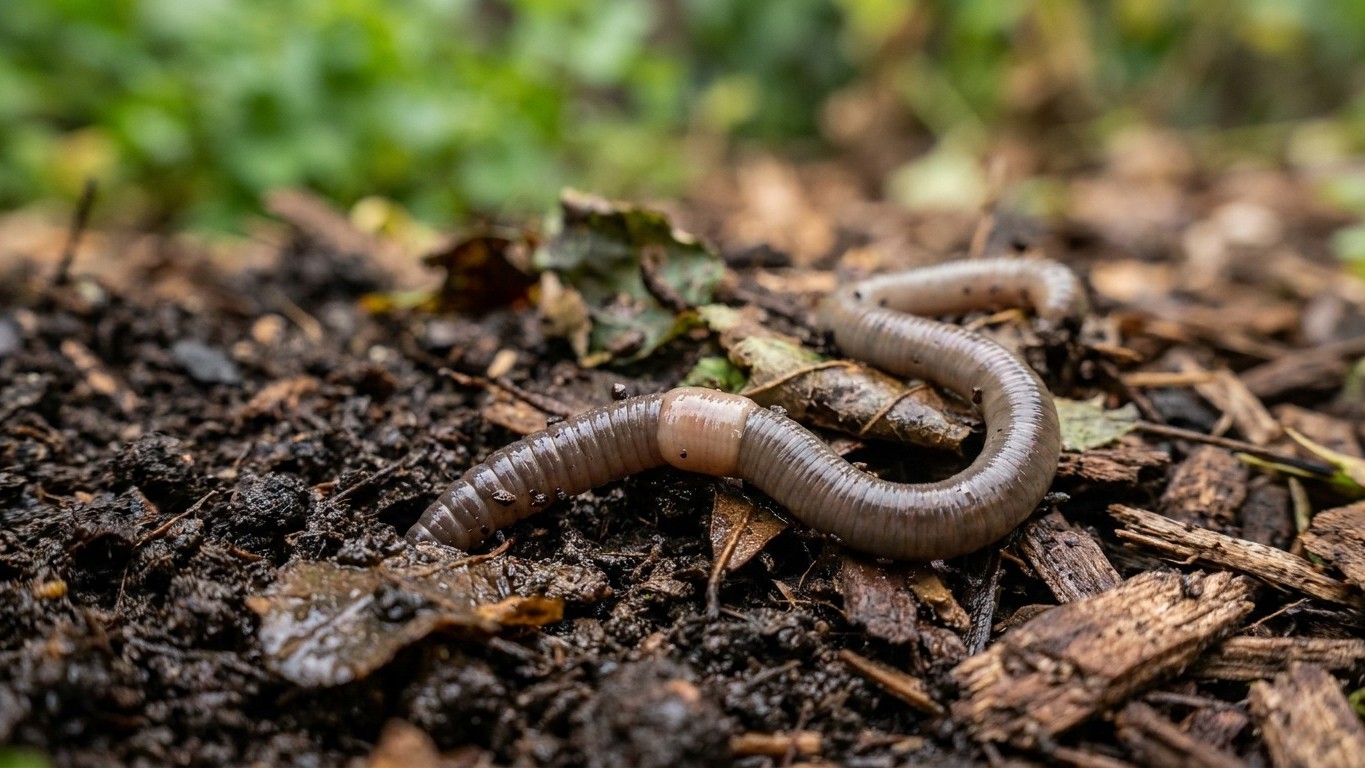

Jumping worms show up in Illinois soil from late spring through fall, with the most obvious activity in July, August and September, once they’ve matured enough to reach full size. There’s no true pesticide fix. What actually slows them down is keeping cocoon-laden soil, mulch and compost from moving between properties, plus a few physical controls that work only while the worms are still small or exposed at the surface.
The weeks to watch

University of Illinois Extension’s pest calendar names specific hatch and flight windows for bagworms, Colorado potato beetle, squash vine borer and Japanese beetle, but it does not publish a seasonal emergence window for jumping worms. What the source does confirm is presence: jumping worms have been found in 49 of the state’s 102 counties, alongside a note that spotted lanternfly was first detected in Cook County in September 2023. So the honest answer for timing is that Illinois’s own extension service tracks where jumping worms are, not when each stage of their year happens.
Spring: cocoons hatch as soil warms
Jumping worm cocoons overwinter in the top few inches of soil and hatch once the ground holds steady warmth, not on a fixed calendar date. This is the general pattern documented for the species across its range, not a date specific to Illinois. Newly hatched worms are thread-thin and easy to miss.
Summer into fall: peak size and visibility
Worms grow through summer and become unmistakable by late summer, when they’re near full length, thrash violently if handled, and have stripped visible amounts of organic matter from the soil surface. Unlike the insects on Illinois’s pest calendar, jumping worms complete one generation per year. Adults die with the first hard frost. The cocoons they leave behind are what carries the population into next spring, and those cocoons tolerate freezing and drought far better than the worms themselves.
Reading the calendar from your last frost

Illinois gardeners plan around one date more than any other: the last spring frost. At the reference weather station used for state climate normals, that falls between April 11 and April 22, based on NOAA’s 1991-2020 freeze probability data. Suburban and rural gardens, especially those away from urban heat and pavement, typically see their own last frost one to two weeks later than that airport figure, so treat it as a normal to check against your own county, not a promise.
Jumping worms answer to soil temperature, not to a date on the wall, which means a warm March pushes hatching earlier and a cold, wet April holds it back. The practical arithmetic looks like this:
- Start from your local last frost date (Illinois’s reference range: April 11 to April 22).
- Add several weeks for soil to hold consistent warmth before cocoons hatch, a range rather than a single day, since soil warming lags air temperature and varies by mulch depth, sun exposure and soil moisture.
That lag matters for one practical decision: whether new mulch, compost or nursery soil brought onto the property that spring might already be carrying cocoons. There’s no row cover that keeps jumping worms out, since they live in the soil itself, so the real “cover” period is the window when you’re most likely to bring contaminated material home. Waiting until soil has clearly warmed, rather than rushing spring mulch purchases the moment frost risk passes, cuts that risk.
What it attacks, and what the damage looks like

Jumping worms don’t chew leaves or bore into stems. They eat organic matter in the top layer of soil, which sounds harmless until you see what’s left behind: soil that looks like loose, dry coffee grounds instead of crumbly earth, mulch that vanishes far faster than it should, and plant roots left exposed because the organic layer holding them in place is gone. Pick up a handful of infested soil and it falls apart with no structure at all. That texture change, more than the worms themselves, is usually the first thing a homeowner notices.
Both juveniles and adults feed aggressively; the cocoons are the only life stage that doesn’t feed, which is also the stage no hand-removal or trap reaches. Adults are identifiable by a smooth, milky-white to pale band (the clitellum) that sits flush against the body near the head, unlike the raised, pinkish band on a common earthworm. What gets affected spans most of a typical yard:
- Vegetable garden beds and raised beds
- Lawns and turf areas with thin topsoil
- Forest floor leaf litter at the edge of wooded lots
- Mulched landscape beds around shrubs and perennials
- Containerized and potted nursery plants
Because the damage is structural rather than a single chewed leaf or dying vine, it’s easy to blame on drought, poor soil, or a bad batch of mulch before anyone thinks to look for the worms themselves.
How Illinois sits in this pest’s range

This content series currently documents jumping worms in one territory: Illinois. That single-territory count doesn’t say anything about how the species’ range compares elsewhere, only that this site hasn’t yet published guidance for a second state, so no cross-territory timing comparison is possible here. What Illinois’s own extension data does show is the within-state spread: confirmed presence in 49 of 102 counties, which is nearly half the state, spread across regions rather than clustered in one corner.
That county count says presence, not severity, and it doesn’t rank Illinois against neighboring states. What it does tell a homeowner is that finding jumping worms in a county with no prior confirmed report isn’t unusual. New county records tend to follow movement of mulch, potted plants, and soil between properties and nurseries, which lines up with how the species spreads generally: people carry it, more than it travels on its own.
What actually works against it

There’s no pesticide labeled to kill jumping worms, and once cocoons are settled into soil, almost nothing reaches them short of sustained heat. That leaves a short list of measures, roughly in order of how much effort they take:
- Inspect before you buy. Check bagged mulch, compost, and the root balls of new potted plants for the tell-tale coffee-ground soil texture or for worms that thrash on contact, before they ever reach your yard.
- Solarize suspect soil or mulch. Spreading it thin under clear plastic in full summer sun raises temperatures high enough, held long enough, to kill cocoons. This works only before material goes into the ground, not after.
- Hand-remove adult worms. Drop them into soapy water when you see them at the surface, typically after rain or when digging. This kills the worm in front of you but does nothing about cocoons already in the soil.
- Don’t move soil, mulch, or leaf litter between properties. Cocoons survive in small amounts of soil clinging to tools, boots, and root balls, which is how new infestations start in un-affected counties.
- Use a mustard-powder soil drench to survey, not to eradicate. Mixing ground mustard seed with water and pouring it over soil irritates worms and brings them to the surface so you can count them. Many gardeners use it to check whether an area is infested; it isn’t a control method, and it doesn’t touch the cocoons.
Popular home remedies like copper barriers or ultrasonic soil devices circulate online for jumping worms the way they do for other garden pests. There’s no established mechanism showing either does anything to a soil-dwelling worm, and no controlled trial results confirming they reduce populations.
Common questions
Do jumping worms bite or hurt pets? No. They don’t bite people or animals; the “jumping” name comes from their violent thrashing when picked up or disturbed, which is startling but not dangerous.
Can I compost jumping worms or their castings? Moving any soil, compost, or leaf litter that might contain cocoons off your property risks spreading them to a new location. It’s safer to leave suspect material in place or solarize it there rather than transport it elsewhere.
Will a hard freeze get rid of them for good? A hard frost kills the adult worms each fall, but it doesn’t kill the cocoons they leave behind in the top layer of soil, which is why the population returns the following year unless the cocoons themselves are exposed to sustained heat.