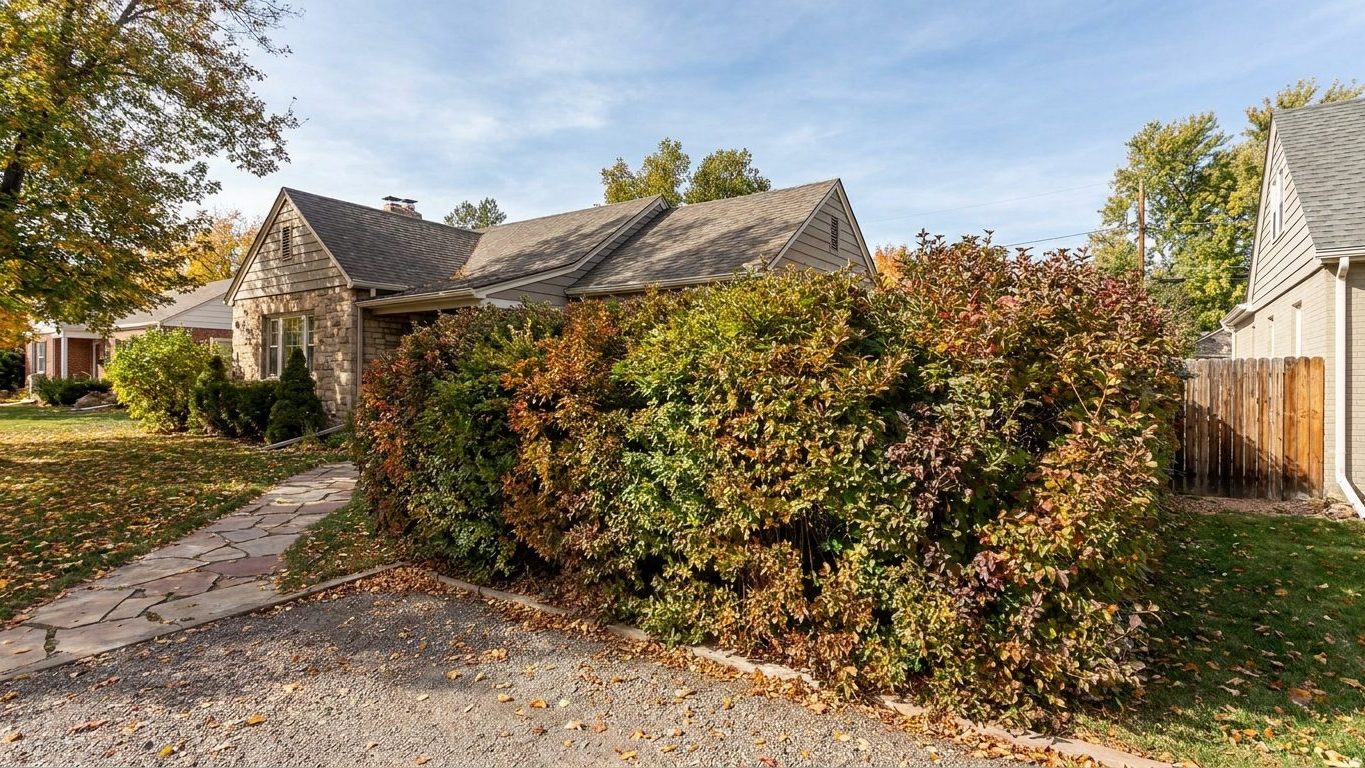

Indiana has no statewide hedge height law. There is no section of the Indiana Code that tells you how tall a hedge can grow before it becomes illegal. That limit, if one exists at all, is set by your city or town government, not the state, which means the real answer depends entirely on your zip code.
There is no Indiana hedge height law
Search “hedge height law Indiana” and you’ll find pages confidently quoting a single number, usually something like 4 feet in front yards and 6 feet elsewhere. That figure isn’t wrong because someone made it up out of thin air. It’s wrong because it was likely pulled from one city’s ordinance and stretched to cover a state of roughly 6.8 million people spread across more than 500 incorporated cities and towns, each with its own zoning code and its own elected council writing its own rules.
This isn’t an Indiana quirk. No state in the country sets a blanket hedge height limit. Property and land-use regulation in the United States runs through municipal government by design, following a legal principle called home rule, which lets local governments write zoning codes tailored to their own streets, lots, and traffic patterns. A downtown lot in a dense city block has different sightline needs than a half-acre lot on a rural county road, and state legislators generally leave that granularity to the people who actually drive those streets.
What this means practically: the fence and hedge rule that applies to a homeowner in one Indiana city may not exist at all in the next town over, or it may exist with a completely different number attached. Some municipalities cap residential fences and hedges at 6 feet in rear and side yards and 4 feet in front yards facing the street. Others set no general height limit but regulate hedges only near intersections. Still others fold hedges into a broader “accessory structure” definition and never mention “hedge” by name at all.
That last point trips up a lot of homeowners. Many municipal codes define a fence as a built structure, wood, vinyl, chain-link, wrought iron, something assembled and installed. A hedge is a living plant. Some zoning codes explicitly extend fence rules to “any hedge, wall, or vegetative screen,” which pulls hedges under the same height cap as fences. Others are silent on living screens entirely, leaving hedges in a gray zone where no explicit numeric limit applies, only general nuisance and sight-obstruction language. You cannot assume your city treats a 7-foot arborvitae hedge the same way it treats a 7-foot wood fence until you’ve actually read the definitions section of the ordinance.
The commercial sites ranking for this question rarely make that distinction, because a single tidy number is easier to publish than an accurate answer that starts with “it depends on your city.” Accuracy here means accepting that the state doesn’t set the rule, and building the habit of checking local code before you plant, trim, or complain to a neighbor.
How to find the rule that actually applies to you
Since Indiana leaves hedge and fence height to local governments, your actual next step is finding your municipality’s zoning code, not searching for a statewide number that doesn’t exist. The good news: nearly every city and town in the country now publishes its full municipal code online, and it’s almost always hosted by one of three platforms.
The first is Municode, searchable at library.municode.com, which hosts the codes for thousands of American municipalities including a large share of Indiana’s cities and towns. The second is American Legal Publishing, at codelibrary.amlegal.com, which covers many mid-sized Midwestern municipalities. The third is eCode360, run by General Code, which hosts a smaller but still significant share of local codes, often for smaller towns and townships. Between the three, you can usually find your local ordinance in under five minutes by searching “[your city name] Indiana municipal code” and clicking through to whichever platform hosts it.
Where in the code to look
Once you’re in your city’s code, don’t search for “hedge” first. Head straight to the zoning chapter, sometimes labeled “Zoning Ordinance” or “Unified Development Ordinance,” and look for a section titled “fences,” “accessory structures,” or “walls, fences, and hedges.” That’s where height limits, if any exist, are almost always written. Some codes bury the relevant language under “yard requirements” or “obstructions,” so if the fence section comes up empty on hedges, check those headings too.
Pay close attention to how the code defines its terms. If the ordinance defines “fence” to include “any structure, hedge, or vegetative screen used to enclose or divide a yard,” then whatever height cap applies to fences applies to your hedge as well. If the definition only covers built materials, your hedge may fall outside that specific rule and instead be governed only by general nuisance provisions or sight-line requirements, which is a very different legal situation.
Who to call when the code isn’t clear
Municipal code is written by lawyers and can be genuinely ambiguous even to careful readers. When you can’t tell whether a rule applies to your hedge, the fastest resource isn’t a forum or a blog, it’s your city or town’s planning and zoning department, sometimes called the building department or code enforcement office depending on the municipality. These offices field hedge and fence height questions constantly and can usually tell you the applicable section number over the phone, along with any permit requirements for tall or dense plantings near a property line.
The branches that cross the line
Two rules show up in almost every American municipality regardless of what the general hedge height limit says, or whether one exists at all. The first is the sight triangle. At intersections and driveway approaches, most zoning codes prohibit any obstruction, plant or structure, above a certain height within a defined triangular area measured from the curb or property corner. This rule exists purely for driver visibility, and it typically sits well below whatever general fence or hedge height the same code allows elsewhere on the lot. A code that permits a 6-foot hedge along a side yard might still cap growth at 30 inches or less within the sight triangle near a corner lot’s driveway.
Because sight-triangle rules are near-universal, they’re worth checking even in towns whose codes say nothing else about hedges. If you’re planting anything near a corner, along a shared driveway, or at the edge of a street-facing yard, this is the rule most likely to apply to you no matter what your city’s general height policy looks like. It’s also the rule most likely to generate a code-enforcement complaint, since a hedge blocking a driver’s view at an intersection is a visible, reportable safety issue in a way that a slightly-too-tall backyard privacy hedge usually isn’t.
The second nearly universal principle concerns branches and roots that cross a property line. In most states, a neighbor whose yard is invaded by overhanging branches or encroaching roots has the right to trim that growth back, at their own expense, up to the boundary line, and no further onto the tree or hedge owner’s side. This comes from long-established property case law rather than a specific statute, and the details, including whether a neighbor can also demand reimbursement for damage or removal, vary by state and sometimes by court precedent within a state. What stays consistent is the boundary itself: a neighbor can cut back to the line, not past it, and generally cannot take an action that kills or seriously damages the plant, since that can shift the dispute from routine self-help into a property damage claim.
If a hedge dispute with a neighbor has already escalated past a friendly conversation, a phone call to your city’s code enforcement office can clarify whether a height violation exists under local ordinance. For anything involving damage, removal, or a disagreement over the boundary line itself, that’s a property law question best handled by a local attorney rather than settled based on a general rule found online.
What to check before you plant
Before you put a hedge in the ground along a property line, driveway, or street-facing yard, a short round of checking saves a lot of regrowth-and-replant headaches later. Start with your city or town’s zoning code, using the Municode, American Legal Publishing, or eCode360 search described above, and read the fence and accessory-structure sections specifically for any mention of hedges, vegetative screens, or living fences.
Next, look for a sight-triangle or clear-vision requirement in the same chapter, especially if you’re planting anywhere near a corner lot, a shared driveway, or a street intersection. That limit will usually be lower than any general height cap, and it applies even in towns whose codes say nothing else about hedge height.
Confirm your actual property line before you plant, not after. A rough guess based on where an old fence sits or where your neighbor’s mower stops isn’t reliable, and a hedge planted a foot or two over the line becomes a much harder problem to fix once it’s established than a stake-and-string layout is to correct on day one. A recorded plat map from your county recorder’s office, or a formal survey if the line has ever been disputed, is worth the modest cost compared to relocating mature plantings.
Check for utility easements as well. Many residential lots carry a utility easement along the rear or side property line, and while a hedge itself rarely violates an easement the way a structure would, utility crews accessing buried lines can and do cut through plantings in that strip without much notice.
Finally, if you live in a subdivision with a homeowners association, read the HOA’s own architectural or landscaping guidelines separately from the municipal code. HOA rules are private contractual restrictions, not government law, and they can be stricter than your city’s zoning code, sometimes capping hedge height well below what the municipality would otherwise allow. Checking both, the city ordinance and the HOA covenant, before you plant is the only way to be sure you’re covered on both fronts.
Common questions
Does Indiana have a state law limiting hedge height?
No. Indiana has no statewide statute setting a hedge height limit. Any limit that exists comes from a city or town zoning ordinance, and those vary from one municipality to the next.
How do I find my city’s hedge or fence height rule?
Search for your city’s municipal code, usually hosted on Municode (library.municode.com), American Legal Publishing (codelibrary.amlegal.com), or eCode360, and look under the zoning chapter’s fence or accessory-structure section. If the code is unclear, call your city’s planning or zoning department directly.
Can my neighbor cut branches from my hedge that cross onto their property?
In most states, yes, up to the property line, at their own expense, without going further onto your side or killing the plant. This principle comes from property case law rather than a specific Indiana statute, and details can vary, so a persistent dispute is worth a conversation with a local attorney.
Is there a height limit near driveways and corners even if my city has no general hedge rule?
Almost certainly yes. Sight-triangle or clear-vision requirements are close to universal in municipal codes, and they typically set a lower height limit near intersections and driveways than whatever general rule, if any, applies elsewhere on the property.