
July in Indiana sits in the middle of the growing season, well past the last spring frost window of April 9 to April 21 and still three months from the first fall frost window of October 21 to October 30 (Indianapolis normals). That gap is what decides everything this month: it’s long enough for a fast summer crop to mature, tight enough that a full-season corn or pumpkin sown late in the month may not finish before the ground cools. July is a month for succession sowing, starting fall brassicas, and heavy harvest, not for setting out spring transplants.
What goes in the ground in July

The frost calendar isn’t the limiting factor now. Soil is warm across the state, so the question shifts from “will it survive the cold” to “will it finish before the cold comes back.” That means counting days to maturity backward from the first fall frost window, October 21 to October 30 around Indianapolis, and adding a buffer because that date only marks a 30-70% probability band, not a guarantee.
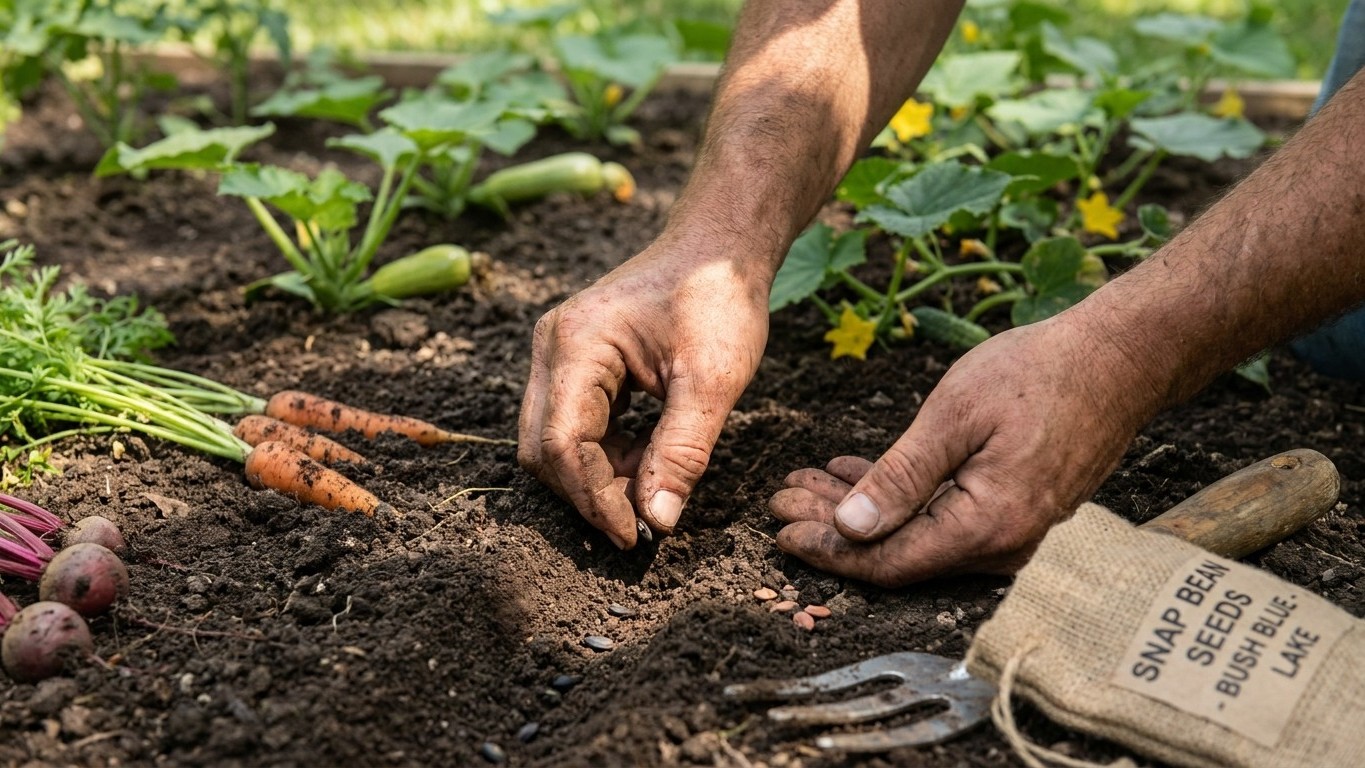
Snap beans (50 to 60 days) can go in through early and even mid-July almost anywhere in the state and still ripen with room to spare. Summer squash and cucumbers (roughly 50 to 65 days) are worth a second or third sowing now, since the first planting often declines from squash vine borer or powdery mildew by late summer, and a fresh row picks up the slack. Carrots and beets (60 to 75 days) sown by mid-July will size up for a fall harvest, and both tolerate a light frost, so they aren’t racing the calendar as hard as tender crops. Kale and collards direct-sown now will be ready right when frost actually improves their flavor.
Full-season sweet corn and pumpkins are the riskier calls. A 90-day pumpkin sown in late July needs harvest by late October, which leaves almost no cushion in the northern counties where frost typically arrives earlier than the Indianapolis average. Southern Indiana has more room; northern Indiana has less.
| Crop | Days to maturity | Safe to sow in July? |
|---|---|---|
| Snap beans | 50-60 | Yes, through mid-July statewide |
| Summer squash / cucumber | 50-65 | Yes, best as a second planting |
| Carrots / beets | 60-75 | Yes, sow by mid-July |
| Kale / collards | 50-65 | Yes, tolerates the first frosts |
| Sweet corn / pumpkin | 85-100+ | Tight in north IN after early July |
What to start under cover
The crop that most needs starting this month isn’t a summer vegetable at all. It’s the fall brassica crop: broccoli, cabbage, and cauliflower. Working backward from the first fall frost window of October 21 to October 30, a broccoli variety needing around 70 days from transplant to harvest, plus 4 to 5 weeks growing as a seedling in cell trays before it goes outside, points to starting seed under cover in early to mid-July for transplanting outdoors in mid-August. Push that start later than the end of July in northern counties and the plants may not head up before the ground turns cold.
Lettuce and other tender greens are worth starting under cover too, but for a different reason than frost. Germination for many lettuce varieties slows or stalls above roughly 80 degrees, so starting seed in trays kept in a shaded, cooler spot, rather than direct-sowing into hot open soil, gets a stand established that can be transplanted out once the worst heat breaks.
Two ways this goes wrong. Start the fall brassicas too early, in the thick of summer heat with no shade, and seedlings often turn leggy, stress in the pots, and struggle once transplanted. Start them too late, past roughly the third week of July in the north, and the plants run out of daylight and cooling weather before they mature, leaving loose heads or none at all. The window is real but it’s narrow enough that it’s worth marking rather than guessing at.
What is ready to pick
July is when the garden starts paying back the spring’s work. Garlic planted the previous fall usually finishes its curing-in-the-ground stage and comes out when the lower leaves have browned, typically stretching from late June into July depending on when it went in. Onions follow a similar signal: once the tops yellow and flop over, they’re done sizing and ready to lift and cure.
Summer squash and zucchini need daily attention now, since fruit that hits 8 inches or more turns seedy and tough fast, and leaving oversized fruit on the plant actually slows the next round of fruit set. Cucumbers and snap beans are in the same daily-check category. Tomatoes begin their color break by mid to late July in much of the state, and the fruit is ready once the color has fully filled in and gives slightly to a gentle squeeze, not before. Early-season blueberries and summer-bearing raspberries are usually in full swing, and basil is ready for regular cutting, which also keeps the plant from bolting to flower.
The tell for garlic and onions worth remembering: pulling too early sacrifices size, but leaving them in the ground once tops have fully died back risks rot from summer rain sitting in wet soil.
The jobs that matter this month
Heat and growth speed are both peaking, which changes the maintenance calendar more than it changes the planting one.
Water and mulch
A deep soak once or twice a week, aiming for roughly an inch to an inch and a half of water total, beats a light daily sprinkle every time, since shallow watering trains roots to stay near the surface where they dry out fastest. A 2 to 3 inch mulch layer holds that moisture in and keeps soil temperature down, which matters directly for tomatoes: uneven watering under a heat wave is the single most common cause of blossom end rot, and mulch smooths that out.
Stake, scout, and succession sow
Tomatoes and cucumbers are growing fast enough now that staking or trellising has to happen before the vines sprawl and tangle, not after. This is also peak pressure time for Japanese beetles on foliage and fruit, squash vine borer (check for a small hole with frass near the base of squash stems), and tomato hornworm, so a walk through the rows every few days catches problems while they’re still small. Succession sowing of beans, cucumbers, and summer squash every 2 to 3 weeks keeps the harvest coming instead of arriving all at once and then stopping. Garlic and onions coming out of the ground need curing in a dry, shaded, airy spot for several weeks before storage, not straight into a sealed container.
What not to do in July
The most common mistake this month is feeding tomatoes and peppers a heavy dose of high-nitrogen fertilizer once fruit has already set. Nitrogen pushes leafy growth at the expense of fruit, and on plants that are already sizing tomatoes, it can delay ripening and reduce yield. A lighter, lower-nitrogen feed, or simply working in compost, keeps energy going toward the fruit instead of the foliage.
Shallow, frequent watering is the second trap. It feels responsible in a heat wave, but it keeps roots shallow and makes plants more vulnerable to the next dry stretch, and it’s a direct driver of blossom end rot on tomatoes and squash when the moisture supply swings between too little and too much. Deep, less frequent watering paired with mulch is the fix, not more frequent light watering.
Skipping mulch during the hottest stretch of the year lets soil dry and crack between waterings, which stresses roots and splits ripening tomatoes and carrots. And letting the first flush of zucchini or cucumbers grow oversized before picking doesn’t just waste that fruit, it signals the plant to slow down setting new fruit, so daily picking actually increases total yield over the month.
Assuming there’s still time for a full-season corn or pumpkin variety sown late in the month is the mistake that shows up in October rather than July. Check the variety’s listed days to maturity against the first fall frost window for your county before committing seed to the ground.
Checking this against your own county
Everything above is built around the Indianapolis reference station, and that’s a starting point, not an instruction for every county. Southern Indiana runs earlier in spring and later in autumn than the north by two weeks or more, which stretches the safe planting window for slower crops. Areas near Lake Michigan carry their own lake-effect timing that a single statewide average can’t capture. Before locking in a sowing date for anything with a long days-to-maturity number, check current conditions and local guidance through Purdue Extension, which maintains county-level offices and Indiana-specific planting resources.
Common questions
Is July too late to plant tomatoes in Indiana?
Yes, for a full crop from seed. Tomato transplants set out from an already-started plant can still go in early July in warmer pockets, but seed started now won’t reliably fruit and ripen before the first fall frost window of October 21 to October 30.
Can I still plant sweet corn in July in Indiana?
Only in the southern part of the state, and only with a short-season variety. Sweet corn needing 85 to 100-plus days sown in late July runs close to or past the first fall frost window in northern counties, where that frost arrives earlier than the Indianapolis average.
What vegetables can I direct sow in Indiana in July for a fall harvest?
Snap beans, summer squash, cucumbers, carrots, beets, kale, and collards all fit comfortably within the days remaining before the first fall frost window, and several of them, like kale and carrots, tolerate a light frost without damage.
When should I start fall broccoli and cabbage seeds in Indiana?
Working backward from the first fall frost window of October 21 to October 30, and allowing about 70 days from transplant to harvest plus 4 to 5 weeks as a seedling, starting seed under cover in early to mid-July for transplanting outdoors in mid-August gives the plants time to head up before cold weather sets in.