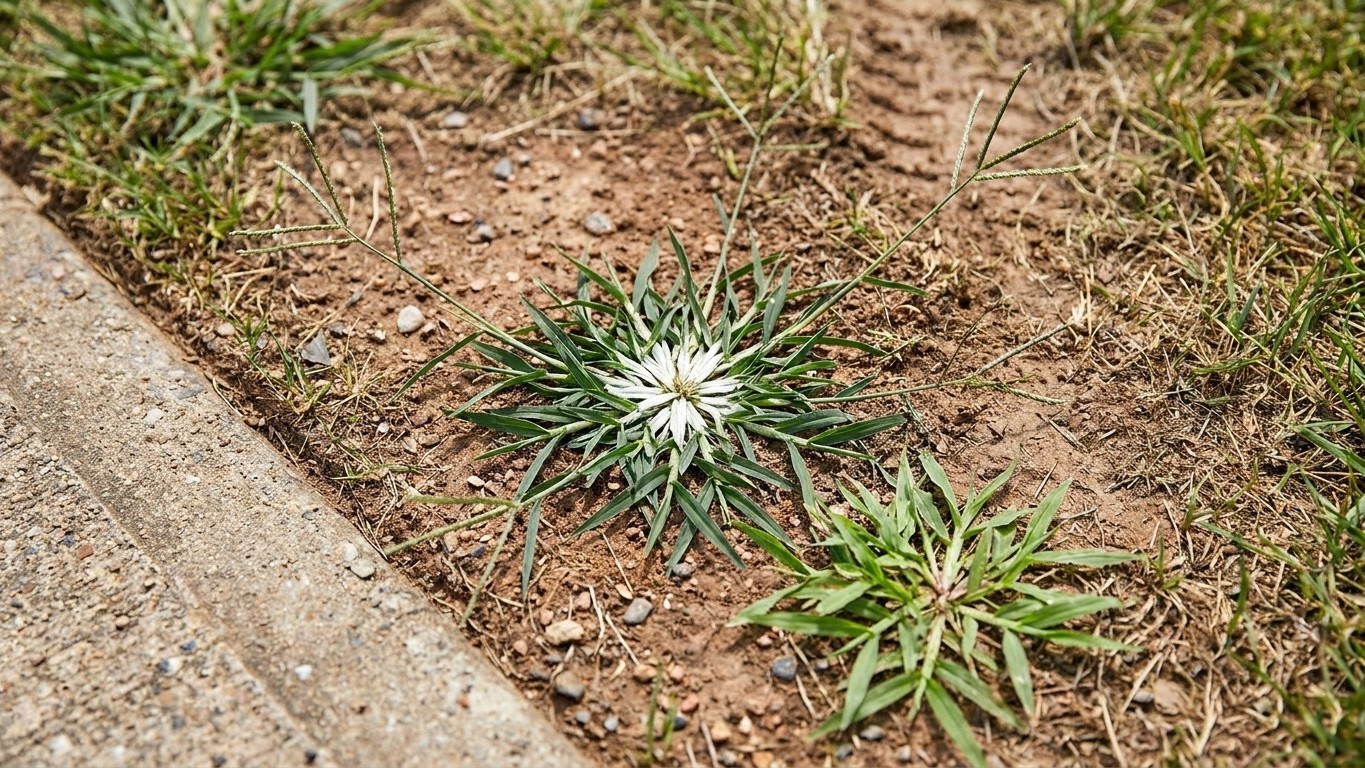

Most Iowa lawns are cool-season grass, and the right cut depends on which species you have. Tall fescue wants 3 to 3.5 inches. Kentucky bluegrass and fine fescues sit at 2 to 3 inches. Perennial ryegrass and rough bluegrass do best at 1.5 to 2.5 inches. Those numbers are not interchangeable, so check what is growing before you set the deck.
The mowing height for Iowa lawns
Every grass on that list is a cool-season species, and that is no accident. Cool-season turf grows hardest in spring and fall and slows in midsummer, which suits a state where the last spring frost typically lands between April 12 and April 24 and the first fall frost between October 14 and October 25. Those dates come from NOAA NCEI 1991-2020 normals for one reference station. Warm-season lawn grasses, the kind that thrive in Georgia or the Carolinas, are built for a long stretch of steady heat. Here they would green up late, stall after the first October frost, and sit brown through a long cold winter. The growing window is too short for them to hold a lawn.
Height matters because grass blades are the plant’s solar panels. A taller blade means more leaf area, which feeds deeper roots and shades the soil so weed seeds struggle to sprout. Cut too low and the plant spends stored energy regrowing leaves instead of building roots. The gap between species comes from their growth habits. Tall fescue is a bunch-type grass with coarse, upright blades that tolerates a high cut. Perennial ryegrass and rough bluegrass are finer and lower-growing, so they cope with a shorter one.
| Grass | Mowing height |
|---|---|
| Tall Fescue | 3 to 3.5 inches |
| Kentucky Bluegrass | 2 to 3 inches |
| Fine Fescues | 2 to 3 inches |
| Perennial Ryegrass | 1.5 to 2.5 inches |
| Rough Bluegrass | 1.5 to 2.5 inches |
If you are not sure what you have
Many Iowa lawns are blends, often Kentucky bluegrass with some ryegrass or fescue mixed in. When a lawn is mixed, set the deck for the species that makes up most of the turf. Splitting the difference at 2.5 inches is a reasonable fallback, because it stays inside the range for four of the five species. A lawn that is mostly tall fescue will thin out at that height over time, though. For help identifying your turf, Iowa State Extension is the place to start.
Raising the deck when the heat comes
July is when most Iowa lawns start to struggle. Cool-season grass slows down in the heat, and the roots have less margin for error. The fix costs nothing: move the deck to the top of your species’ range from late June through August. That means 3.5 inches for tall fescue, 3 for Kentucky bluegrass and fine fescues, and 2.5 for ryegrass or rough bluegrass. The extra blade length shades the crown and the soil, which stays cooler and loses water more slowly.
Rainfall tells you how much help the weather will give. NOAA NCEI normals for 1991-2020, taken from one reference station, show about 13.2 inches of rain across June, July and August, out of 36.5 inches for the year. June averages 5.26 inches, July drops to 3.82 (the driest of the three), and August comes back to 4.17. Those are what the region can usually expect, not a forecast, and a slope, a rain shadow or a city can shift them for your yard.
The soil decides what those inches mean. A sandy lawn lets rain drain through within the day, so a wet summer can still leave grass thirsty every second day. A clay lawn can hold the same rain for a week. Heat makes it worse. On days at or above 90°F, evaporation pulls moisture out fast, and a single summer thunderstorm often runs off rather than soaking in. Three inches arriving in 40 minutes does less for the roots than the same amount spread over a week.
A cheap rain gauge on your own lot settles the question better than any regional average. If it shows less than about an inch in a week during July, the lawn is likely to slow down or go partly dormant. Raising the deck helps either way. Resist the urge to scalp a stressed lawn to make it look tidy, because a dormant brown patch cut short has almost nothing left to recover with when the rain returns.
The one-third rule, and why it is not arbitrary
Never remove more than one-third of the blade in a single mowing. The reason is physiological. Cut off half the leaf and the plant loses much of its ability to photosynthesize overnight, so it pulls energy from the roots to rebuild. Roots stop growing while that happens. Do it repeatedly and you get a shallow-rooted lawn that browns at the first dry spell.
The math sets your mowing schedule, and it is easy to work out. At 3 inches, you can let the grass reach 4.5 inches before cutting, which removes 1.5 inches at most. A tall fescue lawn kept at 3.5 inches can grow to about 5.25 inches. A ryegrass lawn kept at 2.5 inches should be cut by the time it hits roughly 3.75 inches. A lower setting means a shorter allowable gap between mowings, so the species that tolerate close cuts also need more frequent attention. That is a trade-off worth knowing before you choose a cut height for looks alone.
Wet stretches in May and June are where the rule usually breaks. Rain keeps you off the lawn for a week, the grass shoots up, and the temptation is to drop the deck and take it all at once. Do the opposite. Raise the deck for the first pass, then lower it a notch a few days later and again at the next mowing until you are back at your target. Leave the clippings in place when you can. They break down quickly and return some nutrients to the soil. If they clump in heavy rows, rake or mow again lightly.
A dull blade matters here too. It tears grass instead of slicing it, leaving frayed tips that turn tan. If you want the full routine around the cut itself, our guide to Mowing a Lawn covers frequency, blade care and clipping management.
The first and last cut of the year
Timing the first mow is simple. Start when the grass is actively growing and has gained enough height to trim, not on a calendar date. In Iowa that usually follows the last spring frost, which NOAA NCEI 1991-2020 normals put between April 12 and April 24 for the reference station. Iowa State Extension county figures from 1950 to 2021 run about 4 days later in spring and about 10 days earlier in fall, so treat the airport numbers as the optimistic end. If you live farther from a city, plan on the later spring dates and the earlier fall ones.
For the first cut, set the deck at the top of your species’ range and remove only the tips. Spring growth is fast, and a gentle first pass leaves plenty of green blade to fuel it. Scalping in April does the most damage of any mowing mistake, because the soil is cool, roots are still waking up, and weed seeds are ready to take the light you just uncovered.
The last cut mirrors the first. Cool-season grass keeps growing into the fall, often right up to the first fall frost, which the same normals place between October 14 and October 25. Keep mowing on your regular schedule until growth stops. For the final one or two passes, drop to the low end of your species’ range, such as 3 inches for tall fescue or 2 inches for Kentucky bluegrass. Do not go below it. Very long grass can mat down under leaves and snow and invite disease over winter, while cutting too short exposes the crown to cold.
Lawns in other cool-season regions follow the same logic, but their frost calendars and local rules shift the details. If you want to compare, see How High to Mow a Lawn in Rhode Island or How High to Mow a Lawn in Prince Edward Island.
Common questions
What is the best mowing height for an Iowa lawn?
It depends on the grass. Tall fescue does best at 3 to 3.5 inches, Kentucky bluegrass and fine fescues at 2 to 3 inches, and perennial ryegrass and rough bluegrass at 1.5 to 2.5 inches.
Should I mow shorter in spring to get a head start?
No. A low first cut stresses grass that is just starting to grow and lets weeds into the light. Start at the top of your species’ range and lower the deck only if you need to, staying inside the range.
Can I grow a warm-season grass in Iowa?
It is a poor bet. Warm-season grasses need long, steady heat, and Iowa’s frost dates cut the season short at both ends. They turn brown after the first fall frost and have a hard time surviving the winter. The cool-season species above are the ones that hold here.
How often should I mow?
Often enough that you never remove more than one-third of the blade. In spring that may mean twice a week. In a dry July, once every 10 days may be enough, with the deck raised.