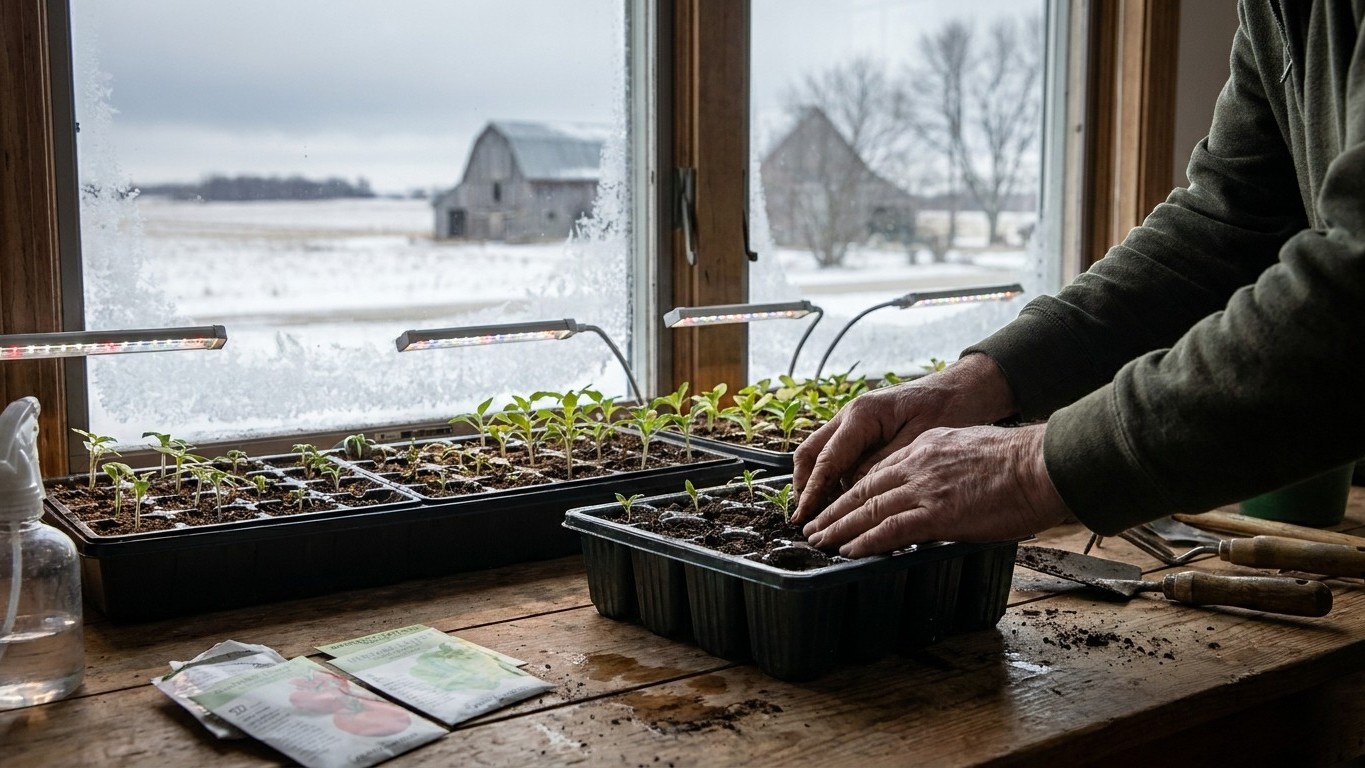

Nothing goes into open ground in Iowa in January. Soil across the state is frozen solid, often to a depth of a foot or more, and the last spring frost doesn’t arrive until April 12 to April 24 in most of the state. What you can do this month is limited but real: force rhubarb and chicory indoors, plant bare-root stock during a rare thaw, manage a cold frame, and start the seed trays that long-season crops need to hit their transplant date on time.
What goes in the ground in January

The frost window matters more than the calendar, and in January that window is still three to four months away. NOAA’s 1991-2020 climate normals put the last spring freeze between April 12 and April 24 for the reference station, and Iowa State Extension’s county-level figures run about four days later than that. Either way, the ground itself is the limiting factor, not the date on the wall. Soil temperature under snow cover or frozen crust sits well below what any seed needs to germinate, so direct-sowing anything outdoors this month is not a gamble, it’s simply not an option.
That doesn’t mean the garden goes untouched. A cold frame or low tunnel with a south-facing exposure can hold enough residual heat on a sunny day to keep dormant mache, claytonia, or spinach ticking over if they were established the previous fall, but starting anything fresh inside an unheated frame in January is a losing bet in a 4b-6a zone. Bare-root fruit trees, grapevines, and cane fruit can go into the ground during an unusual thaw if the soil is actually workable and not just soft on the surface, but count on that window being rare and short.
Garlic and shallots, the alliums most gardeners associate with a January planting elsewhere, are already in the ground here. Iowa gardeners plant those in fall, and by January they’re simply overwintering under mulch, doing nothing visible and needing nothing from you. What you can actively start this month is indoor forcing: rhubarb crowns dug and brought into a dark, warmish spot will push tender stalks in a few weeks, and Belgian endive roots forced the same way give you a genuine winter harvest without touching the frozen bed outside.
Bare-root and dormant planting windows
If a bare-root shipment arrives before the ground is workable, don’t force it into frozen soil. Heel the roots into a bucket of damp sand or sawdust in an unheated garage and hold them there until a thaw actually softens the top six inches of soil, checking weekly rather than guessing from the air temperature alone.
What to start under cover
Count backward from the frost window instead of forward from today’s date, and January starts making sense. Onions and leeks grown from seed need roughly 10 to 12 weeks of indoor growth before they’re ready to go outside, and since the last frost falls between April 12 and April 24, that puts the ideal seed-starting date somewhere in mid-January to early February for anyone aiming at the earlier end of that window. Run the same math for your own microclimate: if your local frost tends to land closer to April 24, you have a bit more slack; if it tends toward April 12, start now.
Celery and celeriac follow a similar long runway, often needing 10 weeks or more before transplant, and they’re notoriously slow and fussy to germinate, so an early start under lights is less risky than it sounds. Peppers, at 8 to 10 weeks, sit on the edge of the January window depending on how far into the month you are; starting them in the first half of the month lines up reasonably well with an April 12 target, while waiting until late January better suits a later frost date.
The two ways this goes wrong are mirror images of each other. Start onions or peppers too early and you’ll be nursing rootbound, leggy seedlings on a windowsill for weeks past when they should have gone outside, with stunted growth to show for it all season. Start too late and you run out of runway entirely, transplanting undersized plants that never catch up. A seedling heat mat and supplemental lighting close the gap either way, but they don’t rewrite the arithmetic.
What is ready to pick
Outdoors, the honest answer is close to nothing. Kale and leeks left in the ground under a thick mulch or snow layer can sometimes still be dug if the ground hasn’t frozen too hard around them, and both actually improve in flavor after repeated freezes, but access depends entirely on how deep the frost has gone that particular week. A cold frame maintained since fall may still be yielding small amounts of spinach or mache on the better days, though growth has essentially stopped and you’re harvesting standing stock rather than new leaves.
Indoors is where the real January harvest happens. Sprouts and microgreens started on a countertop are ready in one to two weeks and give you fresh greens with zero dependence on outdoor conditions. Forced rhubarb and chicory, started the previous month, should be coming into their own by now.
This is also the month to go through the root cellar or basement shelf with a critical eye. Squash should be firm with no soft spots; a squash that’s starting to give under light pressure near the stem end is on its way out and should be used first. Potatoes that have sprouted or gone green need to be pulled and used or discarded, and onions showing soft necks or mold at the root end will spread rot to their neighbors if left in the bin.
The jobs that matter this month
Dormant pruning is the single biggest task January owns. Apple and pear trees, grapevines, and raspberry canes are all fully dormant now, with no leaves to obscure structure and no active sap flow to bleed from a cut. Pruning now, rather than waiting for a warm spring day when buds are already swelling, reduces stress on the plant and gives you a clean view of which branches actually need to go. Skip pruning on days when wood is brittle from extreme cold, since branches can crack instead of cutting cleanly, but most January days in Iowa are workable for this.
Seed ordering has a real deadline even though it doesn’t feel like one. Popular varieties, especially in categories like heirloom tomatoes and specialty peppers, sell out from seed companies well before planting season, and ordering in January instead of March is often the difference between getting the variety you actually wanted and settling for whatever’s left.
Soil testing can happen now if you can get a spade into unfrozen ground, or you can pull a sample and hold it for a spring test if the ground is locked up. Either way, results take a few weeks to come back, so submitting early means you have amendment recommendations in hand well before planting season instead of scrambling in April. Compost piles keep working even in cold weather as long as there’s enough mass and moisture; check that the pile hasn’t dried out under an insulating snow cap, and skip turning it if it’s frozen through.
Round out the month with the jobs that have no growing-season deadline but always get pushed aside once spring hits: sharpening and oiling pruners and shears, repairing raised bed frames and fencing while the garden is empty and easy to walk through, and mapping out next season’s crop rotation on paper before seed orders lock in what you’re actually planting where.
What not to do in January
The most common mistake is letting seed-catalog enthusiasm push warm-season starts too early. Tomatoes and squash started in January, rather than closer to their actual 6-to-8-week window before an April 12-24 frost, end up as tall, weak, rootbound plants by the time it’s safe to transplant them, and they rarely recover the vigor they lost sitting too long in a small pot.
A second trap is trusting a warm afternoon more than the calendar. A January thaw that pushes air temperatures into the 40s or even 50s doesn’t mean the soil has warmed to match, and it doesn’t mean the freeze risk is over. Uncovering a cold frame or removing mulch from overwintering crops during one of these breaks leaves them exposed when the next hard freeze rolls back in, which it almost always does in a state that doesn’t see its last frost until well into April.
Fertilizing dormant plants is wasted effort at best and harmful at worst. Nitrogen applied to a fruit tree or a bed of overwintering greens right now sits unused in soil that’s too cold for roots to take it up, and it’s prone to leaching away with snowmelt before the plant is even active enough to use it. Hold nitrogen applications until you see actual new growth, not just a mild stretch of weather.
Walking or working frozen or waterlogged beds is a quieter mistake with long consequences. Soil compacted while frozen or saturated stays compacted long after it thaws, and that structure damage shows up as poor drainage and stunted roots months later.
Checking this against your own county
A statewide frost window is a starting point, not a forecast for your backyard. Iowa’s hardiness zones span 4b to 6a under the USDA system, and elevation, river valleys, and simple north-south distance across the state can shift a local frost date by two weeks or more in either direction from the April 12-24 range cited here. Iowa State Extension’s own county-level data already runs about four days later in spring and ten days earlier in fall than the airport-based figures used above, and your own yard’s microclimate can move things further still. Before committing to a seed-starting date, check Iowa State University Extension and Outreach for county-specific planting guidance.
Common questions
Can I plant garlic in Iowa in January?
No. Garlic in Iowa goes into the ground in fall, typically well before the first hard freeze, and by January it’s already established underground and dormant under mulch. There’s nothing to plant and nothing to do with it until spring growth resumes.
Is it too early to start tomato seeds in January?
For most of Iowa, yes. Tomatoes need roughly 6 to 8 weeks indoors before transplanting near the last frost, which falls between April 12 and April 24. Starting in January means weeks of extra time on a windowsill, producing leggy, stressed seedlings by the time it’s actually safe to plant them outside.
What can I still harvest from my Iowa garden in January?
Little to nothing outdoors unless you’ve kept kale or leeks mulched heavily enough to dig, or maintained a cold frame with cold-hardy greens still standing. Most January harvests come from stored crops in the root cellar, forced rhubarb or chicory, and indoor sprouts or microgreens.
Should I prune my fruit trees in January?
Yes, this is one of the better months for it. Trees are fully dormant with no leaves in the way, and pruning now reduces stress compared to cutting once buds start swelling in spring. Avoid pruning during extreme cold snaps when wood is more likely to crack than cut cleanly.