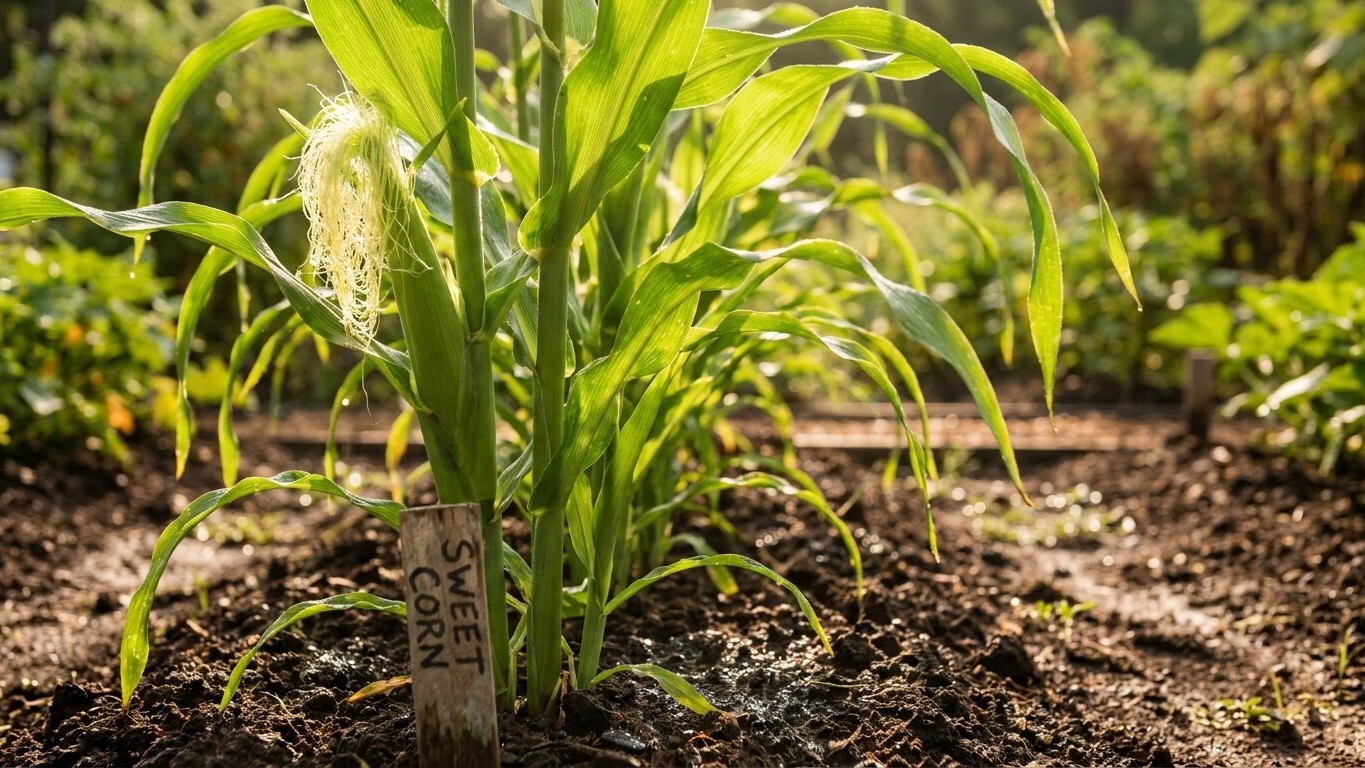

Yes. Sweet corn ripens across Iowa in a typical season, and the margin isn’t even close. The state’s frost-free stretch is long, its summers run hot, and both the fast-maturing and full-season types of sweet corn have room to reach harvest before the weather turns. The real question growers here run into isn’t ripening at all, it’s timing the planting date to the soil, not to the calendar, and keeping different corn types from tasseling into each other.
The short answer
Forget the last frost date for a moment. It matters, but it’s not the number that decides when you plant sweet corn. Sweet corn needs soil above 60 F to germinate well, and soil doesn’t warm at the same pace as the air. It lags behind the last frost by weeks, not days. Iowa’s last spring frost falls somewhere between April 12 and April 24, depending on where you sit in the state, but the soil underneath that frost-free air is still cold. In practice, sweet corn planting in this territory pushes into May for most growers, sometimes later in a slow, wet spring, because rushing seed into 50-degree ground just means rot instead of a stand.
That delay is the piece people miss. A gardener who plants the day after the last frost, assuming the season clock starts then, is often planting into soil that hasn’t caught up yet. The clock that actually matters starts when a soil thermometer reads 60 F, not when the forecast says frost risk has passed.
Once that clock does start, Iowa has room to spare. The first fall frost arrives between October 14 and October 25. Stretch the calendar from the earliest last-frost date to the latest first-frost date and you get a frost-free window in the neighborhood of six months. Even after losing several weeks to soil warm-up in spring, sweet corn’s stated need of 60 to 90 days from planting to maturity fits with margin left over. There’s also a caution worth carrying into this math: county-level records from Iowa State Extension, covering decades of local data, tend to run about 4 days later in spring and 10 days earlier in fall than the airport-station numbers above. That trims the window slightly at both ends, but it doesn’t come close to closing it.
Heat is the other half of the story, and Iowa doesn’t lack it. The state averages 18.4 days a year at 90 F or hotter. That’s a heavy heat load, and sweet corn, a warm-season crop, uses it well for growth and starch conversion to sugar. The tradeoff is water demand. Those same hot stretches pull moisture out of the soil fast, and corn is most vulnerable to drought stress right around silking. A long season and strong heat don’t help much if the crop runs dry during the two or three weeks it matters most.
Does a late variety fit here?
Maturity numbers on a seed packet describe days from planting to harvest, not days from the last frost. That distinction decides whether a given variety has room to work in this territory.
A 60-day variety
A quick-maturing type in the 60-day range is the safest bet for anyone nervous about a late spring or a cool start. Even with soil warm-up pushing the planting date into May, a 60-day crop can go into the ground, mature, and clear harvest well before the frost-free season starts winding down in October. This is also the variety that gives a gardener a second option: an early planting followed by a later one, timed so the two blocks don’t tassel in the same window, stretching the fresh-corn harvest across several weeks instead of one.
A 90-day variety
The full-season, 90-day type is where growers start doing the math more carefully, and in Iowa’s case the math works. Even counting a delayed May start and trimming for the more conservative county-level frost dates, there’s still comfortably more than 90 days left before the first fall frost arrives. A 90-day sweet corn variety fits this territory without needing a shortened season or a gamble on an early frost holding off. What it does need is a planting date that respects the soil temperature rule rather than the frost date alone, plant a 90-day variety too early into cold ground, and the maturity clock never really gets a clean start.
Worth noting separately: the 60-to-90-day figure only answers whether the crop has time to mature at all. It says nothing about which week to actually pick. That’s a different clock, counted in days from when the silks first appear rather than from planting, and the two shouldn’t be confused when planning a harvest date.
What goes wrong here
- Soil sown too cold. This is the most common failure in a state where the itch to plant early is strong. Seed dropped into soil that hasn’t reached 60 F sits, rots, or comes up thin and uneven. The fix is patience and a soil thermometer: wait for the soil reading, not the last-frost date, before planting.
- A variety pushed past what the season allows. Less common in Iowa than in shorter-season states, but it still happens when a late planting date (from a wet spring, or a second succession planting started too far into summer) leaves a 90-day variety without enough runway before the first fall frost. The fix is watching the calendar backward from the October frost window, not just forward from planting day.
- Sweetness lost to a bad neighbor. This one has nothing to do with soil or frost. Standard (su), sugary-enhanced (se), and supersweet (sh2) sweet corn types cross-pollinate, and when two different types tassel at the same time near each other, the sweeter type loses its flavor advantage. The fix is timing, not distance: stagger plantings so the types tassel in different weeks, or keep each type in its own block of three or more rows so pollination stays within its own planting.
Common questions
When should sweet corn actually go into the ground in Iowa? Once soil temperature reads consistently above 60 F, not on the calendar date of the last frost. That’s typically later than gardeners expect, often well into May in a normal spring.
How can I tell when an ear is actually ripe? Check for all three signs together: silks that have turned dry and brown, husks that are still moist and green, and milky (not clear, not thick) juice from a kernel you puncture with a thumbnail. One sign alone isn’t reliable.
Can I grow two different sweet corn types in the same garden? Yes, as long as they don’t tassel at the same time. Stagger planting dates or keep types in separate blocks so their tasseling windows don’t overlap, and sweetness holds for both.
Does Iowa’s heat cause any special problems for sweet corn? Mainly water stress. With close to 18 days a year hitting 90 F or higher, the crop can dry out fast right around silking, which is the stage most sensitive to a moisture shortfall.