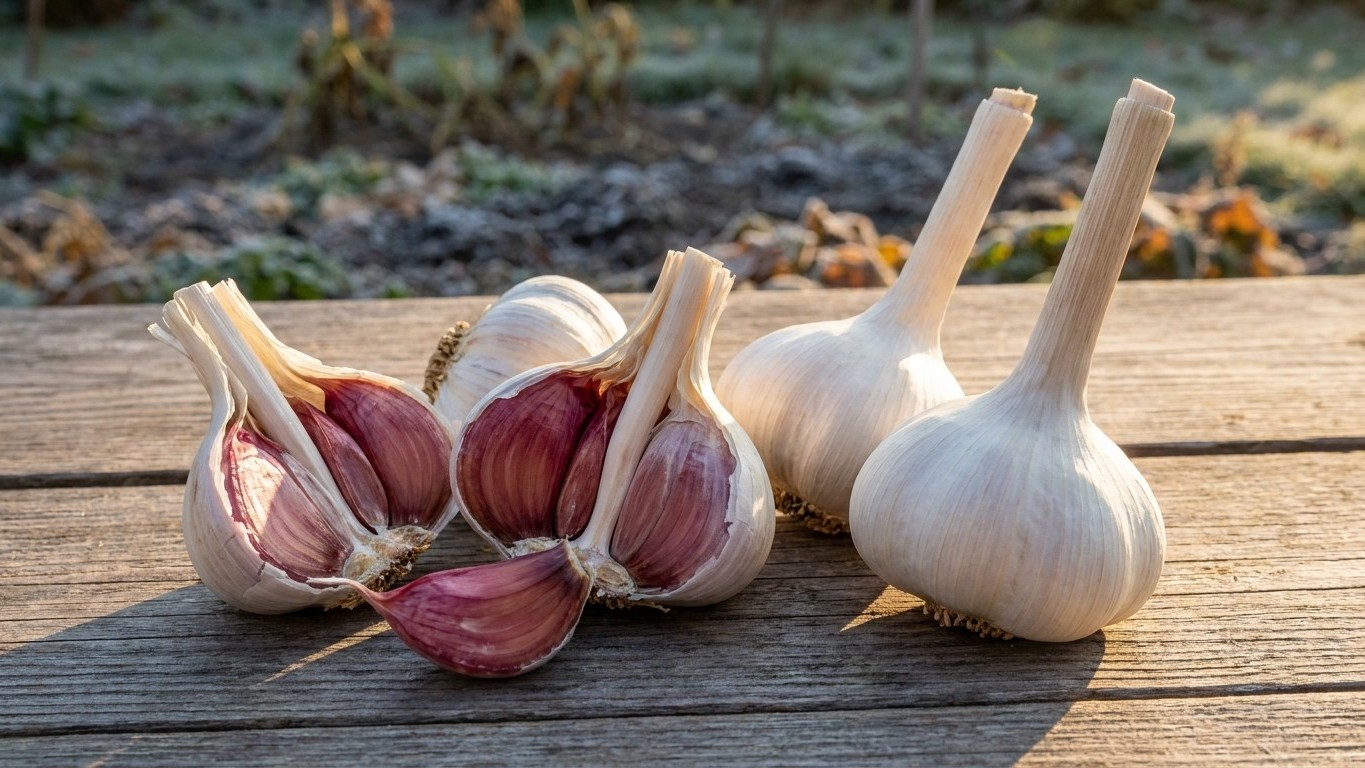

Garlic in Kansas comes out of the ground in early summer, not by looking at a calendar but by watching the leaves: once the lower half to two-thirds have browned and only five or six green leaves remain up top, it’s time to dig. From there, curing takes two to four weeks in a warm, dry, shaded spot with good airflow, and storage afterward needs cool, dark, moderately humid conditions to keep bulbs firm through winter. The details shift depending on where in Kansas you garden and what kind of season it’s been.
When garlic is ready to lift in Kansas
Garlic planted in autumn spends the cold months building roots underground, then resumes growth once soil warms in spring. The bulb itself swells during that late-spring push, and the plant tells you when it’s done far more reliably than any date on a calendar. As the bulb matures, the lowest leaves start yellowing and drying from the base up. That’s the signal to start paying attention, not the signal to grab a shovel.
The right window to harvest is when about half the leaves, sometimes a bit less, have browned while five or six leaves at the top stay green. Each green leaf roughly corresponds to a layer of wrapper protecting the bulb, so pulling too early, while most leaves are still green, means thin, underdeveloped wrappers and bulbs that won’t store well. Waiting until every leaf has collapsed is worse: the wrapper layers start splitting apart underground, cloves separate inside their skins, and the whole bulb becomes more vulnerable to rot the next time it rains.
Stop watering roughly one to two weeks before the expected harvest. Wet soil at digging time makes bulbs harder to clean and can trap moisture under the wrapper, which works against everything curing is supposed to accomplish. If you’re unsure, dig a single test bulb from the row and slice it in half. Well-formed cloves with distinct skins mean the rest of the patch is likely ready or close to it.
Hardneck versus softneck timing
Hardneck and softneck varieties don’t mature on identical timelines, and neither do bulbs from cloves planted a few weeks apart the previous fall. That variation is normal. Rather than fixing a date in your head, check the row every few days once the bottom leaves start turning, and let the plant’s own signals, not the month, make the call. There isn’t a published Kansas-specific harvest calendar here worth quoting, because the leaf signal is the actual data point that matters, and it moves with the year.
Curing it, and where to hang it here
Curing is what turns a freshly dug, dirt-covered bulb into something that will actually keep. Skip it, or rush it, and even a well-timed harvest won’t store past a few weeks. The process is simple in concept: shake off loose soil without washing the bulbs, leave the roots and leaves attached, and get the whole plant into a spot with shade, low humidity, and steady airflow.
A garage with the door cracked, a covered porch out of direct sun, or a shed with a box fan running all work. Direct sunlight is the one thing to avoid outright, since it can scald the outer wrapper and encourage soft spots that turn into rot later. Bundle a handful of plants together and hang them upside down, or lay them in a single layer on a screen or wire rack so air moves underneath as well as over the top. Crowding bulbs in a pile is a common way to lose part of a harvest to mold, since the ones in the middle never fully dry.
Expect two to four weeks before the neck above the bulb is fully dry and papery and the outer wrapper has that dry, rustling feel. Humid stretches in July, which Kansas gets its share of, can stall that process, so a fan aimed at the drying area helps push it along when the air outside isn’t cooperating.
One date worth keeping in the back of your mind if curing runs long: in Kansas, the first fall frost typically lands somewhere between October 23 and November 2, based on NOAA NCEI 1991-2020 Climate Normals and the 30-70% probability band for a 32°F freeze at the reference weather station. That’s a midpoint, not a guarantee, since frost arrives later than that window about half the years on record and earlier the other half. A July harvest and a four-week cure finish well ahead of that window in most years, but if a wet stretch or a late harvest pushes curing into October, it’s worth moving bulbs into fully enclosed storage before overnight temperatures start dropping hard. Check your own county’s typical dates rather than assuming the reference station’s window applies exactly where you garden.
Storing it through a Kansas winter
Once curing is finished, trim the roots close and cut the tops down to an inch or so, unless you’re braiding softnecks, in which case the tops stay on. This is also the moment to set aside your largest, healthiest bulbs as seed stock for fall planting, kept separate from the bulbs you plan to cook with over winter.
Cured garlic keeps best somewhere cool, dark, and moderately humid, with air able to move around the bulbs rather than sit stagnant against them. Mesh bags, paper bags with a few holes, open baskets, or braided ropes hung on a wall all allow that airflow. Plastic bags or sealed containers trap the small amount of moisture bulbs still give off and invite mold, so they’re worth skipping even though they’re convenient.
Where in the house it actually works
| Storage spot | Typical conditions | How well it works |
|---|---|---|
| Pantry or interior closet | Cool, stable, low light | Good for most of a Kansas winter if the room stays under 60°F |
| Basement | Cool, often more humid | Good, watch for dampness that could promote mold on wrappers |
| Unheated garage | Swings with outdoor temperature | Risky during hard freezes; bulbs can be damaged if they drop below freezing |
| Refrigerator | Cold and dry | Poor for long-term storage; cold exposure tends to trigger early sprouting |
Kansas homes also swing hard between a forced-air furnace running nonstop and a garage that tracks the outside temperature almost exactly. A furnace-heated closet can dry storage air out enough that bulbs shrivel faster than they should, while an attached but unheated garage can dip below freezing during a January cold snap and damage bulbs stored there. An interior closet or a basement corner that stays reasonably steady tends to outperform either extreme.
What goes wrong here
Most of what shortens garlic’s shelf life traces back to one of three things: moisture that got trapped somewhere along the way, heat or dryness that shriveled the bulbs, or cold exposure that triggered sprouting before you were ready to use them. Harvesting too early leaves bulbs small with thin wrappers that don’t hold up in storage. Harvesting too late, especially if a summer thunderstorm rolls through before you get to the patch, lets wrapper layers split and rot set in while the bulb is still in the ground.
K-State Research and Extension documents a specific set of pests for gardens in this region: bagworm (Thyridopteryx ephemeraeformis), blister beetle (Epicauta spp.), Colorado potato beetle, grasshopper, harlequin bug, pine sawyer beetle, spotted cucumber beetle, squash bug (Anasa tristis), squash vine borer, and striped cucumber beetle. None of them target garlic bulbs directly. That’s worth knowing mainly because it points you back to what actually causes losses locally, which is curing and storage conditions rather than insect damage.
A few other things that trip people up: washing bulbs before curing instead of just brushing off dry soil, which adds moisture right when you’re trying to remove it; stacking bundles too tightly during the curing window, which stops air from reaching the bulbs in the middle; and forgetting to check stored garlic every few weeks. A single soft bulb left in a mesh bag can spread rot to its neighbors before you notice, so a quick look through storage every couple of weeks catches problems early enough to save the rest.
Common questions
Can I Harvest Garlic in Kansas before the leaves die back completely?
Yes, and you should. Waiting until every leaf has browned usually means the bulb has already started splitting apart inside its wrapper. Aim for roughly half the leaves brown with five or six still green.
How long does cured garlic last in Kansas storage?
That depends heavily on variety and how well curing went, and no specific duration figure is published here to cite. What’s clear is that cool, dark, moderately humid conditions with airflow extend storage life far more than any single number would suggest, while damp or overly warm storage cuts it short regardless of variety.
Should I store garlic in the refrigerator?
It’s generally not recommended for the bulk of your harvest, since cold storage tends to trigger sprouting sooner than room-temperature storage does. A cool pantry, closet, or basement spot works better for keeping garlic through winter.
What is a good source for Kansas-specific growing advice?
K-State Research and Extension is the land-grant extension service for the state and a reliable place to check for local advisories that go beyond general curing and storage practices.