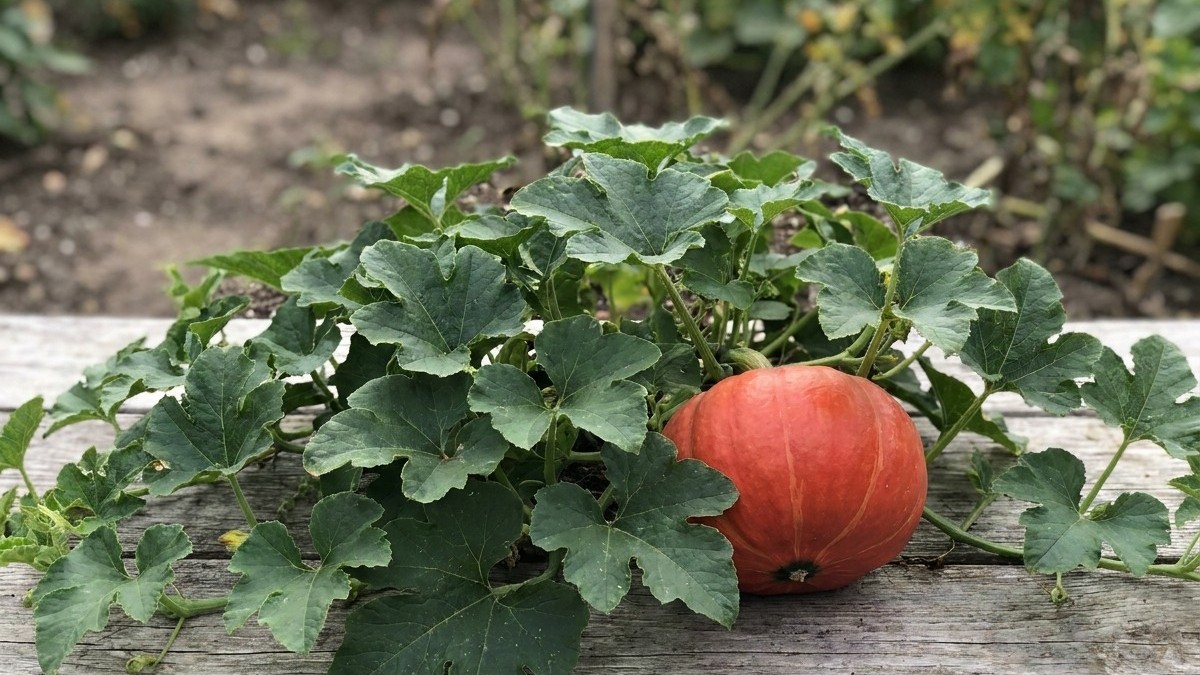

Cut a pumpkin when the rind has taken on its full color and resists a thumbnail, and the stem has turned woody. Cut it with the stem attached, before frost. In your own garden that usually means checking your county extension office for the local harvest window. A whole pumpkin stored cool and dark, at 45-50 F and away from apples, can keep up to three to six months. That is the best case, not a guarantee. More on growing pumpkins in Kansas is a click away.
When pumpkins are ready in Kansas
The plant tells you first, and the calendar confirms it. A pumpkin needs 45 to 55 days after flowering to mature, so the clock starts when the female flower opens, not on the day the seed went in the ground. Count from that bloom and you know roughly when the fruit will be ready, then check the frost window to see whether it will get there in time.
How do you know a pumpkin is ready to cut?
Start with the rind. A ripe pumpkin is evenly colored all the way around, including the underside where it sat on the soil. Press a thumbnail against the skin. If it dents or scratches easily, the fruit is still growing and needs more time on the vine.
Next, look at the stem and the vine. The stem turns hard, dry and woody, and the vine often browns and dies back as the fruit finishes. A green, flexible stem on a fruit that is still glossy usually means more days are needed.
When it passes the tests, cut it with pruners and leave the stem attached. Utah State University Extension advises harvesting pumpkins with the stem on, before frost. Lift the pumpkin from underneath. A stem snapped off or used as a handle can tear loose, and that leaves an open wound on the fruit.
How does the Kansas frost window set the deadline?
NOAA NCEI’s 1991-2020 Climate Normals, using the 32 F freeze probabilities in the 30-70% band, put the first fall frost at the reference-city airport station between October 23 and November 2. The last spring frost there falls between April 4 and April 18. You can see the raw station data in the NOAA NCEI normals file.
Those are airport numbers. Gardens in the suburbs and the country usually get their first fall frost one to two weeks earlier, and more than that at elevation. Treat the range as a starting point and ask your county extension office what is typical for your own ground.
Now count back from the frost window. A flower that opens too late gives a green fruit that frost catches first. In a garden that frosts a week or two early, the safe cutoff for new flowers moves earlier by the same amount. If frost is coming and your fruit is still green, Will Pumpkins Ripen Before Frost in Kansas? covers what a late fruit can and cannot do.
One more date gets mixed up with these. Pumpkins are sown when the soil reaches 65 F, and that is not the last frost date. Soil lags the air by weeks, so a mid-April frost date does not mean the seed can go in that week. A late planting pushes flowering later, which pushes ripening toward the frost line. Vines that lose leaves early to squash bugs or cucumber beetles can also stop feeding the fruit sooner than you planned. What Eats Pumpkin in Kansas, and When explains the timing of those pests.
Keeping them, and for how long
University of Illinois Extension says a whole pumpkin keeps for three to six months in a cool, dark location between 45-50 F. Think of that as the ceiling. It describes a sound, fully mature pumpkin with its stem intact, kept in the right spot the whole time. A fruit with a bruise, a cracked stem or a weak start will go sooner, and a warm room cuts the clock further.
How long does a whole pumpkin really keep?
The long end of the range goes to the best pumpkins: hard rind, intact stem, no soft spots, cut at full maturity. Fruit that was cut a little early, or that sat through a cold night in the field, belongs on the short end or earlier. Use those pumpkins first, whether for cooking or for the front step. Plan on the lower number if you cannot guarantee the conditions.
Utah State University Extension says only that harvested pumpkins should go where they will not freeze. That is the floor. A frozen pumpkin does not keep, so harvest before frost. Check the weather before you leave fruit on a porch or in an outbuilding, since a single hard freeze ends the storage season for that pumpkin.
What should a stored pumpkin stay away from?
The same Illinois source adds a second rule that most people never hear. Store pumpkins away from ripening fruits and vegetables such as apples, potatoes or tomatoes. Ripening produce gives off a gas that ages the pumpkin faster. A porch corner beside a crate of apples, or a basement shelf shared with a bin of potatoes, works against everything else you are doing right.
The 45-50 F range applies to a whole pumpkin. A carved pumpkin is another matter. Once the rind is cut, the flesh is exposed, and it spoils far sooner than the stored fruit would. If you want a jack-o’-lantern, carve it close to the day you plan to show it, and keep the uncarved pumpkins in storage until then.
Handle each pumpkin like a ripe peach. Set them down gently, and do not stack them so the weight rests on a stem. Look them over regularly. A soft spot or a patch of mold on one pumpkin spreads to its neighbors, so pull it out early and use it right away.
Where in the house that actually is
Few rooms in a house sit at 45-50 F all winter. A kitchen or living room runs well above the range, and a pumpkin there ages quickly. A refrigerator runs far colder than the range and has no room for a pumpkin anyway. An attached or detached garage swings with the weather, so it can sit in the right range one week and drop below freezing the next, or warm up during a mild spell in the fall.
Which room comes closest in a Kansas house?
The best candidates are the cool, dark corners that stay put. An unfinished basement, or a basement room away from the furnace and water heater, often settles near the range through the cold months. An interior closet or pantry in an unheated spare room is another good choice. A cellar or storm shelter, where one exists, can also work, as long as it stays dry enough to avoid mold on the rind.
Kansas weather adds a wrinkle. Temperatures can drop hard and fast after the first fall frost window opens, then rebound for a week or more. A spot that holds steady in October can run cold by January. Garages and sheds are the usual places for that surprise, which is why they need a closer look than a basement.
What should you check with a thermometer?
Before the pumpkins move in, put a thermometer in the spot and check it. A minimum-maximum model is best, since it shows the coldest and warmest readings between checks. If you only have a standard one, read it first thing in the morning and again in the afternoon. You are looking for readings that stay near 45-50 F and never reach freezing. Skip this step and you may find out about a bad spot only when the pumpkins turn soft, which wastes months of growing.
Then keep an eye on the spot during the first cold snap and again in midwinter. If the readings drift too warm, move the pumpkins to a cooler room. If a freeze threatens the space, bring them inside for a few days. Keep them off a bare concrete floor if you can, and set them on a shelf, a board or a piece of cardboard instead. Leave a little space between each fruit, and keep any apples or potatoes in a separate room.
Common questions
How do I know a pumpkin is ready to cut?
Check for full, even color, a rind a thumbnail will not dent, and a hard, woody stem. A dying vine supports the same conclusion. If the fruit is still shiny and the skin gives under pressure, wait.
Do I have to cut pumpkins before the first frost?
Yes. Extension guidance is to harvest with the stem attached, before frost. In the reference-city window the first fall frost arrives between October 23 and November 2, and country gardens often see it a week or two earlier. When a frost warning shows up in the forecast, cut that day.
Can I leave pumpkins on the porch until Halloween?
You can, if there is no freeze in the forecast and nothing ripening nearby. A porch beside a bowl of apples or tomatoes ages the pumpkin faster, and a cold night can ruin it. For the longest keeping time, move the pumpkins to a cool, dark spot instead.
Does a carved pumpkin keep as long as a whole one?
No. The 45-50 F storage range and the three to six months are for whole pumpkins. A carved pumpkin has exposed flesh and spoils much sooner, so carve as close to the display date as you can.