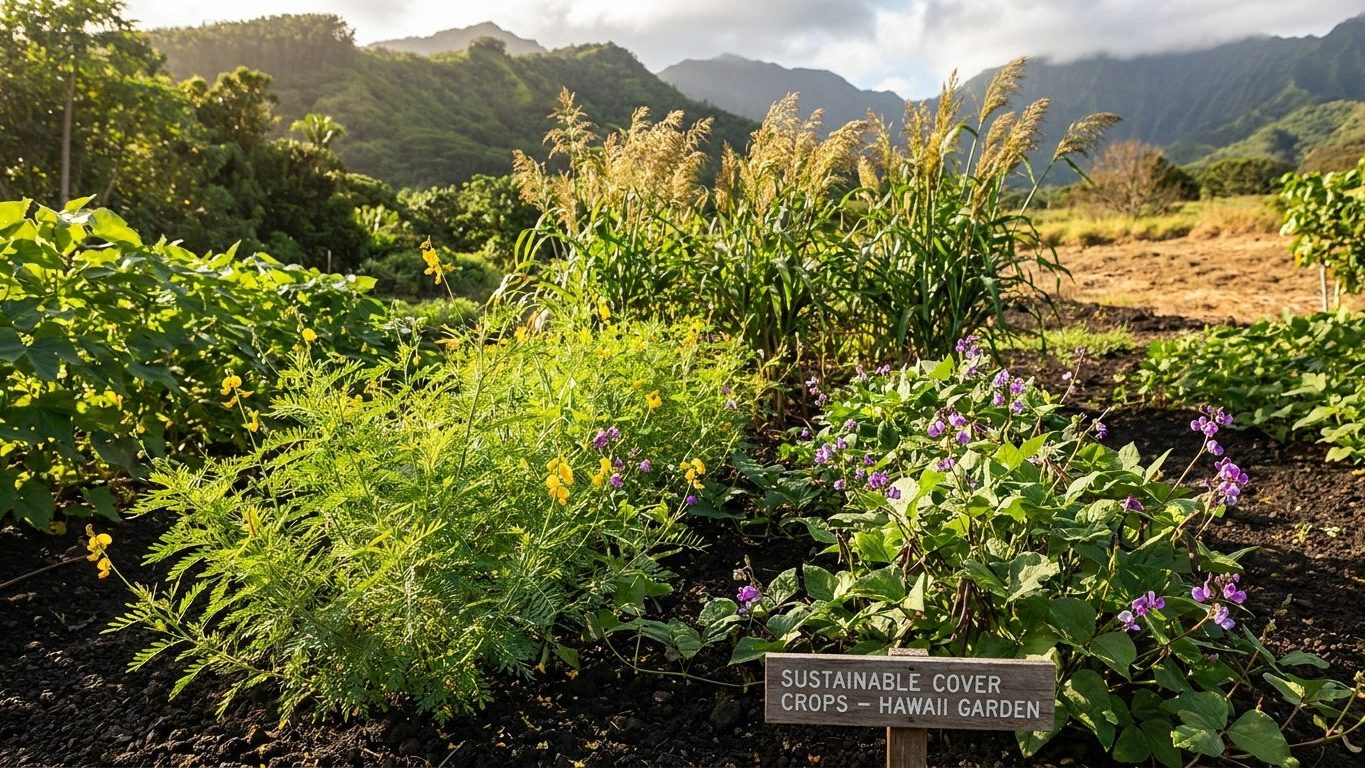

For most of Kentucky, cereal rye is the safest bet for a full-season cover crop, with crimson clover and hairy vetch as strong legume partners where soil-building nitrogen matters. The state’s 6a-7a hardiness range and frost calendar decide which of those actually survive the winter without extra protection.
The short answer for Kentucky
Start with the season length, because that’s what eliminates half the seed catalog before you even open it. Kentucky’s frost-free window runs from a last spring frost of March 24 to April 4 to a first fall frost of November 2 to November 12. Stack the widest version of those dates and you get a growing season pushing 230 days. Stack the narrowest and it’s closer to 212. Either way, that’s enough time for a cover crop to establish, grow real biomass, and either overwinter or get terminated on schedule.
That season length is what makes cereal rye the default choice across the state. It germinates in cool soil, keeps growing after most other covers have quit for the year, and tolerates the coldest month’s mean minimum of 27.8°F without blinking. Rye doesn’t just survive that number, it survives temperatures well below it, which is why it’s the one cover crop Kentucky growers rarely lose to winter.
Legumes are where the decision gets more interesting, because they’re the ones actually building nitrogen instead of just holding soil. Crimson clover fits the fall planting window well if seeded early enough to size up before the first frost hits, and it handles the state’s zone 6a-7a winters without much drama in most years. Hairy vetch is slower to establish but tougher through the cold months, and it pairs naturally with cereal rye in a mix, since the rye holds the vetch up off the ground and keeps it from matting down under snow or ice.
For anyone planting later in the season, or after a fall vegetable harvest that runs close to the November frost dates, oats are worth a look precisely because they’re not meant to survive winter. Oats winterkill reliably once temperatures drop hard, which means no spring termination pass, no herbicide, no tilling in a stand that got away from you. That’s a real advantage for a grower who wants ground cover through fall and bare, plantable soil by April without extra work.
The type of cover crop that makes sense here depends on the goal: rye for maximum biomass and erosion control, crimson clover or hairy vetch for nitrogen, oats for a low-maintenance winterkill option. All three work inside Kentucky’s frost calendar without needing extended-season tricks.
What will not work here
Buckwheat is the clearest example of a mismatch with Kentucky’s calendar, and it trips up more gardeners than any other cover crop on this list. Buckwheat is frost-tender and needs roughly six to eight weeks from seed to flower. Sown after the first week of September, it’s racing the November 2 frost date in the earlier parts of the state, and a cold snap can cut it down before it’s put on enough growth to matter. It’s a fine summer cover between spring and fall vegetable crops. It is not a fall-planted option here.
Subterranean clover is another one that sounds appealing on paper and struggles in practice. It’s bred for milder winters than Kentucky’s coldest month minimum of 27.8°F reliably delivers, and a hard freeze during an exposed young stand can wipe it out before it sets the underground seed it’s named for. Growers who’ve had luck with it further south often assume it will behave the same way here. It usually doesn’t.
Dense, close-spaced clover stands are a second failure point, but the cause isn’t cold, it’s humidity. Kentucky summers carry enough moisture that a thick, poorly ventilated clover stand becomes an invitation for fungal disease, particularly if it’s left standing into a warm, wet June rather than terminated on schedule. The fix isn’t a different species, it’s wider row spacing or an earlier termination date, but plenty of first-time cover croppers learn this the hard way after seeing a stand collapse in midsummer.
Sorghum-sudangrass and other tall, heat-loving summer covers can work in Kentucky, but they’re frequently misjudged on timing. They need consistent heat to perform, and a cool, wet spring stretching close to the April 4 frost date delays planting enough that the crop never reaches the height needed to smother weeds effectively. Planting too early into cold soil just means a slow, patchy stand that never catches up.
The common thread across all of these failures isn’t that the plants are wrong for Kentucky in general. It’s that they’re wrong for a specific piece of the calendar: too tender for the frost dates, too dense for the humidity, or too heat-dependent for a season that doesn’t always warm up on schedule.
What changes across Kentucky
Kentucky isn’t one climate, it’s a state that spans USDA hardiness zones 6a to 7a, and that range is built on the average annual extreme minimum temperature, not on how mild an ordinary winter feels. A 6a location can see winter lows in the range of -10°F to -5°F in a hard year, while a 7a location a couple hours away might only bottom out at 0°F to 5°F. That’s a meaningful gap for anything overwintering as a young, unestablished stand.
Growers in the colder end of that range, generally the higher-elevation and more northern parts of the state, should lean harder on cereal rye and treat legumes like hairy vetch and crimson clover as slightly riskier bets. That doesn’t mean skip them. It means plant them earlier in the fall window to maximize root establishment before cold weather arrives, and consider a heavier seeding rate as insurance against a partial stand loss.
Growers in the milder end of the range have more room to experiment. Crimson clover planted a couple weeks later, or a legume mix pushed closer to the fall frost window, has a better chance of surviving intact through winter in a 7a pocket than it would further north. The margin for error is simply wider.
None of this tells you which zone applies to your own garden, and it shouldn’t try to. Local geography, elevation, and even how close you are to a river valley or an urban heat pocket can shift where you actually fall inside that 6a-7a range. The USDA Plant Hardiness Zone Map is the tool built to answer that question at the address level, and it’s worth five minutes before you commit seed money to a cover crop that’s marginal in your specific spot.
Where to check this for your own county
This page describes Kentucky at the state level, which means it’s built on averages that smooth over real differences between counties. A county-level recommendation from a local extension agent, who’s watching actual trial plots and actual frost data in your part of the state, will always beat a statewide generalization. That’s not a knock on this page, it’s just what a state-level summary can and can’t do.
The University of Kentucky Cooperative Extension Service is the place to go for that finer detail. Once there, two things are worth tracking down specifically. First, look for the local or regional planting calendar for your county or agricultural district, since it will reflect the actual frost pattern for your area rather than the statewide range cited here. Second, look for any cover crop variety trial data your county agent has published or can point you to. Extension offices frequently run side-by-side trials of different rye, clover, and vetch varieties under local soil and weather conditions, and that trial data is worth more than any general species recommendation.
If your county office doesn’t have cover crop-specific trial results on hand, ask directly. Extension agents in agricultural counties usually know what local farmers are running with success, even when it’s not formally published, and that word-of-mouth knowledge is often more current than anything in print.
Checking this against your own garden
Every date on this page is a probability built from decades of regional averages, and your own soil doesn’t read calendars. Three simple observations will tell you more about your specific plot than any frost date range.
Soil warmth by feel is the first and most useful check. Push a bare hand into the top few inches of soil where you’re planning to seed. If it feels cold and damp rather than cool and workable, germination will be slow no matter what the calendar says, and you’re better off waiting a few more days than forcing seed into ground that isn’t ready.
Watch how quickly volunteer weeds and grass green up in your yard or garden edges each spring. A fast, early flush of weed growth is a decent sign that your particular microclimate is running warmer than the regional average, which means you might be able to push spring-terminated covers a bit earlier than the state date suggests. A slow, patchy green-up suggests the opposite.
For fall-planted covers, track how long it takes seedlings to put on their first true leaves after the initial sprout. A stand that’s slow to move past that first-leaf stage before nights start turning cold is telling you it needs more lead time next year, whether that means seeding a week or two earlier or switching to a faster-establishing species like oats instead of a slower legume. Your own garden’s pace, tracked year over year, becomes a better predictor than any single frost date ever will.