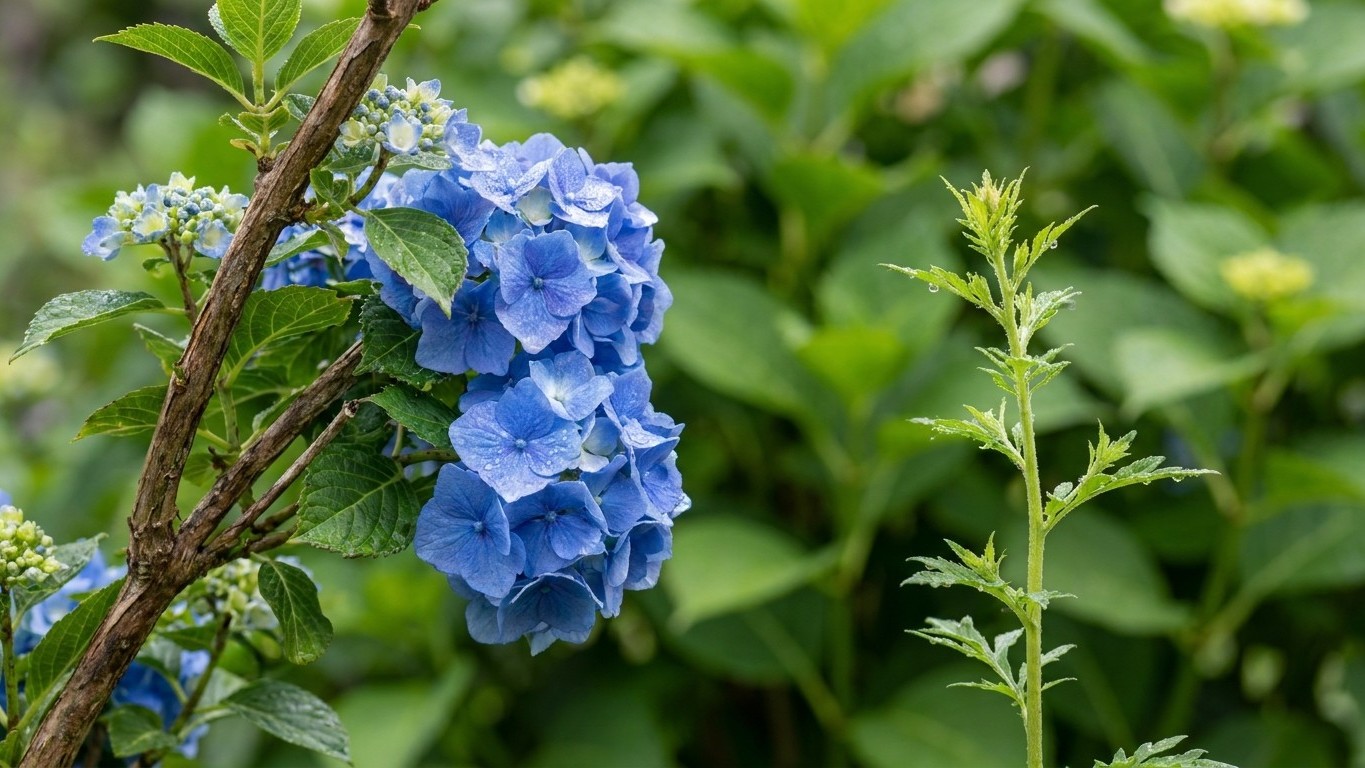

Growing hydrangeas in Kentucky is straightforward if you match the type to the winter and the planting date to the frost calendar. In Louisville, the last spring freeze typically lands between March 24 and April 4, and the first fall freeze between November 2 and November 12. Panicle and smooth hydrangeas bloom reliably statewide. Bigleaf types need more care. Japanese beetles show up in July.
When to plant Hydrangeas in Kentucky
Kentucky gives you two planting windows, early spring and early fall. The reference city here is Louisville. NOAA’s 1991-2020 Climate Normals put the last spring 32°F freeze in the 30-70% probability band from March 24 to April 4. The first fall freeze falls between November 2 and November 12. A band is not a promise. Some years the freeze comes after the late edge, and a frost in mid-April is not unheard of.
One city does not speak for the whole state. Northern Kentucky and the higher ground in the east run later in spring and turn cold sooner in fall. NWS Louisville also warns that this urban station does not match the surrounding rural parts of Jefferson County, and that rural gardens should expect a tighter window. If your place sits in a low spot where cold air pools, plan on the late end of the spring band at least.
Seed, cuttings or nursery plants
Starting hydrangeas from seed is a poor use of a windowsill. Named garden varieties are hybrids and do not come true from seed, and seedlings take years to flower. Most gardeners buy container plants. If you want to multiply a plant you already own, softwood cuttings taken in early summer root in a month or two, and the rooted cuttings can overwinter in pots.
The count-back arithmetic works the same for any plant that has spent time indoors or in a sheltered spot. Pick your target planting date, then work backward. If you want a plant in the ground the day the frost band closes, say April 4, hardening off should start 7 to 10 days earlier, around March 25. For the March 24 edge, start around March 14. Put the pot outside in shade for a few hours, then lengthen the time and the sun a little each day.
Spring or fall
Dormant or barely leafed plants can go in during March. Plants already carrying soft new leaves should wait until the frost band has passed, because bigleaf foliage is tender. Fall planting suits hydrangeas well, since the roots grow in warm soil while the top rests. A common rule of thumb is to finish about six weeks before the first freeze. Counted back from November 2 and November 12, that lands between September 21 and October 1. Today is October 1, so Louisville gardeners are at the tail end of that rule, and rural gardeners with a tighter window are probably past it. A shrub planted in October still has a good chance if the soil stays workable and you water it through dry spells. Skip planting in the heat of July and August, when a new root ball dries out faster than you can keep up.
Soil and site preparation
Morning sun with afternoon shade is the best exposure for most hydrangeas in Kentucky, where summer afternoons are hot and humid. Bigleaf and oakleaf types wilt badly on a west wall. Panicle hydrangeas tolerate far more sun, and they bloom best with at least six hours of it. Avoid the root zone of a big maple or oak. The tree will win every contest for water.
Drainage matters more than fertility. Many Kentucky yards sit on clay-heavy soil, and clay that holds water around the crown rots roots in a wet spring. Test it before planting. Dig a hole about a foot deep, fill it with water, let it drain, and fill it again. If water is still standing after several hours the second time, choose a raised bed or a mound a few inches above grade. Parts of the state have limestone-influenced soil that leans alkaline, and others run acidic, so a soil test is worth the few dollars. It also tells you whether your bigleaf blooms will tilt pink or blue (more on that below).
Start prep weeks ahead. Four to six weeks before planting, loosen the bed over an area two to three times the width of the root ball, and fold in a couple of inches of compost or aged leaf mold. Do not fill only the planting hole with rich amendment while leaving clay all around, since roots tend to circle inside it like a flowerpot. If the test calls for lime or sulfur, work it in now rather than at planting, because both take months to shift pH.
On planting day, dig the hole as deep as the root ball and two to three times wider. Set the crown level with the soil, backfill with the native soil you loosened, water slowly, and mulch. Space compact varieties about 3 to 4 feet apart. Large panicles and smooth hydrangeas want 5 to 8 feet. Crowding invites mildew, because air cannot move through a hedge of wet leaves.
Varieties that suit Kentucky
The trait that matters most is where the variety sets its flower buds. Bigleaf hydrangeas (Hydrangea macrophylla) mostly bloom on wood grown the previous year. A hard winter or a late freeze after leaf-out can kill those buds, and you get a green shrub with no flowers. Panicle and smooth hydrangeas bloom on the current season’s growth, so a cold snap rarely costs them the show. Oakleaf hydrangeas bloom on old wood too but are tough, and their shape and fall color earn their keep even in a poor flower year.
Heat and humidity matter next. Panicle types handle Kentucky summers well and shrug off most leaf diseases. Smooth hydrangeas flop under heavy flowers in rain, so the sturdy-stemmed selections earn their price. If you garden near the northern border, the Indiana hydrangea guide covers a similar winter, and the West Virginia guide is a closer match for the eastern hills. For a colder-coast comparison, see Rhode Island.
| Type and example | Blooms on | Winter risk to flowers | Best used for |
|---|---|---|---|
| Panicle: ‘Limelight’, ‘Quick Fire’, ‘Little Lime’ | New wood | Low | Sunny beds, hedges, reliable summer bloom; ‘Little Lime’ for smaller spaces |
| Smooth: ‘Annabelle’, ‘Incrediball’ | New wood | Low | Part shade, big white blooms, cutting back hard each spring; ‘Incrediball’ for stronger stems |
| Oakleaf: ‘Alice’, ‘Snow Queen’ | Old wood | Moderate | Woodland edges, fall leaf color, peeling bark in winter |
| Bigleaf reblooming: ‘Endless Summer’ series | Old and new wood | Moderate | Blue or pink color, a second flush if the first buds are lost |
| Bigleaf classic: mophead and lacecap types | Old wood | High | Sheltered, protected spots; the color most people picture |
Reblooming bigleaf selections are the compromise for gardeners who want blue or pink. They flower on new growth as well, so a lost set of buds is not the end of the season. For the full range of types, the complete hydrangea guide goes deeper.
Color comes down to aluminum availability. In acidic soil, bigleaf blooms tend toward blue, and in alkaline soil toward pink. White hydrangeas do not change. Sulfur or an aluminum sulfate drench shifts a bed slowly, and it needs annual repeating. Pick the color your soil already gives you and save the effort.
What to plant alongside
Hostas, ferns, and astilbe are the natural partners for shaded hydrangeas. Their foliage shades the soil and keeps roots cool and moist, and their water needs run close to the hydrangea’s. Hellebores and epimedium fill the gap under bare winter stems. Coral bells give contrast at the front. None of these compete hard for water the way a tree does.
For pollinators, panicle hydrangeas with fertile flowers draw bees and other insects, and a few native perennials nearby, such as coneflower or bee balm, widen the pool of visitors. Taller perennials behind smaller hydrangeas can extend the bloom season. These plants share a hydrangea’s sun, but do not plant them so close that air stops moving through the shrub, since poor airflow feeds powdery mildew.
Acid-loving shrubs such as azalea and rhododendron suit the same soil and light. One caution: azalea lace bug is on Kentucky’s extension pest list, and a lace bug outbreak on azaleas is worth catching early if they stand next to your hydrangeas. Stippled, bleached leaves with dark specks underneath are the clue.
Avoid planting anything that needs a dry, sunny, lean site (lavender, rosemary) within reach of hydrangea watering. Don’t plant shallow-rooted, thirsty neighbors such as large clumps of ornamental grasses within a foot or two of a young shrub either. Walnut trees release juglone, which stunts some plants, but hydrangeas are not reliably listed as sensitive, so do not treat that as proven for them. Claims that marigolds or garlic repel hydrangea pests are folklore, with no solid evidence for beetles or bagworms. Plant them if you like them.
Watering, feeding and support
Hydrangea means “water vessel,” and the leaves show it fast. In the first year, water deeply once or twice a week through summer rather than a little every day. A slow soak that wets the top foot of soil sends roots down. In established beds, an inch of water a week from rain and hose combined is a decent target, more in a hot, dry July. Water at the base in the morning. Wet foliage overnight is an invitation to leaf spot.
Midday wilting on a hot afternoon is not always a sign of thirst, since big leaves lose water faster than roots deliver it. Check the soil. If it is moist 2 inches down and the plant perks up by evening, leave it alone. If it is dry, water.
Mulch with 2 to 3 inches of shredded bark or leaves, pulled back a few inches from the stems. It holds moisture, moderates soil temperature, and suppresses weeds. Refresh it each spring.
Feed lightly. A slow-release shrub fertilizer in early spring is plenty, and heavy nitrogen produces leaves at the expense of flowers. Skip feeding after midsummer. Late growth stays soft, and fall freezes damage it. Your soil test says whether phosphorus or other nutrients are actually needed.
Pruning depends on bloom habit, and mistakes here are the main cause of “my hydrangea won’t bloom.” Panicle and smooth types can be cut back in late winter or early spring, since they flower on new wood. Prune bigleaf and oakleaf types right after they finish flowering, if at all. Cutting them in fall or spring removes the buds. Deadheading is optional, and many gardeners leave the dried heads over winter for interest and a little bud protection.
Staking is rarely needed for panicle types, but heavy-headed smooth hydrangeas can flop after a storm. A ring support set in spring, before stems reach knee height, keeps them upright without looking staged. Hydrangeas do not sucker like some shrubs, but older plants can send up new stems from the base. Thin the oldest canes now and then to keep the center open.
Common problems
No blooms is the number one complaint. Check the type first. A bigleaf pruned at the wrong time or hit by a late freeze will leaf out and skip flowers. Too much shade or too much nitrogen is the next suspect. Give a shrub a full season under the right conditions before concluding it is the plant’s fault.
Wilting has more than one cause. Dry soil is the easy one. Soggy soil looks identical from above, because rotted roots cannot carry water, and the fix runs the opposite way. Push a finger into the soil before reaching for the hose. Afternoon wilting that recovers by evening is heat stress, and extra shade or mulch helps.
Leaf spots show up in wet, humid stretches as brown or purplish blotches. They look ugly but rarely kill a shrub. Water at the base, thin crowded stems, and rake up fallen leaves in autumn. Powdery mildew appears as a white film in late summer, especially on crowded plants in shade. It responds to better airflow and, if needed, a labeled fungicide applied early.
Brown, crispy leaf edges mean scorch, from heat, wind, or dry spells. Move the plant, add mulch, or water more deeply. Yellow leaves with green veins point to iron deficiency, common when alkaline soil locks up iron, and a soil test confirms it. Flowers that fade to green or brown early in the heat are usually just the plant’s nature, particularly on panicle types, which often age to pink or tan.
Winter damage reads as bare, dead-looking canes in spring. Wait until leaves emerge before cutting, since buds low on the stem often survive. Scratch a bit of bark with a thumbnail. Green underneath means life. For pests and the damage patterns specific to this state, see the next section.
Pests that actually show up in Kentucky
The University of Kentucky Entomology calendar, EF447, lists the pests that matter for home landscapes. It also includes squash vine borer, squash bug, and the cucumber beetles, which are vegetable-garden pests, not hydrangea pests. Skip those. The list is not exhaustive, and pressure varies across the state, so your county extension office can identify a mystery culprit. Here are the ones that do real harm to hydrangeas.
Japanese beetle
You see leaves reduced to lace, with veins left behind, and metallic copper-green beetles clustered on the foliage. They peak from July through August, right as many hydrangeas bloom. Hand-pick them into a bucket of soapy water in the cool of early morning, when they are sluggish. Skip pheromone traps, which tend to pull more beetles into the yard than they catch.
Bagworm
The first sign is small, silky bags hanging from branches, studded with bits of leaf, and chewed foliage near them. Larvae are active from mid-May through mid-June. Pick the bags off by hand and drop them in soapy water (you can do this any time of year, and winter is easiest). Where infestations are large, a Bt product or other labeled spray works on small caterpillars in that May to June window, but not once they are big.
Fall webworm
Webbing appears at branch tips, enclosing leaves, with caterpillars feeding inside. It shows up late May to June, then again in mid to late July. It is mainly a tree pest, but shrubs near host trees can pick it up. Clip out small webs and bag them. Bt can help on young larvae.
Brown marmorated stink bug
This one mostly bothers gardeners by its presence. Shield-shaped bugs gather on plants, with numbers peaking in early August. Knock them into soapy water. Damage to hydrangeas is minor compared with the beetles.
Eastern tent caterpillar, active from early April to mid-May, prefers trees such as cherry. If you see tents on a tree next to your shrubs, remove them early.
Harvest and end of season
Cut flowers for the vase in the morning when blooms are fully open, and plunge stems into water right away. Hydrangeas wilt fast, and a trick that helps is a fresh cut at an angle and a short dip of the stem ends in hot water. Panicle and smooth types hold up best.
For drying, wait. Cut blooms late in summer or early fall, when the petals have gone papery and have started changing color on the plant. Dry them hanging upside down in a dark, airy spot, or stand them in a vase with an inch of water that you let evaporate. Store dried heads in a cardboard box or hang them out of direct sun, since light fades the color.
As fall approaches, give the plant what it needs to rest. Stop fertilizing by midsummer. Keep watering through dry autumn spells, since drought-stressed shrubs winter poorly. The Louisville first-freeze band of November 2 to November 12 is your cue, and earlier for rural or higher ground. Mulch a few inches deep after the soil has cooled, not before. Bigleaf hydrangeas that bloom on old wood gain from extra protection. A cage of chicken wire stuffed with leaves around the shrub works, and so does a deep layer of mulch over the crown. Leave the dead stems until spring.
Local help
Dates, soil tests, and pest identification all vary by county. Your local office of University of Kentucky Extension can test your soil, identify the beetle or caterpillar you are looking at, and tell you what is happening in your part of the state. More Kentucky guides are on this site.
Common questions
What is the best time to plant hydrangeas in Kentucky?
Early fall and early spring are the two good windows. In Louisville, the last spring freeze falls between March 24 and April 4, and the first fall freeze between November 2 and November 12. Rural and higher-elevation sites can differ, so check with your county office.
Which hydrangeas are most reliable in Kentucky?
Panicle and smooth types bloom on new wood, so a hard winter or late freeze rarely costs you flowers. Oakleaf hydrangeas are tough and add fall color. Bigleaf types can lose buds, so reblooming selections are the safer choice if you want blue or pink.
Why are my hydrangea leaves wilting in summer?
Heat stress, dry soil, or soggy soil can all cause it. Feel the soil 2 inches down before watering. If the plant recovers by evening and the soil is moist, it is only afternoon heat.
Which pests should I watch for?
Japanese beetles in July and August, bagworms from mid-May through mid-June, and fall webworm in late May to June and again in mid to late July. Brown marmorated stink bugs peak in early August but cause less harm.
Can I change my hydrangea flower color?
Bigleaf hydrangeas respond to soil chemistry. Acidic soil tends to produce blue blooms and alkaline soil pink ones. White hydrangeas stay white regardless. A soil test tells you where you start, and shifting pH takes months, not days.