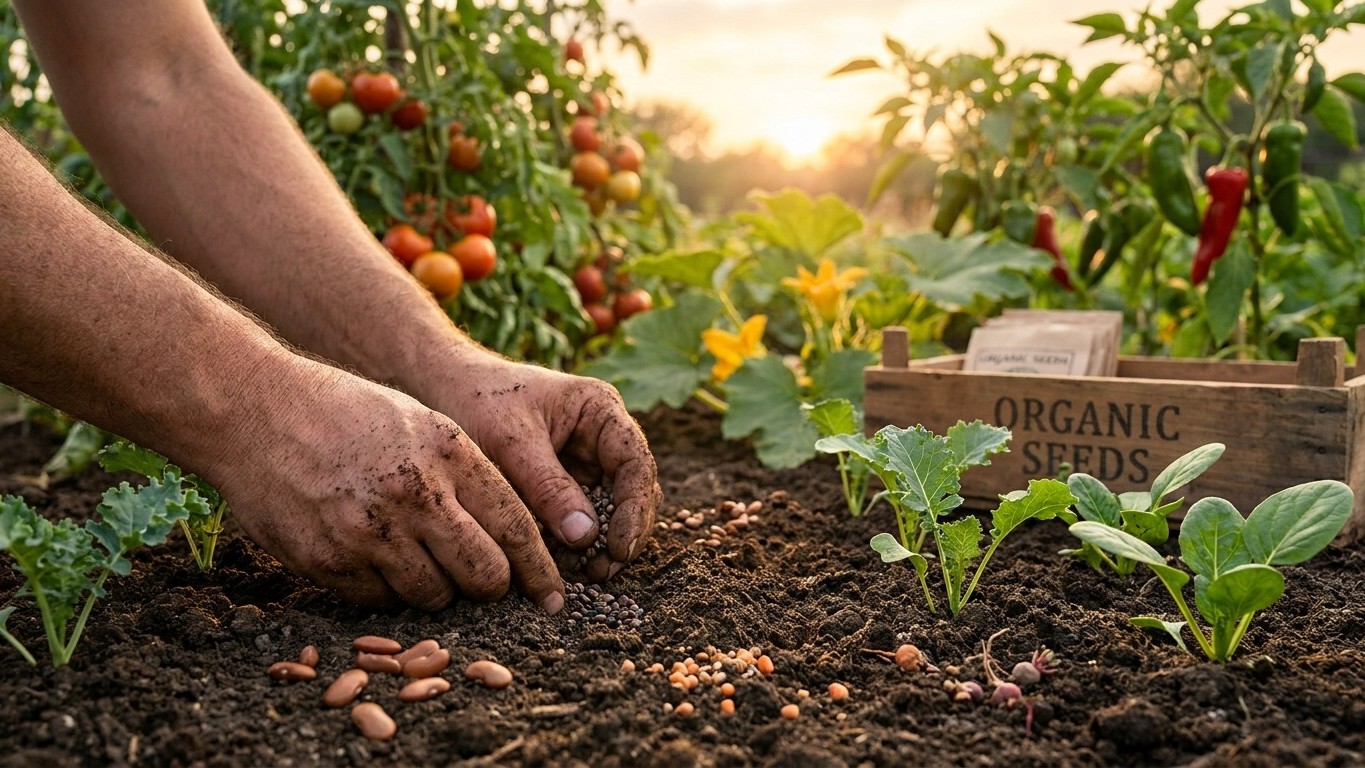

Direct-sow bush beans, beets, carrots, and the full run of fall greens: kale, collards, turnips, mustard, and spinach. Transplant broccoli, cabbage, and cauliflower started earlier under cover. Keep tomatoes, peppers, and squash producing through the heat while the fall garden goes in around them. The window that makes this possible runs from the last spring freeze in late March or early April to the first fall freeze in early-to-mid November.
What goes in the ground in August

The decision here isn’t made by a calendar page. It’s made by two numbers: how many days a crop needs to mature, and how many days are left before the first fall freeze arrives. NOAA’s 1991-2020 climate normals put that first freeze, measured at 32°F, somewhere between November 2 and November 12 for the Louisville reference station. Work backward from that window and August turns into the last real planting month of the outdoor season, not an afterthought squeezed between spring and fall.
A bush bean sown in the first days of August, needing roughly 50 to 55 days to bear, comes off the vine by late September with weeks to spare. Carrots, at 70 to 75 days, are tighter: sown August 1, they mature into mid-October, which works because carrots shrug off a light frost and actually sweeten after one. Beets, turnips, kale, collards, and mustard greens all fall comfortably inside the window and tolerate cold better than almost anything else in the garden, so a late-August sowing still has room to finish. Radishes are the fastest of the bunch and can go in right up until the month’s final week.
Transplants change the math. Broccoli, cabbage, and cauliflower started as seedlings in July are ready to go into open ground now, giving them the six to eight weeks of cool-leaning weather they need to head up before hard cold sets in. This is also where the USDA hardiness zone matters, though only for one thing: it’s built from average annual extreme minimum temperatures, not from frost timing, so it tells you what a plant can survive over winter, not when to sow it. Kentucky spans zone 6a to 7a on the current USDA Plant Hardiness Zone Map, with Louisville itself sitting as the reference point for the frost dates above. Gardens toward the warmer 7a end, generally western Kentucky, gain a few extra frost-free days; the cooler 6a pockets in the eastern mountains lose them.
What doesn’t belong in the ground this month: new plantings of corn, melons, or long-season winter squash. None of them have enough days left before frost to be worth the space.
What to start under cover
Some of August’s most important planting happens in trays, not garden beds. Fall broccoli and cabbage destined for a September transplant date need four to five weeks as seedlings first, so working backward from a September 1 to 10 transplant window puts the seeding date in late July through the first days of August. Miss that and the seedlings either go into the garden too small to establish before the weather turns, or they sit in cell trays getting rootbound and stressed, which shows up later as stunted, bolting plants that never head up properly.
Lettuce and spinach benefit from the same trick for a different reason: soil surface temperatures in August routinely climb high enough to push both crops into dormancy or poor germination if seeded directly. Starting them in trays under light shade, then transplanting once soil has cooled a few degrees in the evening hours, sidesteps the problem entirely. It’s a two-to-three week head start, not a long one, but it’s often the difference between a fall lettuce bed and a failed one.
The two failure modes worth naming directly: starting too early leaves transplants sitting too long, going leggy and rootbound in cramped trays before the ground is ready for them. Starting too late means the transplant goes out with too few weeks left before frost to reach a usable size. Since the first fall freeze lands anywhere from November 2 to November 12, and that’s a range, not a fixed date, building in a week of slack on either end of the arithmetic is worth more than hitting an exact target date.
What is ready to pick
August is peak harvest for the summer garden even as the fall garden is going in around it. Tomatoes, peppers, cucumbers, and summer squash are all producing steadily, and the rule for all four is the same: pick often. Squash and cucumbers left on the vine even two extra days swell past their best texture and signal the plant to slow production; tomatoes and peppers keep setting new fruit longer when ripe ones are removed promptly.
Sweet corn planted in late spring is finishing now, ready when the silks have browned and a kernel, pressed with a thumbnail, releases a milky rather than watery liquid. Melons are trickier to judge; a cantaloupe slips cleanly from the vine at the stem when ripe, while watermelon relies on the dulling of the skin’s sheen and the pale ground spot underneath.
Garlic and onions planted the previous fall or early spring should already be out of the ground and curing by now; check that cured bulbs are stored somewhere dry and shaded, since any left in a hot, humid shed will start to soften and sprout early. Potatoes planted early in the season can be dug once the foliage yellows and dies back, and any bruised or cut tubers pulled during harvest should be used first rather than stored, since they won’t keep as long as clean ones.
The jobs that matter this month
Water, mulch, and succession
Consistent watering matters more in August than almost any other month, because heat stress at the flowering stage is what causes blossom drop in tomatoes and peppers and blossom-end rot in developing fruit. A deep soak that reaches several inches down, rather than a light daily sprinkle, encourages roots to grow downward instead of staying shallow and vulnerable. Mulch does double duty here: it holds that moisture in and keeps soil temperatures low enough for fall seed to germinate reliably. Succession sowing of quick greens like radishes and lettuce every ten to fourteen days keeps the harvest coming instead of arriving all at once in October.
Staking, pests, and storage
Any tomato, pepper, or vining crop not already staked or caged needs it now, before the weight of a full fruit load snaps stems or drags plants onto damp soil where rot sets in. This is also peak season for squash vine borer, Japanese beetles, and tomato hornworm; a few minutes scouting the undersides of leaves every few days catches an infestation while hand-picking is still enough, before it requires anything more aggressive. Powdery mildew shows up fast on cucumbers and squash in humid stretches, and improving airflow by removing a few crowded lower leaves does more than any spray applied after the fact. Finally, walk through anything already in storage, garlic, onions, cured winter squash, and pull out the first soft or sprouting one before it spreads to its neighbors.
What not to do in August
The most common mistake this month is treating warm air as a signal that soil is ready, when the two aren’t the same thing. Lettuce and spinach seed sown into soil still holding late-summer heat will simply refuse to germinate, no matter how the air temperature reads at 7 a.m. The fix is timing the sowing for evening, mulching to keep the surface cooler, or starting under cover as described above and transplanting once the ground has eased off its peak.
A second mistake is feeding nitrogen-heavy fertilizer to tomatoes and peppers this late in their cycle. Nitrogen pushes leafy growth at the expense of fruit set, and a plant that’s already established and flowering doesn’t need more foliage; it needs the plant’s energy going into ripening what’s already on the vine. A lower-nitrogen, higher-potassium feed supports fruit finishing better at this stage.
Transplanting fall brassica seedlings into open ground at midday, under full sun, with no protection, is a third avoidable error. The shock of full sun and heat on a young transplant’s root system, still adjusting from a tray, often stalls growth for a week or more. Transplanting in late afternoon or on an overcast day, with a temporary shade cloth for the first few days, gets seedlings established with far less setback.
Checking this against your own county
Every date above comes from a single reference station and describes Kentucky broadly, not any one backyard. Elevation shifts in the eastern mountains, valley cold pockets, and the general west-to-east gradient across the state can move a frost date by more than a week in either direction, and the hardiness zone range of 6a to 7a spans real differences in winter minimums from one county to the next. The University of Kentucky’s Cooperative Extension Service, reachable through extension.ca.uky.edu, publishes county-level guidance and local planting calendars that reflect these variations far than any statewide figure can.
Common questions
Can I still plant tomatoes in August in Kentucky?
Not as a new planting expecting a full harvest; with the first fall freeze landing between November 2 and November 12, there isn’t enough season left for a newly transplanted tomato to mature fruit. Existing plants, however, should keep producing well into September with regular watering and pest scouting.
What can I direct-sow in a Kentucky garden in August?
Bush beans early in the month, along with beets, carrots, kale, collards, turnips, mustard greens, and radishes throughout August. Spinach and lettuce do better sown in trays or seeded in the cooler evening hours later in the month.
How do I time fall broccoli and cabbage transplants for August?
Seed them in trays about four to five weeks before a planned September transplant date, which typically means starting in late July or the first days of August. That gives the plants enough weeks in the ground afterward to head up before hard cold arrives.
Does the frost date differ across Kentucky counties?
Yes. The November 2 to November 12 range comes from one reference station, and elevation, local terrain, and the general geographic spread of the state shift that date meaningfully from county to county. The Cooperative Extension Service’s local resources are the more precise source for any specific address.