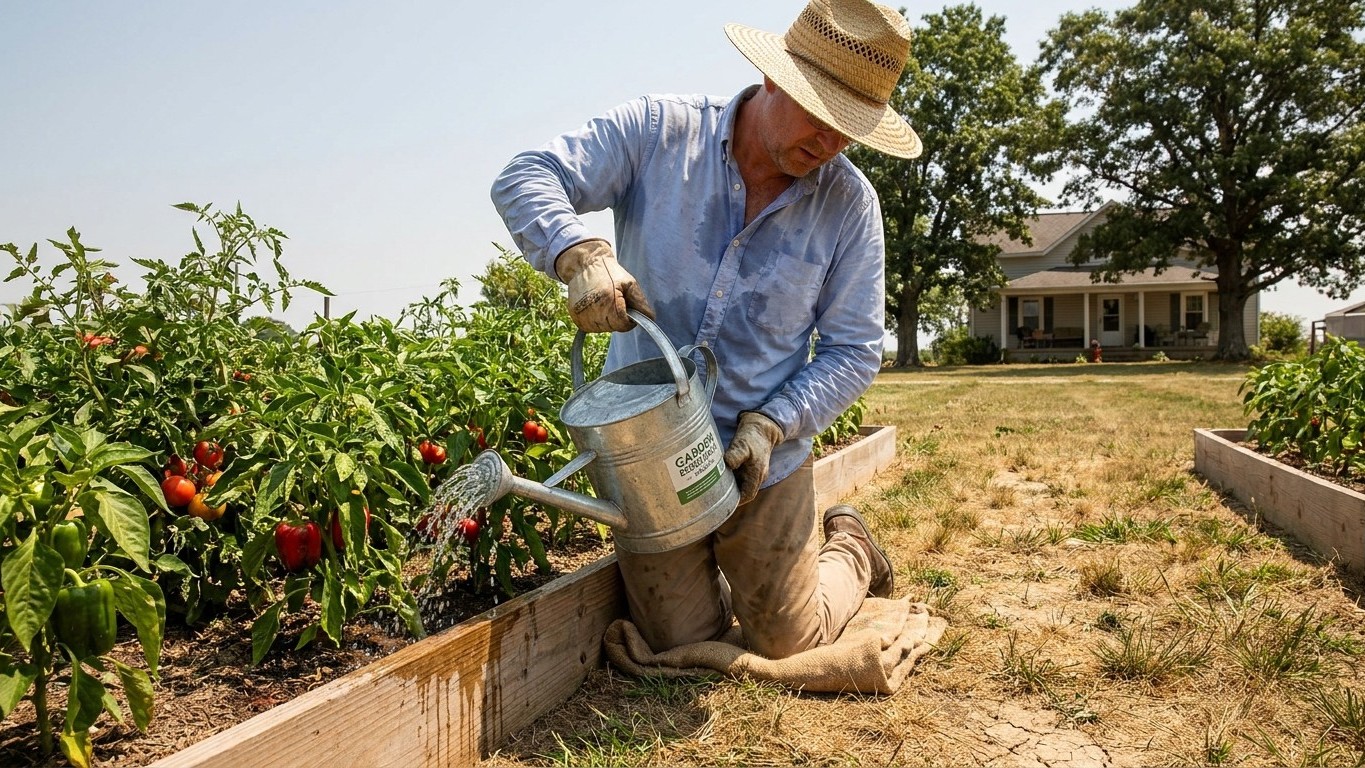

Kentucky gardeners deal with two truths that don’t always cooperate: enough heat most summers to push tomatoes and peppers hard, but rainfall that arrives in bursts rather than a steady drip. The state runs USDA zones 6a to 7a, with Louisville as the reference point, and that heat load, not the calendar, decides when a garden goes from thriving to stressed.
What the climate asks of you

Start with the number that matters most for anyone growing food or flowers here: Louisville averages 37.2 days a year at 90F or hotter, based on NOAA’s 1991-2020 Climate Normals. That’s not a heat wave here and there. That’s more than five weeks, cumulatively, when soil moisture evaporates fast and shallow-rooted plants show stress by early afternoon. It’s also the figure that rules out cool-season options that sulk once daytime highs push past the mid-80s for stretches.
What NOAA’s normals don’t hand us, at least not in a single clean figure for this page, is a precise June-July-August rainfall total for the whole state. Kentucky’s precipitation is famously uneven from one county to the next, and even within a single county a ridge and a bottomland can see different totals in the same storm system. That’s not a dodge, it’s the honest picture: a gardener in western Kentucky and one in the eastern hills can have very different summers even under the same statewide zone map. The practical move is to pull your own county’s normals from NOAA or ask your local extension office, rather than trust a single number for a state this size.
The soil story is similarly local. Large stretches of central Kentucky sit on limestone-derived clay, the kind that made the Bluegrass region famous for pasture, and clay behaves nothing like the sandier ground you’ll find in parts of the Purchase region to the west. Clay holds water for days after a storm and then cracks when it finally dries out. Sand lets water run straight through in hours. Since the FACTS available for this page don’t specify a single soil texture for the whole state, the honest instruction is to test your own dirt: squeeze a handful after a rain. If it holds a shape and feels slick, you’re dealing with clay-heavy ground and should water less often but more deeply. If it falls apart immediately, you’re closer to sand and need shorter, more frequent sessions.
How much, how often
The rule most extension programs repeat, and it holds here too, is watering deep and infrequent rather than a light daily sprinkle. Shallow watering trains roots to stay near the surface, which is exactly where they cook once one of those 37-plus days over 90F rolls around. A deep soak pushes moisture down six to eight inches, and the roots follow it, which buys the plant a buffer during the heat, though the same logic doesn’t apply to raised beds or pots, where Watering Pots and Containers in Kentucky requires a different rhythm given how fast a confined volume of soil dries out under next hot stretch, a strategy worth mastering if you want to keep a garden alive while Watering Through a Dry Spell in Kentucky.
The test for whether it’s time to water isn’t the calendar, it’s the dirt. Push a finger, or better, a trowel, two inches into the soil near the plant’s base. Dry at that depth, water. Still cool and damp, wait. This beats any fixed schedule because it accounts for the week you got a surprise thunderstorm and the week you didn’t.
The watering sequence
- Check the soil first. Two inches down, using a finger or trowel, every two to three days during hot stretches.
- Water at the base, not overhead. Wetting foliage in Kentucky’s humid summer air invites fungal problems that dry-leaf watering avoids.
- Water in the morning. Early hours let moisture soak in before the day’s heat pulls it back out through evaporation, and dry foliage by nightfall means less disease pressure.
- Adjust for your soil texture. Sandy ground: shorter sessions every two to three days. Clay-heavy ground: longer, deeper soakings roughly once a week, and never work or water clay that’s still wet from the last rain, since compacting saturated clay ruins its structure for the season.
- Watch the driest stretch of summer closely. Whatever week gets the least rain in your specific location is the week irrigation stops being optional and starts being the only water your plants get.
That last point matters because Kentucky’s rainfall doesn’t arrive on a predictable schedule even in a normal year. A garden that coasted through June on natural rain can hit a dry pocket in late July or August with almost no warning, and that’s when the two-inch soil check earns its keep.
Restrictions and rules
Watering restrictions aren’t a fixed statewide policy in Kentucky, they’re set locally, usually by municipal water utilities or water districts, and they shift depending on reservoir levels and rainfall in a given year. Some systems introduce voluntary conservation requests during dry stretches, others move to mandatory odd-even watering days or time-of-day limits when supply gets tight. None of that is fixed enough to print here as a permanent rule, because a district that had no restrictions last summer can announce them mid-season if a drought sets in.
The only reliable move is checking with your own water provider before you set a sprinkler timer for the season. Most utilities post current watering guidance on their websites, and many update it through the summer as conditions change. If you’re on a private well rather than municipal water, restrictions generally don’t apply to you the same way, but drawdown during a dry summer is still a real concern worth monitoring.
Given how unevenly rainfall lands across the state, and how many days a year push past 90F in a place like Louisville, it’s worth treating restriction-checking as a routine early-season task, not an afterthought. Kentucky’s extension service, through the University of Kentucky Cooperative Extension, is a good starting point for finding your county office and getting pointed toward the right local water authority.
Using less
Cutting water use in a Kentucky garden isn’t about growing less, it’s about losing less to evaporation, runoff, and mismatched watering habits. A few techniques do most of the heavy lifting.
- Mulch, two to three inches deep. A layer of shredded bark or straw around plants slows evaporation dramatically, which matters most during those 37-plus days a year above 90F when bare soil can dry out within hours of watering.
- Drip irrigation or soaker hoses. Water goes straight to the root zone instead of misting into the air or running off a clay surface that hasn’t absorbed the last soaking yet.
- Group plants by water need. Tomatoes and squash next to drought-tolerant perennials means one or the other is always getting watered wrong. Separating them by thirst level lets you water each zone only as often as it actually needs.
- Work organic matter into the soil. Compost improves clay’s drainage and improves sand’s water retention, moving both soil types closer to the ideal middle ground.
- Rain barrels, where local rules allow them. An inch of rain falling on a 1,000-square-foot roof yields roughly 600 gallons of runoff. In a wetter month that’s a meaningful reserve to draw down during the following dry stretch, but a barrel filled during a wet June can run empty fast if July turns dry, since Kentucky’s summer rainfall doesn’t arrive in equal monthly installments. Treat a rain barrel as a supplement to your watering routine, not a replacement for a hose during a genuine dry spell.
None of these techniques work in isolation as well as they do stacked together. Mulch keeps drip-irrigated water from evaporating before it reaches roots, and compost-improved soil holds onto rain-barrel water longer than depleted, compacted dirt ever would.
Common questions
Do I need to water every day during a Kentucky summer?
No. Daily light watering trains roots to stay shallow, which backfires during hot stretches. Deep watering every few days, checked against a two-inch soil test, works better than a fixed daily habit.
How do I know if my soil is clay or sandy?
Squeeze a damp handful. If it holds together and feels slick, it’s clay-heavy, common across much of central Kentucky’s Bluegrass region. If it crumbles apart immediately, it’s sandier and drains faster, which means more frequent, shorter watering sessions.
When does Kentucky’s frost season typically end and begin?
At the Louisville reference station, the last spring frost typically falls between March 24 and April 4, and the first fall frost between November 2 and November 12, based on NOAA’s 1991-2020 normals. Rural areas around Jefferson County should expect a tighter window, since NWS Louisville notes this urban station runs later in spring and earlier in fall than the surrounding countryside.
Where do I check current watering restrictions in my area?
Contact your local municipal water utility or water district directly, since restrictions are set locally and change with drought conditions. The University of Kentucky Cooperative Extension can also help point you to county-level resources and your nearest office.