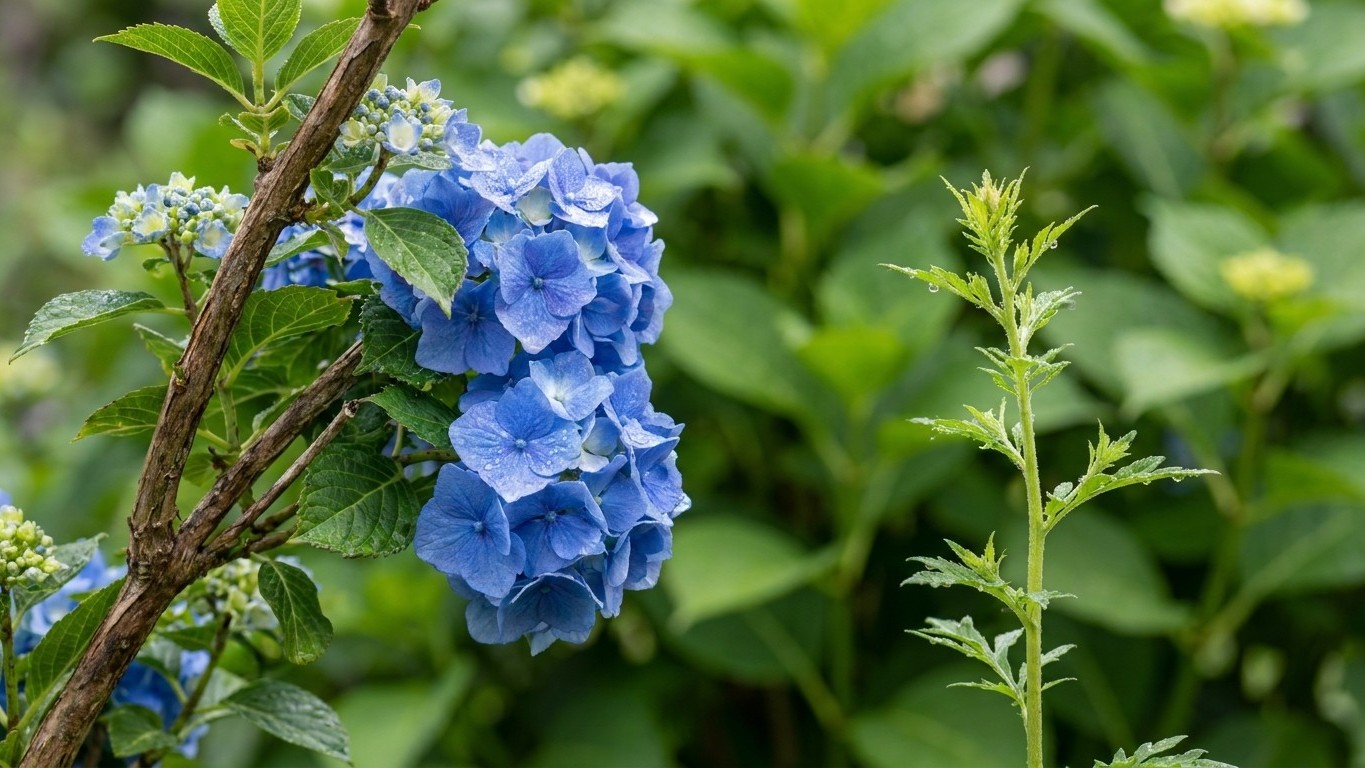

Most hydrangeas get through a Kentucky winter without help. The ones that need it are bigleaf and oakleaf types, which set next summer’s flower buds on old wood in late summer, and those buds are the part that freezes. Protection comes down to three steps. Put a thick mulch over the roots once the plant is dormant. Wrap bigleaf stems in a cage of leaves. Leave it all in place until the last spring frost window has passed. Panicle and smooth hydrangeas need far less.
What this comes down to in Kentucky

In Louisville, the reference city for Kentucky’s frost record, the average last spring frost falls between March 24 and April 4, and the average first fall frost between November 2 and November 12 (NOAA NCEI 1991-2020 Climate Normals). Winter protection goes on after the fall window and comes off after the spring one. Louisville is an urban station, so rural gardens in the surrounding countryside should expect frost to linger later in spring and arrive earlier in fall.
When do hydrangeas need winter protection in Kentucky?
The calendar tells you when to start getting ready, but the plant tells you when to act. Wait until the leaves have browned and dropped and the nights are freezing regularly. A shrub wrapped or mulched too early, while it is still taking up water, holds moisture against the stems and gives mice a warm place to nest.
Once the first fall frost window has opened, gather your materials: shredded leaves, pine straw, or straw, plus wire fencing or hardware cloth for cages. Most Kentucky gardeners will be mulching between the first frost and the first run of hard freezes.
Why do hydrangea buds freeze in Kentucky?
Bigleaf and oakleaf hydrangeas carry their flower buds on stems that stand exposed all winter. A bud that is dormant tolerates a lot of cold. A bud that has started to swell does not. Kentucky winters are known less for deep, steady cold than for swings: a few mild weeks in late winter wake the buds up, then a freeze in March or early April catches them. Since the average last frost runs as late as April 4 even in Louisville, that second scenario is the one that costs most gardeners their blooms.
The USDA Plant Hardiness Zone Map covers Kentucky with zones 6a through 7a. That system rests on one variable, the average annual extreme minimum temperature, so it says how cold the coldest night of a typical year gets and nothing about how often a warm spell is followed by a freeze. Different parts of the state fall in different zones, so check where your own county sits.
Panicle and smooth hydrangeas bloom on new wood, which grows from the base each spring. A frozen stem tip costs them little, and most of the time they need only a layer of mulch.
Working it out for your own garden
The right protection depends on the type of hydrangea you have and on how exposed your site is. Sort out the type first, then set dates from the frost windows and adjust them by watching the plant.
How do you know which kind of protection your hydrangea needs?
Start with which wood carries the flowers. If you cannot remember what you planted, think about last year’s bloom. A shrub that flowered on stems left standing from the year before blooms on old wood, and a shrub that flowered on shoots it grew that same spring blooms on new wood. Reblooming bigleaf types do both, but their first flush still comes from old wood, so treat them as old-wood plants.
| Type | Blooms on | Winter protection |
|---|---|---|
| Bigleaf | Old wood (reblooming types add new wood) | Mulch plus a leaf-filled cage |
| Oakleaf | Old wood | Mulch, light cage in exposed sites |
| Panicle | New wood | Mulch only |
| Smooth | New wood | Mulch only |
For a full rundown of which species hold up in Kentucky’s cold, see Which Hydrangeas Survive a Kentucky Winter.
How do you set your own dates for covering and uncovering hydrangeas?
Begin with the Louisville windows. The fall one runs November 2 to November 12, and the plant itself should confirm it: leaves down and nights freezing before you put on anything. A garden outside the city, especially one in a low spot or on open ground, gets frost earlier in fall, so start watching the plant a week or so ahead of those dates.
Spring works the same way in reverse. The Louisville last frost window ends April 4. A rural garden should add a week or two of margin, which pushes removal to the second or third week of April. In a low hollow, wait longer. Take the cage off in stages. Open the sides first, pull the mulch back from the crown, and keep a bedsheet or frost cloth ready for any night that dips to freezing after the leaves unfurl. A late frost on swelling buds is the loss you are trying to avoid.
If you are unsure whether the buds survived, wait until the plant leafs out. Scratch a small patch of bark on a stem. Green underneath means it is alive. Brown and dry means it is dead, and you can cut it back to a point where you see green. Do this after new growth shows rather than in late winter, because a stem that looks dead in March sometimes sprouts in May.
What changes across the state
Louisville sits in the middle of a state that runs from the Mississippi River to the Appalachian ridges. The frost windows above describe that one station, and they shift as you move.
The far west, near the Tennessee line and the Mississippi, is milder, with an earlier spring and a later fall frost. Gardeners there get more of the early-warmth problem, with buds waking up early and then catching a freeze. The Ohio River corridor and northern Kentucky are cooler. Their last frost comes a little later and their first frost a little earlier, so protection goes on sooner and comes off later.
Eastern Kentucky is where elevation does the most. Ridgetops and higher valleys in the mountains run colder than the Bluegrass, with a shorter frost-free season and more exposure to wind. A hollow adds its own problem: cold air settles there on still nights, so a garden at the bottom of a slope frosts earlier than one halfway up. Those spots are often a zone colder than a nearby slope, which fits the 6a to 7a spread on the USDA Plant Hardiness Zone Map.
Practical advice: shift the Louisville windows later in spring and earlier in fall if you garden in the east, the north, or any low spot. In the west, plan more for the late-winter warm spell than for deep cold. For your own address, the county extension office can tell you how local conditions compare to the nearest long-term station.
The mistakes this state punishes

The most common error is pruning bigleaf hydrangeas in fall or winter. Cutting back stems that carry next year’s buds removes the flowers before they open. Prune only dead wood, and wait until the plant leafs out so you can see which stems are alive. Panicle and smooth types can be cut back in late winter without losing blooms.
Mulching too early is the second. A pile of leaves laid down in October, while the soil is still warm and the plant is still active, holds damp against the crown and invites rot and rodents. Wait for the leaves to drop and several hard freezes to come.
Wrapping a shrub tightly in plastic is another. On a sunny day in January or February a plastic wrap can heat up enough to wake the buds, and when the cold returns they are in worse shape than if you had done nothing. Use a wire cage filled loosely with shredded leaves or pine straw, or burlap that lets air through.
Fertilizing late is a quieter error. Nitrogen applied in late summer pushes soft new growth that has no time to harden before frost. The effect of fertilizer and soil amendments on bloom color is a separate matter, covered in Why Hydrangeas Are Pink in Kentucky, and How to Turn Them Blue.
The last is leaving covers on too long. Kentucky springs warm fast, and a caged plant left in place into late April can leaf out pale and weak inside the cage. Uncover in stages once the last frost window has passed, and keep a cloth within reach for a surprise cold night.
Checking this against your county
A state-wide figure is a starting point. Louisville’s frost windows describe one city, and your county may run earlier in fall or later in spring. Your local office of the University of Kentucky Cooperative Extension Service can give you the dates and cold-air patterns for your area, and it can tell you which hydrangeas have done well nearby. For the rest of the picture, such as site, soil, and care through the growing season, the state guide on growing hydrangeas in Kentucky covers what this article leaves out.
Common questions
Should I cut back my hydrangeas before winter?
Leave bigleaf and oakleaf stems alone, because they carry next summer’s buds. Panicle and smooth hydrangeas can be pruned in late winter. In all cases, remove only dead wood until you see new growth in spring.
How much mulch do hydrangeas need in a Kentucky winter?
A layer of shredded leaves, pine straw, or shredded bark over the root zone is enough for most types. Keep it a little back from the stems, so moisture does not sit against the bark.
When should I take winter protection off my hydrangeas?
After the last spring frost window has passed. In Louisville that window is March 24 to April 4, and a garden outside the city should wait a week or two longer. Open the cage in stages and keep a frost cloth handy.
Do hydrangeas in pots need extra protection?
Yes. Roots in a container are more exposed to cold than roots in the ground. Move the pot to an unheated garage or shed once the plant is dormant, or sink it in a bed and mulch heavily. Water it lightly now and then so the soil does not dry out completely.