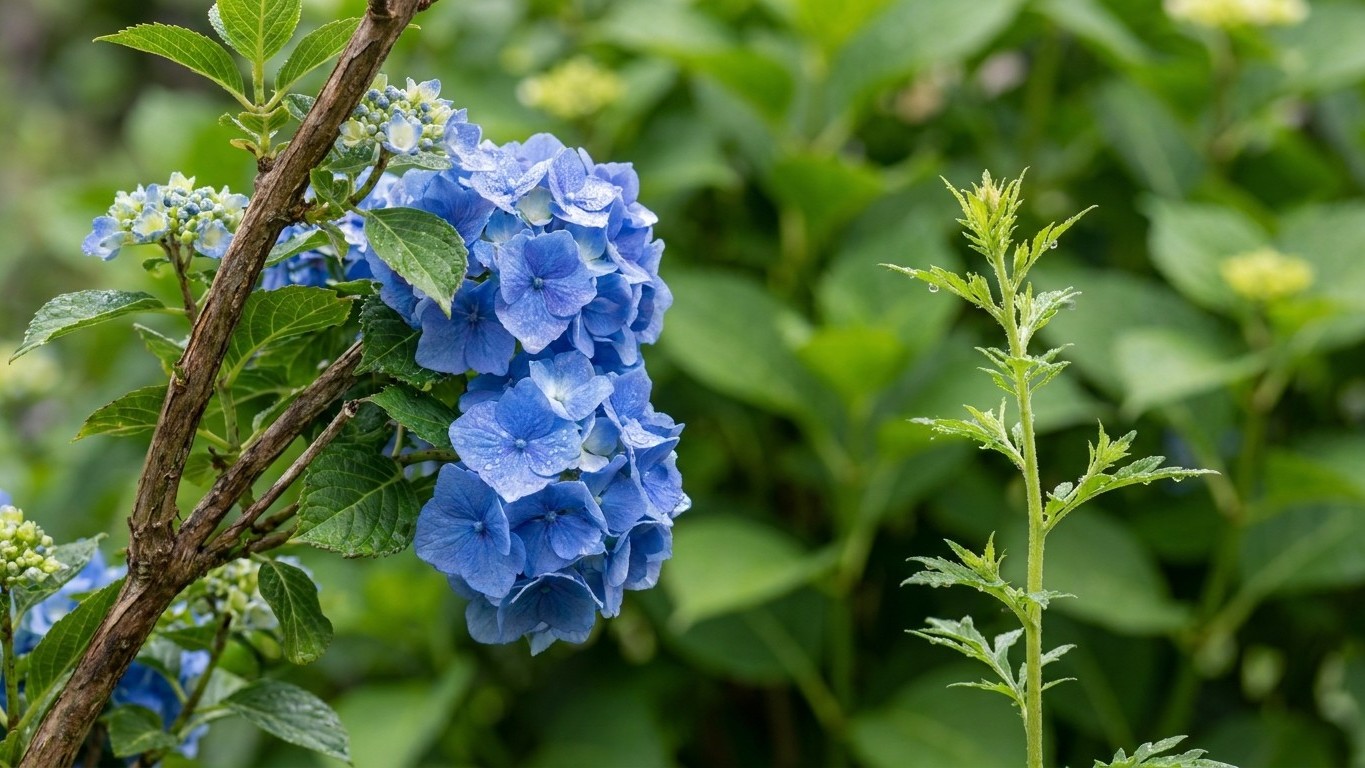

Prune hydrangeas that bloom on new wood in late winter or early spring, and prune those that bloom on old wood right after the flowers fade, by early August. The split matters in Maine because winters are long and stems often get damaged anyway. Cut at the wrong time and you can remove a whole summer of flowers. Cut at the right time and the shrub comes back sturdy and full of blooms.
What this comes down to in Maine

Around Portland, the reference point for Maine’s mildest climate, the last spring frost typically falls between April 22 and May 1, and the first fall frost between October 9 and October 21. Those two windows bracket the pruning calendar. Shrubs that bloom on new wood get cut before growth starts in spring, and shrubs that bloom on old wood get cut in summer, early enough that new buds can form before fall frost arrives.
A hydrangea sets its flower buds on one of two schedules. Old-wood types build next year’s buds on this year’s stems during late summer and early fall, and those buds sit exposed all winter. Cut those stems in fall, winter, or early spring and the flowers go into the brush pile. New-wood types grow fresh shoots in spring and set buds on them by midsummer, so a spring cut costs them nothing.
Maine adds a wrinkle. The USDA hardiness system, which rests on a single variable (the average annual extreme minimum temperature), puts the state anywhere from zone 3b to 6a. In a hard winter, bigleaf stems can die back to the snow line or even to the ground. When that happens, the old-wood buds above the dieback are gone no matter what you do, and the only pruning job is removing dead wood once leaves show where the live stems end. Which Hydrangeas Survive a Maine Winter covers how the types differ in cold tolerance.
Which hydrangeas bloom on new wood and which on old wood?
The table sorts the common landscape types by where they carry their flower buds and when the shears come out.
| Type | Blooms on | Best time to prune | How much |
|---|---|---|---|
| Panicle (Hydrangea paniculata, such as Limelight) | New wood | Late winter to early spring, before buds swell | Up to a third of the height |
| Smooth (Hydrangea arborescens, such as Annabelle) | New wood | Late winter to early spring | Down to a low framework, or nearly to the ground |
| Bigleaf (Hydrangea macrophylla) | Old wood | Right after bloom, by early August | Spent flowers and a few of the oldest stems |
| Oakleaf (Hydrangea quercifolia) | Old wood | Right after bloom | Very little |
| Reblooming bigleaf (such as the Endless Summer line) | Old and new wood | Light cleanup in spring, trim after the first flush | Light |
Reblooming bigleafs are the confusing ones. They can flower on new shoots, which sounds like a license to prune freely. In Maine, though, the new-wood flowers come late, and a short season can cut them off before they open, so the old-wood buds still matter. Treat them gently.
How much should you cut?
Less than you think, with one exception. On panicle hydrangeas, removing up to a third of the height each spring, cutting just above a pair of healthy buds, keeps the branches strong enough to hold heavy flower heads under wet snow or summer rain. Smooth hydrangeas tolerate a hard cut, since they flower on shoots that grow after you cut. On bigleaf and oakleaf, take out dead stems, weak stems, and every few years one or two of the oldest stems at the base to open up the center.
Working it out for your own garden
The calendar dates above come from one coastal station, so the useful skill is building the schedule from your own plant and your own spring. Three questions settle it: what type is the shrub, when does it finish blooming, and when does frost usually arrive where you live.
How do you tell which type you have?
Start with the flower. Cone-shaped white heads that age to pink or tan point to a panicle. Round white balls on a floppy, soft-stemmed shrub are a smooth hydrangea. Big round mopheads or flat lacecaps in pink or blue are bigleaf. Large leaves shaped like oak leaves, with long white cones and burgundy fall color, are oakleaf.
If the tag is long gone and the shrub has never bloomed, leave it alone for one full season. Watch where the flowers appear. Blooms that come out of fresh green shoots in midsummer mean new wood. Blooms that sit on stems that came through the winter mean old wood. Next year you will know which rule applies.
How do you set the dates for your own garden?
For new-wood shrubs, aim for the stretch after the worst cold and before the buds swell. In Portland that is a few weeks ahead of the April 22 to May 1 frost window. Farther inland the same job slides later, because snow lingers and the ground thaws on a different schedule. The plant gives you the end of the window: when buds on last year’s stems start to swell and turn green, stop.
For old-wood shrubs, count backward from the first fall frost. Portland’s window runs October 9 to October 21. Finishing well before the frost window leaves enough time for the shrub to push new shoots and set buds on them. Take a bigleaf that finished flowering in mid-July. Cut it by the end of that month and it has the full runway. Cut that same shrub too close to the frost window and little time remains for new growth to harden. New shoots barely get started, and any buds that do form are caught by cold or never form at all.
A smooth hydrangea like Annabelle works the other way. Cut it in late March or early April and it sends up fresh stems, which carry the flowers by midsummer. A late frost may nip the tips of early growth, but the shrub keeps producing shoots, so the damage rarely costs the season.
Judging dead wood needs patience. Bigleaf stems often look lifeless well into spring, and inland they may leaf out later still. Scratch the bark with a fingernail. Green underneath means alive. Brown and dry, with a stem that snaps cleanly, means dead. When in doubt, wait for leaves.
What changes across the state
Portland sits at the mild end of Maine, warmed by Casco Bay. Move inland and north and spring frost runs substantially later while fall frost comes earlier. The practical effect is that your pruning window shifts on both ends. New-wood shrubs wait longer in spring, and old-wood shrubs need their cut done earlier in summer so the season is not squeezed.
Several things drive that shift. The ocean holds heat into fall and cools spring, so a shrub within a few miles of salt water sees a longer, steadier season than one at the same latitude in the interior. Elevation matters as well: a hillside garden can run a full growth stage behind one in the valley below. Cold air drains downhill on still nights, though, so low spots can collect frost and behave like a colder climate than the ridge above them.
Northern Maine, up toward Aroostook County, sits in the colder hardiness zones, where bigleaf hydrangeas regularly die back to the ground. Gardeners there usually do better building their hydrangea planting around panicle and smooth types, which flower on the shoots they grow each year. Pruning questions mostly disappear for them, since the spring cut is the one that counts.
Snow cover is another factor. A deep, early blanket insulates lower stems and lets buds survive, so a year of heavy snow in the western mountains can leave more live wood than a bare, windy winter on the coast. That is another reason to read the plant before cutting. Wait for leaves, then trim to live growth.
The mistakes this state punishes

The most common error is the early-spring tidy-up on a bigleaf. A warm week in late March feels like permission, and the shears come out. But the stems carrying this year’s flowers are the ones you just removed. Hold off until leaves emerge, then take only what is clearly dead.
Fall pruning is the second. Maine’s first frost comes early enough that anything cut in September has little time to heal or harden. On old-wood types it removes the buds outright. On new-wood types it can prompt tender growth that the first hard cold kills. If a shrub needs shaping in fall, wait until it is dormant, and expect to make the real cuts in spring.
A third trap is the warm spell followed by a cold snap. If a mild stretch in March pulls buds awake and you cut then, new growth starts earlier than the frost window allows. Frost between April 22 and May 1 in Portland, and later inland, can hit that soft growth. Spacing your work for the cold end of the window and watching the buds, rather than the calendar, keeps you out of that bind.
Last, hard-cutting a panicle after it has fully leafed out. It will survive, but it will bloom late, and in a short season the blooms may arrive just as cold weather returns. Do the heavy cuts while the shrub is dormant.
Checking this against your county
The Portland dates are a starting point. Your own frost window depends on elevation, how close you are to the coast, and where your garden sits on the slope. Your county office of University of Maine Extension can tell you what is typical for your area. For the rest of the picture, including siting and care, see growing hydrangeas in Maine.
Common questions
Can I prune hydrangeas in fall in Maine?
You can remove spent flower heads and obviously broken stems, but avoid real pruning. On old-wood types, fall cuts remove next year’s buds. On any type, late cuts can stimulate soft growth that early frost damages. Save structural pruning for the right season.
My bigleaf hydrangea looks dead in May. Should I cut it down?
Wait. Bigleaf stems leaf out late, especially inland. Scratch the bark of a stem: green means alive. Cut only to the point where live buds or leaves appear. If the whole shrub stays bare well into the season, cut to the ground and let it regrow, though it may not flower that year.
Does pruning change the flower color?
No. Color on bigleaf types depends on soil chemistry and aluminum availability. Why Hydrangeas Are Pink in Maine, and How to Turn Them Blue explains how that works.
Can I deadhead hydrangeas through the summer?
On bigleaf types, yes, until early August. Cut each spent flower back to the first pair of healthy buds below it. On panicle and smooth types, deadheading is optional, and many gardeners leave the dried heads standing through winter, since snow-dusted blooms add interest and the old heads come off easily at spring pruning.