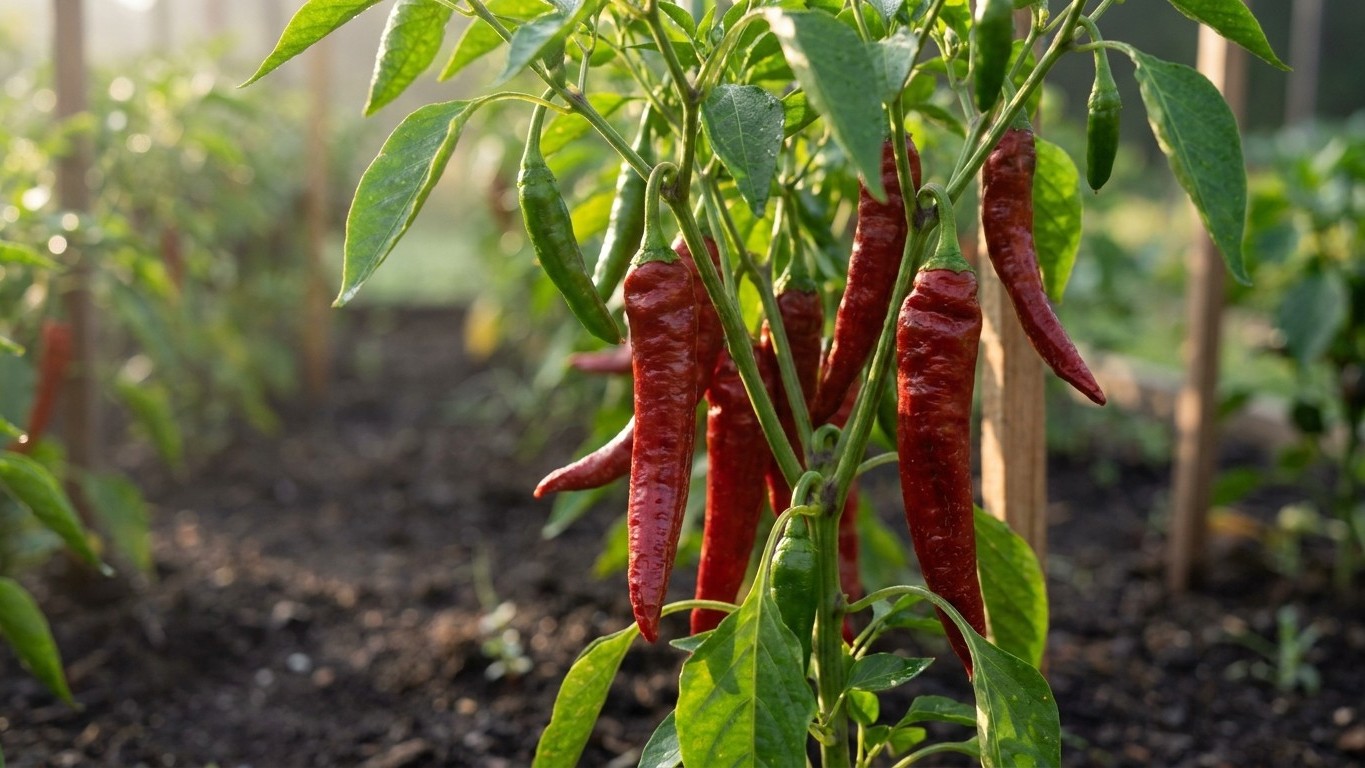

Pick peppers when they reach full size and feel firm, then store them at 45 to 50 °F. The refrigerator is colder than that, and below about 45 °F peppers develop pits and go soft. Most Maine gardeners pick at the right moment and then undo the work by putting the whole harvest in the crisper drawer.
Keeping them, and for how long
The storage numbers come from Clemson Cooperative Extension’s Home & Garden Information Center. Its pepper fact sheet says peppers should be ready for harvest in about 70 to 85 days after transplanting. It also says the optimal storage conditions are temperatures of 45 to 50 °F and 80 to 90 percent relative humidity for two to three weeks. You can read the full guidance on the Clemson fact sheet.
Read that last number carefully. Two to three weeks is a ceiling under ideal conditions. It describes a sound, unblemished pepper picked at the right stage and held in a steady, cool, humid spot. A pepper with a nibbled shoulder or a soft patch won’t come close. (If slugs or caterpillars have been at your plants, What Eats Pepper in Maine, and When explains what to look for.) Plan on using the best fruit first and checking the rest every few days.
What temperature and humidity do peppers need?
The target is 45 to 50 °F with 80 to 90 percent humidity. Temperature slows the pepper’s respiration, so it stays firm longer. Humidity keeps the walls from shriveling. A pepper is mostly water inside a thin skin, and in dry air it wrinkles at the stem end first, then goes limp all over.
Most homes can hit the temperature more easily than the humidity. A loosely closed paper or perforated plastic bag helps hold moisture around the fruit while still letting some air move. A sealed bag with no vents traps too much moisture and invites mold. Wipe off garden soil with a dry cloth rather than washing the peppers, because wet fruit rots faster in storage.
Why does the fridge ruin peppers?
A domestic refrigerator is set colder than the 45 °F floor. Below about 45 °F, peppers suffer chilling injury. The skin develops small sunken pits, the flesh softens, and the fruit breaks down faster once it comes back to room temperature. Damage can start inside the fridge without showing, then appear a day later on the counter.
Peppers come from a tropical plant family, so they tolerate cold poorly. Apples and carrots handle a refrigerator well because they evolved for cooler climates. Peppers are closer to tomatoes and cucumbers in that respect, and cucumbers also pit when chilled.
A pepper that has been chilled isn’t ruined for cooking. Pitted, softened peppers still work in a stew, a sauté or a pot of sauce. They just won’t make a decent raw slice for a salad. That is the real cost of the fridge: the crisp texture you worked all summer to grow is the first thing lost.
Where in the house that actually is
The target range of 45 to 50 °F is narrow, and few rooms in a Maine house sit there. A heated living space is too warm, so peppers soften and wrinkle sooner than they should. A garage swings with the weather, mild on an October afternoon and near freezing on the same night, and a freeze will wreck the fruit outright. The refrigerator is too cold. That leaves a few in-between places.
The closest match in most Maine houses is a cool basement, or an unheated but insulated mudroom, pantry or cellar stairwell on the north side of the house. Look for a spot that stays steady through the day and doesn’t sit against an exterior wall that gets cold at night. Concrete basement floors hold their temperature well. A shelf off the floor, away from the furnace, water heater and any window, is usually the best bet. Many older farmhouses have a root cellar or a cold room for this purpose, and it suits peppers well.
Don’t trust your hand to judge the temperature. A room that feels cool to a person can still be 55 or 60 °F, which is warm enough to shorten storage life. Leave a thermometer on the shelf for a few days before you commit a harvest to it, and check the high and low readings, not just the current one. A simple min-max thermometer costs little, and a small hygrometer will tell you whether the humidity is in the 80 to 90 percent range. If the space reads dry, a loosely closed bag does most of the work.
Basements change through the season too. A cellar that sits at 50 °F in October may creep up if the furnace runs more in November, or drop in a cold snap. Recheck once a week. If the space runs a little warm, accept a shorter keeping time and use the peppers sooner. If you have more than you can eat, slice and freeze the extras, since frozen peppers keep their flavor well enough for cooked dishes.
When are peppers ready to pick in Maine?
The timeline starts with the plant going into the ground. Utah State University Extension advises growing transplants 8 to 10 weeks indoors and setting them out when the soil reaches 60 F, after frost. At the Portland reference station, the last spring frost falls between April 22 and May 1, according to NOAA’s NCEI climate normals (the station data is public). Coastal Portland is the mild end of the state, so inland and northern Maine run substantially later in spring and earlier in fall. Cold soil stalls peppers, so wait for the 60 F reading rather than going by the calendar.
From transplanting, Clemson’s figure of about 70 to 85 days gives you a window to work with. That puts first picks in mid to late summer for a plant set out in late May or early June, and later for slower plants. Use the count as a guide and let the fruit tell you the rest.
A green pepper is ready when it has reached its full size for the variety and feels firm and glossy. Colored peppers need extra time on the plant, since red, yellow and orange are a sign of full ripening. Waiting for color gives sweeter fruit but exposes it longer to pests, weather and the end of the season. Cut peppers from the plant with pruners, leaving a short piece of stem. Pulling can snap a whole branch.
Fruit set is the other piece. Pepper fruit set fails at both ends: nights below 55 F or days above 90 F, according to Utah State University Extension. The reference station averages 3.8 days a year at 90 F or more, so the hot end is rarely the problem on the Maine coast. The cool end is harder to call, because summer night lows vary by yard, by elevation and by how close you are to open water. Watch your own nights with a thermometer. Why Peppers Fail to Set Fruit in Maine covers what to do when flowers drop. For the full season plan, see Growing Peppers in Maine.
In fall, pick everything of usable size before a frost night. Peppers are tender, and a frost-killed fruit turns soft and watery within a day or two. Check the forecast through September and early October, and keep a few old sheets handy to cover plants on a borderline night.
Common questions
Can I store peppers in the refrigerator if I have no other place?
You can, but expect some pitting and softening, because a domestic fridge runs colder than the 45 °F that peppers tolerate. It makes sense only for peppers you plan to eat soon and cook rather than serve raw. Cut or cooked peppers are a different case, and they keep fine in the fridge in a sealed container.
How long do picked peppers last?
Clemson Extension says two to three weeks at 45 to 50 °F and 80 to 90 percent humidity. That is a maximum under optimal conditions. Fruit with blemishes, bruises or insect damage will go sooner, and a warm room cuts the time further.
Should I pick peppers green or wait for color?
Either works. Green peppers are mature when they are full size and firm, and picking them can encourage the plant to keep setting fruit. Waiting for red, yellow or orange gives sweeter flavor but takes longer. In a short season, a frost can arrive before the last fruit colors up, so pick the rest green rather than lose them.
Do hot summer days stop peppers from setting fruit in Maine?
Rarely. The Portland reference station averages 3.8 days a year at or above 90 F, so heat stress is occasional. Cool nights below 55 F are the more likely trouble, and the only way to know is to track the lows in your own garden. Your county extension office can tell you what to expect where you live.