
By November, most of Maine has already had its first fall frost, which lands somewhere between October 9 and October 21 along the coast, according to NOAA. So the direct answer is short: almost nothing goes into open ground this month except garlic, shallots, and a few dormant plantings, and most of the real work has moved indoors, under cover, or into the tool shed.
What goes in the ground in November

The calendar says November, but the soil doesn’t care about the calendar. What matters is whether the ground is still workable, meaning it hasn’t frozen solid, and that window closes fast once nighttime lows settle below freezing for good. In coastal Portland, the first fall freeze typically arrives sometime in the October 9 to October 21 stretch, per NOAA’s 1991-2020 climate normals. Inland and northern Maine, sitting in USDA hardiness zones as cold as 3b compared to Portland’s milder 6a end of the range, freeze up earlier and harder. By the time November opens, a lot of the state is already past the point of digging a planting hole without a pickaxe.
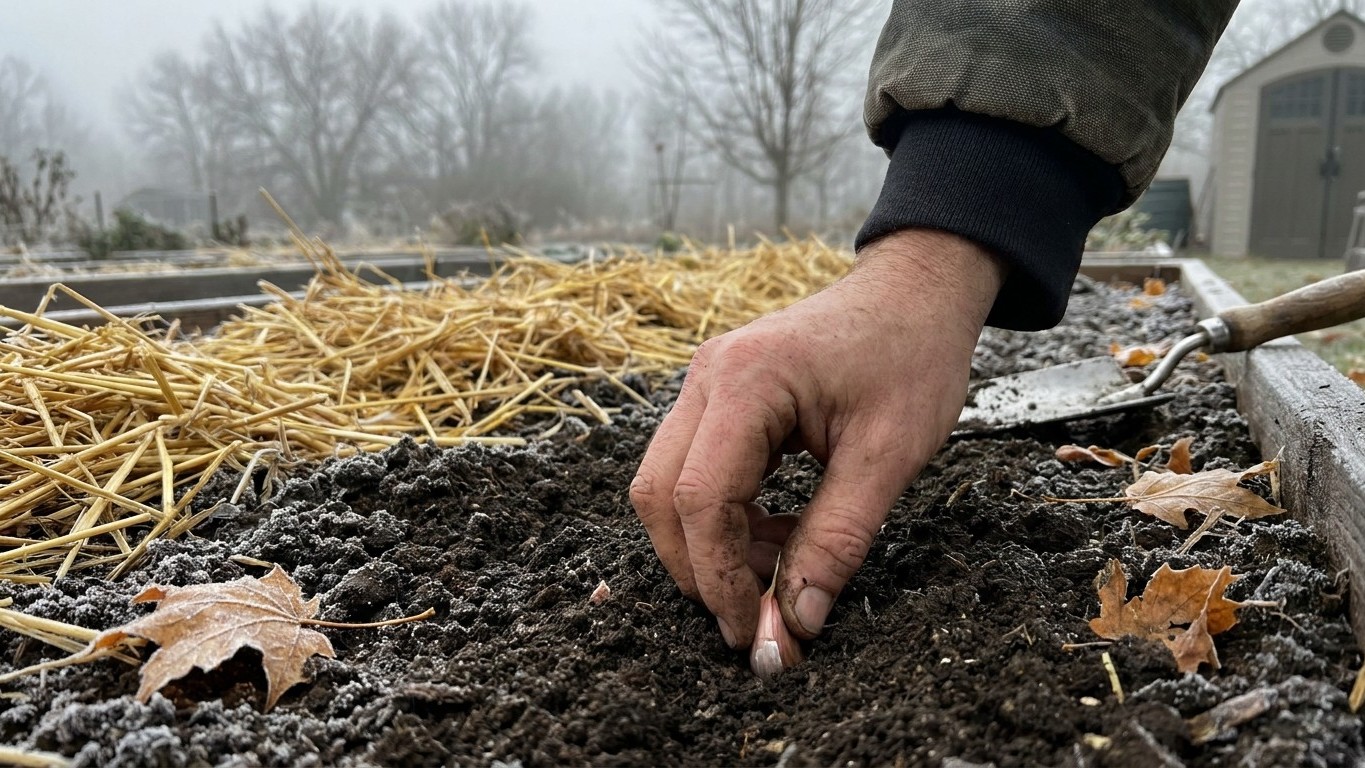
That doesn’t mean the month is empty. Garlic and shallots are the one crop still worth planting as long as a spade goes into the soil without a fight, and early November is often the last realistic chance before frozen ground shuts the door. Get cloves in, mulch heavily with straw, and let winter do the vernalizing.
Cold frames and low tunnels stretch the season a bit further for hardy greens like spinach, mâche, and claytonia, all of which shrug off temperatures that would kill lettuce outright. If you’ve got a frame already built, this is the month to use it rather than start a new one from scratch in frozen ground.
Bare-root fruit trees, berry canes, and dormant perennials can still go in on the milder coastal end of the state, provided the ground hasn’t locked up yet. Once it has, the fallback options are forcing: rhubarb crowns and Belgian endive (witloof chicory) roots can be brought indoors, kept dark and cool, and coaxed into tender growth over the following weeks. It’s not glamorous, but it’s real food from a garden that otherwise looks finished.
What to start under cover
Here’s where honesty matters more than optimism. Counting backward from Maine’s last spring frost, which NOAA puts between April 22 and May 1 for the Portland area, means there are roughly five to six months standing between November and transplant time. That’s far too long a runway for almost any seedling. Start tomatoes, peppers, or brassicas now and you’ll be nursing leggy, rootbound plants by February, fighting for light on a windowsill that can’t compete with actual spring sun.
So the safer play this month is smaller and more immediate. Microgreens and sprouts are ready in one to three weeks regardless of when you start them, which makes them the one “start under cover” project that actually fits a November timeline without gambling on months of indoor babysitting.
Forcing bulbs is the other legitimate use of this window. Paperwhites and amaryllis planted now in pots of soil or even just gravel and water will bloom indoors over several weeks, giving color at a time when the garden outside offers none. Cut branches of forsythia or witch hazel, brought in and set in water, can also be forced into early bloom on a similar timeline.
The failure mode to watch for isn’t starting too late this month, it’s starting too early for spring crops. If you’re itching to get seeds going, redirect that energy toward planning and ordering rather than sowing pepper seeds that will be six-inch-tall stems by the time it’s safe to plant them out.
What is ready to pick
Outdoors, the pickings are genuinely thin by November, and there’s no point pretending otherwise. Most annual crops are finished, killed back by the frosts that have already swept through. But a working garden still produces something, just not from the open beds.
Overwintered kale and leeks are the standouts. Both crops actually improve in flavor after a hard frost, converting starches to sugars, and both can often be harvested straight from the garden even once light snow covers the ground, as long as you can find them and dig them out. Leeks in particular can sit in the ground for weeks, hardy well into the cold, and kale leaves picked after frost taste noticeably sweeter than their fall-harvested counterparts.
Cold frames extend this further, holding spinach, mâche, and other hardy greens in pickable condition long after the open beds have shut down. Indoors, sprouts and microgreens fill the gap for anyone wanting fresh greens on a shorter timeline than the garden can currently offer.
This is also the month to walk the root cellar or storage shelves and check what’s there. Squash with soft spots, potatoes that have started to shrivel or sprout, and onions going soft at the neck should all be pulled and used first, before they take neighboring produce down with them. A single rotting squash in a storage bin can spread mold to everything around it within a week or two, so a five-minute check now saves a much bigger loss later.
The jobs that matter this month
This is the section that carries the most weight in a month where the ground itself offers little. The work done now, or skipped now, shows up in how well next season starts.
Pruning, ordering, and planning
Dormant pruning of fruit trees and berry canes is best done once the leaves are down and the plant’s structure is visible, and November often provides exactly that window before deep snow makes access harder. Remove dead, crossing, or diseased wood while the tree is fully dormant and the cuts can heal without stressing active growth.
Seed catalogs start circulating heavily around this time, and ordering now, rather than waiting until late winter, matters because popular varieties, especially disease-resistant tomatoes and heirloom types, do sell out. Pair that with planning next season’s crop rotation on paper: knowing which bed grew tomatoes so it doesn’t get nightshades again saves a lot of disease pressure down the line.
Soil, compost, and tools
Soil testing and amending is easier to justify now than in the rush of spring, and amendments like lime or compost benefit from sitting over winter to integrate before planting. Turning the compost pile one more time before it freezes solid keeps decomposition moving as long as possible.
Cleaning and sharpening tools, from pruners to hoes, prevents rust damage over winter and means spring starts with equipment that actually works. Repairing raised beds, fencing, and trellises while there’s no foliage in the way is far easier than trying to fix a leaning bed frame once it’s buried under a spring crop.
What not to do in November
The most common mistake is trusting a mild afternoon over the actual soil and season. A warm stretch in early November can feel like an invitation to plant something tender, but air temperature isn’t soil temperature, and a warm-season crop put into cooling ground will simply sit and rot rather than grow.
A close second is uncovering cold frames or row covers too eagerly after a mild spell, only to have a cold snap roll back through and hit unprotected plants that had gotten used to shelter. Keep covers on hardy greens through fluctuating weather rather than reacting to every warm day.
Fertilizing with nitrogen this late is also a mistake worth naming directly. Nitrogen pushes soft, leafy growth, which is exactly what a plant doesn’t need heading into a hard freeze. New growth stimulated now has no time to harden off and will simply die back, wasting the plant’s energy reserves it needs for winter survival. If soil needs amending, lean on compost or lime rather than a nitrogen-heavy feed at this point in the season.
Leaving tender bulbs like dahlias or gladiolus in the ground past the point of hard freeze is another late-season regret. Once foliage has blackened from frost, it’s time to dig, dry, and store them, not to leave them for “one more week” that turns into a lost bulb.
Checking this against your own county
Everything above is built around Portland’s coastal frost data, and that’s genuinely the mild end of Maine. Inland valleys, northern counties, and higher elevations freeze earlier in fall and thaw later in spring, sometimes by several weeks compared to the coast. Lake effect and local topography shift things further still, county by county and even field by field.
Treat the dates here as a starting point, not an instruction. For a planting calendar built specifically around local conditions, the University of Maine Cooperative Extension is the resource built for exactly that kind of ground-level detail.
Common questions
Is it too late to plant garlic in Maine in November?
Not necessarily, but the window is narrow and closing. As long as the ground can still be worked without frozen clumps or standing ice, garlic and shallots can go in, followed immediately by a heavy straw mulch. Once the soil locks up, that option is gone until spring.
Can I still start seeds indoors for spring in November?
For most transplants, no, it’s simply too early. With five to six months standing between November and Maine’s last spring frost window of April 22 to May 1, seeds started now will grow leggy and rootbound long before it’s safe to plant them outside. Microgreens and sprouts are the exception, since they’re harvested within weeks rather than months.
What vegetables can survive frost in a Maine garden?
Kale and leeks are the most frost-tolerant standbys, both improving in flavor after cold exposure and often harvestable even with light snow on the ground. Under cold frames or row cover, spinach, mâche, and claytonia can hold on considerably longer than uncovered crops.
Why does my hardiness zone matter if I already know my frost dates?
Frost dates tell you when the growing season starts and ends, but the USDA hardiness zone, based on the average annual extreme minimum temperature, tells you what survives the winter in between. Maine spans zones 3b to 6a, so a perennial or fruit tree that overwinters fine near the coast might not survive a colder inland or northern location, even with similar frost dates.
Gardeners who plant by the Moon can check the November 2026 moon planting calendar, a tradition rather than a proven method.
Related guides
Elsewhere? See what to plant in November in every state and province.