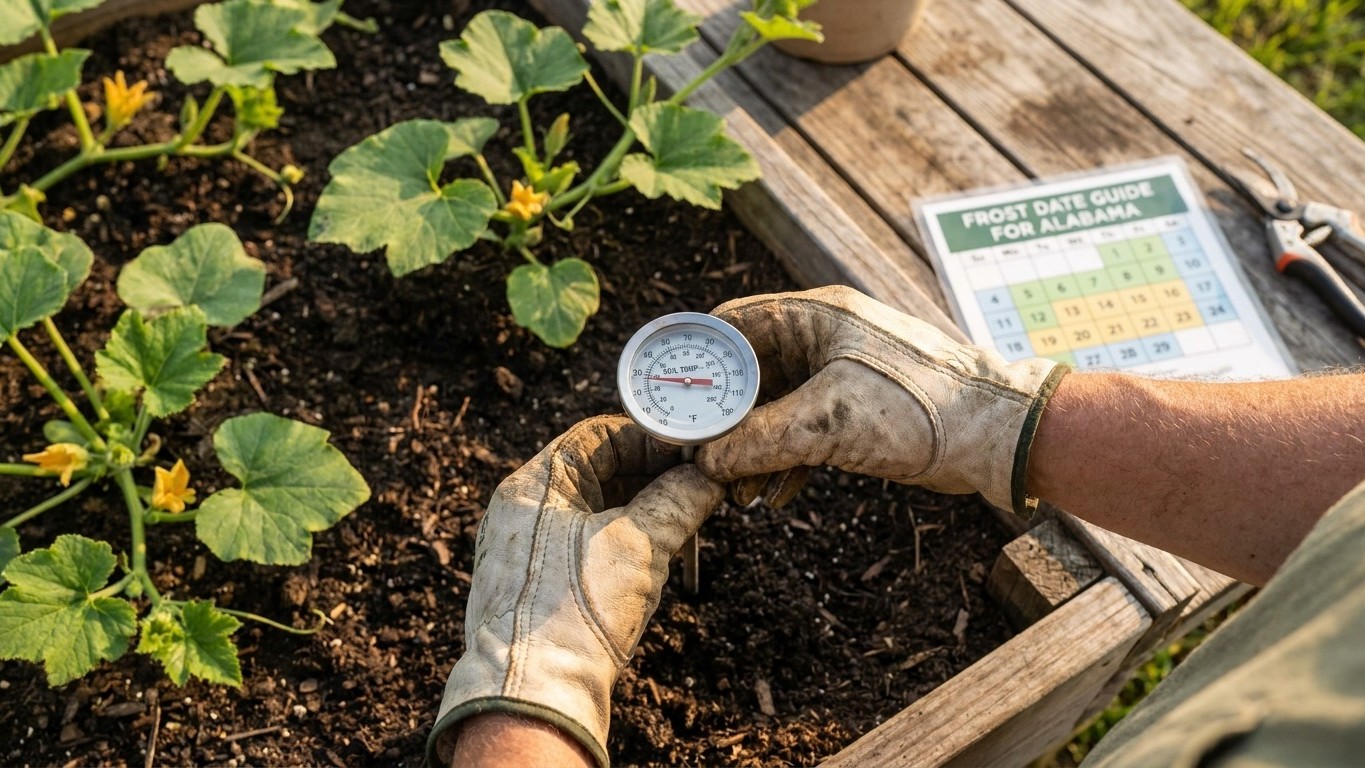

The short version: soil needs to hit 65 F before pumpkin seed goes in the ground, which in coastal Maine usually lands in late May to early June, well after the April 22 to May 1 last-frost window closes. Work backward from the first fall frost (October 9 to October 21) and flowers need to open by mid-August to early September, giving the fruit its full 45 to 55 days to ripen before the season ends.
The short answer
Maine’s coast around Portland sees its first fall frost arrive somewhere between October 9 and October 21, based on NOAA’s 30-year Climate Normals for that station. That ten-day spread matters more than it looks, because a pumpkin’s ripening clock doesn’t start at the frost date. It starts at the flower.
Utah State University Extension puts the interval from flowering to a mature, harvest-ready pumpkin at 45 to 55 days. Run that math against Maine’s frost window and the outer limit for a flower opening comes into focus. Take the earliest frost date, October 9, and subtract 55 days for a vine that needs the full stretch: that lands the deadline around mid-August. Take the latest frost date, October 21, and subtract the shorter 45-day interval for a faster-finishing fruit: that pushes the deadline closer to early September. The safe window for a flower to open and still deliver an orange, hard-skinned pumpkin runs from about mid-August to the first days of September. Not a single date, a window.
Miss that window and the fruit still on the vine when frost hits stays the color it was. It might soften. It won’t sweeten, and the rind won’t cure hard enough to store through fall.
This is why the sowing date carries so much weight. Every pumpkin plant needs weeks of vegetative growth between germination and its first female flower, and that stretch shifts with planting date, weather, and which pumpkin variety went in the ground. Seed racks carry a wide range of pumpkin varieties, from compact vines suited to a raised bed to sprawling plants that want real acreage, but none of them come with a published days-to-maturity figure solid enough to build a Maine planting calendar around. The safer approach is working backward from the frost window, not forward from a seed packet’s printed number.
Portland’s climate station sits at the mild end of Maine’s spread. Inland areas and the state’s northern reaches see their last spring frost later than April 22 to May 1, and their first fall frost earlier than October 9 to October 21. That squeezes the calculation from both sides: the flowering deadline shifts earlier, and the safe sowing window compresses. Anyone gardening inland or in northern Maine should treat every date in this article as the coastal, best-case edge, not a number to plan around exactly.
For Maine gardeners overall, the practical takeaway is sowing early enough that the plant reaches flowering by the mid-August to early-September mark, and late enough that seed isn’t sitting in cold, wet spring soil. Those two constraints, one set by fall frost and one set by spring soil temperature, decide the actual sowing date.
When to sow here
Soil temperature, not the calendar date of the last frost, decides when pumpkin seed goes in the ground. Here’s how the two relate in Maine.
- Start with the last spring frost. NOAA’s Climate Normals put that date at April 22 to May 1 for coastal Portland. Air temperature clears freezing by then, but the ground underneath is a different story.
- Wait for the soil, not the air, to warm. Pumpkin seed needs soil at 65 F to germinate reliably, according to Utah State University Extension, and soil holds onto spring cold for weeks after the air has moved on. In practice that pushes direct sowing into late May at the earliest along the coast, and later still further inland and north, where spring arrives later across the board.
- Count the gap in weeks, not days. The stretch between the last frost date and the soil actually reaching 65 F is measured in weeks, not a day or two, and it’s the single most common mistake in Maine pumpkin patches: sowing right on the frost date, into ground that isn’t warm enough yet, only to watch the seed rot instead of sprout.
- Use row cover to buy time on both ends. A floating row cover laid over the bed adds roughly two weeks of usable season, whether that means sowing slightly earlier in spring by trapping ground heat, or holding off the season’s first light frost for a short stretch in fall while fruit finishes ripening.
- Check the sowing date against the flowering deadline. Once soil hits 65 F and seed goes in, count forward the weeks of vegetative growth to first flower, then confirm that flower would open before the mid-August to early-September cutoff. If the arithmetic doesn’t work, especially far inland where soil warms later and frost arrives sooner, starting seed indoors and transplanting once soil has warmed is the safer route.
None of this is guesswork specific to one town. It’s the same two-step check everywhere in Maine: confirm the soil is actually at 65 F before sowing, and confirm the resulting flowering date still falls inside this territory’s frost-driven window before committing a whole growing season to one seed packet.
What goes wrong here
- A late flower that never colors. When sowing happens too late, whether because soil took its time reaching 65 F or a stretch of cool weather stalled early growth, the first female flowers can open after the safe window closes in early September. The fruit swells but frost or shortening days catch it green, and it never turns orange. The remedy is sowing as soon as soil genuinely tests at 65 F rather than waiting for a calendar date, and picking a spot with full sun and good drainage so the plant doesn’t lose early weeks to slow, wet-soil growth.
- A fruit caught by frost before it hardens. Even a pumpkin that colored on schedule still needs its rind to cure before a hard frost hits. Utah State University Extension recommends harvesting with the stem attached and moving fruit somewhere it won’t freeze, since frost damages the skin and shortens how long the pumpkin keeps afterward. In Maine’s October 9 to October 21 frost window, that means watching the forecast closely through early October and harvesting ahead of the first freeze, even if the fruit looks like it could use another week on the vine.
- A vine that dies back before the skin hardens. Disease pressure, dry spells, or insect damage can knock a vine down weeks before the fruit is fully cured, leaving a colored pumpkin with a still-soft rind that won’t store well. Squash bugs and cucumber beetles are common causes of this kind of vine collapse in Maine gardens; managing both is its own topic, covered on this site’s pages on squash bugs in Maine and cucumber beetles in Maine. Keeping the vine’s leaves intact as long as possible after the fruit colors gives the rind more time to harden before harvest.
Common questions
Can I still sow pumpkins in June in Maine?
Yes, in most of coastal Maine, as long as soil has reached 65 F. The bigger question is whether flowering will happen soon enough to leave 45 to 55 days before the October 9 to October 21 frost window. A June sowing works if the plant reaches flower by late summer; further inland, where frost arrives earlier, June sowing cuts the margin thin.
What happens if I sow before the soil hits 65 F?
Seed sitting in cold, wet soil is prone to rotting rather than germinating, which is why Utah State University Extension ties sowing to soil temperature rather than a calendar date. Testing the soil directly, rather than assuming it’s warm because the air feels warm, avoids the wasted planting.
Does the frost date really differ that much across Maine?
Coastal Portland’s October 9 to October 21 window and April 22 to May 1 last-frost window represent the mild end of the state’s range. Inland and northern Maine see later spring frosts and earlier fall frosts, which shrinks the growing season and moves both the sowing window and the flowering deadline earlier.
How do I know when a pumpkin is actually ready to pick?
Utah State University Extension’s guidance is to harvest with the stem still attached and get the fruit somewhere it won’t freeze, once color and rind hardness look right. The source doesn’t publish a storage temperature or a specific keeping time, only that emphasis on avoiding freezing after harvest.