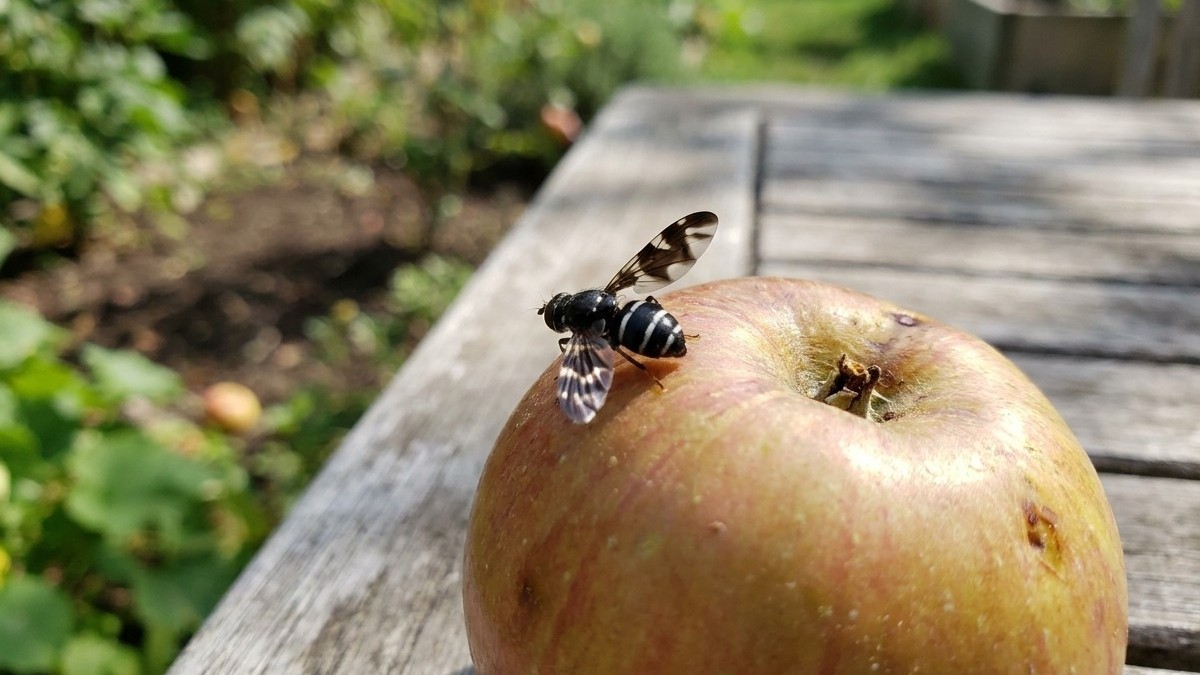

Most Massachusetts apples come off the tree between early September and late October, but the exact week depends on variety, not the calendar. Early types like Ginger Gold finish first; dense-flesh keepers like Mutsu or Northern Spy hang on until the tree’s stage, not the date, says they’re done. Storage life splits the same way: a week on the counter for soft early apples, four to six months in cold, humid storage for the right late-season varieties.
When apples are ready to pick in Massachusetts
Ripeness is a stage, not a date on a wall calendar, and the stage that matters most is how close the tree is to the first fall frost. At the Boston reference station, that frost lands between November 3 and November 14 (NOAA NCEI 1991-2020 Climate Normals, 32°F freeze probability). That’s the outer edge for the latest-hanging varieties. Everything else ripens on its own schedule ahead of that date, working backward from it rather than forward from spring.
Inland matters here. The Boston-area station sits on the water, which makes it the mildest spot in the state. Push west into the Worcester Hills, the Pioneer Valley, or up into the Berkshires, and frost arrives noticeably earlier in fall and lingers later in spring. A grower in Great Barrington or Ashfield should expect to pick, and to see frost risk, on a schedule shifted earlier than what the Boston dates suggest. No statewide date tells you when your own tree is ready; the tree does.
Reading the tree instead of the month
Growers judge ripeness by three signs rather than by looking at a calendar: the background skin color shifting from green toward yellow underneath any red blush, seeds turning from white to brown inside a cut fruit, and the apple separating from the spur with a gentle twist instead of a tug. Early varieties hit that combination in late summer. Mid-season types follow a few weeks later. Storage varieties, the ones bred to hold flavor and firmness for months, are often still hard and starchy well into fall, right up near that first frost window.
Winter cold plays a role too, though not the one people expect at harvest time. The mean daily minimum for the coldest month in the Boston area runs 23.1°F (NOAA NCEI Climate Normals, 1991-2020), which is mild enough that standard apple varieties survive the winter here without issue across almost all of the state. Hardiness isn’t usually the limiting factor for Massachusetts apple trees. What can go sideways is bloom timing: a variety bred for a milder climate breaks dormancy on less accumulated winter chill, so it flowers earlier in spring, right into the window when the last frost typically falls between April 1 and April 8 at the same reference station. Earlier flowering in a state with an early-April frost date is a real risk, not a bonus, so there’s no advantage to chasing low-chill varieties here. Standard Northeast-adapted varieties that flower on the later side of normal are the safer bet against that frost window, and that’s the trade worth making.
Which ones keep, and which must be eaten
Storage life comes down almost entirely to flesh density and skin thickness, which is why some apples vanish off the counter in a week and others sit quietly in a cold room until spring. Softer, thinner-skinned varieties bruise easily and lose crispness fast once picked. Firm, dense varieties, often the same ones that ripen latest and closest to that November frost window, hold their texture and acidity far longer under the right conditions.
| Variety group | Typical ripening order | Realistic storage life |
|---|---|---|
| Early-season (soft, thin-skinned) | First off the tree | Days to about 2 weeks, room temperature or refrigerator |
| Mid-season (moderate density) | Middle of the harvest run | 3 to 6 weeks in a cold refrigerator |
| Late-season, dense-flesh storage types | Last off the tree, closest to first fall frost | Several months to roughly half a year in cold, humid storage (around 32-40°F, high humidity) |
That table is a general pattern across apple growing regions, not a Massachusetts-specific set of dates, since no local source publishes a variety-by-variety storage chart for the state. What is specific to this territory is the frost window that bookends the season: any variety still on the tree past mid-November in most of the state is gambling against the November 3 to November 14 frost arrival at the mild Boston reference point, and against an earlier date inland.
What “keeps” actually means
A storage apple doesn’t just avoid rotting, it holds crisp texture and balanced acid instead of turning soft and flat-tasting. That only happens with fruit picked at the right stage, free of bruises, and cooled quickly after picking. An apple picked a week too early never develops full storage flavor no matter how cold you keep it, and one picked a week too late, or nicked by an early frost, starts breaking down faster than the calendar would suggest. The variety sets the ceiling; handling decides whether you reach it.
Storing them through a Massachusetts winter
Cold, damp, and dark is the target, and Massachusetts winters make the cold part easy but not automatic. With the coldest month averaging a daily minimum of 23.1°F at the Boston reference station, an unheated garage or an outdoor shed will swing well below freezing on a regular basis, which is too cold and will freeze the fruit solid, rupturing cell walls and turning the flesh mushy on thaw. The goal is a spot that stays close to 32-40°F without dropping into a hard freeze, which usually means an insulated root cellar, a cool basement corner, or a refrigerator for smaller quantities.
Humidity matters as much as temperature. Dry storage air pulls moisture out of the fruit and leaves apples shriveled within weeks even at the right temperature. Perforated plastic bags, damp sand, or a covered bin with a shallow water tray all help hold humidity near the 90 percent mark that dense-flesh storage varieties want.
Practical setup for a home grower
- Sort before storing: any apple with a bruise, puncture, or soft spot goes to the eat-now pile, since one bad apple releases ethylene and speeds up decay in the whole batch.
- Keep storage apples away from other fruit and vegetables, especially potatoes and onions, which respond badly to the ethylene apples give off.
- Check stored fruit every few weeks and pull anything going soft before it spreads.
- Label by variety and pick date, since early-season fruit stored alongside late-season keepers will spoil first and get lost in the pile.
For anyone unsure whether a particular variety on their own tree is a keeper or an eat-now apple, the UMass Amherst Extension is the land-grant service covering the state and a reasonable first stop for variety-specific growing and storage questions that a general national guide won’t answer.
What goes wrong here
The most common mistake is picking by date instead of by stage. Someone circles “mid-October” on a calendar because that’s when a neighbor picked last year, then ends up with starchy, sour fruit from a variety that wasn’t ready, or mealy, frost-touched fruit from a late variety left on the tree too close to that November 3 to November 14 frost window. Inland growers make the reverse mistake, assuming they have until the Boston date and getting caught by an earlier frost in the Berkshires or the Worcester Hills.
The second common failure is storage temperature drift. A garage that dips well past freezing on cold nights, consistent with that 23.1°F average minimum for the coldest month, will freeze fruit stored too close to an exterior wall or a drafty window even if the room “feels” cool rather than cold. Apples don’t need to be frozen solid to suffer; a few hours near freezing repeatedly softens tissue and shortens storage life even without visible ice damage.
Third, people mix varieties and skip the sort. An early, soft apple stored next to a dense late-season keeper starts breaking down within days and spreads ethylene and mold spores to everything nearby, which is why a single overlooked bruised apple can quietly ruin a bin that would otherwise have lasted into spring.
Fewer growers realize that bloom timing, not winter survival, is usually the real risk in this climate. Standard apple varieties handle the winter cold here without trouble; the vulnerability shows up in spring, when an early-flowering variety opens blossoms right into the April 1 to April 8 frost window and loses the year’s fruit before harvest ever becomes a question.
Common questions
Can I store apples outside in Massachusetts once it gets cold?
Not reliably. Outdoor temperatures regularly fall well below the 32-40°F storage target, and the coldest month averages a daily minimum of 23.1°F at the Boston reference station, cold enough to freeze fruit solid and ruin the texture. An insulated cellar, basement, or refrigerator holds a steadier range.
Do I need to worry about my apple tree surviving a Massachusetts winter?
Standard varieties tolerate winter cold across most of the state without issue, since the 23.1°F mean coldest-month minimum at the reference station falls well within their hardiness range. The bigger local risk is spring frost damaging blossoms, not winter cold damaging the tree itself.
Why did my late-season apples get damaged before I could pick them?
Late varieties are timed to ripen close to the first fall frost, which lands between November 3 and November 14 at the mild Boston-area reference station and earlier inland. Waiting too long in a colder inland location risks frost exposure before the fruit is off the tree.
Is there a Massachusetts-specific chart for how long each apple variety stores?
No local source publishes one. UMass Extension covers variety selection and growing guidance for the state, but variety-by-variety storage duration data isn’t published at the state level, so general density and skin-thickness patterns are the best available guide.